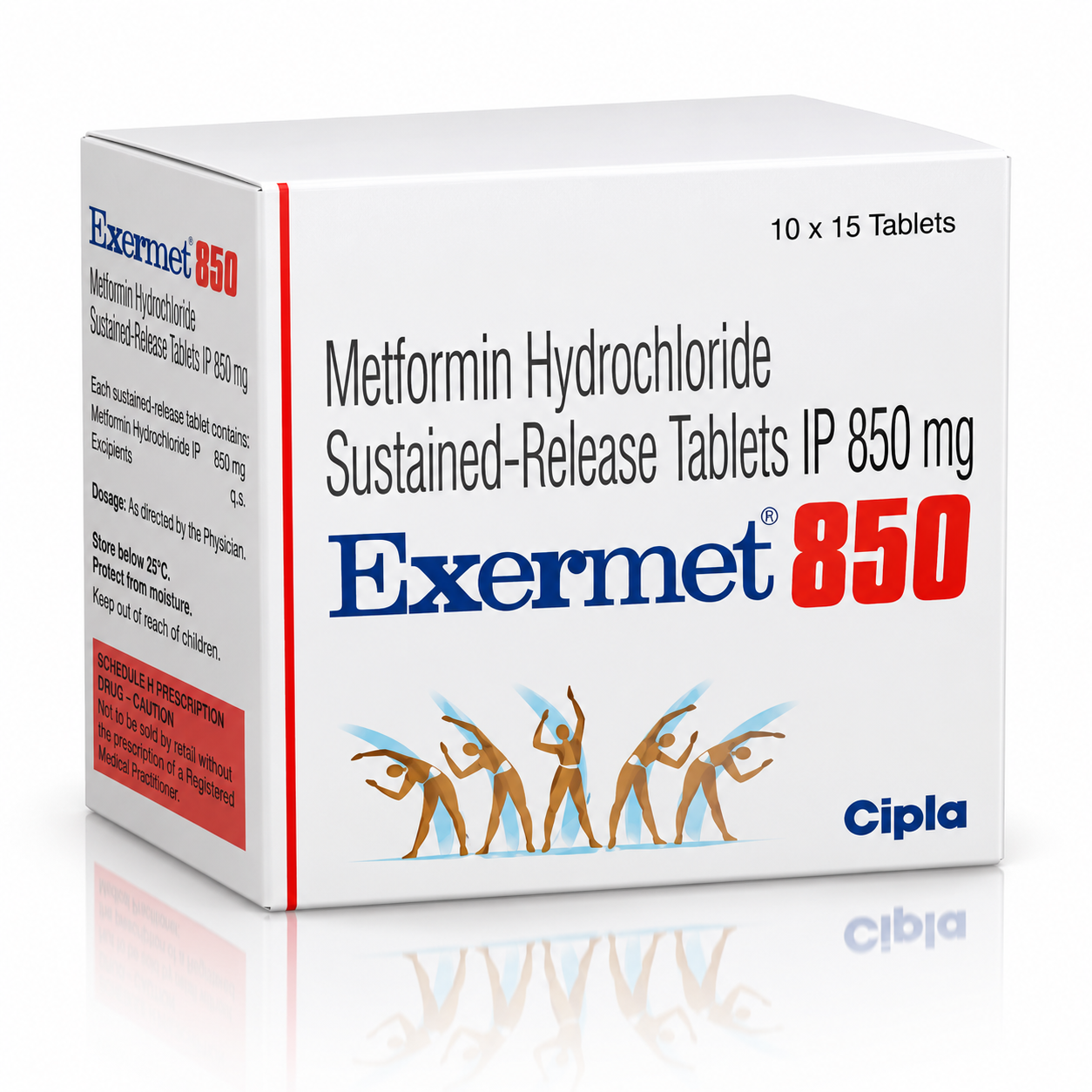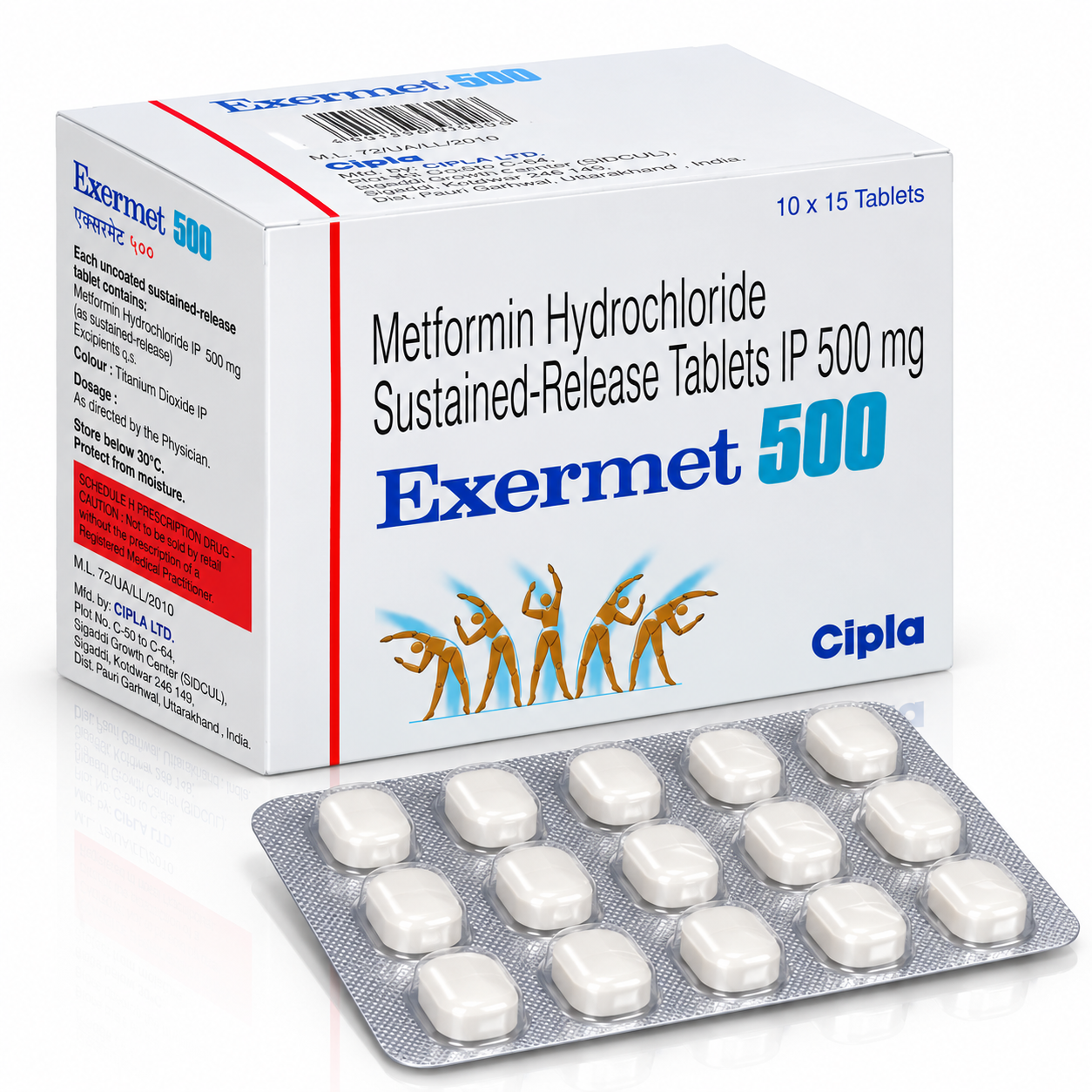
Glyciphage-SR 500 MG Tablet
$0.06 / unit
Available Options
| Pack Size | Price | Price / Unit | Quantity | Action |
|---|---|---|---|---|
| 180 tablets | $10.08 | $0.06/unit | ||
| 150 tablets | $8.40 | $0.06/unit | ||
| 120 tablets | $6.72 | $0.06/unit | ||
| 90 tablets | $5.04 | $0.06/unit | ||
| 60 tablets | $3.36 | $0.06/unit | ||
| 30 tablets | $1.68 | $0.06/unit |
Product Description
What is this medicine?
GLYCIPHAGE SR 500 MG TABLET contains Metformin Hydrochloride 500 mg (Sustained Release), a biguanide antidiabetic medicine used to improve blood sugar control in adults with type 2 diabetes mellitus. It works by decreasing the amount of glucose produced by the liver, reducing glucose absorption from the intestine, and improving the body's sensitivity to insulin. It is also commonly prescribed for polycystic ovary syndrome (PCOS) to help improve insulin resistance.
What should I tell my health care provider before I take this medicine?
They need to know if you have any of these conditions:
type 1 diabetes
diabetic ketoacidosis
kidney disease or reduced kidney function
liver disease
heart failure or recent heart attack
dehydration or severe infection
breathing problems
excessive alcohol use
vitamin B12 deficiency
if you are scheduled for surgery or imaging tests using iodinated contrast dye
an unusual or allergic reaction to metformin or any other medicines, foods, dyes, or preservatives
pregnant or trying to get pregnant
breast-feeding
How should I use this medicine?
Take this medicine by mouth with a glass of water. Take it with or immediately after food, preferably your evening meal, or as directed by your doctor. Swallow the sustained-release tablet whole. Do not crush, chew, or break it.
Take your doses at regular intervals and at the same time each day. Continue following your recommended diet, exercise program, and blood sugar monitoring plan while taking this medicine. Do not stop taking the medicine unless advised by your doctor.
Overdosage: If you think you have taken too much of this medicine, contact a poison control center or emergency room at once.
NOTE: This medicine is only for you. Do not share this medicine with others.
What if I miss a dose?
If you miss a dose, take it as soon as you remember with food. If it is almost time for your next scheduled dose, skip the missed dose and take your next dose at the regular time. Do not take double or extra doses.
What may interact with this medicine?
insulin
sulfonylureas such as glimepiride or gliclazide
iodinated contrast dyes used for X-ray or CT scans
corticosteroids such as prednisolone
diuretics (water pills)
medicines for high blood pressure
cimetidine
nifedipine
alcohol
medicines that may affect kidney function, including NSAIDs such as ibuprofen or naproxen
This list may not describe all possible interactions. Give your health care provider a list of all the medicines, herbs, non-prescription drugs, or dietary supplements you use. Also tell them if you smoke, drink alcohol, or use illegal drugs. Some items may interact with this medicine.
What should I watch for while using this medicine?
Visit your doctor or health care professional for regular checks on your progress. Check your blood sugar as directed.
Your doctor may perform regular blood tests to monitor your kidney function, blood sugar, and vitamin B12 levels, especially if you take this medicine for a long time.
Tell your doctor immediately if you develop symptoms of lactic acidosis, such as unusual muscle pain, weakness, difficulty breathing, severe tiredness, dizziness, stomach pain, or slow or irregular heartbeat.
Avoid drinking excessive amounts of alcohol while taking this medicine, as it may increase the risk of lactic acidosis.
If you are scheduled for surgery or a medical procedure involving contrast dye, inform your doctor that you are taking metformin. Your medicine may need to be stopped temporarily.
Continue following your recommended diet and exercise program. This medicine works best when combined with healthy lifestyle habits.
What side effects may I notice from this medicine?
Side effects that you should report to your doctor or health care professional as soon as possible:
allergic reactions such as skin rash, itching, hives, or swelling of the face, lips, tongue, or throat
symptoms of lactic acidosis (unusual weakness, muscle pain, trouble breathing, severe drowsiness, slow or irregular heartbeat)
severe stomach pain
persistent vomiting
yellowing of the skin or eyes
decreased amount of urine
severe low blood sugar (when taken with insulin or other antidiabetic medicines)
Side effects that usually do not require medical attention (report to your doctor or health care professional if they continue or are bothersome):
nausea
diarrhea
vomiting
stomach discomfort
bloating
loss of appetite
metallic taste in the mouth
headache
This list may not describe all possible side effects.
Where should I keep my medicine?
Keep out of the reach of children.
Store at room temperature below 30°C. Keep the tablets in their original packaging and protect them from moisture, heat, and direct sunlight.
Throw away any unused medicine after the expiration date.