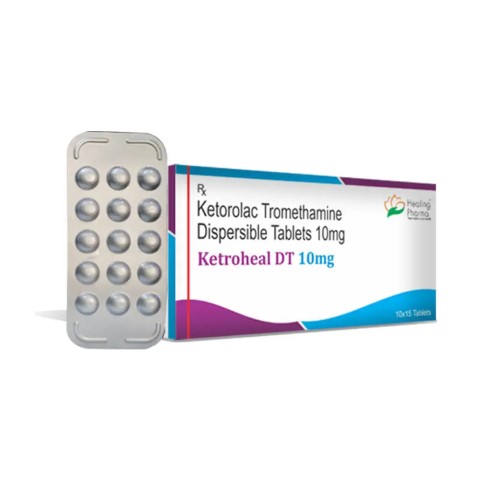
Ketroheal DT 10mg
$0.26 / unit
Available Options
| Pack Size | Price | Price / Unit | Quantity | Action |
|---|---|---|---|---|
| 180 tablets | $36.00 | $0.20/unit | ||
| 150 tablets | $31.00 | $0.21/unit | ||
| 120 tablets | $25.00 | $0.21/unit | ||
| 90 tablets | $20.00 | $0.22/unit | ||
| 60 tablets | $14.00 | $0.23/unit | ||
| 30 tablets | $8.00 | $0.27/unit |
Product Description
What is this medicine?
KETROHEAL DT 10 mg tablet contains Ketorolac tromethamine, a nonsteroidal anti-inflammatory drug (NSAID). It is used for the short-term treatment of moderate to severe pain, usually after surgery. It works by blocking the production of prostaglandins, substances in the body that cause inflammation and pain.
What should I tell my health care provider before I take this medicine?
They need to know if you have any of these conditions:
bleeding disorders or if you bruise easily
asthma or other breathing problems
history of stomach ulcers or gastrointestinal bleeding
kidney or liver disease
heart disease or high blood pressure
fluid retention or swelling
if you are taking diuretics or water pills
if you have a history of stroke or blood clot
if you smoke or drink alcohol regularly
an unusual or allergic reaction to ketorolac, aspirin, other NSAIDs, or other medications
pregnant or trying to get pregnant
breast-feeding
How should I use this medicine?
Take this medicine by mouth with a full glass of water. It may be taken with food or milk if it upsets your stomach. Ketroheal DT is a dispersible tablet, so it can be dissolved in a small amount of water before swallowing, or taken directly with water.
Take your doses at regular intervals as directed. Do not take your medicine more often than prescribed, and do not use for more than 5 days, as longer use can increase the risk of serious side effects.
Overdosage: If you think you have taken too much of this medicine, contact a poison control center or emergency room at once.
What if I miss a dose?
If you miss a dose, take it as soon as you remember. If it is almost time for your next dose, skip the missed dose. Do not take double or extra doses.
What may interact with this medicine?
other NSAIDs (ibuprofen, naproxen, diclofenac)
aspirin or salicylates
anticoagulants (blood thinners like warfarin)
corticosteroids (like prednisone)
lithium
methotrexate
SSRIs or SNRIs (antidepressants like fluoxetine, sertraline, venlafaxine)
diuretics or water pills
ACE inhibitors or ARBs for blood pressure
cyclosporine
alcohol
This list may not describe all possible interactions. Give your health care provider a list of all the medicines, herbs, non-prescription drugs, or dietary supplements you use. Also tell them if you smoke, drink alcohol, or use illegal drugs. Some items may interact with your medicine.
What should I watch for while using this medicine?
Visit your doctor for regular follow-up to monitor for side effects, especially if used close to the 5-day maximum limit.
Do not take other painkillers without your doctor’s approval.
Avoid alcohol while using this medicine — it increases the risk of stomach bleeding.
Notify your doctor if you have black or bloody stools, vomit that looks like coffee grounds, severe stomach pain, or signs of kidney trouble (e.g., change in urine output).
Do not drive or operate heavy machinery if the medicine makes you dizzy or drowsy.
Avoid use in the last trimester of pregnancy — it may harm the unborn baby.
What side effects may I notice from this medicine?
Side effects that you should report to your doctor or health care professional as soon as possible:
signs of allergic reaction (rash, itching, swelling, difficulty breathing)
stomach pain, heartburn, or ulcers
black, tarry stools or blood in the stool
vomiting blood or material that looks like coffee grounds
yellowing of skin or eyes (jaundice)
unusual bleeding or bruising
difficulty urinating or changes in urine output
swelling in hands, ankles, or feet
chest pain or shortness of breath
Side effects that usually do not require medical attention (report if they continue or are bothersome):
nausea
headache
dizziness
indigestion
drowsiness
upset stomach
This list may not describe all possible side effects.
Where should I keep my medicine?
Keep out of the reach of children.
Store at room temperature between 20 and 25 degrees C (68 and 77 degrees F).
Keep away from moisture and direct heat.
Do not use after the expiration date.
Properly discard any unused or expired medication.