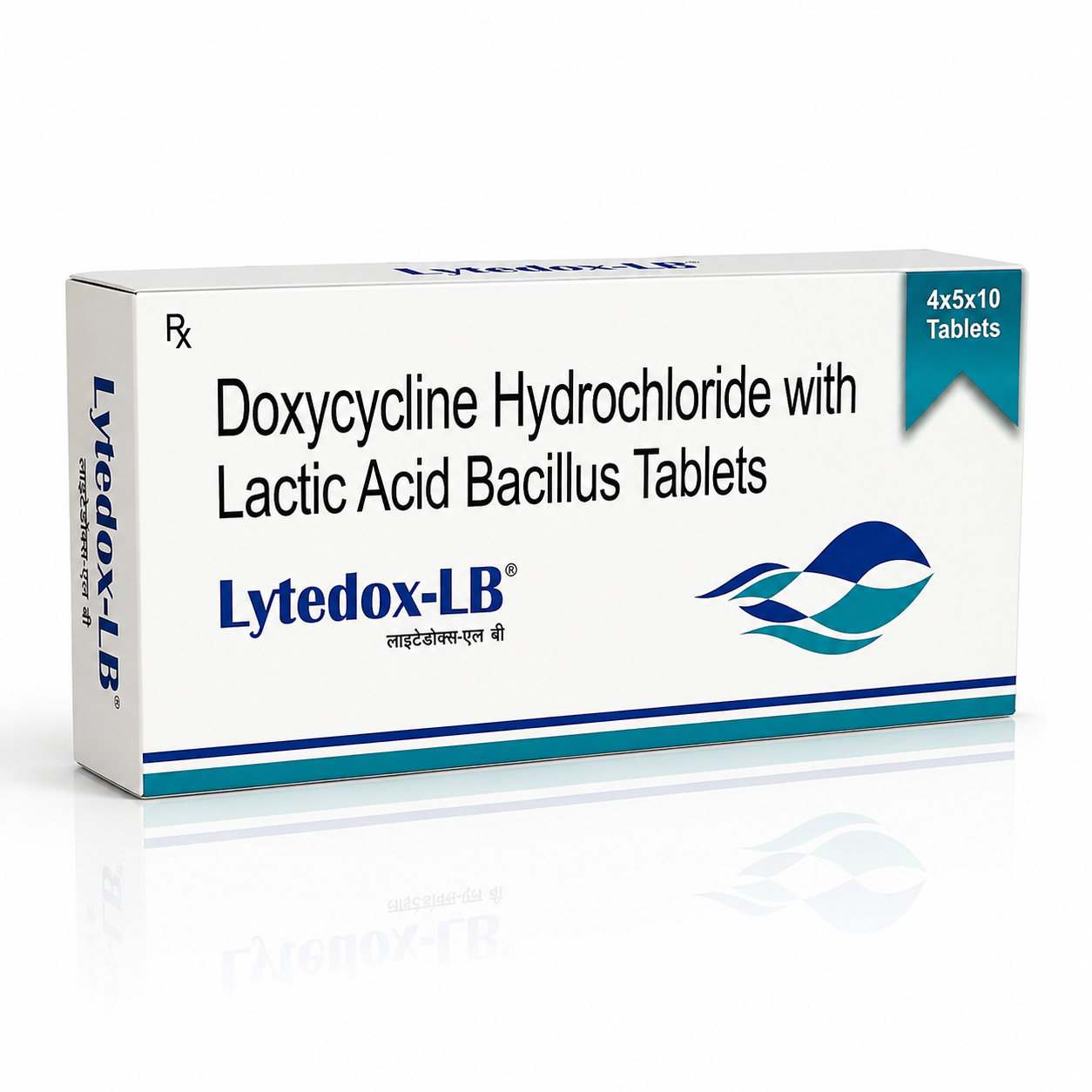
Lytedox 100 LB Capsules
$0.54 / unit
Available Options
| Pack Size | Price | Price / Unit | Quantity | Action |
|---|---|---|---|---|
| 180 Tablets | $72.00 | $0.40/unit | ||
| 150 Tablets | $62.00 | $0.41/unit | ||
| 120 Tablets | $50.00 | $0.42/unit | ||
| 90 Tablets | $40.00 | $0.44/unit | ||
| 60 Tablets | $28.00 | $0.47/unit | ||
| 30 Tablets | $16.00 | $0.53/unit |
Product Description
What is this medicine?
LYTEDOX-LB contains Doxycycline 100 mg + Lactobacillus 60 million spores. It is a prescription oral antibacterial combination. Current Indian product information confirms this composition.
Doxycycline is a broad-spectrum tetracycline antibiotic that works by inhibiting bacterial protein synthesis and stopping the growth of susceptible bacteria. Lactobacillus is added as a probiotic to help maintain intestinal bacterial balance during antibiotic treatment.
This medicine is commonly used for:
bacterial respiratory tract infections
certain urinary and genital tract infections
skin and soft-tissue infections
acne caused or complicated by susceptible bacteria
certain sexually transmitted bacterial infections, including chlamydial infections
other infections caused by doxycycline-sensitive bacteria
reducing antibiotic-associated disturbance of intestinal flora
Doxycycline should be used only for infections that are proven or strongly suspected to be caused by susceptible bacteria. Unnecessary antibiotic use contributes to antimicrobial resistance.
What should I tell my health care provider before I take this medicine?
They need to know if you have any of these conditions:
allergy to doxycycline
allergy to tetracycline, minocycline, or another tetracycline antibiotic
allergy to Lactobacillus or any ingredient in the capsule
liver disease
kidney disease
difficulty swallowing
disease of the esophagus
severe or persistent diarrhea
previous antibiotic-associated colitis
lupus
myasthenia gravis
increased pressure inside the skull or a history of intracranial hypertension
if you take isotretinoin or another systemic retinoid
if you take warfarin or another anticoagulant
pregnancy or plans to become pregnant
breast-feeding
if the medicine is intended for a young child
Tetracycline-class medicines can affect developing teeth and bones. Doxycycline use during pregnancy and in young children therefore requires careful assessment of the indication, duration, and available alternatives by a health care professional.
How should I use this medicine?
Take Lytedox-LB exactly as prescribed by your doctor. The dose and treatment duration depend on the type and severity of infection.
Swallow the capsule with a full glass of water. Take it while sitting or standing, and avoid lying down immediately afterward. This helps reduce the risk of doxycycline irritating or ulcerating the esophagus.
Important instructions include:
take the medicine at approximately the same time each day
swallow it with plenty of water
complete the entire prescribed antibiotic course
do not stop treatment early just because you feel better
do not take more capsules than prescribed
avoid taking it at the same time as antacids or mineral supplements containing calcium, magnesium, aluminum, iron, or zinc
follow your doctor's instructions regarding food and dairy products
Doxycycline doses vary considerably by infection. For several adult infections, 100 mg every 12 hours is an established regimen, but this does not mean every infection requires that schedule. Follow the prescription written specifically for you.
Overdosage: If you think you have taken too much of this medicine, contact a poison control center, doctor, or emergency room at once.
NOTE: This medicine is only for you. Do not share this medicine with others.
What if I miss a dose?
If you miss a dose, take it when you remember unless it is almost time for your next scheduled dose.
If it is nearly time for the next dose, skip the missed dose and continue with your regular schedule.
Do not take two doses at the same time or take extra capsules to make up for a missed dose.
Try not to miss doses, because incomplete or irregular antibiotic treatment may reduce effectiveness and contribute to antimicrobial resistance.
What may interact with this medicine?
Important interactions can include:
antacids containing aluminum, calcium, or magnesium
iron supplements
zinc supplements
calcium supplements
bismuth-containing medicines
warfarin and other anticoagulants
isotretinoin and other systemic retinoids
certain seizure medicines
barbiturates
carbamazepine
phenytoin
some other antibiotics
oral typhoid vaccine
other medicines or supplements containing substantial amounts of minerals
Minerals such as calcium, magnesium, aluminum, and iron can reduce doxycycline absorption when taken too close to the antibiotic. Ask your doctor or pharmacist how far apart your specific products should be taken.
Systemic retinoids such as isotretinoin deserve particular caution because both retinoids and tetracyclines have been associated with intracranial hypertension.
This list may not describe all possible interactions. Give your health care provider a complete list of all prescription medicines, non-prescription drugs, herbs, vitamins, and dietary supplements you use.
What should I watch for while using this medicine?
Complete the full prescribed course unless your doctor tells you to stop.
Doxycycline can make your skin more sensitive to sunlight. Avoid unnecessary prolonged sun exposure and tanning lamps. Use protective clothing and appropriate sunscreen when outdoors.
Contact your doctor if you develop:
severe or persistent diarrhea
watery or bloody stools
severe abdominal cramps
difficulty or pain when swallowing
severe heartburn or chest discomfort after taking the capsule
severe headache with blurred or double vision
severe skin rash
unusual bruising or bleeding
yellowing of the skin or eyes
Antibiotic-associated C. difficile diarrhea can occur during or after antibacterial treatment. Persistent, severe, or bloody diarrhea should therefore be medically evaluated rather than treated with anti-diarrheal medicines without advice.
Doxycycline can irritate the esophagus. Taking it with adequate fluid and avoiding taking it immediately before lying down can reduce this risk.
If your infection does not improve or becomes worse during treatment, contact your doctor. Do not extend the antibiotic course yourself.
What side effects may I notice from this medicine?
Side effects that you should report to your doctor or health care professional as soon as possible:
severe or persistent diarrhea
watery or bloody stools
severe abdominal pain
severe headache with blurred or double vision
difficulty or pain when swallowing
severe heartburn or chest pain after swallowing
severe skin rash
blistering or peeling skin
unusual bleeding or bruising
yellowing of the skin or eyes
dark urine
severe allergic reaction
swelling of the face, lips, tongue, or throat
difficulty breathing or swallowing
Rare but serious tetracycline-class reactions include severe skin reactions, intracranial hypertension, liver injury, and serious hypersensitivity reactions.
Side effects that usually do not require medical attention (report them if they continue or are bothersome):
nausea
vomiting
diarrhea
stomach discomfort
loss of appetite
indigestion
headache
mild skin rash
increased sensitivity to sunlight
changes in intestinal bacterial flora
The Lactobacillus component is generally intended to support intestinal flora during antibiotic therapy, although it does not guarantee prevention of antibiotic-associated diarrhea.
This list may not describe all possible side effects.
Where should I keep my medicine?
Keep out of the reach of children.
Store the capsules according to the temperature and storage instructions printed on the original Lytedox-LB package.
Keep the medicine:
in its original blister packaging
in a cool and dry place
protected from moisture
protected from excessive heat
away from direct sunlight
Do not use doxycycline capsules after their expiration date. Dispose of expired or unused antibiotics appropriately.