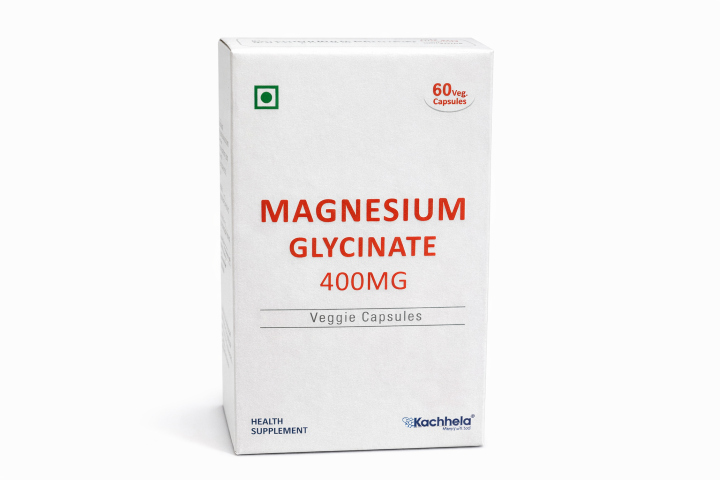
Magnesium Glycinate 400 MG Capsule
$1.20 / unit
Available Options
| Pack Size | Price | Price / Unit | Quantity | Action |
|---|---|---|---|---|
| 360 Capsules | $55.00 | $0.15/unit | ||
| 300 Capsules | $47.00 | $0.16/unit | ||
| 240 Capsules | $38.00 | $0.16/unit | ||
| 180 Capsules | $30.00 | $0.17/unit | ||
| 120 Capsules | $22.00 | $0.18/unit | ||
| 60 Capsules | $12.00 | $0.20/unit |
Product Description
What is this medicine?
MAGNESIUM GLYCINATE 400 MG CAPSULE is a mineral/dietary supplement that provides magnesium in the form of magnesium glycinate (magnesium bisglycinate), where magnesium is bound to the amino acid glycine.
Magnesium is an essential mineral involved in many processes in the body, including normal muscle and nerve function, energy production, blood glucose regulation, blood pressure regulation, and maintenance of healthy bones.
This supplement is commonly used for:
prevention or correction of inadequate magnesium intake
supporting normal muscle function
supporting normal nerve function
maintaining healthy bones
supporting normal energy production
supporting cardiovascular function
helping meet increased magnesium requirements when dietary intake is inadequate
Important 400 mg strength information
The wording “Magnesium Glycinate 400 mg” can mean different things on different supplement labels.
Some products state 400 mg of elemental magnesium supplied from magnesium glycinate, while others may refer to the weight of the magnesium-glycinate compound itself. NIH's Dietary Supplement Label Database includes products labeled Magnesium Glycinate 400 mg that provide 400 mg elemental magnesium per serving, but the serving may require multiple capsules rather than one capsule.
Therefore, check the original Supplement Facts panel for wording such as:
“Magnesium — 400 mg (as magnesium glycinate)”
The elemental magnesium amount is the important number when assessing magnesium intake.
What should I tell my health care provider before I take this medicine?
They need to know if you have any of these conditions:
allergy to magnesium glycinate or any ingredient in the capsule
kidney disease
significantly reduced kidney function
heart rhythm problems
gastrointestinal disorders
persistent diarrhea
low blood pressure
electrolyte abnormalities
neuromuscular disorders
pregnant or trying to get pregnant
breast-feeding
Kidney function is particularly important because the kidneys normally remove excess magnesium from the body.
People with significantly impaired kidney function may have difficulty eliminating magnesium, increasing the risk of excessively high blood magnesium levels (hypermagnesemia).
Tell your healthcare provider if you already take:
other magnesium supplements
magnesium-containing antacids
magnesium-containing laxatives
multivitamin/mineral supplements
Also give your healthcare provider a complete list of your prescription and non-prescription medicines.
How should I use this medicine?
Take MAGNESIUM GLYCINATE 400 MG CAPSULE by mouth according to the directions printed on the original product label or as recommended by your healthcare professional.
Swallow the capsule with a glass of water.
It may generally be taken with food if this improves gastrointestinal tolerance.
Do not take more than the recommended amount.
Important dosage information
The NIH states that the Tolerable Upper Intake Level for magnesium from supplements and medications is 350 mg per day for adults. This limit does not include magnesium naturally present in foods and beverages.
Therefore, if your product actually provides 400 mg of elemental magnesium per daily serving, it exceeds the adult supplemental UL of 350 mg/day.
The UL does not mean that a healthcare professional can never recommend a higher dose; rather, doses above it should generally be used with appropriate medical guidance.
If the label says 400 mg magnesium glycinate but provides substantially less elemental magnesium, the situation is different. Always check the elemental-magnesium amount.
Overdosage: If you think you have taken a large amount of magnesium, contact a healthcare professional or emergency medical service. Very high magnesium intake can cause serious toxicity, particularly in people with impaired kidney function.
NOTE: Dietary supplements should not be used as substitutes for a balanced diet or appropriate medical treatment.
What if I miss a dose?
If you miss a dose, take it when you remember unless it is almost time for your next dose.
If it is almost time for your next dose, skip the missed dose and continue with your normal schedule.
Do not:
take two doses together
double your next dose
take extra capsules to compensate for a missed dose
Missing an occasional dose of a magnesium supplement generally does not require special treatment.
What may interact with this medicine?
Magnesium supplements may interact with or affect the absorption of certain medicines.
Tell your healthcare provider if you take:
tetracycline antibiotics
quinolone antibiotics
bisphosphonates used for osteoporosis
diuretics or "water pills"
other magnesium-containing medicines
magnesium-containing antacids
magnesium-containing laxatives
other mineral supplements
Magnesium can interfere with the absorption of certain antibiotics and bisphosphonates when taken too close together. Some diuretics can also increase or decrease magnesium loss through the urine.
Long-term use of certain medicines for acid reflux or peptic ulcers can contribute to low magnesium levels.
This list may not describe all possible interactions.
Give your healthcare provider a list of all medicines, herbs, non-prescription drugs, vitamins, minerals, and dietary supplements you use.
What should I watch for while using this medicine?
Do not assume that taking more magnesium will provide greater benefits.
Check the label carefully to determine the amount of elemental magnesium per capsule and per serving.
If you are taking other products containing magnesium, include them when calculating your total supplemental magnesium intake.
Contact your healthcare provider if you develop persistent:
diarrhea
nausea
abdominal cramping
unusual weakness
excessive tiredness
dizziness
low blood pressure
confusion
High intakes of supplemental magnesium commonly cause diarrhea, nausea, and abdominal cramping. Extremely high magnesium intake can cause serious complications, including abnormal heart rhythm.
People with impaired kidney function should be particularly careful with magnesium supplements because magnesium can accumulate in the body.
What side effects may I notice from this medicine?
Side effects that you should report to your doctor or health care professional as soon as possible:
severe or persistent vomiting
severe weakness
severe dizziness
fainting
confusion
very low blood pressure
slow or irregular heartbeat
difficulty breathing
severe allergic reaction
widespread rash or hives
swelling of the face, lips, tongue, or throat
difficulty breathing or swallowing
Side effects that usually do not require immediate medical attention but should be reported if they continue or are bothersome:
diarrhea
loose stools
nausea
stomach upset
abdominal discomfort
abdominal cramping
NIH identifies diarrhea, nausea, and abdominal cramping as typical adverse effects of excessive magnesium intake from supplements or medicines.
This list may not describe all possible side effects.
Where should I keep my medicine?
Keep MAGNESIUM GLYCINATE 400 MG CAPSULES out of the reach of children.
General product information:
Product Name: Magnesium Glycinate 400 mg Capsule
Active Ingredient: Magnesium Glycinate / Magnesium Bisglycinate
Strength: 400 mg
Dosage Form: Capsule
Therapeutic/Nutritional Class: Mineral / Dietary Supplement
Route: Oral
Primary Purpose: Magnesium supplementation
Regulatory Category: Dietary/health supplement.
Store the capsules:
in their original bottle or packaging
in a cool, dry place
protected from excessive heat
protected from moisture
away from direct sunlight
Follow the exact storage instructions printed on the original product packaging.
Do not use capsules that have changed significantly in colour, smell, appearance, or physical condition.
Do not use Magnesium Glycinate 400 mg Capsules after the expiration date printed on the bottle or outer packaging.