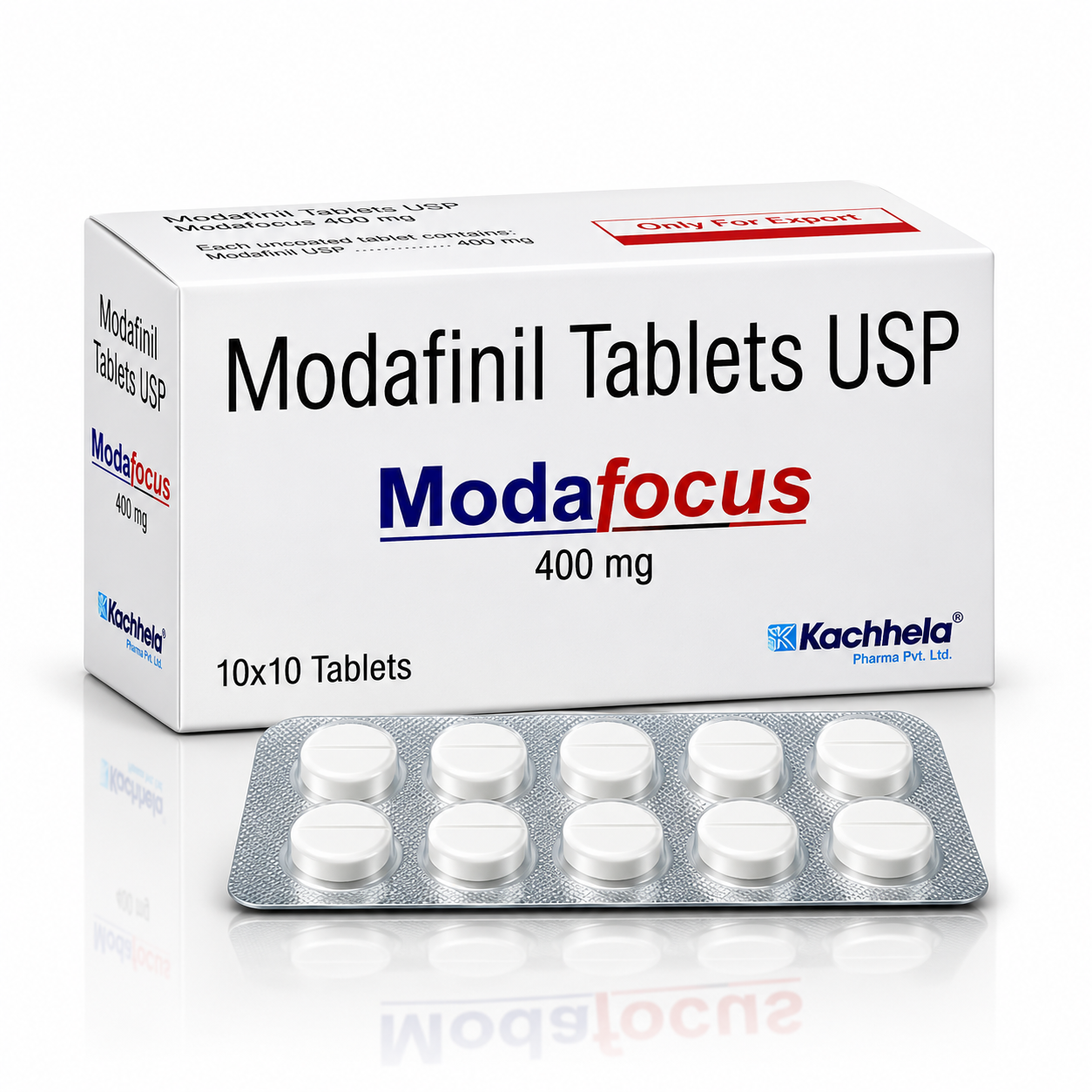
Modafocus 400 MG Tablet
$0.80 / unit
Available Options
| Pack Size | Price | Price / Unit | Quantity | Action |
|---|---|---|---|---|
| 180 Tablets | $109.00 | $0.61/unit | ||
| 150 Tablets | $94.00 | $0.63/unit | ||
| 120 Tablets | $76.00 | $0.63/unit | ||
| 90 Tablets | $61.00 | $0.68/unit | ||
| 60 Tablets | $43.00 | $0.72/unit | ||
| 30 Tablets | $24.00 | $0.80/unit |
Product Description
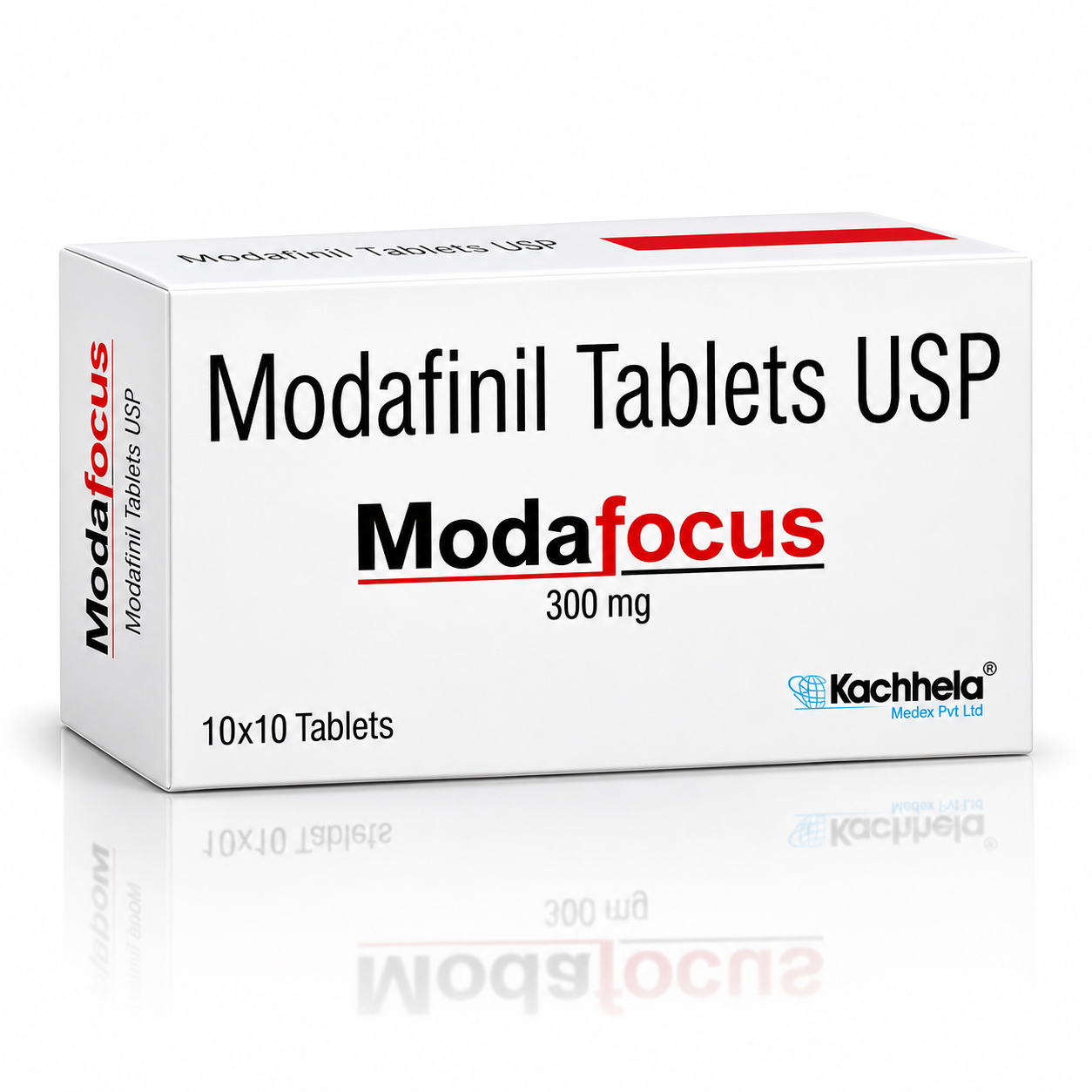
MODAFOCUS 400 MG TABLET
Brand Name: Modafocus 400 MG Tablet
Generic Name: Modafinil
Strength: 400 mg
Dosage Form: Oral Tablet
Therapeutic Class: Wakefulness-Promoting Agent / Eugeroic / Central Nervous System Stimulant
Manufacturer / Marketer: Kachhela
Pack Size: 10 × 10 Tablets
Prescription Status: Prescription Medicine
Primary Therapeutic Category: Sleep Disorders / Excessive Daytime Sleepiness
What is this medicine?
MODAFOCUS 400 MG TABLET contains Modafinil, a prescription medicine that helps promote wakefulness.
Modafinil belongs to a class of medicines called wakefulness-promoting agents, also known as eugeroics.
It acts on brain signaling pathways involved in maintaining alertness and regulating the sleep-wake cycle.
Modafinil is used for excessive sleepiness associated with:
Narcolepsy
Obstructive sleep apnea (OSA), when sleepiness persists despite appropriate treatment
Shift work disorder (SWD)
These are established indications for modafinil in U.S. prescribing information. The approved indications for Modafocus 400 mg in India should be verified separately.
Important: Modafinil does not replace adequate sleep, cure narcolepsy or treat the underlying airway obstruction in obstructive sleep apnea.
How Does Modafocus Work?
Modafinil promotes wakefulness through several effects on the central nervous system.
Its complete mechanism of action has not been fully established.
An important mechanism involves inhibition of the dopamine transporter (DAT).
This reduces dopamine reuptake, increasing dopamine availability in certain parts of the brain.
Modafinil also influences brain systems involving:
Orexin (hypocretin)
Histamine
Norepinephrine
Glutamate
GABA-related signaling
These effects contribute to increased wakefulness.
1. Dopamine Transporter Inhibition
Dopamine is a neurotransmitter involved in:
Alertness
Motivation
Attention
Movement
Reward processing
Other neurological functions
By inhibiting dopamine reuptake, modafinil increases extracellular dopamine in certain brain regions.
This is one mechanism contributing to its wakefulness-promoting effects.
Important: Modafinil's effects on dopamine also contribute to its potential for misuse.
2. Wakefulness-Related Brain Pathways
Modafinil affects multiple brain systems involved in maintaining wakefulness.
Its effects may help:
Reduce excessive daytime sleepiness
Improve the ability to remain awake
Increase alertness during intended waking hours
Reduce unintended daytime sleep episodes
Support wakefulness during scheduled work shifts
However, increased wakefulness does not necessarily mean that all effects of insufficient sleep have been corrected.
3. Effects on the Sleep-Wake Cycle
Modafinil promotes alertness without directly correcting every cause of sleep disturbance.
For example:
In narcolepsy, it improves daytime wakefulness but does not reliably treat cataplexy.
In obstructive sleep apnea, it may improve residual sleepiness but does not prevent airway collapse.
In shift work disorder, it may improve alertness during work but does not eliminate the need for adequate sleep.
Common Uses
Narcolepsy
Narcolepsy is a chronic neurological condition involving impaired regulation of sleep and wakefulness.
Symptoms may include:
Excessive daytime sleepiness
Sudden sleep episodes
Difficulty remaining awake
Disrupted nighttime sleep
Sleep paralysis
Sleep-related hallucinations
Cataplexy in certain patients
Modafinil may improve daytime wakefulness.
Important: Patients with cataplexy or other significant narcolepsy symptoms may require additional treatment.
Obstructive Sleep Apnea (OSA)
Obstructive sleep apnea occurs when the upper airway repeatedly narrows or becomes blocked during sleep.
Common symptoms include:
Loud snoring
Breathing pauses
Unrefreshing sleep
Morning headaches
Excessive daytime sleepiness
Difficulty concentrating
Some people continue to experience excessive sleepiness even after receiving appropriate treatment for airway obstruction.
Modafinil may be used to manage this residual sleepiness in selected patients.
Important: Modafinil is not a substitute for CPAP or another prescribed treatment for obstructive sleep apnea. Appropriate airway therapy must continue.
Shift Work Disorder
Shift work disorder occurs when a person's work schedule interferes with the body's usual sleep-wake rhythm.
It may affect individuals working:
Overnight shifts
Rotating shifts
Early morning shifts
Irregular schedules
Symptoms may include:
Excessive sleepiness during work
Difficulty maintaining alertness
Trouble sleeping during intended rest periods
Reduced daily functioning
Modafinil may improve wakefulness during scheduled work periods when prescribed for diagnosed shift work disorder.
Important: Treatment does not eliminate the consequences of chronic sleep deprivation.
Excessive Daytime Sleepiness
Excessive daytime sleepiness can interfere with:
Work
Concentration
Daily activities
Driving safety
Social functioning
Before prescribing modafinil, a healthcare professional should evaluate the underlying cause.
Possible causes of sleepiness include:
Narcolepsy
Sleep apnea
Insufficient sleep
Other sleep disorders
Sedating medicines
Certain medical conditions
Important: Not every cause of excessive sleepiness should be treated with modafinil.
Cognitive Enhancement and Focus
Modafinil is sometimes promoted for:
Concentration
Studying
Productivity
Mental performance
Extended wakefulness
However, routine cognitive enhancement in otherwise healthy individuals is not an established approved indication.
Important: Modafocus 400 mg should not be promoted as a general study pill, productivity enhancer or substitute for sufficient sleep.
Attention-Deficit/Hyperactivity Disorder (ADHD)
Some suppliers advertise modafinil products in connection with ADHD.
However, modafinil is not a standard approved ADHD treatment in U.S. prescribing information.
Its use for ADHD differs from the established sleep-disorder indications and requires separate clinical and regulatory consideration.
Important: A supplier listing ADHD as a use does not establish that Modafocus 400 mg is approved for ADHD treatment.
Important Treatment Limitations
Modafocus should not routinely be used for:
Ordinary tiredness
Sleep deprivation
Examination preparation
Routine cognitive enhancement
Recreational stimulation
Weight loss
Undiagnosed chronic fatigue
Treatment of sleep apnea-related airway obstruction
Self-treatment of attention problems
Unsupervised management of depression
NOTE: Modafinil is a prescription medicine and should be used only for an appropriate medical indication.
What should I tell my healthcare provider before I take this medicine?
Inform your healthcare provider if you have:
Allergy to modafinil
Allergy to armodafinil
Previous serious skin reactions
Stevens-Johnson syndrome
Drug-related hypersensitivity reactions
Heart disease
High blood pressure
Heart rhythm abnormalities
Structural heart disease
Left ventricular hypertrophy
Mitral valve prolapse
Liver disease
Kidney disease
Anxiety disorders
Panic attacks
Depression
Bipolar disorder
Mania
Psychosis
Hallucinations
Suicidal thoughts
History of substance misuse
Previous stimulant dependence
Pregnancy or plans to become pregnant
Breastfeeding
Use of hormonal contraceptives
Use of antidepressants
Use of other stimulants
Use of anticoagulants
Use of antiseizure medicines
Tell your healthcare provider about all prescription medicines, over-the-counter medicines, supplements and herbal products you use.
Important Contraindications
Modafinil is contraindicated in patients with known hypersensitivity to:
Modafinil
Armodafinil
Relevant inactive ingredients
A previous serious hypersensitivity reaction to modafinil or armodafinil is a reason to avoid further treatment.
Important Serious Skin Reaction Warning
Modafinil may cause rare but potentially life-threatening skin reactions, including:
Stevens-Johnson syndrome (SJS)
Toxic epidermal necrolysis (TEN)
Drug reaction with eosinophilia and systemic symptoms (DRESS)
Other serious hypersensitivity reactions
Warning symptoms may include:
New skin rash
Fever
Blistering
Mouth ulcers
Skin peeling
Facial swelling
Important: Discontinue modafinil at the first sign of a rash unless it is clearly unrelated to the medicine, and obtain prompt medical advice. Severe skin reactions may require emergency treatment.
Important Psychiatric Warning
Modafinil may cause or worsen psychiatric symptoms.
Possible reactions include:
Anxiety
Agitation
Irritability
Insomnia
Mania
Hallucinations
Psychotic symptoms
Suicidal thoughts
Patients with a history of psychiatric conditions require careful assessment and monitoring.
Important Cardiovascular Warning
Modafinil may affect blood pressure and heart rate.
Additional caution is needed in patients with:
Uncontrolled hypertension
Significant heart disease
Heart rhythm abnormalities
Structural heart disorders
Previous cardiovascular events
Chest pain, fainting or significant palpitations require medical evaluation.
Important Pregnancy Warning
Modafinil may cause fetal harm.
Its use during pregnancy is generally avoided.
Patients who are pregnant or planning pregnancy should discuss suitable alternatives with their healthcare provider.
Important Hormonal Contraception Warning
Modafinil can reduce the effectiveness of certain hormonal contraceptives.
This may increase the risk of unintended pregnancy.
Alternative or additional effective contraception should be discussed with the prescriber.
How should I use this medicine?
Take Modafocus 400 MG Tablet only as prescribed by a qualified healthcare professional.
Swallow the tablet with water.
Take it at the prescribed time.
Modafinil can generally be taken with or without food.
Do not increase the dose independently.
Do not take extra tablets to remain awake longer.
Do not combine it with other stimulants without medical advice.
Avoid taking it close to your intended sleep period unless your prescribed shift-work schedule specifically requires a different timing.
Monitor for insomnia, anxiety, rash or palpitations.
Do not share the medicine.
Attend scheduled medical reviews.
Understanding the Tablet Strength
Active Ingredient: Modafinil
Strength: 400 mg
Dosage Form: Oral tablet
Route of Administration: Oral
Important: A single Modafocus 400 mg tablet contains twice the usual recommended adult dose of modafinil. It should not automatically be used as an initial dose.
Usual Adult Dosage
The standard adult dosing recommendations for modafinil are:
Medical Indication | Standard Reference Dose | Administration Time |
|---|---|---|
Narcolepsy | 200 mg once daily | Morning |
Residual sleepiness in treated OSA | 200 mg once daily | Morning |
Shift work disorder | 200 mg once daily | Approximately 1 hour before the work shift |
According to U.S. prescribing information, doses up to 400 mg/day have been studied and were generally tolerated in clinical trials, but there is no consistent evidence of additional benefit beyond 200 mg/day.
Important: The study of 400 mg daily does not establish that a particular 400 mg tablet formulation is authorized or appropriate for every patient. Do not start with Modafocus 400 mg or increase treatment to this strength without specialist guidance.
Modafocus for Narcolepsy
Modafinil is generally taken in the morning when prescribed for narcolepsy.
The healthcare provider considers:
Severity of excessive sleepiness
Sleep study findings
Response to previous treatment
Other narcolepsy symptoms
Adverse effects
Other medical conditions
The dosage should be individualized.
Modafocus for Obstructive Sleep Apnea
Modafinil may be prescribed for residual daytime sleepiness despite adequate OSA treatment.
Patients should continue:
CPAP therapy when prescribed
Other recommended airway treatments
Sleep specialist follow-up
Appropriate sleep schedules
Management of contributing medical conditions
Important: Modafinil does not reopen blocked airways during sleep.
Modafocus for Shift Work Disorder
For diagnosed shift work disorder, modafinil is generally taken before the scheduled work period.
The reference timing is approximately one hour before starting the shift.
The clinician should determine the dose and schedule.
Important Higher-Dose Consideration
The 400 mg strength is higher than the recommended routine 200 mg dose.
Higher doses may increase exposure to modafinil and some adverse effects, such as:
Headache
Anxiety
Nervousness
Insomnia
Palpitations
Nausea
A higher dose should not be assumed to improve concentration or wakefulness more effectively.
Severe Liver Impairment
Modafinil is metabolized substantially in the liver.
U.S. prescribing information recommends reducing the usual modafinil dose by half in patients with severe hepatic impairment.
Important: A 400 mg tablet is generally unsuitable for someone who requires a substantially reduced dose.
Kidney Impairment
Patients with significant kidney impairment should undergo individual assessment.
Although routine renal dose adjustments are not clearly established, severe kidney disease can alter the handling of certain metabolites.
Older Adults
Older adults may have reduced clearance of modafinil.
They may be more susceptible to:
Insomnia
Dizziness
Anxiety
Drug interactions
Cardiovascular adverse effects
Lower doses and closer monitoring may be appropriate.
Children and Adolescents
Modafinil is not approved for routine pediatric use under standard U.S. prescribing information.
Serious skin reactions are a particular safety concern.
Important: Modafocus 400 MG Tablet should not be used in children or adolescents without appropriate specialist assessment and regulatory authorization.
How Long Does Modafocus Take to Work?
Modafinil is absorbed after oral administration.
Peak blood concentrations generally occur approximately 2–4 hours after administration.
The elimination half-life is approximately 15 hours in many adults.
Time to peak concentration
2–4 hours
Approximate half-life
15 hours
These values can vary with:
Liver function
Other medicines
Individual metabolism
Food intake
Age
Important: Because modafinil remains in the body for many hours, late administration may interfere with sleep.
Important Treatment Duration
Modafinil may be prescribed for ongoing management of a diagnosed sleep disorder.
Treatment should be periodically reassessed.
The clinician should review:
Daytime sleepiness
Sleep quality
Blood pressure
Heart rate
Treatment effectiveness
Psychiatric symptoms
Adverse effects
Continued need for medication
Potential misuse
What if I miss a dose?
If you miss a dose:
Follow the instructions provided by your prescriber.
If it is late in your intended waking period, skipping the missed dose may help prevent insomnia.
Do not take two doses together.
Do not double the next dose.
Do not take extra tablets to compensate.
Resume the regular schedule as instructed.
For shift work disorder, missed-dose instructions should account for the work schedule.
Important: Never take an additional 400 mg tablet to compensate for a missed dose.
What may interact with this medicine?
Modafinil may affect enzymes involved in the metabolism of other medicines.
Potential interactions include:
Hormonal contraceptives
Warfarin
Phenytoin
Diazepam
Certain antidepressants
Certain antipsychotics
Ciclosporin (cyclosporine)
Carbamazepine
Phenobarbital
Rifampicin
Certain antifungal medicines
Other stimulants
Important Drug Interaction Considerations
Hormonal Contraceptives: Modafinil may reduce contraceptive effectiveness.
Warfarin: Anticoagulation response may require closer INR monitoring.
Phenytoin: Modafinil may increase phenytoin concentrations in some patients.
Diazepam: Modafinil may reduce diazepam metabolism, increasing exposure.
Certain Antidepressants: Some medicines metabolized by CYP2C19 may have increased concentrations.
Ciclosporin: Modafinil may reduce ciclosporin concentrations and potentially its effectiveness.
Carbamazepine: May increase modafinil metabolism.
Phenobarbital: May affect modafinil exposure through enzyme induction.
Rifampicin: May reduce modafinil exposure.
Other Stimulants: May increase anxiety, insomnia, palpitations and other adverse effects.
Important Hormonal Contraceptive Interaction
Modafinil can induce CYP3A4-related drug metabolism.
This can reduce the effectiveness of certain hormonal contraceptives, including some:
Combined oral contraceptive pills
Progestogen-only pills
Hormonal contraceptive implants
Other hormonal methods affected by enzyme induction
Patients should discuss suitable additional or alternative contraception.
U.S. prescribing information recommends effective alternative or additional contraception during treatment and for one month after stopping modafinil. Some other countries recommend longer intervals; follow local labeling and the treating clinician's advice.
Important Warfarin Interaction
Patients taking warfarin may require additional INR monitoring when modafinil is started or stopped.
Report unusual bleeding or bruising.
Important CYP Enzyme Interactions
Modafinil can:
Induce CYP3A4-related metabolism
Inhibit CYP2C19-related metabolism
These effects can change blood concentrations of certain medicines.
Important: Always inform the prescriber about all concurrent medication.
Important Caffeine and Stimulant Precaution
Large amounts of caffeine or other stimulants may worsen:
Nervousness
Anxiety
Insomnia
Palpitations
Increased heart rate
Elevated blood pressure
Avoid combining high doses of stimulating substances without medical guidance.
Important Drug Interaction Precaution
Tell your healthcare provider about all medicines and supplements you use, including contraception, antidepressants, antiseizure medicines, anticoagulants and other stimulants.
What should I watch for while using this medicine?
Contact your healthcare provider promptly if you experience:
Persistent headache
Significant insomnia
Severe anxiety
Palpitations
Increasing blood pressure
Unusual irritability
Mood changes
Persistent nausea
Unexplained dizziness
Reduced appetite
Hallucinations
Unusual behavior
Any new skin rash
Seek emergency medical attention for:
Blistering or peeling skin
Mouth sores with fever
Swelling of the face or throat
Severe chest pain
Fainting
Serious allergic reactions
Severe psychiatric disturbances
Suicidal thoughts with immediate danger
Important Monitoring
Daytime Sleepiness: Assess improvement in excessive sleepiness.
Blood Pressure: Monitor regularly when clinically indicated.
Heart Rate: Assess significant palpitations or changes in pulse.
Sleep Quality: Monitor for insomnia and sleep disruption.
Psychiatric Symptoms: Watch for anxiety, agitation, mania or hallucinations.
Skin Reactions: Monitor closely for new rashes or hypersensitivity.
Treatment Response: Evaluate whether the medicine continues to provide meaningful benefit.
Misuse Risk: Monitor for unauthorized dose escalation or use outside the prescribed indication.
Important Serious Skin Reaction Monitoring
Modafinil has been associated with potentially life-threatening skin reactions.
Warning symptoms include:
New rash
Fever
Blistering
Mouth ulcers
Facial swelling
Skin peeling
Important: Stop taking modafinil at the first sign of rash unless clearly unrelated, and obtain urgent medical advice.
Important Cardiovascular Monitoring
Patients with cardiovascular risk factors may require monitoring of:
Blood pressure
Heart rate
Chest discomfort
Palpitations
Other cardiovascular symptoms
Significant symptoms require medical evaluation.
Important Psychiatric Monitoring
Modafinil may cause or worsen:
Anxiety
Irritability
Agitation
Mania
Hallucinations
Psychosis
Patients with a history of psychiatric conditions may require closer follow-up.
Important Dependence and Misuse Monitoring
Modafinil has potential for misuse.
Warning signs include:
Taking more than prescribed
Using additional tablets to remain awake
Increasing doses for productivity enhancement
Continuing use despite significant side effects
Obtaining medicine outside a legitimate prescription
Important: The 400 mg strength should not be used for unsupervised experimentation with higher doses.
Important Driving Warning
Modafinil may improve wakefulness without completely eliminating excessive sleepiness.
Patients should avoid driving or operating dangerous machinery if alertness remains impaired.
What side effects may I notice from this medicine?
Modafocus 400 MG Tablet may cause mild, moderate or serious adverse effects associated with modafinil.
Side effects that should be reported promptly:
Severe skin rash
Stevens-Johnson syndrome
Toxic epidermal necrolysis
DRESS syndrome
Serious allergic reactions
Chest pain
Significant palpitations
Severe anxiety
Mania
Hallucinations
Psychosis
Suicidal thoughts
Significant blood pressure changes
Side effects that usually do not require immediate medical attention:
Headache
Nausea
Dizziness
Insomnia
Anxiety
Nervousness
Dry mouth
Diarrhea
Reduced appetite
Back pain
Indigestion
Commonly reported modafinil adverse effects include headache, nausea, nervousness, anxiety, insomnia, dizziness, diarrhea and indigestion.
Important Headache
Headache is one of the most frequently reported adverse effects.
Possible contributing factors include:
Medicine exposure
Sleep disruption
Individual sensitivity
Dehydration
Persistent or severe headache should be evaluated.
Important Insomnia
Modafinil can interfere with sleep because it promotes wakefulness.
Possible symptoms include:
Difficulty falling asleep
Delayed bedtime
Reduced sleep duration
Restlessness
The risk increases when the medication is taken too late relative to the intended sleep schedule.
Important Nausea and Digestive Effects
Some patients experience:
Nausea
Stomach discomfort
Diarrhea
Indigestion
Reduced appetite
Persistent symptoms should be discussed with a healthcare professional.
Important Anxiety and Nervousness
Modafinil may cause:
Anxiety
Nervousness
Irritability
Restlessness
Agitation
These reactions may be especially troublesome in patients with existing anxiety disorders.
Important Dizziness
Dizziness may affect balance and coordination.
Avoid hazardous activities if affected.
Important Serious Skin Reactions
Rare but serious skin reactions may occur.
These can include SJS, TEN and DRESS.
Important: A new rash during modafinil treatment requires prompt assessment.
Important Psychiatric Side Effects
Serious psychiatric reactions may include:
Hallucinations
Mania
Psychotic symptoms
Severe agitation
Suicidal thoughts
Urgent medical assessment is required when serious psychiatric symptoms occur.
Important Cardiovascular Side Effects
Modafinil may cause:
Palpitations
Increased heart rate
Blood pressure changes
Chest discomfort
Significant cardiovascular symptoms should not be ignored.
Important Higher-Dose Consideration
Modafocus 400 mg contains twice the usual 200 mg reference dose.
Higher exposure may increase certain adverse effects.
However, exact adverse-event rates for this specific Modafocus 400 mg product have not been established through independent clinical trials.
Important: A higher-strength tablet is not necessarily more effective or appropriate.
Important Pregnancy and Breastfeeding Considerations
Pregnancy: Modafinil may cause fetal harm and should generally be avoided during pregnancy.
Breastfeeding: Information about safety during breastfeeding is limited. Treatment should be assessed by a healthcare professional.
Hormonal Contraception: Modafinil may reduce the effectiveness of certain hormonal contraceptives. Discuss suitable alternative or additional contraception.
Where should I keep my medicine?
Store according to the instructions printed on the supplied Modafocus 400 mg packaging.
Keep in a cool, dry place.
Protect from direct sunlight.
Protect from excessive heat.
Protect from moisture.
Keep tablets in their original blister packaging.
Keep out of the reach of children.
Keep away from pets.
Do not use after the expiry date.
Do not use tablets from damaged packaging.
Keep the medicine in a secure location.
Do not share the medicine.
Dispose of expired or unused medicine according to pharmacist instructions.
Storage Note: The exact temperature requirement for Modafocus 400 mg was not independently verified. Follow the instructions on the original carton and blister strip.
Manufacturer Details
Field | Information |
|---|---|
Brand Name | Modafocus 400 MG Tablet |
Generic Name | Modafinil |
Strength | 400 mg |
Dosage Form | Oral Tablet |
Therapeutic Class | Wakefulness-Promoting Agent / Eugeroic |
Primary Indication | Excessive Daytime Sleepiness Associated With Certain Sleep Disorders |
Established Modafinil Uses | Narcolepsy, Residual Sleepiness in Treated OSA, Shift Work Disorder |
Mechanism of Action | Dopamine Transporter Inhibition and Modulation of Wakefulness-Related Brain Pathways |
Brand / Supplier | Kachhela |
Supplier-Listed Manufacturer | Kachhela |
Exact Legal Manufacturer | Verify from Current Product Packaging |
Actual Manufacturing Facility | Not Independently Verified |
Manufacturer Address | Verify from Current Product Packaging |
Prescription Status | Prescription Medicine |
Indian Regulatory Authorization of 400 MG Strength | Not Independently Verified |
Route of Administration | Oral |
Tablet Strength | 400 mg |
Usual Recommended Adult Modafinil Dose | 200 mg Once Daily |
Higher Dose Investigated in Clinical Studies | Up to 400 mg/day |
Administration Timing | Morning for Narcolepsy/OSA; Approximately 1 Hour Before Shift for SWD |
Time to Peak Blood Concentration | Approximately 2–4 Hours |
Elimination Half-Life | Approximately 15 Hours |
Important Safety Risks | Serious Skin Reactions, Psychiatric Effects, Cardiovascular Effects, Drug Interactions and Misuse |
Storage | Follow Current Product Packaging |
Retail Strip Size | 10 Tablets, According to Supplier Packaging Information |
Supplier-Listed Wholesale Pack | 10 × 10 Tablets |
Distributor-Listed Shelf Life | 36 Months |
Pharmacopoeial Standard | IP, According to Supplier |
Country of Origin | India, According to Supplier Listing |