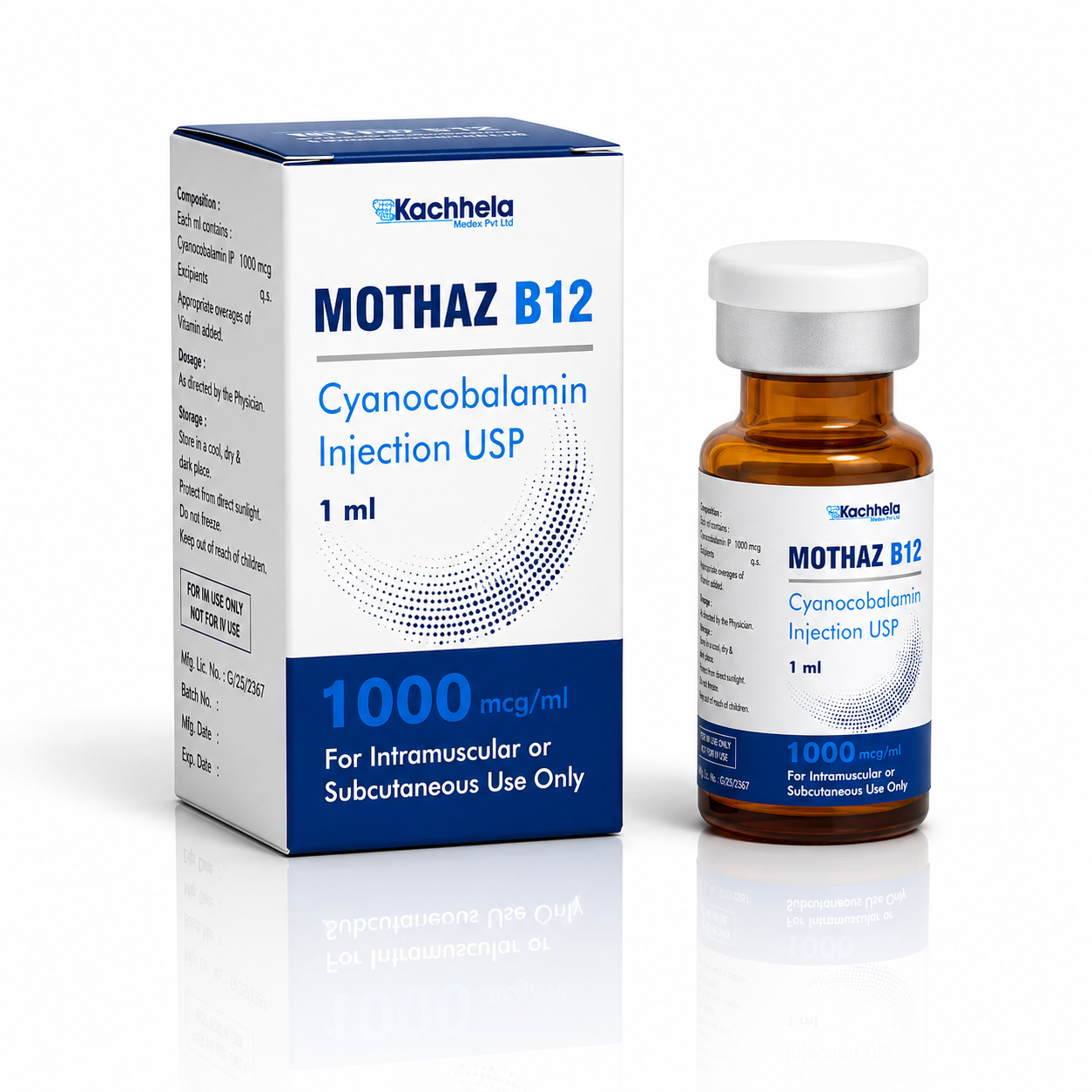
Mothaz B12 1ML Injection
$3.00 / unit
Available Options
| Pack Size | Price | Price / Unit | Quantity | Action |
|---|---|---|---|---|
| 10 Injection | $19.00 | $1.90/unit | ||
| 8 Injection | $15.00 | $1.88/unit | ||
| 6 Injection | $11.00 | $1.83/unit | ||
| 4 Injection | $8.00 | $2.00/unit | ||
| 2 Injection | $5.00 | $2.50/unit | ||
| 1 Injection | $3.00 | $3.00/unit |
Product Description
What is this medicine?
MOTHAZ B12 1 ML INJECTION contains Cyanocobalamin (Vitamin B12) 1000 mcg/mL. It is a prescription Vitamin B12 preparation used to treat or prevent significant Vitamin B12 deficiency. Current product information lists a 1 mL injectable presentation, intramuscular administration, and a shelf life of 24 months.
Cyanocobalamin is a synthetic form of Vitamin B12, an essential vitamin needed for normal red blood cell production, DNA synthesis, and proper functioning of the brain and nervous system.
This medicine is commonly used for:
Vitamin B12 deficiency
Vitamin B12 deficiency anemia
pernicious anemia
Vitamin B12 deficiency caused by poor absorption
Vitamin B12 deficiency following certain gastrointestinal surgeries
deficiency caused by inadequate dietary intake
neurological symptoms associated with Vitamin B12 deficiency, such as numbness or tingling
prevention of recurrent Vitamin B12 deficiency when ongoing replacement is required
Mothaz B12 product information specifically describes cyanocobalamin injection as being used to treat and prevent severe Vitamin B12 deficiency, including pernicious anemia.
What should I tell my health care provider before I use this medicine?
They need to know if you have any of these conditions:
an unusual or allergic reaction to cyanocobalamin
allergy or sensitivity to cobalt
allergy to any ingredient in the injection
Leber's disease or another hereditary optic nerve disorder
kidney disease
significant liver disease
low potassium levels
iron deficiency
folate deficiency
other types of anemia
current infection
problems absorbing nutrients from the stomach or intestine
previous serious reaction to a Vitamin B12 injection
pregnant or trying to get pregnant
breast-feeding
Tell your healthcare provider about any stomach or intestinal surgery you have had, because this can affect your body's ability to absorb Vitamin B12.
Your healthcare provider may perform blood tests to determine whether your symptoms are caused by Vitamin B12 deficiency and whether additional deficiencies, such as folate or iron deficiency, are present.
How should I use this medicine?
MOTHAZ B12 1 ML INJECTION should be used exactly as directed by your doctor or healthcare professional.
Current Mothaz B12 product information identifies the injection as:
Strength: 1000 mcg/mL
Volume: 1 mL
Route: Intramuscular (IM)
Form: Injection
Prescription Status: Prescription product
Cyanocobalamin injections may also be administered by other appropriate injectable routes depending on the specific formulation and prescribing information, so follow the instructions for your particular product.
The dose and frequency depend on:
severity of Vitamin B12 deficiency
underlying cause of the deficiency
presence and severity of anemia
neurological symptoms
response to treatment
laboratory results
whether long-term maintenance treatment is required
Treatment may initially involve more frequent injections, followed by less frequent maintenance doses. Do not determine the injection schedule yourself.
Overdosage: If you think too much of this medicine has been administered, contact your doctor or emergency medical service.
NOTE: This medicine is only for you. Do not share this medicine with others.
What if I miss a dose?
If you miss a scheduled Mothaz B12 injection, contact your healthcare provider to arrange the next dose.
Do not:
administer two doses together
double the next dose
change the injection schedule yourself
If you require long-term Vitamin B12 replacement because your body cannot adequately absorb B12, maintaining the recommended treatment schedule is important.
What may interact with this medicine?
Tell your healthcare provider if you take:
chloramphenicol
colchicine
metformin
medicines that reduce stomach acid
proton-pump inhibitors
H2-receptor blockers
other Vitamin B12 supplements
folic acid supplements
potassium supplements
other vitamin or mineral preparations
Some medicines can contribute to Vitamin B12 deficiency by interfering with its absorption when used for long periods.
Chloramphenicol may interfere with the blood-forming response to Vitamin B12 in some patients.
This list may not describe all possible interactions.
Give your healthcare provider a list of all medicines, herbs, non-prescription drugs, vitamins, minerals, and dietary supplements you use.
What should I watch for while using this medicine?
Visit your doctor or healthcare professional for regular checks on your progress.
Your healthcare provider may monitor:
Vitamin B12 levels
complete blood count
hemoglobin
red blood cell count
reticulocyte count
folate levels
iron status
potassium levels when clinically appropriate
Neurological symptoms
Tell your healthcare provider if symptoms such as:
numbness
tingling
weakness
balance problems
difficulty walking
do not improve or become worse during treatment.
Neurological complications from prolonged Vitamin B12 deficiency can sometimes become irreversible if treatment is delayed.
Potassium levels
During rapid correction of severe megaloblastic anemia, blood potassium can occasionally decrease. Your healthcare provider may monitor potassium when clinically appropriate.
Pernicious anemia
If Vitamin B12 deficiency is caused by pernicious anemia or another irreversible absorption problem, long-term or lifelong Vitamin B12 replacement may be required.
Do not discontinue maintenance injections simply because your symptoms have improved without consulting your healthcare provider.
What side effects may I notice from this medicine?
Side effects that you should report to your doctor or health care professional as soon as possible:
severe allergic reaction
skin rash or widespread hives
swelling of the face, lips, tongue, or throat
difficulty breathing or swallowing
severe dizziness or fainting
unusual heartbeat or palpitations
significant swelling
severe weakness
severe or persistent diarrhea
symptoms suggestive of very low potassium levels
Serious allergic reactions to injectable Vitamin B12 are uncommon but can occur.
Side effects that usually do not require immediate medical attention but should be reported if they continue or are bothersome:
pain at the injection site
redness at the injection site
mild swelling or tenderness
headache
dizziness
nausea
diarrhea
mild skin rash or itching
This list may not describe all possible side effects.
Where should I keep my medicine?
Keep MOTHAZ B12 1 ML INJECTION out of the reach of children.
Current product information identifies:
Brand Name: Mothaz B12 Injection
Generic Name: Cyanocobalamin / Vitamin B12
Strength: 1000 mcg/mL
Pack Size: 1 mL
Dosage Form: Injection
Therapeutic Class: Vitamin B12 / Hematinic / Nutritional Supplement
Route: Intramuscular (IM) in the current product listing
Grade: IP
With B-Complex: No in the 1 mL listing
Primary Use: Treatment and prevention of Vitamin B12 deficiency
Shelf Life: 24 months
Prescription Status: Prescription medicine
Store the injection:
in its original packaging
protected from direct light
protected from excessive heat
according to the temperature specified on the original carton or vial
away from children
Do not freeze unless the original manufacturer's labeling specifically permits it.
Do not use the injection if the vial or ampoule is damaged, the solution has changed significantly in appearance, or visible contamination is present.
Do not use Mothaz B12 Injection after the expiration date printed on the vial, ampoule, or outer packaging.