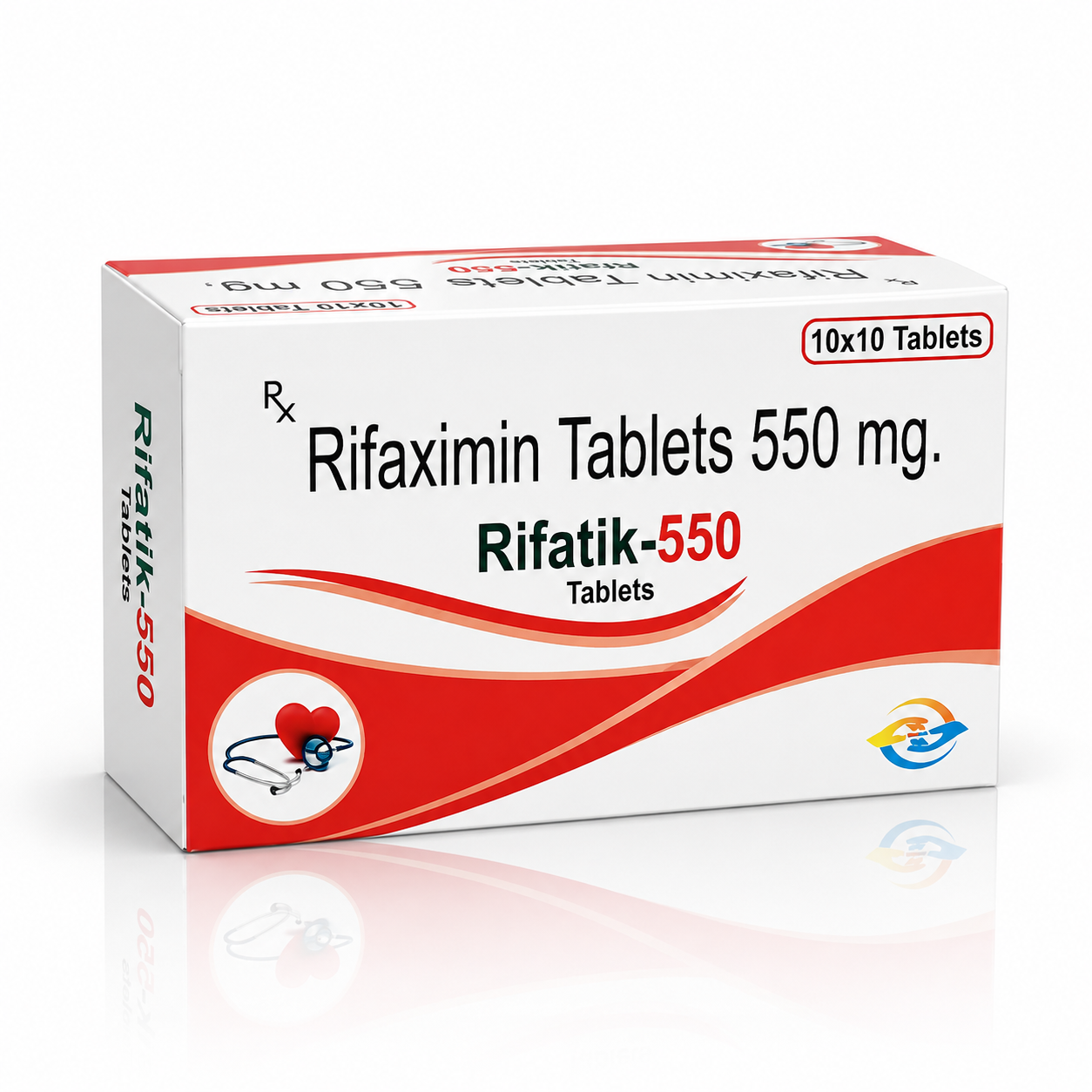
Rifatik 550 MG Tablet
$1.47 / unit
Available Options
| Pack Size | Price | Price / Unit | Quantity | Action |
|---|---|---|---|---|
| 180 Tablets | $264.00 | $1.47/unit | ||
| 150 Tablets | $220.00 | $1.47/unit | ||
| 120 Tablets | $176.00 | $1.47/unit | ||
| 90 Tablets | $132.00 | $1.47/unit | ||
| 60 Tablets | $88.00 | $1.47/unit | ||
| 30 Tablets | $44.00 | $1.47/unit |
Product Description
What is this medicine?
RIFATIK 550 MG TABLET is marketed as containing Rifaximin 550 mg, an oral rifamycin-class antibacterial medicine that acts mainly within the gastrointestinal tract. Rifaximin is poorly absorbed into the bloodstream, allowing much of its antibacterial activity to occur locally in the intestine.
Rifaximin 550 mg is used for certain gastrointestinal and liver-related conditions. The exact indication and treatment duration depend on the patient's diagnosis.
This medicine is commonly used for:
reducing the risk of recurrence of overt hepatic encephalopathy (HE) in adults
treatment of irritable bowel syndrome with diarrhea (IBS-D) in adults
reducing intestinal bacteria that contribute to hepatic encephalopathy
other intestinal bacterial conditions when specifically prescribed by a healthcare professional
For hepatic encephalopathy, rifaximin is often used alongside lactulose. Official prescribing information notes that most patients in the pivotal HE trial were also receiving lactulose.
What should I tell my health care provider before I take this medicine?
They need to know if you have any of these conditions:
allergy to rifaximin
allergy to rifampicin, rifabutin, rifapentine, or other rifamycin antibiotics
severe liver disease
kidney disease
persistent or severe diarrhea
diarrhea accompanied by fever
blood or mucus in the stool
history of Clostridioides difficile infection
intestinal obstruction
any serious gastrointestinal disorder
if your symptoms are getting worse despite antibiotic treatment
if you are pregnant or planning pregnancy
if you are breastfeeding
if you take cyclosporine or other medicines that may interact with rifaximin
Rifaximin is contraindicated in people with a history of hypersensitivity to rifaximin, other rifamycin antimicrobial agents, or any component of the formulation.
Extra caution is required in patients with severe hepatic impairment, because systemic exposure to rifaximin can be substantially increased.
How should I use this medicine?
Take Rifatik 550 mg Tablet exactly as prescribed by your healthcare professional.
Swallow the tablet by mouth with water. Rifaximin can generally be taken with or without food.
The dose depends on the condition being treated. Standard rifaximin 550 mg regimens include:
Hepatic encephalopathy: 550 mg twice daily
IBS with diarrhea (IBS-D): 550 mg three times daily for 14 days
For recurrent IBS-D symptoms, official U.S. labeling permits retreatment with the same 14-day regimen up to two times.
These are reference regimens for rifaximin and should not replace the dosing instructions provided for Rifatik by your doctor.
Take the medicine for the complete prescribed duration. Do not increase, decrease, or discontinue treatment without medical advice.
Overdosage: If you take more rifaximin than prescribed, contact your healthcare professional or seek medical attention.
NOTE: This medicine is only for you. Do not share this medicine with others.
What if I miss a dose?
If you miss a dose of Rifatik 550 mg, take it when you remember unless it is almost time for your next scheduled dose.
If it is nearly time for your next dose, skip the missed dose and continue with your regular schedule.
Do not take a double dose to make up for a missed dose.
Try to take each dose at approximately the same time each day according to your prescribed regimen.
What may interact with this medicine?
Rifaximin may interact with:
cyclosporine
other rifamycin antibiotics
certain medicines transported by P-glycoprotein
warfarin and other anticoagulants, where closer monitoring may be appropriate
other antibiotics or gastrointestinal medicines, depending on the treatment plan
Because rifaximin has relatively low systemic absorption, it generally has fewer systemic drug interactions than many conventional antibiotics. However, absorption and systemic exposure may increase in certain circumstances, particularly with severe liver disease.
Give your healthcare provider a complete list of all prescription medicines, nonprescription medicines, vitamins, herbal products, and dietary supplements you use.
What should I watch for while using this medicine?
Take Rifatik for the condition and duration prescribed by your healthcare professional. Unnecessary antibiotic use can contribute to the development of antibiotic-resistant bacteria.
Contact your healthcare professional if:
diarrhea becomes severe or persistent
diarrhea is accompanied by fever
you notice blood in your stool
symptoms become worse during treatment
symptoms return soon after treatment
you develop severe abdominal pain
you develop signs of an allergic reaction
Antibacterial medicines, including rifaximin, can be associated with Clostridioides difficile-associated diarrhea (CDAD). This possibility should be considered if significant diarrhea develops during or after antibiotic treatment.
Patients taking rifaximin for hepatic encephalopathy should continue other prescribed treatments, such as lactulose, unless their healthcare professional changes the treatment plan.
What side effects may I notice from this medicine?
Side effects that you should report to your doctor or health care professional as soon as possible:
severe or persistent diarrhea
bloody or watery diarrhea
severe abdominal pain
fever associated with diarrhea
severe skin rash
hives
swelling of the face, lips, tongue, or throat
difficulty breathing or swallowing
unusual or severe weakness
significant swelling of the hands, feet, or legs
Side effects that usually do not require immediate medical attention (report them if they continue or are bothersome):
nausea
abdominal discomfort
abdominal pain
bloating
gas
headache
dizziness
tiredness
constipation
diarrhea
Side-effect patterns vary according to the condition being treated. Rifaximin's prescribing information reports different commonly observed adverse reactions in patients treated for hepatic encephalopathy and IBS-D.
Where should I keep my medicine?
Keep out of the reach of children.
Store Rifatik 550 mg Tablet according to the storage conditions printed on the original product packaging. Keep the tablets protected from excessive heat, moisture, and direct sunlight.
Keep the tablets in their original blister packaging until ready for use. Do not use the medicine after the expiration date.