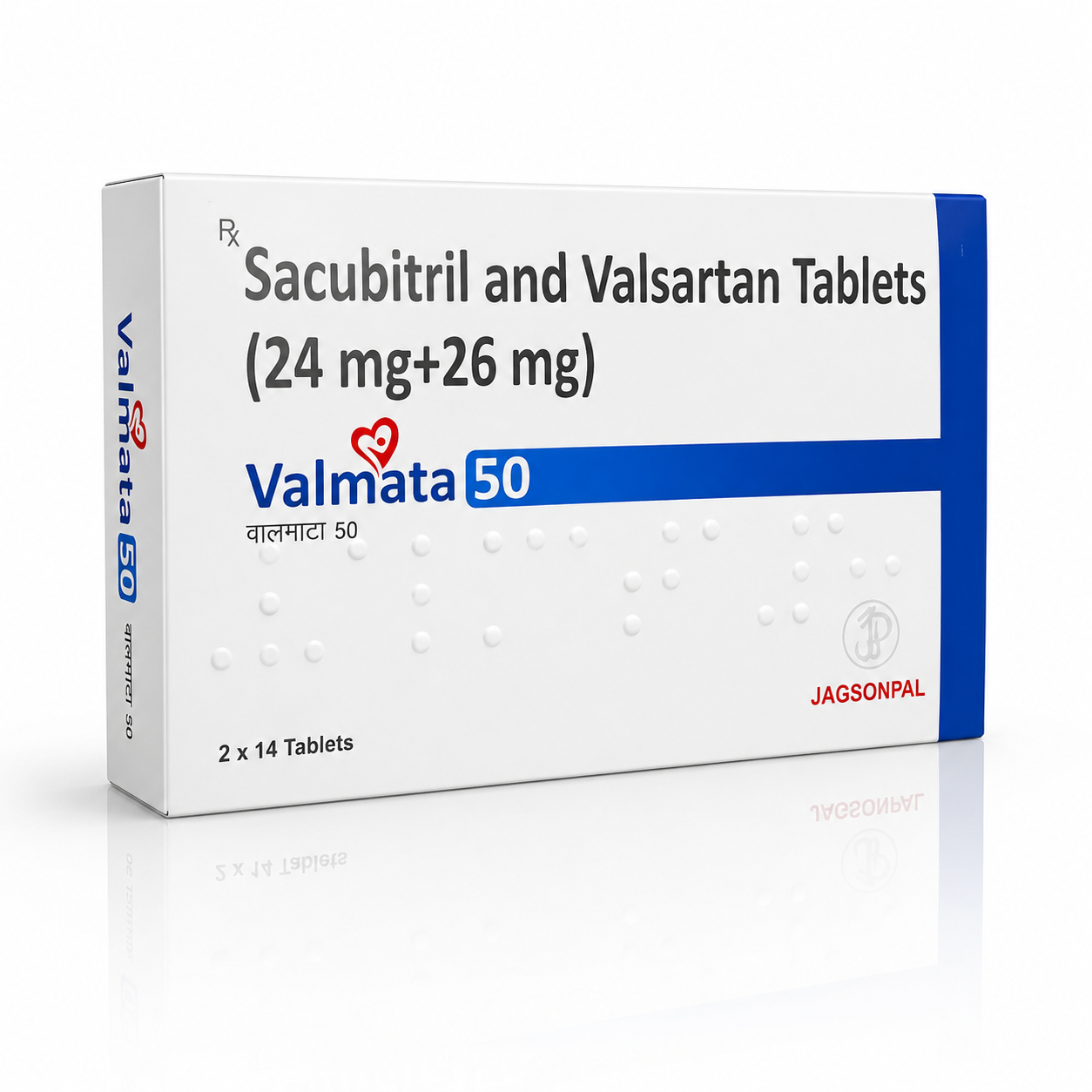
Valmata 50 MG Tablet
$1.00 / unit
Available Options
| Pack Size | Price | Price / Unit | Quantity | Action |
|---|---|---|---|---|
| 84 tablets | $63.00 | $0.75/unit | ||
| 70 tablets | $54.00 | $0.77/unit | ||
| 56 tablets | $44.00 | $0.79/unit | ||
| 42 tablets | $35.00 | $0.83/unit | ||
| 28 tablets | $25.00 | $0.89/unit | ||
| 14 tablets | $14.00 | $1.00/unit |
Product Description
What is this medicine?
VALMATA 50 MG TABLET contains Sacubitril 24 mg and Valsartan 26 mg. It is a combination medicine belonging to the Angiotensin Receptor-Neprilysin Inhibitor (ARNI) class. It is used to treat chronic heart failure with reduced ejection fraction (HFrEF). Sacubitril helps relax blood vessels and reduce fluid overload by increasing beneficial natriuretic peptides, while valsartan blocks the action of angiotensin II to lower blood pressure and reduce strain on the heart. Together, they improve heart function and reduce the risk of hospitalization and death due to heart failure. It is available only on prescription.
This medicine is commonly used for:
chronic heart failure with reduced ejection fraction (HFrEF)
reducing the risk of hospitalization due to heart failure
reducing the risk of cardiovascular death in patients with chronic heart failure
improving symptoms such as shortness of breath and fatigue associated with heart failure
What should I tell my health care provider before I take this medicine?
They need to know if you have any of these conditions:
kidney disease
liver disease
low blood pressure (hypotension)
dehydration
high potassium levels (hyperkalemia)
history of angioedema (swelling of the face, lips, tongue, or throat)
heart valve disease
diabetes
if you are taking an ACE inhibitor or another angiotensin receptor blocker (ARB)
an unusual or allergic reaction to sacubitril, valsartan, or any ingredients in the tablet
pregnant or planning to become pregnant
breast-feeding
How should I use this medicine?
Take this medicine by mouth with a glass of water. It may be taken with or without food, preferably at the same time each day. Swallow the tablet whole. Take exactly as prescribed by your doctor.
Do not stop taking this medicine unless your healthcare provider advises you to do so. If you are switching from an ACE inhibitor, wait at least 36 hours before starting this medicine to reduce the risk of angioedema.
Overdosage: If you think you have taken too much of this medicine, contact a poison control center or emergency room immediately.
NOTE: This medicine is only for you. Do not share this medicine with others.
What if I miss a dose?
If you miss a dose, take it as soon as you remember. If it is almost time for your next scheduled dose, skip the missed dose and continue with your regular dosing schedule. Do not take double or extra doses.
What may interact with this medicine?
ACE inhibitors (such as enalapril, ramipril, lisinopril)
angiotensin receptor blockers (ARBs)
aliskiren
potassium supplements
potassium-sparing diuretics (such as spironolactone)
NSAIDs (such as ibuprofen or naproxen)
lithium
other medicines used to lower blood pressure
This list may not describe all possible interactions. Give your healthcare provider a complete list of all prescription medicines, over-the-counter medicines, herbal products, vitamins, and dietary supplements you use. Also tell them if you smoke, drink alcohol, or use illegal drugs. Some items may interact with this medicine.
What should I watch for while using this medicine?
Visit your doctor regularly to monitor your progress. Your blood pressure, kidney function, and potassium levels may need to be checked periodically.
This medicine may cause dizziness or lightheadedness, especially when you first start treatment or after a dose increase. Rise slowly from sitting or lying positions.
Contact your healthcare provider immediately if you develop swelling of the face, lips, tongue, or throat, difficulty breathing, or signs of an allergic reaction.
Avoid potassium supplements or salt substitutes containing potassium unless your doctor advises otherwise.
Inform your healthcare provider if you experience severe vomiting, diarrhea, or dehydration, as these conditions may increase the risk of low blood pressure or kidney problems.
What side effects may I notice from this medicine?
Side effects that you should report to your doctor or health care professional as soon as possible:
allergic reactions such as rash, itching, hives, or swelling of the face, lips, tongue, or throat
severe dizziness or fainting
swelling of the face, lips, tongue, or throat (angioedema)
difficulty breathing
decreased urine output
signs of high potassium such as muscle weakness or irregular heartbeat
severe kidney problems
Side effects that usually do not require medical attention (report to your doctor or health care professional if they continue or are bothersome):
dizziness
low blood pressure
cough
fatigue
headache
nausea
This list may not describe all possible side effects.
Where should I keep my medicine?
Keep out of the reach of children.
Store below 30°C (86°F) in a cool, dry place. Protect from moisture, heat, and direct sunlight. Keep the tablets in their original blister pack until ready to use. Do not use the medicine after the expiration date.