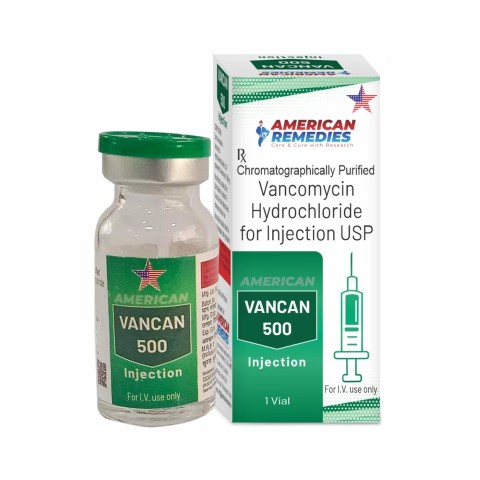
VANCAN 500
$8.00 / unit
Available Options
| Pack Size | Price | Price / Unit | Quantity | Action |
|---|---|---|---|---|
| 10 injections | $36.00 | $3.60/unit | ||
| 8 injections | $31.00 | $3.88/unit | ||
| 6 injections | $25.00 | $4.17/unit | ||
| 4 injections | $20.00 | $5.00/unit | ||
| 2 injections | $14.00 | $7.00/unit | ||
| 1 injection | $8.00 | $8.00/unit |
Product Description
What is this medicine?
VANCAN (Vancomycin) is a glycopeptide antibiotic. This medicine is used to treat serious bacterial infections, especially those caused by Gram-positive bacteria, such as methicillin-resistant Staphylococcus aureus (MRSA). It is used to treat infections of the skin, blood, bones, joints, lungs (pneumonia), and heart (endocarditis) when other antibiotics are not effective.
What should I tell my health care provider before I take this medicine?
They need to know if you have any of these conditions:
hearing problems or history of hearing loss
kidney disease
inflammatory bowel disease (if using for oral Vancomycin)
dehydration
a recent or current use of other nephrotoxic or ototoxic drugs
an unusual or allergic reaction to vancomycin or other antibiotics
pregnant or trying to get pregnant
breast-feeding
How should I use this medicine?
This medicine is usually given by intravenous (IV) infusion in a hospital or clinical setting by a healthcare professional. The dose and duration of therapy depend on your condition and response to treatment. It must be administered slowly to prevent infusion-related reactions (e.g., Red Man Syndrome).
Overdosage: If you think you have received too much of this medicine, contact your doctor, poison control center, or emergency room at once.
What if I miss a dose?
If you are receiving this medicine in a medical facility, it is unlikely you will miss a dose. If you are using it at home and miss a dose, contact your doctor or pharmacist immediately for instructions.
What may interact with this medicine?
aminoglycoside antibiotics (e.g., gentamicin, amikacin)
amphotericin B
loop diuretics (e.g., furosemide)
cyclosporine
cisplatin
muscle relaxants used during surgery
other nephrotoxic or ototoxic drugs
This list may not describe all possible interactions. Give your health care provider a list of all the medicines, herbs, non-prescription drugs, or dietary supplements you use. Also tell them if you smoke, drink alcohol, or use illegal drugs. Some items may interact with your medicine.
What should I watch for while using this medicine?
Your kidney function and hearing will be monitored regularly during treatment.
Notify your doctor immediately if you develop ringing in the ears, hearing loss, or reduced urine output.
Inform your doctor if symptoms do not improve or worsen during treatment.
Report any rash, fever, or chills during or after infusion. These may be signs of an infusion reaction or hypersensitivity.
Do not use other medicines that can harm the kidneys or ears unless prescribed and monitored closely by your doctor.
What side effects may I notice from this medicine?
Side effects that you should report to your doctor or health care professional as soon as possible:
allergic reactions like rash, itching or hives, swelling of the face, lips, or tongue
hearing loss or ringing in the ears (tinnitus)
decreased urine output or signs of kidney damage
severe diarrhea (may indicate C. difficile infection)
chest pain or difficulty breathing
flushing, redness, or rash on the upper body and face during infusion (Red Man Syndrome)
fever, chills, or joint pain
Side effects that usually do not require medical attention (report if they continue or are bothersome):
nausea
mild diarrhea
pain or irritation at the injection site
headache
This list may not describe all possible side effects.
Where should I keep my medicine?
If you are storing it at home (for home infusion):
Keep out of the reach of children.
Store the dry powder vials at controlled room temperature between 20°C and 25°C (68°F and 77°F).
Protect from light and moisture.
Once reconstituted, the solution should be used within the time specified by your pharmacist or healthcare provider, typically within 24 to 48 hours if refrigerated.
Do not freeze.
Discard any unused medicine after the expiration date or as instructed.