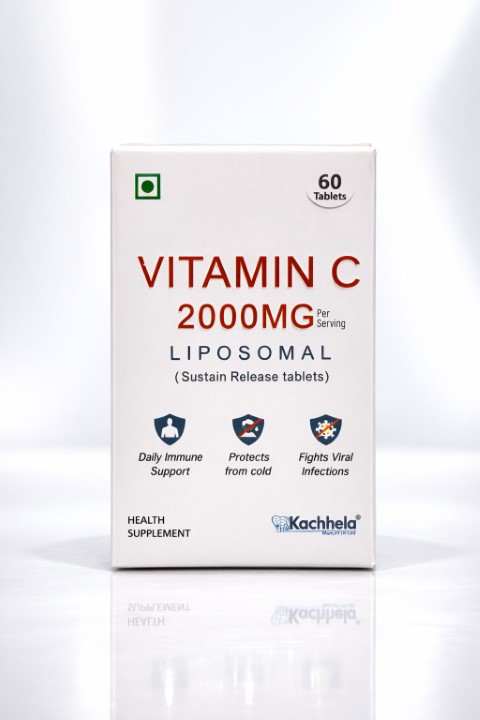
Vitamin C 2000 MG Liposomal Tablet
$0.60 / unit
Available Options
| Pack Size | Price | Price / Unit | Quantity | Action |
|---|---|---|---|---|
| 180 Tablets | $819.00 | $4.55/unit | ||
| 150 Tablets | $702.00 | $4.68/unit | ||
| 120 Tablets | $572.00 | $4.77/unit | ||
| 90 Tablets | $455.00 | $5.06/unit | ||
| 60 Tablets | $324.00 | $5.40/unit | ||
| 30 Tablets | $180.00 | $6.00/unit |
Product Description
What is this supplement?
VITAMIN C 2000 MG TABLET is a high-strength nutritional supplement containing Vitamin C (Ascorbic Acid) 2000 mg per stated serving/tablet, depending on the exact product formulation.
Vitamin C is an essential water-soluble vitamin and antioxidant. The body needs it for collagen formation, wound healing, normal immune function, antioxidant protection, and improved absorption of non-heme iron from plant foods.
This supplement is commonly used to support:
vitamin C supplementation
prevention or correction of inadequate vitamin C intake
normal immune-system function
antioxidant protection
collagen formation
healthy skin and connective tissue
wound healing
healthy gums
normal blood-vessel function
absorption of iron from plant-based foods
general nutritional wellness
Important: 2000 mg is a high dose. For adults, the U.S. Food and Nutrition Board's tolerable upper intake level (UL) for vitamin C from food and supplements combined is 2,000 mg per day. Regularly taking more can increase gastrointestinal side effects.
What should I tell my health care provider before I take this supplement?
Tell your healthcare provider if you have any of these conditions:
allergy to ascorbic acid
allergy to any ingredient in the tablet
kidney disease
history of kidney stones
hemochromatosis
iron-overload disorder
thalassemia or another condition associated with iron overload
glucose-6-phosphate dehydrogenase (G6PD) deficiency
diabetes
if you are receiving chemotherapy
if you are receiving radiation therapy
if you take iron supplements
if you take other high-dose vitamin C products
pregnancy or planning to become pregnant
breast-feeding
High-dose vitamin C requires particular caution in people with hereditary hemochromatosis, because it can worsen iron overload and potentially contribute to tissue damage.
Tell your healthcare provider about all prescription medicines, non-prescription medicines, vitamins, herbal products and nutritional supplements you use.
How should I use this supplement?
Take VITAMIN C 2000 MG TABLET according to the directions printed on the product label or as advised by your healthcare professional.
For general use:
Take the tablet by mouth with water.
Follow the recommended serving size on the original package.
If the product is effervescent, dissolve it completely in the stated amount of water before drinking.
Do not exceed the recommended daily intake.
Consider your vitamin C intake from other supplements and multivitamins before taking an additional high-strength product.
Vitamin C can generally be taken with or without food. Taking a high dose with food may be easier on the stomach for some people.
Important dosage consideration
For adults, 2,000 mg/day is already the established tolerable upper intake level, while typical adult recommended dietary amounts are much lower—90 mg/day for men and 75 mg/day for women.
Therefore, a 2000 mg product should not automatically be treated as an appropriate everyday dose for everyone.
What if I miss a dose?
If you forget to take your Vitamin C 2000 mg Tablet, simply continue with your normal supplementation schedule.
If it is almost time for your next serving, skip the missed serving.
Do not take two 2000 mg tablets together to compensate for a missed dose.
Taking additional vitamin C does not necessarily provide additional benefit and can increase the likelihood of:
diarrhea
nausea
stomach cramps
gastrointestinal discomfort
What may interact with this supplement?
Tell your healthcare provider if you take or receive:
chemotherapy medicines
radiation therapy
iron supplements
multivitamins containing vitamin C
other high-dose vitamin C supplements
medicines requiring laboratory monitoring
The NIH notes that vitamin C supplements can potentially interact with chemotherapy and radiation therapy, although the clinical significance can depend on the specific treatment. Patients undergoing cancer treatment should discuss antioxidant supplementation with their oncology team.
High-dose vitamin C may also interfere with certain laboratory tests or glucose-monitoring methods, potentially producing misleading results in some circumstances.
Tell your healthcare provider and laboratory staff that you take high-dose vitamin C when relevant.
What should I watch for while using this supplement?
Watch for:
diarrhea
nausea
abdominal cramps
heartburn
stomach discomfort
other persistent digestive symptoms
These effects are more likely with high doses. The NIH identifies diarrhea, nausea and abdominal cramps among the main adverse effects of excessive vitamin C intake.
People with a history of kidney stones or kidney disease should discuss high-dose vitamin C supplementation with their healthcare provider.
Also remember that vitamin C supplements do not replace:
a balanced diet
adequate fruit and vegetable intake
medical treatment for vitamin deficiency
prescribed treatment for infections or other diseases
What side effects may I notice from this supplement?
Vitamin C is generally well tolerated at appropriate amounts, but 2000 mg is a high supplemental dose.
Side effects that you should report to your doctor or health care professional as soon as possible:
severe or persistent abdominal pain
severe diarrhea
persistent vomiting
severe back or side pain
blood in the urine
painful urination
severe allergic reaction
widespread rash or hives
swelling of the face, lips, tongue or throat
difficulty breathing
Side effects that may not require immediate medical attention but should be reported if persistent:
diarrhea
nausea
stomach cramps
abdominal discomfort
heartburn
digestive upset
High vitamin C intakes most commonly cause gastrointestinal disturbances, particularly diarrhea, nausea and abdominal cramps.
This list may not describe all possible reactions.
Where should I keep my supplement?
Keep VITAMIN C 2000 MG TABLETS out of the reach of children.
General product information:
Product Name: Vitamin C 2000 mg Tablet
Generic/Active Ingredient: Vitamin C / Ascorbic Acid
Strength: 2000 mg
Dosage Form: Tablet
Product Class: Vitamin / Antioxidant / Nutritional Supplement
Route: Oral
Prescription Status: Generally non-prescription dietary supplement
Primary Role: Vitamin C supplementation and nutritional support
The exact manufacturer, pack size, formulation and excipients cannot be reliably identified from the name “Vitamin C 2000 mg Tablet” alone, because multiple products use this description. These details should be taken from the specific bottle/carton rather than assumed.
Keep the tablets:
in their original container or strip
with the container properly closed
in a cool, dry place
protected from moisture
protected from excessive heat
away from direct sunlight
Follow the exact storage temperature stated on the original product packaging.
Do not use tablets that have changed significantly in colour, smell, appearance or physical condition.
Do not use Vitamin C 2000 mg Tablets after the expiration date printed on the bottle, strip or outer packaging.