Antihistamines are among the most commonly used medicines for allergies, itching, runny nose, sneezing and other allergic symptoms. Most people take them without experiencing sexual problems. However, some men wonder whether antihistamines can contribute to erectile dysfunction (ED).
The answer is yes, they potentially can in some men, although antihistamines are not considered one of the most common causes of erectile dysfunction.
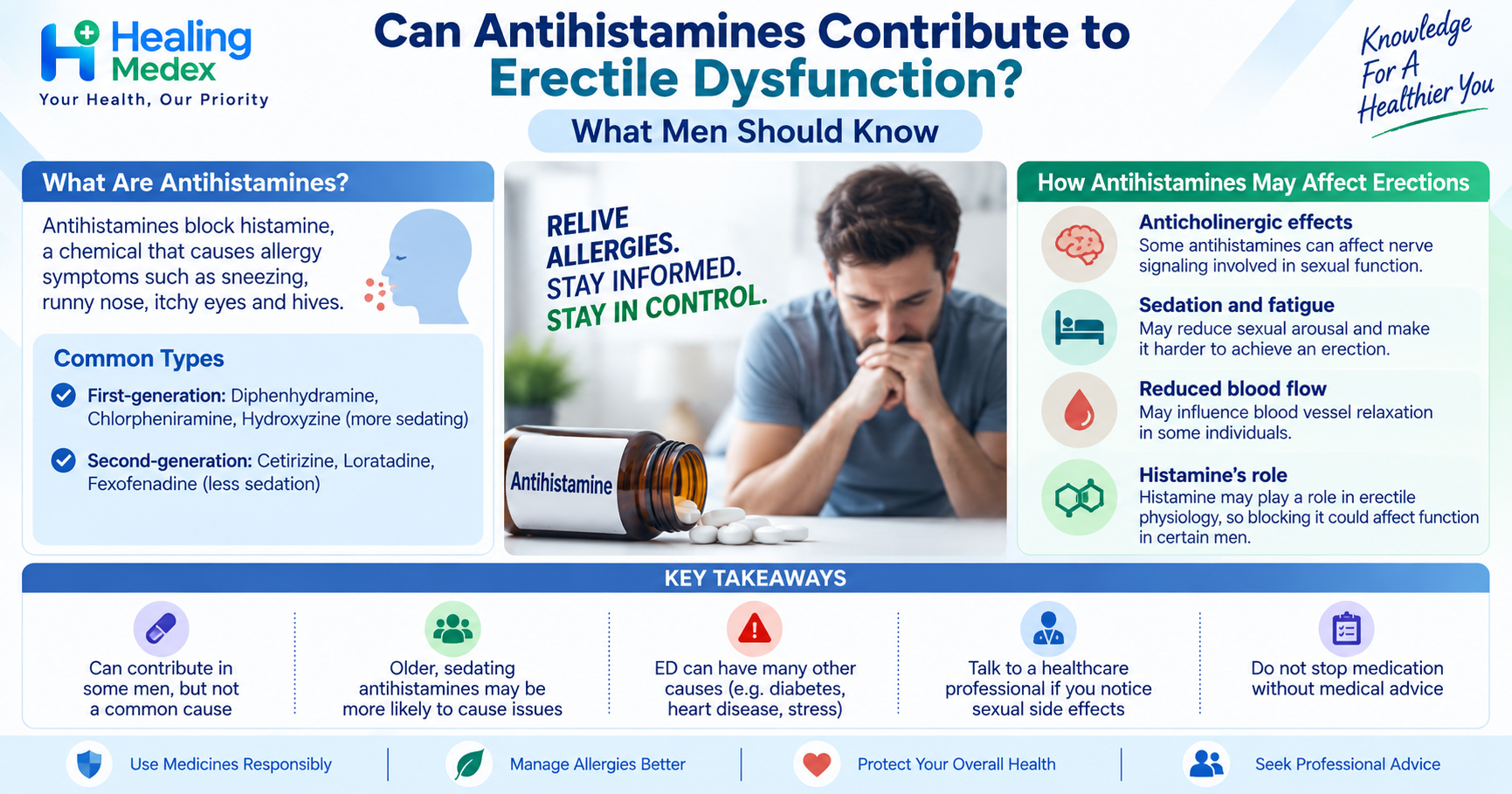
Some over-the-counter and prescription antihistamines have been associated with erectile or ejaculation problems. Cleveland Clinic includes antihistamines among medications that may contribute to ED, while the Merck Manual notes that drugs with significant anticholinergic effects—including many antihistamines—can cause erectile difficulties.
Older, sedating antihistamines may be of particular concern because they have stronger effects on the central nervous system and acetylcholine signaling. But medication-related ED is complicated, and the underlying allergy, other medicines, stress, cardiovascular health, diabetes and hormone levels may also play important roles.
What Are Antihistamines?
Histamine can produce symptoms such as:
Sneezing
Runny or blocked nose
Itchy or watery eyes
Skin itching
Hives
Swelling
Most allergy medicines work by blocking H1 histamine receptors.
H1 antihistamines are generally divided into two groups.
First-generation antihistamines
Older antihistamines include:
Doxylamine
Meclizine
These medicines readily enter the brain and can cause considerable drowsiness and anticholinergic effects.
Second-generation antihistamines
Newer antihistamines include:
They generally produce substantially less sedation and fewer anticholinergic effects than first-generation medicines.
Can Antihistamines Cause Erectile Dysfunction?
Cleveland Clinic identifies antihistamines as one of several medication classes that can potentially cause ED. It also specifically notes that some OTC antihistamines, including diphenhydramine, cetirizine and loratadine, may cause erectile or ejaculation problems.
Merck similarly identifies medicines with anticholinergic effects, including many antihistamines, among medications that may cause ED.
Evidence directly measuring ED rates from individual antihistamines is limited, however. This means it is difficult to predict exactly who will experience the problem or how frequently it occurs.
How Could Antihistamines Affect Erections?
Erections depend on several systems working together, including:
Brain and nerve signaling
Sexual arousal
Blood vessel relaxation
Adequate blood flow
Hormonal function
Psychological well-being
Antihistamines could potentially interfere with some of these processes in several ways.
1. Anticholinergic Effects May Interfere With Sexual Function
Some older antihistamines also block acetylcholine, a neurotransmitter involved in many nervous-system functions.
This is known as an anticholinergic effect.
Common anticholinergic effects include:
Dry mouth
Blurred vision
Constipation
Urinary retention
Dizziness
The Merck Manual lists drugs with anticholinergic effects, including many antihistamines, among medications capable of contributing to ED.
Diphenhydramine has particularly notable anticholinergic activity, and erectile dysfunction is listed among its reported adverse effects in medical drug references.
2. Sedation May Reduce Sexual Arousal
First-generation antihistamines readily enter the brain and frequently cause:
Drowsiness
Fatigue
Reduced alertness
Slower reaction time
Sexual arousal begins in the brain. Therefore, significant sedation or fatigue may indirectly make sexual activity less appealing or make an erection more difficult to initiate or maintain.
First-generation antihistamines are considerably more likely to cause these central nervous system effects than most newer antihistamines.
3. Histamine May Have a Role in Erectile Physiology
Histamine is usually discussed in relation to allergies, but histamine receptors also exist throughout the reproductive system.
Research has investigated whether histamine participates in penile erection and male reproductive function.
An older human study found that locally administered histamine could produce penile tumescence or erection, suggesting histamine receptors may participate in erectile physiology. However, subsequent research has produced more complicated findings, so histamine should not be viewed as a simple "erection chemical."
A scientific review has also suggested that antihistamines may influence various aspects of male reproductive physiology, although the authors emphasized that much remains to be understood.
Therefore, blocking histamine could theoretically influence sexual function in certain people, but this mechanism has not been established as a major cause of ED in everyday antihistamine users.
Which Antihistamines Are More Likely to Affect Sexual Function?
There is not enough high-quality comparative research to rank individual antihistamines according to their likelihood of causing ED.
However, first-generation antihistamines have stronger sedating and anticholinergic effects, making a medication-related contribution more biologically plausible in some patients.
Examples include:
Antihistamine | Generation | Sedation/Anticholinergic Effects |
|---|---|---|
Diphenhydramine | First | Higher |
Chlorpheniramine | First | Higher |
Hydroxyzine | First | Higher |
Promethazine | First | Higher |
Cetirizine | Second | Lower overall, but sedation can occur |
Loratadine | Second | Generally low |
Fexofenadine | Second | Generally very low sedation |
This table describes general sedating and anticholinergic properties—not proven relative ED risk. Second-generation antihistamines are generally preferred when prolonged allergy treatment is necessary because they produce fewer central nervous system and anticholinergic effects.
Can Diphenhydramine Cause Erectile Dysfunction?
Diphenhydramine may contribute to ED in some men.
Diphenhydramine is an older first-generation antihistamine with significant anticholinergic and sedating effects. Medical drug references list erectile dysfunction among reported adverse effects.
This does not mean everyone taking diphenhydramine will develop ED. Occasional short-term use is very different from persistent erectile difficulties, and other health conditions should also be considered.
Can Cetirizine Cause Erectile Dysfunction?
Cleveland Clinic nevertheless includes cetirizine among OTC antihistamines that can potentially cause erectile dysfunction or ejaculation difficulties.
Research specifically establishing how frequently cetirizine causes ED is limited, so erectile problems should not automatically be attributed to cetirizine without considering other causes.
Can Loratadine Cause Erectile Dysfunction?
Cleveland Clinic lists loratadine among antihistamines that may potentially contribute to erectile or ejaculation difficulties.
However, clinical evidence is limited and inconsistent. Interestingly, one very small study even investigated loratadine as a possible treatment for sexual dysfunction associated with antidepressants. The study included only nine patients, making its findings preliminary rather than definitive.
This illustrates why the relationship between histamine-blocking medicines and sexual function is not straightforward.
How Do You Know Whether Your Antihistamine Is Causing ED?
Medication-related ED may be worth considering when:
Erections were normal before starting the medicine.
ED developed shortly after beginning treatment.
Symptoms appeared after increasing the dose.
Erectile function improves when the medication is no longer required.
There are no obvious new medical or psychological causes.
However, timing alone does not prove that the medicine caused the problem.
Many conditions that commonly cause ED are considerably more important risk factors.
These include:
Obesity
Low testosterone
Smoking
Depression
Anxiety
Chronic stress
Sleep problems
Excessive alcohol consumption
Problems affecting blood flow to the penis are among the most common underlying causes of erectile dysfunction.
Other Medicines May Also Be Responsible
If ED develops while taking an antihistamine, review your entire medication list rather than focusing on one medicine.
Other medications associated with sexual dysfunction include:
Sedatives
Opioids
Hormonal treatments
Using several medications with sedating or anticholinergic effects at the same time may also increase overall side effects.
What Should You Do If You Develop ED While Taking an Antihistamine?
Do Not Automatically Stop Your Medication
If your antihistamine was prescribed by a healthcare professional, discuss the problem before discontinuing treatment.
Your healthcare provider may evaluate:
Which antihistamine you are taking
Your dosage
How frequently you use it
When the ED began
Other prescription medicines
Supplements and recreational substances
Blood pressure
Blood glucose
Cardiovascular risk
Testosterone or other hormones when appropriate
Ask Whether Another Allergy Treatment Is Appropriate
For someone using an older sedating antihistamine regularly, a clinician may consider whether a newer, less sedating treatment is appropriate.
Depending on the underlying allergy problem, options may include:
A second-generation oral antihistamine
Nasal antihistamines
Nasal corticosteroids
Other allergy-control strategies
The correct alternative depends on the medical condition and the individual patient.
Don't Treat Persistent ED Without Investigating the Cause
Erectile dysfunction can sometimes be an early indication of cardiovascular or metabolic disease.
Persistent or recurrent ED therefore deserves medical evaluation rather than simply taking an erectile dysfunction medicine and ignoring the underlying cause.
Will Erectile Function Return After Stopping an Antihistamine?
If an antihistamine is genuinely contributing to erectile problems, sexual function may improve after the medication is changed or discontinued.
The timing will vary depending on:
The specific drug
Dose
Frequency of use
How long it remains in the body
Other medications
Underlying health conditions
Do not stop a prescribed medicine solely to test whether ED improves without discussing the situation with your healthcare provider.
If erectile dysfunction continues after the suspected medication has been addressed, another cause may be responsible.
When Should You See a Doctor?
Talk with a healthcare professional when erectile problems:
Occur repeatedly
Persist for several weeks
Begin soon after starting a new medicine
Are accompanied by reduced sexual desire
Occur with fatigue or other possible hormonal symptoms
Affect your confidence or relationship
Develop alongside diabetes, hypertension or cardiovascular disease
Seek medical care rather than assuming the problem is simply part of aging.
Frequently Asked Questions
1.Do antihistamines commonly cause erectile dysfunction?
No. ED is not experienced by most antihistamine users. However, antihistamines are recognized among medications that can potentially contribute to erectile difficulties in some individuals.
2.Are older antihistamines more likely to cause sexual side effects?
Older first-generation antihistamines generally produce stronger sedation and anticholinergic effects than newer second-generation medications. These effects provide possible mechanisms through which they could interfere with sexual function, although comparative ED rates between individual antihistamines have not been well established.
3.Can Benadryl affect erections?
4.Can allergy itself cause erectile dysfunction?
Allergies are not usually considered a major direct cause of ED. However, severe symptoms, poor sleep, fatigue, stress and medications used to control allergies could potentially affect sexual interest or performance.
5.Should I stop taking my antihistamine if I develop ED?
Not without medical advice, particularly if the medication has been prescribed. A clinician can determine whether changing the drug, dose or treatment approach is appropriate.
6.Can erectile dysfunction caused by medication be reversible?
Medication-related ED often improves when the responsible medicine can safely be adjusted or replaced, but recovery depends on whether other physical or psychological factors are also contributing.
The Bottom Line
Older first-generation antihistamines such as diphenhydramine may deserve particular consideration because they have stronger sedative and anticholinergic effects. Newer antihistamines generally have fewer of these effects, although sexual side effects have still been reported.
Most importantly, persistent erectile dysfunction should not automatically be blamed on an allergy medicine. ED may be associated with cardiovascular disease, diabetes, hormonal problems, psychological factors or other medications.
If erection problems begin after starting an antihistamine or another medication, speak with a healthcare professional. Reviewing the medication and investigating other possible causes can help determine the safest and most appropriate treatment.