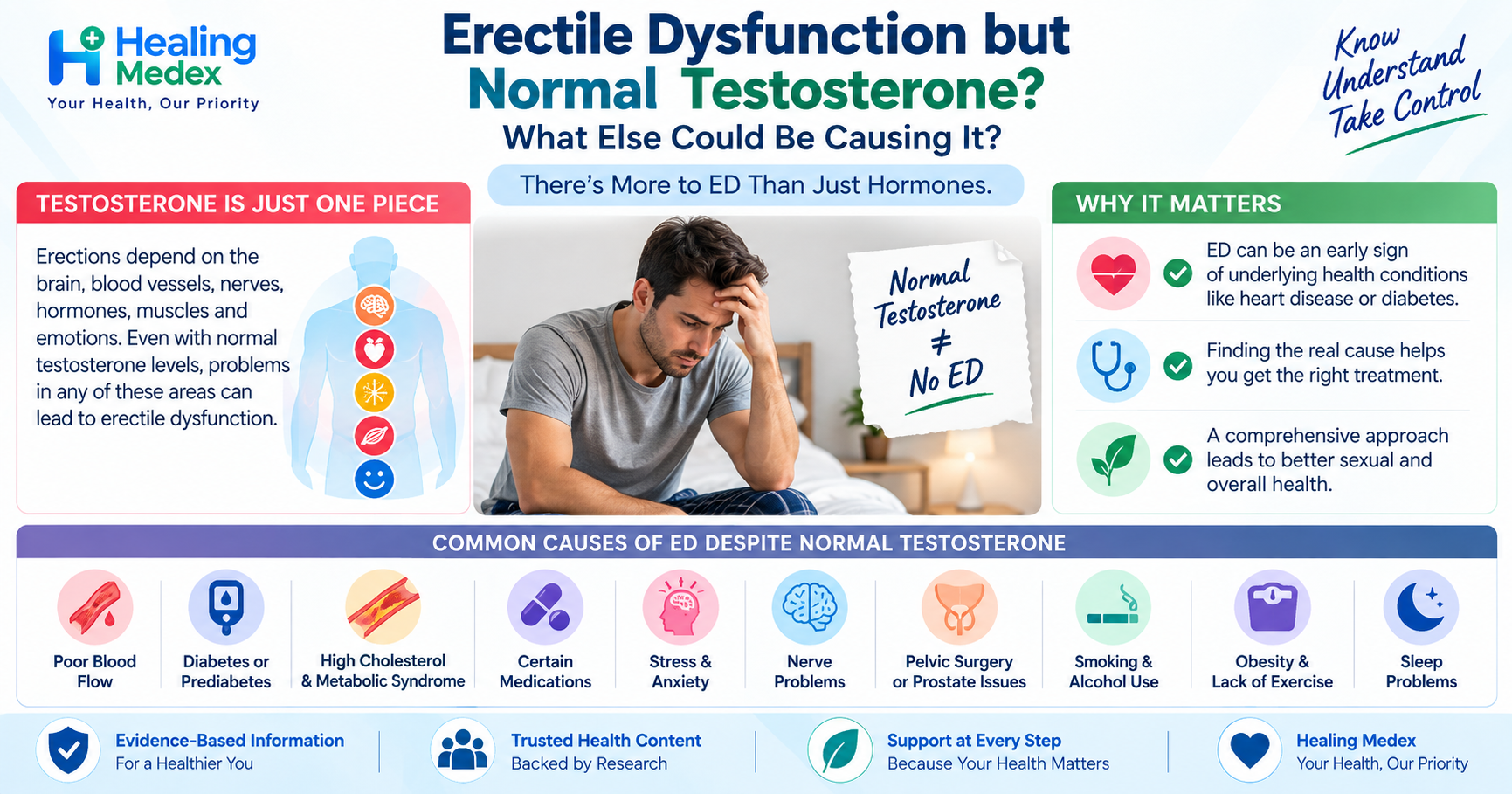
Erectile dysfunction (ED) is often associated with low testosterone, but testosterone is only one part of the erection process. A man can have testosterone levels within the normal range and still experience difficulty getting or maintaining an erection.
An erection depends on the coordinated function of the brain, blood vessels, nerves, hormones, muscles and emotions. A problem affecting any one of these systems can contribute to erectile dysfunction.
For this reason, normal testosterone results should not automatically end the investigation into persistent ED.
This article explains some of the most important causes doctors may consider when erectile dysfunction occurs despite normal testosterone levels.
Does Normal Testosterone Rule Out Erectile Dysfunction?
No.
Testosterone contributes to libido, sexual function and overall reproductive health, but normal testosterone does not guarantee normal erections.
Erectile dysfunction is commonly related to vascular, neurological, metabolic, medication-related and psychological factors, and many men have more than one contributing cause at the same time. Current European urology guidance describes ED as commonly having a mixed rather than purely hormonal, physical or psychological cause.
Therefore, someone can have completely normal testosterone levels while experiencing significant ED.
1. Reduced Blood Flow to the Penis
One of the most important causes of erectile dysfunction is inadequate blood flow.
During sexual stimulation, arteries supplying the penis need to widen so that enough blood can enter the erectile tissue. Conditions that damage blood vessels or reduce their ability to dilate can interfere with this process.
Possible contributors include:
Atherosclerosis
Obesity
Metabolic syndrome
Smoking
These conditions may affect erectile function even when testosterone is normal.
1. ED May Sometimes Be a Cardiovascular Warning Sign
Persistent ED deserves attention because erectile problems can sometimes appear before more obvious symptoms of cardiovascular disease.
The Princeton IV cardiovascular consensus, summarized by the American College of Cardiology, considers ED an important cardiovascular risk marker, particularly when the ED appears to have a vascular cause.
This doesn't mean that every man with ED has heart disease. However, unexplained ED may provide an opportunity to check cardiovascular risk factors such as blood pressure, cholesterol, blood sugar and smoking status.
2. Diabetes or Prediabetes
Diabetes is another major cause of erectile dysfunction.
Chronically elevated blood glucose can damage both the blood vessels and nerves involved in erections. NIDDK notes that diabetes-related vascular and nerve damage can lead to sexual dysfunction.
In some men, ED may occur before diabetes has been diagnosed.
Possible signs that may warrant blood-glucose testing include:
Increased thirst
Frequent urination
Unexplained fatigue
Being overweight
Family history of diabetes
High blood pressure
High triglycerides
Doctors may therefore check fasting glucose or HbA1c when evaluating ED.
Current European Association of Urology guidance recommends assessing glucose or HbA1c and a lipid profile when appropriate as part of the basic ED evaluation.
3. High Cholesterol and Metabolic Syndrome
High cholesterol may gradually damage arteries and interfere with healthy blood flow.
Metabolic syndrome—a combination of problems such as abdominal obesity, high blood pressure, abnormal cholesterol and impaired glucose regulation—is also associated with ED.
A man may therefore have normal testosterone but still develop erectile difficulties because the vascular system supplying the penis is not functioning optimally.
4. Certain Medications
Some commonly prescribed medicines can contribute to erectile difficulties.
Medications associated with ED may include certain:
Sedatives
Pain medications
Hormonal treatments
NIDDK includes several of these medication groups among drugs that may contribute to ED.
However, never stop a prescribed medication simply because you suspect it is affecting erections.
A healthcare professional can review the medication, dosage and alternatives and determine whether a treatment change is appropriate.
5. Stress and Performance Anxiety
Not all erectile dysfunction is caused by a physical abnormality.
Stress can significantly affect sexual performance.
For example, a man may experience one episode of difficulty maintaining an erection. He then becomes worried that it will happen again.
That worry increases anxiety during sexual activity, which may make another erection problem more likely. Over time, this can create a cycle of:
Erection difficulty → worry about performance → increased anxiety → further erection difficulty.
Stress, anxiety and other emotional factors are recognized contributors to ED.
6. Depression and Other Mental Health Conditions
Depression may reduce sexual desire and interfere with the brain signals involved in sexual arousal.
Anxiety, low self-esteem and relationship difficulties can also contribute.
Importantly, psychological and physical causes can exist together.
For example, mild vascular ED could trigger performance anxiety, which then makes the original erectile problem more noticeable.
Counseling or psychological therapy may therefore be helpful when emotional or relationship factors are contributing to ED.
7. Nerve Problems
Normal erections require healthy communication between the brain, spinal cord and nerves supplying the penis.
Neurological problems affecting this pathway may result in ED even when testosterone levels are normal.
Possible causes include:
Multiple sclerosis
Parkinson's disease
Spinal cord injury
Stroke
Diabetic neuropathy
Peripheral neuropathy
Nerve damage following pelvic surgery
Both NIDDK and European urology guidelines recognize neurological disorders and nerve injuries as possible causes of ED.
8. Previous Pelvic or Prostate Surgery
Operations involving the prostate, bladder, rectum or surrounding pelvic structures can sometimes affect the nerves or blood vessels required for erections.
Erectile problems may therefore occur following treatments such as:
Radical prostatectomy
Pelvic cancer surgery
Pelvic radiotherapy
Certain urethral procedures
The likelihood and degree of recovery vary considerably depending on the procedure, age, baseline erectile function and whether nerves could be preserved.
9. Peyronie's Disease or Structural Problems
Peyronie's disease occurs when fibrous scar tissue develops inside the penis.
It may cause:
Penile curvature
Pain during erection
Shortening
Narrowing or indentation
Difficulty with intercourse
A physical examination during an ED evaluation can help identify Peyronie's disease and other structural abnormalities.
10. Smoking
Smoking is strongly associated with blood-vessel damage.
Because erections depend heavily on healthy circulation, long-term tobacco exposure can impair blood flow to the penis.
NIDDK recommends smoking cessation as part of improving erectile and overall cardiovascular health.
Stopping smoking can therefore be an important part of an ED treatment strategy even when testosterone is normal.
11. Excessive Alcohol or Recreational Drug Use
Heavy alcohol consumption and recreational drug use may affect the nervous system, circulation and sexual response.
Alcohol can also reduce sexual performance temporarily, while long-term excessive intake may contribute to broader health problems associated with ED.
Both NIDDK and Mayo Clinic list excessive alcohol or illicit drug use among possible contributors to erectile difficulties.
12. Obesity and Physical Inactivity
Being overweight or obese is associated with multiple ED risk factors, including:
Vascular dysfunction
Metabolic syndrome
Lack of regular physical activity is also associated with ED.
Exercise, weight management and cardiovascular risk reduction may therefore form an important part of treatment.
13. Sleep Problems
Sleep disorders can also affect sexual health.
Poor-quality sleep may influence cardiovascular function, energy, mental health and hormonal regulation. Mayo Clinic includes sleep conditions among possible physical contributors to ED.
Someone experiencing ED together with symptoms such as loud snoring, severe daytime sleepiness or witnessed pauses in breathing during sleep should discuss those symptoms with a healthcare professional.
14. Your Total Testosterone May Be Normal, but Further Hormonal Assessment Could Occasionally Be Needed
A single "normal testosterone" result does not answer every hormonal question.
Testosterone varies throughout the day, and interpretation can depend on:
Time the blood sample was collected
Total testosterone level
Sex hormone-binding globulin (SHBG)
Free or bioavailable testosterone
Symptoms
Other endocrine conditions
European urology guidance recommends early-morning total testosterone during ED assessment and notes that calculated free or bioavailable testosterone may sometimes help clarify the result.
Other hormonal problems, such as thyroid abnormalities, may occasionally contribute to sexual dysfunction as well.
This does not mean everyone with ED needs extensive hormone testing. Additional testing should be guided by symptoms and a healthcare professional's evaluation.
How Do Doctors Investigate ED When Testosterone Is Normal?
Evaluation usually involves looking beyond testosterone.
A healthcare professional may ask about:
When the erectile problems started
Whether ED happens every time or only occasionally
Morning or nighttime erections
Sexual desire
Ejaculation and orgasm
Current medications
Alcohol, smoking and recreational drugs
Diabetes and cardiovascular risk factors
Stress, anxiety and relationship factors
Previous surgery or injuries
A physical examination may assess the cardiovascular, neurological, hormonal and genital systems.
Depending on the individual, blood tests may include:
Fasting glucose or HbA1c
Cholesterol and triglycerides
Morning testosterone
Thyroid testing when indicated
Additional hormonal tests when clinically appropriate
Specialized testing such as penile Doppler ultrasound, nighttime erection testing or other vascular investigations is generally reserved for selected cases.
Can ED With Normal Testosterone Be Treated?
Yes. Treatment depends on the underlying cause rather than simply trying to raise testosterone.
Management may include:
Lifestyle Changes
Depending on individual risk factors, doctors may recommend:
Regular physical activity
Limiting excessive alcohol
Treating high blood pressure
Improving sleep
These measures can support both cardiovascular and erectile health.
Reviewing Current Medicines
If a medication appears to contribute to ED, a healthcare professional may consider adjusting the dosage or choosing an alternative where appropriate.
Do not make these changes without medical supervision.
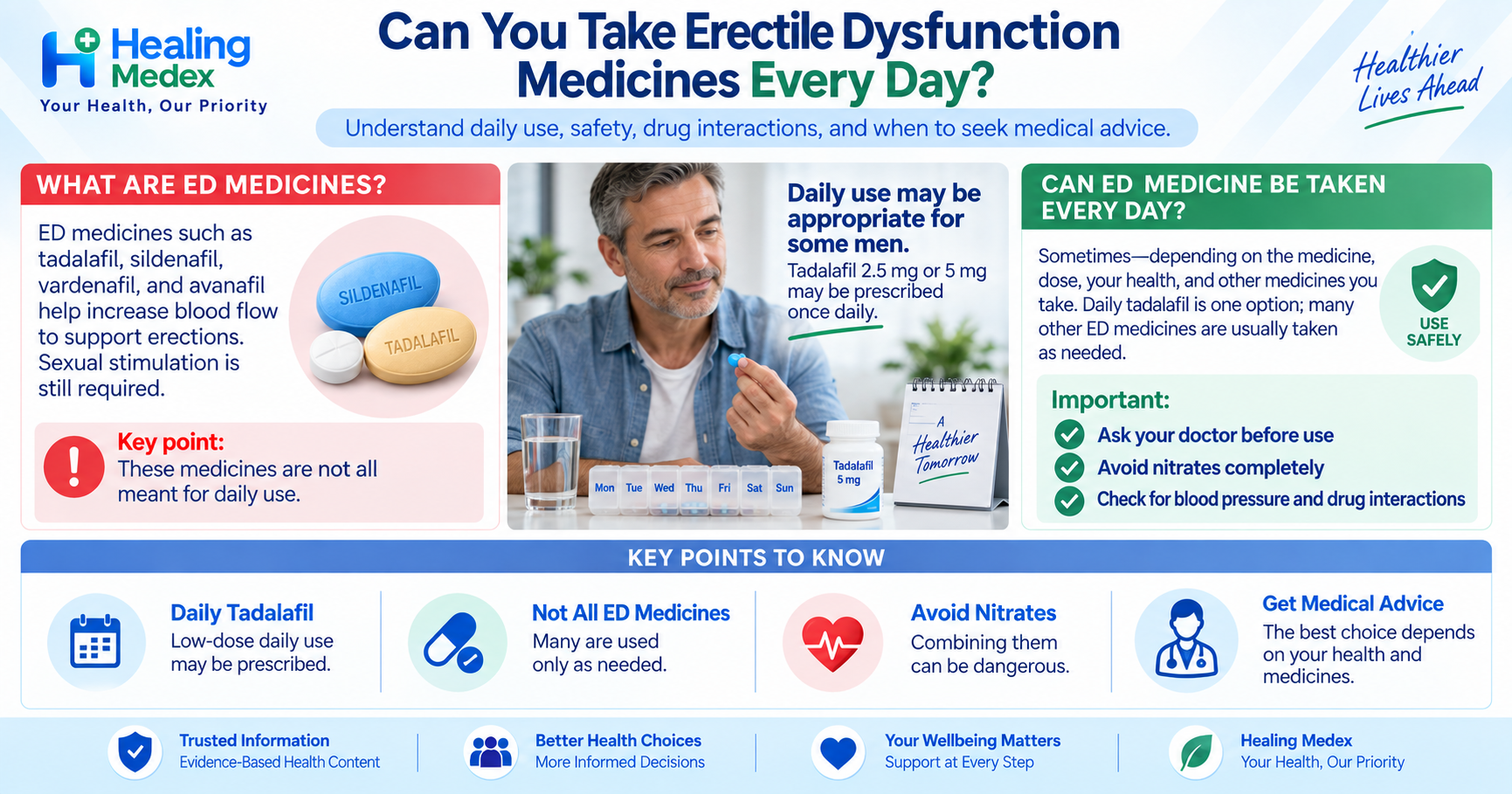
PDE5 Inhibitors
Common prescription ED medicines include:
These phosphodiesterase type 5 (PDE5) inhibitors increase blood flow to the penis in response to sexual stimulation.
They are not suitable for everyone.
PDE5 inhibitors should not be combined with nitrate medications, because the combination can cause a dangerous fall in blood pressure. Cardiovascular health and other medications should therefore be reviewed before treatment.
Psychological or Sex Therapy
When anxiety, depression, stress or relationship difficulties are contributing to ED, counseling or psychosexual therapy may help.
In mixed ED, psychological treatment may be combined with medical treatment.
Other ED Treatments
When tablets are inappropriate or ineffective, treatment options may include:
Vacuum erection devices
Penile injections
Intraurethral treatment
Penile implants in selected cases
The appropriate treatment depends on the cause, severity, medical history and patient preference.
Should You Take Testosterone if Your Testosterone Level Is Normal?
Testosterone therapy should not be used simply because a person has erectile dysfunction.
If testosterone levels are genuinely normal and there are no other indications for testosterone treatment, increasing testosterone may not address the actual cause of the ED.
Instead, evaluation should focus on factors such as circulation, metabolic health, medications, neurological conditions and psychological health.
Testosterone treatment should only be considered following proper clinical and laboratory assessment.
When Should You See a Doctor?
Occasional erection difficulty can happen to many men.
Medical evaluation becomes particularly important when ED:
Happens repeatedly
Persists for several weeks or months
Is becoming progressively worse
Occurs alongside reduced exercise tolerance or cardiovascular symptoms
Is associated with diabetes or significant cardiovascular risk factors
Starts after a new medication
Follows pelvic surgery or injury
Causes significant anxiety or relationship problems
Persistent ED should not simply be dismissed as aging or a testosterone problem.
Frequently Asked Questions
1. Can you have ED with normal testosterone?
Yes. Many causes of erectile dysfunction—including vascular disease, diabetes, medications, neurological problems, stress and anxiety—can occur while testosterone remains within the normal range.
2. Does normal testosterone mean the ED is psychological?
No.
Normal testosterone does not prove that erectile dysfunction is psychological. Blood-vessel, neurological, metabolic, structural and medication-related causes remain possible.
3. Can poor circulation cause ED even with normal testosterone?
Yes. Reduced arterial blood flow is an important cause of erectile dysfunction and can occur independently of testosterone levels.
4. Can stress cause ED when testosterone is normal?
Yes. Stress and performance anxiety can interfere with the brain's sexual response and may cause or worsen erectile difficulties.
5. What blood tests are commonly checked for ED?
Depending on the person's history, assessment may include glucose or HbA1c, cholesterol and triglycerides, morning testosterone and selected additional tests such as thyroid or other hormone measurements.
6. Can ED be an early sign of heart disease?
ED can be associated with underlying cardiovascular disease, particularly when its cause appears vascular. Current cardiovascular guidance recognizes ED as a cardiovascular risk marker, although having ED does not mean that a person definitely has heart disease.
The Bottom Line
Having normal testosterone does not mean erectile dysfunction should be ignored.
Testosterone is only one component of healthy erectile function. Blood circulation, nerves, blood sugar, cardiovascular health, medications, lifestyle, psychological health and structural problems can all affect erections.
For men experiencing persistent ED despite normal testosterone, the next step is usually not trying to increase testosterone. Instead, a healthcare professional should look for the underlying cause and any potentially modifiable risk factors.
Identifying that cause is important not only for sexual health but also because, in some men, ED can provide an early opportunity to detect diabetes, cardiovascular risk factors or other medical conditions.