High blood pressure and erectile dysfunction (ED) often occur together. Hypertension can gradually damage blood vessels and reduce blood flow to the penis, making it harder to achieve or maintain an erection. At the same time, certain medicines used to lower blood pressure may contribute to sexual problems in some men.
This can make it difficult to know whether ED is being caused by the hypertension itself, the medication used to treat it, or other factors such as diabetes, obesity, smoking, stress, low testosterone, or cardiovascular disease.
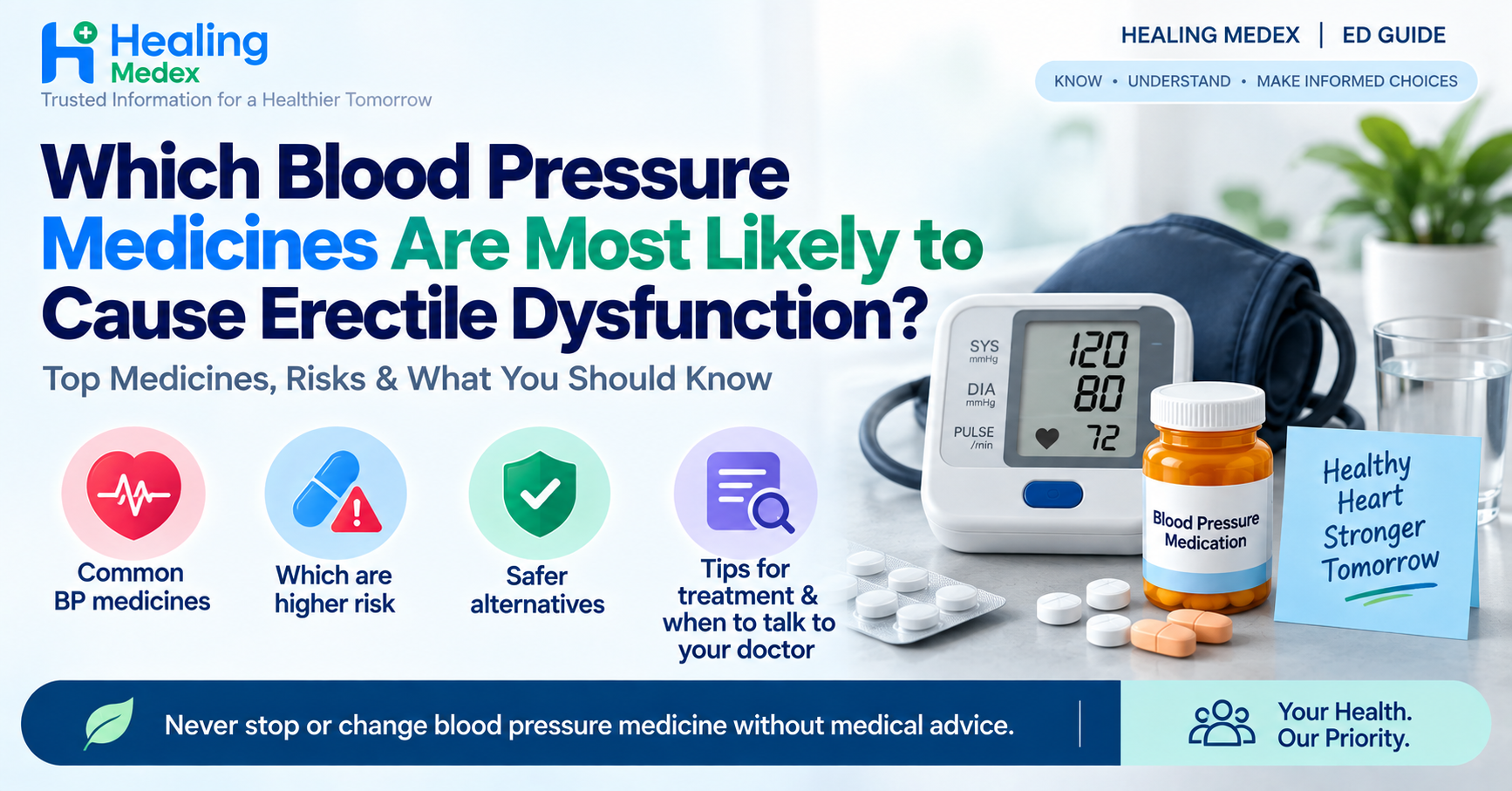
Some antihypertensive medicines have historically been associated with a higher risk of erectile problems than others. Current evidence particularly points toward certain beta-blockers and centrally acting blood-pressure medicines, while evidence concerning thiazide diuretics is more mixed than was once believed.
This article explains which blood-pressure medicines are most commonly associated with ED, which tend to have a more neutral sexual side-effect profile, and what men should do if erection problems develop after starting treatment.
Quick Answer: Which Blood Pressure Medicines Are Most Likely to Cause ED?
The relationship is not identical for every patient, but the overall evidence can be summarized as follows:
Blood-pressure medicine | Examples | Effect on erectile function |
|---|---|---|
Propranolol, atenolol, metoprolol | More commonly associated with ED | |
Centrally acting medicines | Clonid ine, methyldopa | Can contribute to sexual dysfunction |
Thiazide diuretics | Hydrochlorothiazide, chlorthalidone | Historically associated with ED, but newer evidence is mixed |
Spironolactone | Spironolactone | May cause sexual/hormonal adverse effects |
Nebivolol | Nebivolol | May have a more favorable erectile-function profile than older beta-blockers |
ACE inhibitors | Lisinopril, ramipril, perindopril | Generally neutral |
ARBs | Losartan, valsartan, telmisartan | Generally neutral or potentially favorable |
Calcium-channel blockers | Amlodipine, diltiazem | Usually neutral |
A recent review found that beta-blockers remain among the antihypertensive medicines most often associated with ED, while ACE inhibitors, ARBs and calcium-channel blockers generally appear neutral or potentially favorable. The same review emphasized that newer evidence does not consistently confirm a significant negative effect from thiazide diuretics.
1. Older Beta-Blockers
Beta-blockers are one of the blood-pressure medication groups most frequently discussed in connection with erectile dysfunction.
Examples include propranolol, atenolol and metoprolol.
Beta-blockers lower blood pressure partly by reducing the effects of adrenaline and slowing the heart. Some older beta-blockers have been associated with changes in erectile function, although the exact mechanism is complex and psychological expectations surrounding sexual side effects may also contribute.
Propranolol, in particular, has traditionally been associated with sexual problems. Mayo Clinic also notes that older beta-blockers such as propranolol are often linked with sexual side effects.
However, it is important not to assume that every beta-blocker will have the same effect.
Is Nebivolol Different?
Nebivolol is a newer beta-blocker that may have a more favorable effect on erectile function.
Unlike many traditional beta-blockers, nebivolol promotes nitric-oxide-mediated vasodilation. Nitric oxide is also an important part of the normal physiological process that increases penile blood flow during an erection.
A systematic review and meta-analysis comparing nebivolol with metoprolol found better erectile-function scores among men receiving nebivolol, although the researchers also noted limitations including the relatively small number of studies and significant heterogeneity.
Therefore, a man who develops ED while taking an older beta-blocker should not simply stop treatment. A healthcare professional can determine whether another antihypertensive or a different beta-blocker may be appropriate.
2. Thiazide Diuretics
Common thiazide or thiazide-like medicines include hydrochlorothiazide, chlorthalidone and indapamide.
Diuretics have historically been considered one of the antihypertensive classes most likely to cause erection problems. Mayo Clinic lists erectile dysfunction among the possible adverse effects of diuretics and notes that water pills may contribute to reduced penile blood flow in some patients.
However, the evidence is more complicated than the traditional view suggests.
A recent review of antihypertensive drugs and ED concluded that newer evidence does not consistently demonstrate a harmful effect of thiazide treatment on erectile function.
This means thiazide diuretics should not automatically be blamed when ED develops. Factors such as hypertension itself, vascular disease, diabetes, age and other medicines also need to be considered.
3. Centrally Acting Blood-Pressure Medicines
Some older antihypertensive medicines act directly on the central nervous system to reduce sympathetic nerve activity.
Examples include clonidine and methyldopa.
These drugs have long been associated with sexual side effects, including reduced libido and erectile difficulties. A recent review describes the negative effect of centrally acting agents such as clonidine and methyldopa on erectile function as relatively well documented, although controlled-trial evidence remains limited.
These medicines are used less frequently as routine first-line hypertension treatments than several newer drug classes but remain important for selected patients and medical situations.
4. Spironolactone
Spironolactone is a potassium-sparing diuretic and mineralocorticoid receptor antagonist.
It can be especially useful for resistant hypertension and certain types of heart failure. However, spironolactone also has antiandrogenic properties, meaning it can interfere with some effects of male sex hormones.
Recent reviews have linked spironolactone with hormonal and sexual adverse effects.
The likelihood of these effects depends on factors such as dose, treatment duration and individual susceptibility.
If sexual symptoms develop while taking spironolactone, a healthcare professional may consider whether the medication is contributing, while also evaluating other possible causes.
Which Blood Pressure Medicines Are Less Likely to Cause Erectile Dysfunction?
Several commonly prescribed antihypertensive classes generally have a more neutral effect on erectile function.
ACE Inhibitors
ACE inhibitors include medicines such as lisinopril, ramipril, enalapril and perindopril.
Available evidence generally suggests that ACE inhibitors have little negative effect on erectile function. Some research describes their overall effect as neutral or potentially positive compared with older antihypertensive medicines.
Angiotensin II Receptor Blockers — ARBs
ARBs include losartan, valsartan, telmisartan, olmesartan and candesartan.
These medications block the effects of angiotensin II, helping blood vessels relax.
Studies and reviews have generally found that ARBs have either a neutral or potentially favorable effect on erectile function.
This does not mean an ARB will treat ED or that every man experiencing ED should switch to one. The correct antihypertensive depends on cardiovascular history, kidney function, other medical conditions and current medications.
Calcium-Channel Blockers
Examples include amlodipine, nifedipine, diltiazem and verapamil.
Calcium-channel blockers relax blood vessels by reducing calcium entry into vascular smooth muscle.
Overall, available studies generally describe calcium-channel blockers as having a relatively neutral effect on erectile function.
High Blood Pressure Itself Can Cause Erectile Dysfunction
One of the most important points is that the medication may not necessarily be the primary cause.
Long-term hypertension can damage the lining of blood vessels, promote arterial stiffness and impair circulation. Because an erection depends heavily on adequate blood flow, vascular damage may interfere with the ability of penile arteries to dilate normally.
Mayo Clinic notes that people with high blood pressure are more likely to experience difficulty getting and maintaining an erection because hypertension can reduce blood flow to the penis.
Therefore, stopping blood-pressure medication without medical supervision can actually be counterproductive. Poorly controlled hypertension may further damage blood vessels and potentially worsen erectile function over time.
How Can You Tell Whether Your Blood Pressure Medicine Is Causing ED?
Timing can provide an important clue.
For example, medication-related ED may be suspected when erections were normal before a particular medication was started and erectile problems appeared shortly after starting treatment or increasing the dose.
However, timing alone does not prove that the medicine is responsible.
A healthcare professional may also look for diabetes, high cholesterol, obesity, cardiovascular disease, smoking, hormonal abnormalities, depression, anxiety, neurological conditions and other medications known to affect sexual function.
Because more than one factor often contributes to ED, a complete assessment is usually more useful than simply changing one medication.
What Should You Do If Your Blood Pressure Medicine Is Affecting Your Erections?
Do not abruptly stop a prescribed blood-pressure medication because of erectile dysfunction.
Suddenly discontinuing certain antihypertensives—particularly beta-blockers or clonidine—can potentially lead to dangerous increases in blood pressure or other cardiovascular complications.
Instead, discuss the symptoms with the healthcare professional who prescribed the medication. Cleveland Clinic similarly advises patients who develop ED while taking potentially contributing medicines not to discontinue them abruptly and instead discuss alternatives with their clinician.
Depending on the situation, a clinician may review the dose, determine whether another medication is contributing, consider switching antihypertensive classes, evaluate cardiovascular risk factors or investigate another cause of ED.
Can Erectile Dysfunction Medicines Be Used With Blood Pressure Medicines?
Many men with controlled hypertension can use PDE5 inhibitors such as sildenafil, tadalafil, vardenafil or avanafil, but medical evaluation is important because these drugs also affect blood pressure.
One particularly important interaction involves nitrates, including nitroglycerin and isosorbide medicines. PDE5 inhibitors should not be combined with nitrates because the combination can cause a dangerous fall in blood pressure.
Additional caution may be necessary when PDE5 inhibitors are taken with alpha-blockers or in people who already have very low blood pressure.
A clinician should review all cardiovascular medicines before ED treatment is started.
Does Developing ED Mean You Should Change Blood Pressure Medication?
Not necessarily.
Changing treatment depends on why the medication was originally prescribed.
For example, a beta-blocker may be particularly important for someone with certain heart rhythm disorders, previous heart attack, angina or heart failure. Mayo Clinic notes that beta-blockers are used for several cardiovascular conditions in addition to hypertension.
In these circumstances, preserving cardiovascular protection may be more important than simply switching drugs.
The better approach is to identify the probable cause of ED and discuss whether another medication can provide the same cardiovascular benefit with fewer sexual side effects.
Frequently Asked Questions
1.Which blood pressure drug is most commonly associated with erectile dysfunction?
Older beta-blockers are among the antihypertensive medicines most consistently associated with ED. Propranolol, atenolol and metoprolol have received particular attention, although individual responses vary.
2.Does amlodipine cause erectile dysfunction?
Amlodipine is a calcium-channel blocker. This class is generally considered relatively neutral regarding erectile function compared with older beta-blockers or some older antihypertensive therapies.
3.Can losartan improve erectile function?
ARBs such as losartan generally have a neutral or potentially favorable profile regarding erectile function. However, losartan is a blood-pressure medication rather than an approved treatment specifically for ED.
4.Does metoprolol cause ED?
Metoprolol has been associated with erectile difficulties in some patients. Research comparing metoprolol with nebivolol has generally found better erectile-function outcomes with nebivolol.
5.Can hydrochlorothiazide cause erectile dysfunction?
Erectile dysfunction has historically been reported with thiazide diuretics such as hydrochlorothiazide. However, more recent research suggests the association may be weaker or less consistent than previously thought.
6.Will erections return after changing blood pressure medication?
They may improve when the medication is genuinely contributing to the problem, but improvement is not guaranteed. Hypertension, diabetes, vascular disease, hormonal problems and other factors can continue causing ED even after a medication change.
The Bottom Line
Blood-pressure medicines do not all affect erectile function in the same way.
Among antihypertensive treatments, older beta-blockers such as propranolol, atenolol and metoprolol are among the medicines most commonly associated with erectile difficulties. Centrally acting medicines such as clonidine and methyldopa may also contribute to sexual dysfunction.
Thiazide diuretics have historically been associated with ED, although newer research suggests their effect may be less consistent than previously believed. Spironolactone can produce sexual and hormonal side effects because of its antiandrogenic activity.
By comparison, ACE inhibitors, ARBs and calcium-channel blockers generally have a more neutral erectile-function profile, while nebivolol may cause fewer erectile problems than some older beta-blockers.
Most importantly, hypertension itself is a major contributor to erectile dysfunction. Men should therefore never stop blood-pressure medication on their own because of ED.
If erectile problems begin after starting or changing a blood-pressure medicine, speak with a healthcare professional. Reviewing the medication regimen, cardiovascular risk factors and other possible causes can often identify an appropriate way to control blood pressure while protecting sexual health.