Erectile dysfunction (ED) can have many causes, including cardiovascular disease, diabetes, obesity, medication side effects, psychological factors and hormonal problems. One hormone that frequently comes up in discussions about male sexual health is testosterone.
The answer is: it can help some men, particularly those who have both symptoms of testosterone deficiency and consistently low testosterone levels. However, testosterone therapy is not a general treatment for every case of ED.
Understanding the relationship between testosterone and erections can help men have a more informed conversation with their healthcare provider about testing and treatment.
What Is Testosterone?
Testosterone plays an important role in:
Sexual desire or libido
Sperm production
Muscle mass and strength
Bone health
Red blood cell production
Body-fat distribution
Mood and energy
Normal male sexual function
When testosterone levels become abnormally low, a condition known as hypogonadism or testosterone deficiency may develop.
Possible symptoms can include reduced sexual desire, fatigue, reduced muscle mass, mood changes and sexual difficulties.
Is Low Testosterone a Cause of Erectile Dysfunction?
Low testosterone can contribute to sexual dysfunction, but testosterone deficiency and erectile dysfunction are not the same condition.
Testosterone appears to be particularly important for maintaining sexual desire and normal sexual responsiveness. Some men with testosterone deficiency also experience weaker erections or reduced spontaneous and morning erections.
However, many erections depend heavily on healthy blood vessels, nerves and penile smooth muscle.
This means a man may have ED even when his testosterone level is normal.
Common causes and risk factors for ED include:
Obesity
Smoking
Neurological disorders
Certain medications
Anxiety or depression
Relationship or performance-related stress
Hormonal disorders
Because ED has many possible causes, simply taking testosterone without identifying the underlying problem may not improve erections.
Can Testosterone Therapy Improve Erectile Dysfunction?
The European Association of Urology notes that testosterone treatment can be considered when men have low testosterone alongside problems involving sexual desire, erectile function or sexual satisfaction. Current ED guidelines also indicate that men with hypogonadism who respond poorly to PDE5 inhibitor medications may sometimes respond better after testosterone deficiency is treated.
The improvement is generally most relevant when low testosterone is actually contributing to the man's sexual symptoms.
A man with normal testosterone levels should not assume that increasing testosterone will automatically result in stronger erections.
How Could Testosterone Improve Sexual Function?
Testosterone can influence male sexual function through several mechanisms.
1. It May Improve Sexual Desire
Reduced libido is one of the more recognizable symptoms associated with testosterone deficiency.
Restoring testosterone into an appropriate physiological range may improve sexual interest in men with confirmed hypogonadism.
Improved libido can also indirectly improve sexual activity and responsiveness.
2. It May Support Normal Erectile Physiology
Testosterone contributes to mechanisms involved in penile tissue health, nerve signaling and smooth-muscle function.
When testosterone levels are significantly reduced, these processes may become less effective.
Correcting genuine testosterone deficiency may therefore help restore some aspects of erectile function.
3. It May Improve Morning and Spontaneous Erections
Some men with low testosterone notice fewer spontaneous or morning erections.
These may improve as testosterone deficiency is appropriately treated, although individual responses vary.
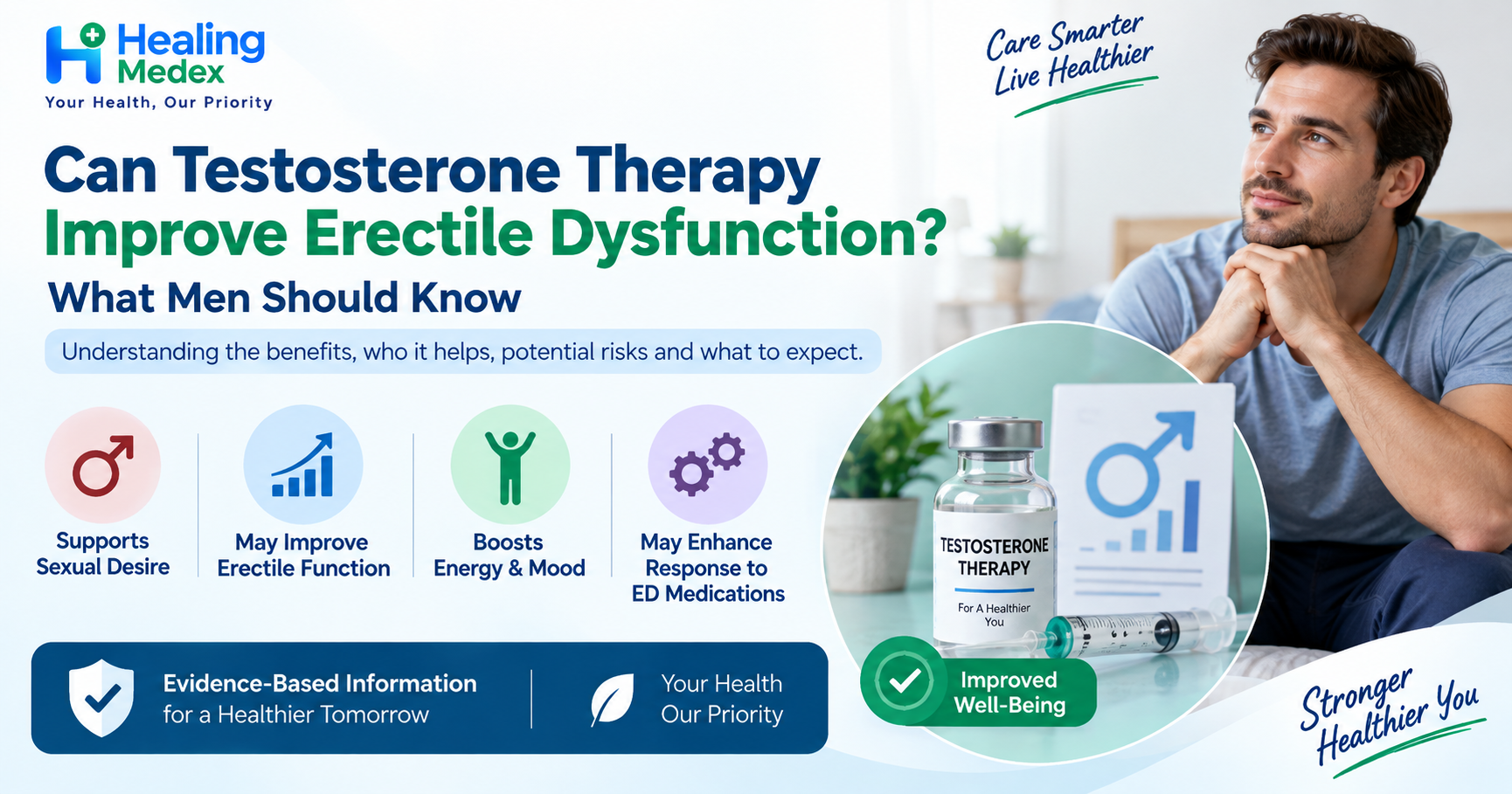
4. It May Improve Response to ED Medication
One particularly important role for testosterone treatment may involve men who have both ED and testosterone deficiency and respond inadequately to standard ED medications.
The American Urological Association states that men with ED and testosterone deficiency should be informed that PDE5 inhibitors may work more effectively when testosterone deficiency is treated.
Testosterone Therapy vs ED Medications
Testosterone therapy and medications such as sildenafil or tadalafil work in different ways.
Testosterone therapy addresses an underlying hormone deficiency when one is present.
Current European guidelines recommend PDE5 inhibitors as a first-line medication treatment for many men with ED.
For some men with low testosterone, a healthcare professional may determine that treating testosterone deficiency together with an appropriate ED treatment provides better results than either approach alone.
Will Testosterone Help ED if Testosterone Levels Are Normal?
Usually, testosterone therapy should not be used simply to increase testosterone above normal levels in an attempt to improve erections.
Current Endocrine Society guidance emphasizes that hypogonadism should be diagnosed only when a man has compatible symptoms or signs together with consistently and unequivocally low testosterone concentrations.
The Endocrine Society reiterated in 2026 that symptoms alone are not enough to diagnose testosterone deficiency because symptoms such as low libido, low energy and mood changes can have many other causes.
If testosterone levels are normal, healthcare providers typically investigate other possible causes of ED.
How Is Low Testosterone Diagnosed?
A diagnosis should not generally be based on one symptom or one random testosterone test.
Healthcare providers usually consider:
Symptoms suggestive of testosterone deficiency
Medical history
Medication history
Physical examination
Testosterone blood testing
Testosterone levels naturally change throughout the day and can also vary between tests.
The Endocrine Society recommends confirming suspected hypogonadism with repeat morning testosterone measurements using appropriate laboratory testing.
Additional tests may sometimes be required to determine why testosterone is low.
These can include hormones such as luteinizing hormone (LH), follicle-stimulating hormone (FSH) or prolactin depending on the clinical situation.
What Testosterone Treatments Are Available?
When medically appropriate, testosterone replacement therapy may be available in several forms.
Common options include:
Testosterone Injections
Testosterone is injected at prescribed intervals depending on the formulation.
Testosterone Gels
A measured amount of testosterone gel is applied to the skin regularly.
Care is necessary to prevent accidental transfer of the medication to another person through skin contact.
Testosterone Patches
Some formulations deliver testosterone through a patch placed on the skin.
Other Testosterone Formulations
Depending on the country and individual patient's needs, additional preparations may include nasal, oral or implanted formulations.
The appropriate treatment depends on factors such as availability, convenience, cost, medical history and the individual's response to therapy.
How Long Does Testosterone Take to Improve Erectile Function?
Testosterone therapy does not normally act like an on-demand ED medication.
Improvements in sexual desire may develop gradually after appropriate treatment begins, while changes in erectile function can take longer and may vary substantially between individuals.
Some men experience meaningful improvement.
Others experience improved libido but continue to have erectile dysfunction because blood-vessel, neurological, medication-related or psychological factors are also involved.
This is one reason follow-up with a healthcare professional is important.
What if Testosterone Therapy Does Not Fix ED?
If testosterone deficiency has been appropriately treated but erectile problems continue, another cause of ED may be present.
Treatment options can include:
Lifestyle and cardiovascular risk-factor management
Vacuum erection devices
Psychological or sex therapy when appropriate
Injectable or urethral ED medications
Other specialist treatments for persistent ED
Current European guidance emphasizes investigating and addressing reversible cardiovascular, metabolic and lifestyle risk factors alongside ED treatment.
Lifestyle Factors Also Matter
Testosterone and erectile health are closely connected with general metabolic and cardiovascular health.
Useful lifestyle measures can include:
Maintaining a healthy body weight
Exercising regularly
Stopping smoking
Controlling blood pressure
Managing cholesterol
Managing diabetes
Getting adequate sleep
Limiting excessive alcohol consumption
Addressing stress and mental-health concerns
Obesity in particular can be associated with both reduced testosterone and ED.
The Endocrine Society's 2026 statement notes that in appropriately diagnosed men whose low testosterone is related to overweight or obesity without another identified cause, weight loss is generally the first-line approach.
What Are the Risks of Testosterone Therapy?
Testosterone therapy should be medically supervised.
Potential concerns can include:
Increased red blood cell concentration or hematocrit
Acne or oily skin
Fluid retention
Changes in prostate-related measurements
Reduced sperm production
Testicular shrinkage
Possible worsening of certain medical conditions
Regular monitoring is therefore important.
The benefits and risks vary considerably between individuals and should be discussed before starting treatment.
Testosterone Therapy and Fertility
One particularly important consideration is fertility.
External testosterone can suppress the hormonal signals that normally stimulate the testes to produce sperm.
As a result, testosterone therapy may substantially reduce sperm production and can sometimes cause temporary infertility.
Men who are currently trying to have children or who want to preserve fertility should discuss this with a healthcare professional before beginning testosterone therapy.
The Endocrine Society recommends against starting testosterone therapy in men planning fertility in the near term.
Who Should Be Cautious About Testosterone Therapy?
Testosterone treatment is not appropriate for everyone.
A healthcare provider should review a man's complete medical history before treatment, particularly when there are concerns involving:
Prostate or breast cancer
Elevated hematocrit
Severe untreated sleep apnea
Significant urinary symptoms
Serious cardiovascular conditions
Blood-clotting disorders
Fertility plans
Appropriate screening and follow-up depend on age, health status and individual risk factors.
Can Testosterone Therapy Be Combined With Sildenafil or Tadalafil?
In appropriately selected patients, yes.
Men who have both confirmed testosterone deficiency and ED may sometimes receive testosterone therapy while also using a PDE5 inhibitor such as sildenafil or tadalafil.
This may be particularly relevant when a man with testosterone deficiency has not obtained an adequate response to an ED medication alone.
However, treatment should be individualized rather than automatically combining medications.
Does More Testosterone Mean Better Erections?
No.
The goal of medically indicated testosterone therapy is generally to restore deficient testosterone toward an appropriate physiological range—not to create unusually high testosterone levels.
In fact, non-medical anabolic steroid use can suppress the body's natural testosterone production and may contribute to hormonal and sexual problems after use is reduced or stopped.
When Should You Talk to a Doctor About ED?
Men should consider medical evaluation when erectile difficulties occur repeatedly or persist over time.
ED can sometimes be an early sign of conditions affecting the blood vessels or metabolism, including cardiovascular disease and diabetes.
A healthcare professional can assess factors such as:
Blood pressure
Blood glucose
Cholesterol
Testosterone levels when indicated
Current medications
Cardiovascular health
Psychological factors
Lifestyle risk factors
Determining the cause is usually more useful than trying testosterone or another treatment without appropriate evaluation.
Frequently Asked Questions
1.Can low testosterone cause ED?
2.Does testosterone therapy make erections stronger?
It may improve erectile function in men whose ED is partly related to genuine testosterone deficiency. Men with normal testosterone levels are less likely to benefit from testosterone treatment for ED.
3.Is testosterone better than sildenafil for ED?
They treat different problems. Testosterone addresses hormone deficiency, whereas sildenafil enhances the physiological blood-flow response involved in erections. Some men with both testosterone deficiency and ED may require both approaches.
4.Can testosterone increase libido without fixing ED?
Yes. A man may experience improved sexual desire after treating low testosterone while still having difficulty achieving or maintaining an erection because other factors are causing his ED.
5.Should every man with ED have testosterone tested?
Testing may be appropriate as part of an ED evaluation, particularly when symptoms suggest testosterone deficiency. Current European ED guidance includes total testosterone among laboratory assessments used to identify potentially reversible contributors to ED.
6.Can testosterone therapy affect sperm count?
Yes. External testosterone can suppress sperm production, which is why fertility plans should be discussed before treatment begins.
The Bottom Line
Men with low testosterone may experience improvements in libido, sexual satisfaction and, in some cases, erectile function after appropriate treatment.
However, ED frequently results from blood-vessel disease, diabetes, obesity, medications, neurological conditions or psychological factors. In those situations, testosterone alone may provide little or no improvement.
For men who have both testosterone deficiency and ED, correcting the hormonal deficiency may also improve their response to standard ED medications.
The most appropriate approach is therefore to identify why erectile dysfunction is occurring rather than assuming that testosterone is the answer.
A healthcare provider can evaluate testosterone levels, cardiovascular and metabolic health, medications and other possible causes before recommending the most appropriate treatment.