Finasteride is widely prescribed for male pattern hair loss and benign prostatic hyperplasia (BPH). For many men, it is an effective treatment and causes few or no troublesome side effects. However, one concern that frequently comes up before starting treatment is:
Can finasteride cause erectile dysfunction?
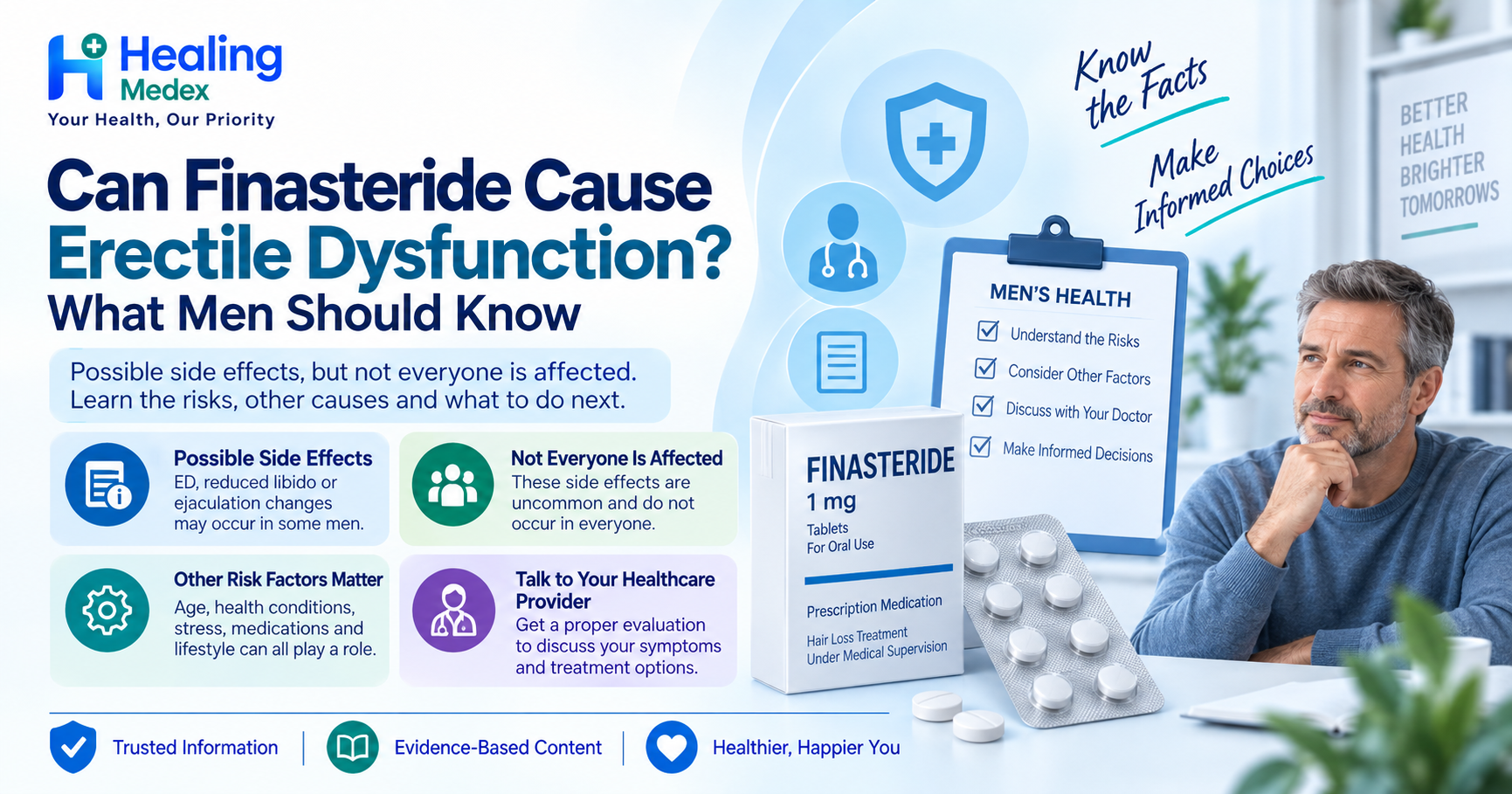
The short answer is yes, erectile dysfunction (ED) is a recognized possible side effect of finasteride, although it does not affect everyone who takes the medicine. Other possible sexual side effects include reduced sex drive and ejaculation problems. Controlled studies generally report these effects in a minority of men, but regulators also recognize reports of sexual symptoms that have continued after finasteride was stopped.
Understanding how finasteride works, what symptoms to watch for, and when to speak with a healthcare professional can help men make better-informed treatment decisions.
What Is Finasteride?
Finasteride belongs to a group of medicines called 5-alpha-reductase inhibitors.
It blocks the enzyme 5-alpha reductase, which converts testosterone into dihydrotestosterone (DHT). DHT plays an important role in both prostate growth and androgen-related hair loss.
Finasteride is commonly prescribed in two doses:
Finasteride 1 mg – commonly used for male pattern hair loss.
Finasteride 5 mg – commonly used to treat benign prostatic hyperplasia or an enlarged prostate.
By lowering DHT levels, finasteride can slow hair loss and help shrink an enlarged prostate.
However, changes in androgen activity may also affect sexual function in some men.
Can Finasteride Cause Erectile Dysfunction?
Yes.
Difficulty getting or maintaining an erection is a recognized potential side effect of finasteride.
The NHS lists difficulty getting an erection, decreased interest in sex and ejaculation problems among the possible side effects of finasteride.
A recent systematic review of studies involving 5-alpha-reductase inhibitors for androgenetic alopecia found that sexual adverse events in placebo-controlled trials of oral finasteride 1 mg were generally uncommon, occurring in approximately 1.9% to 6.7% of finasteride-treated participants, compared with approximately 0.9% to 3.9% with placebo. Most events reported in controlled trials were mild and reversible, although individual responses varied.
Therefore, ED is possible, but developing ED is not inevitable when taking finasteride.
How Might Finasteride Affect Erections?
The exact relationship between finasteride and sexual dysfunction is still being studied.
Finasteride substantially reduces the conversion of testosterone into DHT. DHT is an androgen involved in multiple tissues throughout the body.
Researchers have proposed several possible ways in which reducing DHT could influence sexual function, but no single mechanism completely explains why one man may develop ED while another taking the same medicine does not.
Sexual function is also influenced by many other factors, including:
Blood circulation
Testosterone and other hormones
Nerve function
Stress and anxiety
Depression
Relationship factors
Alcohol consumption
Other medications
For this reason, erectile problems that develop while taking finasteride should not automatically be assumed to have a single cause.
What Sexual Side Effects Can Finasteride Cause?
Possible sexual side effects associated with finasteride include:
1. Erectile Dysfunction
A man may have difficulty achieving an erection or maintaining one long enough for sexual activity.
2. Reduced Libido
Some men report a decrease in sexual desire or interest in sex.
3. Ejaculation Problems
Finasteride may occasionally cause changes in ejaculation, including a reduced amount of semen.
4. Changes in Semen Quality
Reduced sperm quality or infertility has occasionally been reported. According to the NHS, this is not considered a common side effect and sperm quality generally returns to normal after discontinuing treatment.
Not every man who develops one of these symptoms will experience the others.
How Common Is Erectile Dysfunction With Finasteride?
The overall risk appears to be relatively low in controlled clinical trials, but estimates vary according to the population being studied, finasteride dose, treatment duration and how sexual side effects are measured.
A recent systematic review found sexual adverse-event rates of approximately 1.9%–6.7% with oral finasteride 1 mg in placebo-controlled studies of men receiving treatment for androgenetic alopecia.
Studies involving finasteride 5 mg for prostate enlargement have also documented sexual side effects.
This is important because men taking finasteride for BPH tend to be older, and conditions such as diabetes, cardiovascular disease, hypertension and age-related vascular changes may independently increase the likelihood of ED.
Does Finasteride-Related ED Go Away?
For many men who experience sexual side effects during treatment, symptoms may improve with time or after stopping treatment.
However, persistent sexual dysfunction after stopping finasteride has also been reported.
The UK's Medicines and Healthcare products Regulatory Agency (MHRA) specifically warns that sexual dysfunction, including erectile dysfunction and decreased libido, may sometimes persist after finasteride has been discontinued.
The NHS similarly notes that some men have reported sexual side effects continuing after treatment has stopped.
It is important to put these reports into context.
Persistent symptoms have been documented through pharmacovigilance reports and observational research, but determining their exact incidence, individual risk factors and underlying mechanisms remains difficult. Spontaneous adverse-event reports can identify potential safety signals but cannot establish how frequently a problem occurs or prove that the medicine caused every reported symptom.
For this reason, men should be informed about the possibility without assuming that persistent ED will occur.
What Is Sometimes Called Post-Finasteride Syndrome?
The term post-finasteride syndrome (PFS) has been used to describe persistent sexual, physical or psychological symptoms reported by some people after discontinuing finasteride.
Persistent sexual symptoms reported after treatment have included:
Reduced libido
Ejaculatory difficulties
Reduced sexual arousal
Problems with orgasm
Persistent symptoms remain an area of continuing research, and their frequency, mechanisms and diagnostic boundaries are still debated.
Regardless of terminology, ongoing sexual symptoms deserve proper medical evaluation rather than being ignored.
Who May Be More Likely to Experience Erectile Problems?
There is currently no reliable test that predicts who will develop finasteride-related ED.
However, erectile dysfunction has many established causes, so men with existing risk factors may already have a greater likelihood of experiencing erection problems regardless of finasteride use.
These include:
Obesity
Smoking
Heavy alcohol consumption
Depression or anxiety
Hormonal disorders
Sleep problems
Certain medications
Persistent ED can therefore require a broader health assessment rather than simply changing one medication.
Can Finasteride Lower Testosterone?
Finasteride does not work by directly shutting down testosterone production.
Instead, it inhibits conversion of testosterone into DHT.
This distinction is important because finasteride is not equivalent to testosterone-suppressing treatments.
Nevertheless, because DHT is a powerful androgen, reducing DHT activity may influence sexual function in susceptible individuals.
Is Hair-Loss Finasteride Different From BPH Finasteride?
The active medicine is the same, but the commonly prescribed doses and patient populations differ.
Hair loss: Usually finasteride 1 mg daily.
Benign prostate enlargement: Usually finasteride 5 mg daily.
Men using finasteride for hair loss are often younger and otherwise healthy, while men taking the 5 mg dose for BPH are frequently older and may have additional conditions that independently contribute to ED.
A clinician therefore needs to consider the complete medical picture when evaluating sexual symptoms.
Should You Stop Finasteride If You Develop ED?
Do not make major changes to a prescribed treatment without discussing them with your healthcare professional.
If you notice new erectile problems, reduced sex drive or ejaculation changes after beginning finasteride, contact your prescriber.
Your clinician may review:
When the symptoms started
Your finasteride dose
How long you have been taking it
Other medications
Testosterone or other hormone concerns
Blood pressure
Blood glucose
Psychological factors
Depending on the circumstances, your clinician may discuss continuing treatment, modifying the treatment plan or considering alternatives.
The MHRA currently advises people taking finasteride or dutasteride who develop decreased libido, erectile difficulties or ejaculation problems to contact their doctor for medical advice.
Can Finasteride-Related Erectile Dysfunction Be Treated?
Treatment depends on the cause.
If finasteride appears to be contributing to ED, a clinician may first reassess whether continued treatment is appropriate.
When ED has additional contributing factors, treatment may involve managing those factors as well.
Common ED treatments can include prescription PDE5 inhibitors, such as:
These medicines improve penile blood flow during sexual stimulation, but they are not suitable for everyone. For example, PDE5 inhibitors can interact dangerously with nitrate medicines used for chest pain.
Lifestyle changes may also improve erectile function, particularly when cardiovascular or metabolic factors are involved.
Helpful measures can include:
Regular physical activity
Stopping smoking
Limiting excessive alcohol
Managing diabetes
Controlling blood pressure
Improving sleep
Managing stress and anxiety
A healthcare professional should determine the most appropriate approach.
Finasteride and Mental Health: Another Important Consideration
Finasteride safety discussions are no longer limited to sexual function.
European and UK regulators have strengthened warnings concerning potential mood changes, depression and suicidal thoughts associated with oral finasteride.
In 2025, the European Medicines Agency confirmed suicidal ideation as a side effect of finasteride tablets, although its frequency could not be estimated from available evidence. The EMA also highlighted the importance of seeking medical advice when sexual dysfunction develops.
The UK's MHRA issued further updated safety guidance in May 2026, continuing to highlight both psychiatric and sexual adverse effects associated with finasteride.
Men taking finasteride should therefore pay attention to both sexual and significant mood changes.
Anyone experiencing suicidal thoughts or an immediate mental-health crisis should seek urgent medical help.
When Should You Talk to a Doctor?
Speak with a healthcare professional if you develop:
Persistent difficulty getting an erection
Difficulty maintaining erections
Significant reduction in sexual desire
Ejaculation problems
Fertility concerns
New or worsening depression
Major changes in mood
Sexual symptoms that continue after stopping finasteride
Persistent erectile dysfunction should also be evaluated because ED can sometimes be an early indicator of cardiovascular, metabolic or hormonal disease.
Should Men Be Afraid of Taking Finasteride?
For many men, finasteride provides meaningful benefits for hair loss or symptoms caused by an enlarged prostate without causing serious problems.
At the same time, sexual side effects should not be dismissed.
The most balanced approach is to understand both sides:
Finasteride can cause erectile dysfunction and other sexual side effects in some men, but most men in controlled studies do not develop these problems.
For those who do experience sexual symptoms, many cases improve, while persistent symptoms have also been reported and are recognized in regulatory safety information.
Discussing potential benefits, side effects and personal risk factors with a healthcare professional before starting treatment can help you make an informed decision.
Key Takeaway
Yes, finasteride can cause erectile dysfunction.
ED, reduced libido and ejaculation problems are recognized potential side effects. Clinical studies suggest that sexual adverse effects affect a minority of men, and many reported cases improve during treatment or after discontinuation. However, regulators also recognize reports of sexual dysfunction persisting after treatment has stopped, and the exact frequency of persistent symptoms remains uncertain.
If erectile problems begin after starting finasteride, do not simply ignore them. Speak with your healthcare provider so that your medication, overall health and other possible causes of ED can be properly evaluated.
Frequently Asked Questions
1. Can finasteride permanently cause erectile dysfunction?
Persistent erectile dysfunction has been reported after finasteride discontinuation, and regulators recognize this potential risk. However, the exact frequency and mechanisms of persistent symptoms remain uncertain, and persistent ED should be medically evaluated.
2.How soon can finasteride cause sexual side effects?
There is no single timeline that applies to everyone. Sexual symptoms may develop at different stages of treatment. Contact your healthcare provider if you notice a meaningful change after starting finasteride.
3.Does every man taking finasteride develop ED?
No. Most participants taking finasteride in controlled clinical trials did not report sexual adverse effects.
4.Can finasteride reduce sex drive?
Yes. Reduced libido is a recognized possible side effect of finasteride.
5.Can ED medicines be used while taking finasteride?
ED medicines such as sildenafil or tadalafil may be appropriate for some patients, but treatment should be discussed with a healthcare professional because ED medications have contraindications and potential interactions.
6.Does stopping finasteride restore sexual function?
Many reported sexual side effects improve, but persistent symptoms have also been reported after stopping treatment. Individual outcomes vary.