Introduction
Have you ever taken erectile dysfunction (ED) medication but still struggled to achieve or maintain an erection? You might assume the medicine is not working. However, the problem may not always be the medication itself.
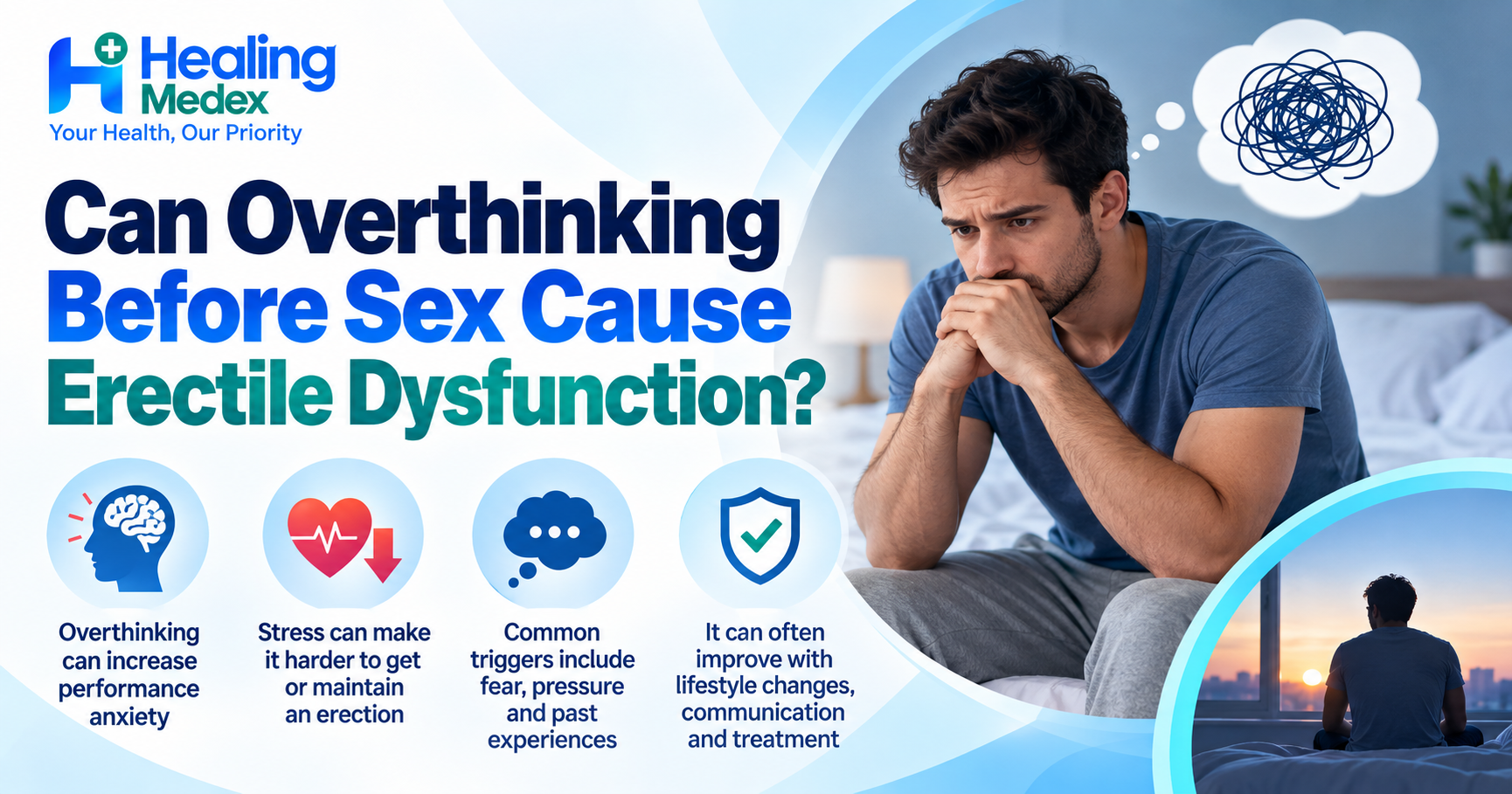
Performance anxiety can play a significant role in sexual performance, even when someone is using medicines such as sildenafil or tadalafil.
Worrying about satisfying a partner, maintaining an erection, or experiencing another disappointing sexual encounter can create stress that interferes with normal sexual arousal.
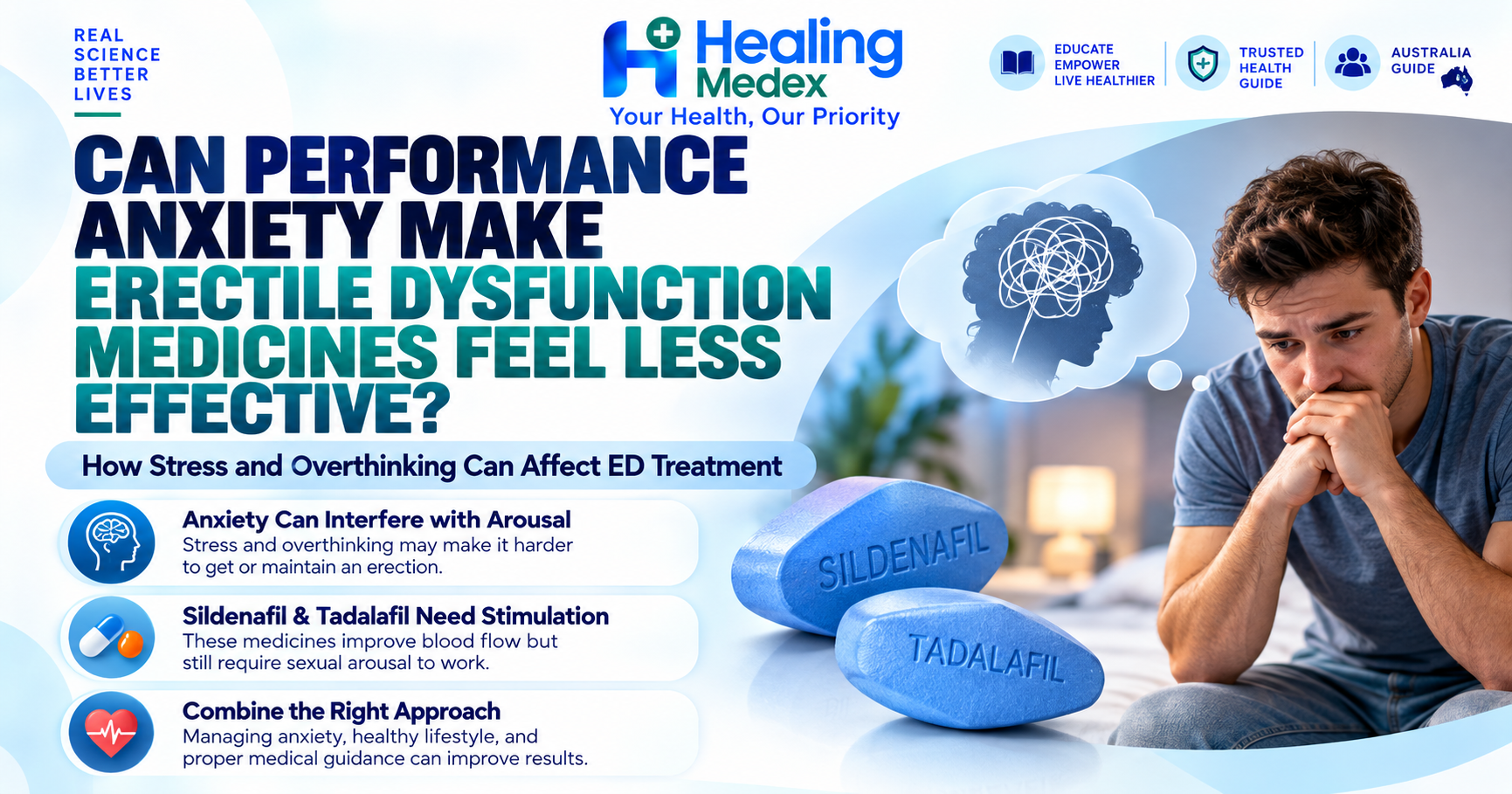
So, can performance anxiety make erectile dysfunction medicines feel less effective? Yes. Anxiety can interfere with the sexual arousal needed for these medications to work effectively. However, medication response can also be affected by incorrect use, underlying health conditions, and other factors.
Understanding the connection between the mind, sexual arousal, and ED treatments may help improve confidence and treatment outcomes.
1. What Is Sexual Performance Anxiety?
Sexual performance anxiety refers to feelings of worry, nervousness, or fear about sexual activity.
It often occurs when someone becomes overly concerned about their ability to achieve an erection, maintain sexual performance, or satisfy their partner.
Common causes include:
Fear of losing an erection during intimacy.
Worrying about satisfying a partner.
Previous experiences with erectile difficulties.
Pressure to perform perfectly.
Low confidence or negative body image.
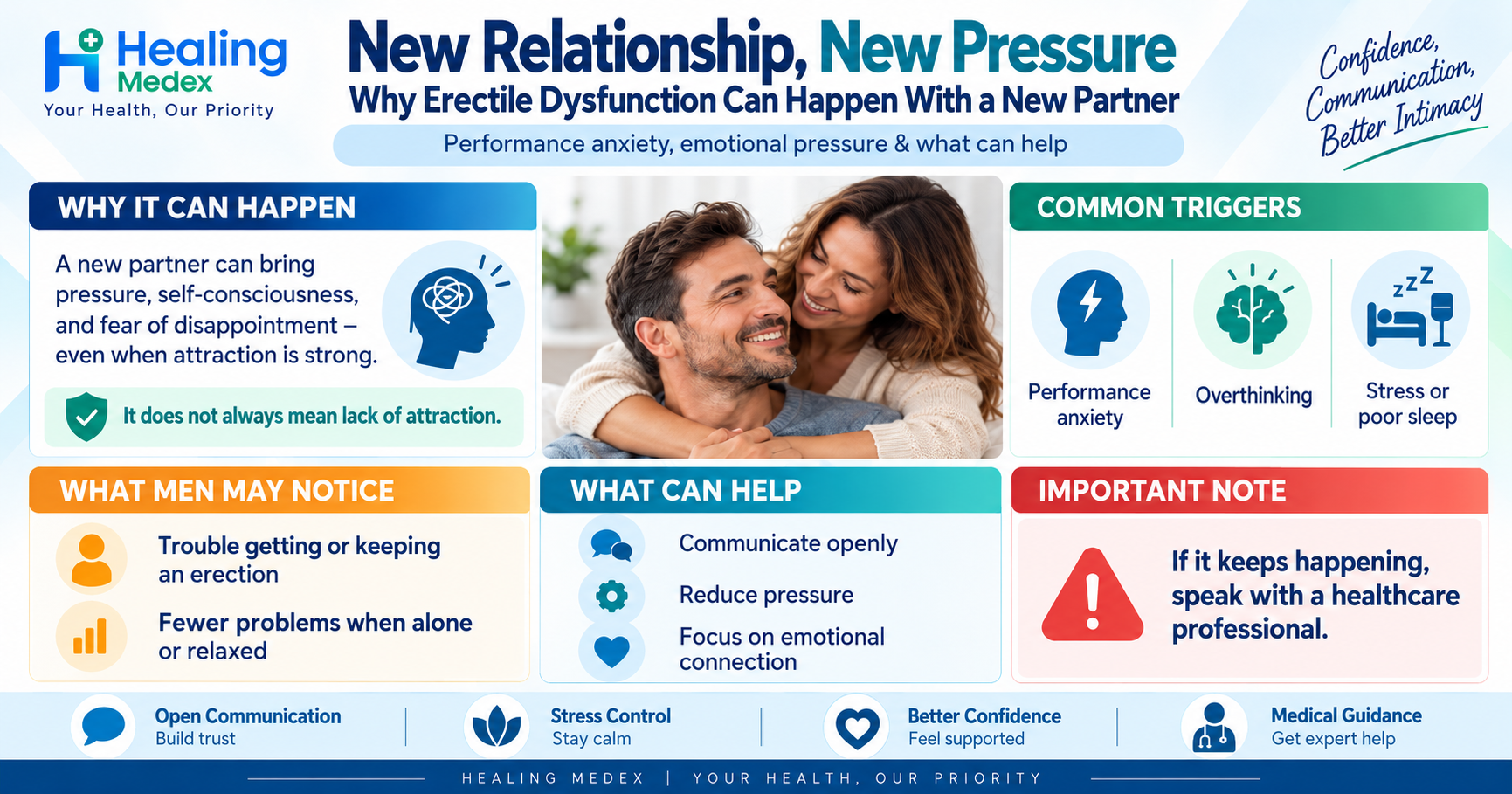
Stress associated with a new relationship.
Overthinking sexual performance.
Occasional nervousness is common, particularly with a new partner or after an uncomfortable experience.
However, when anxiety becomes persistent, it can interfere with sexual arousal and contribute to erectile difficulties.
2. How Do Erectile Dysfunction Medicines Normally Work?
Common erectile dysfunction medicines include sildenafil and tadalafil.
These medications belong to a class called phosphodiesterase type 5 (PDE5) inhibitors.
They help improve blood flow to the penis by supporting the natural processes involved in achieving an erection.
However, ED medicines do not automatically produce an erection without sexual stimulation.
Sexual arousal activates chemical signals that relax blood vessels in the penis. PDE5 inhibitors help these signals last longer, allowing increased blood flow.
If anxiety significantly interferes with arousal, the response to medication may be less satisfactory.
According to the European Association of Urology, incorrect medication use and inadequate information about treatment are important causes of an unsatisfactory response to PDE5 inhibitors
3. Can Performance Anxiety Make ED Medicines Feel Less Effective?
This happens because erections involve both physical and psychological processes.
When someone feels relaxed and sexually stimulated, the nervous system supports the physiological changes needed for an erection.
When someone feels anxious, the body may enter a heightened stress response.
This response can make sexual arousal more difficult and interfere with the maintenance of an erection.
For example, someone may take sildenafil before intimacy but spend the entire encounter worrying about whether the medication will work.
Instead of focusing on pleasure and connection, their attention shifts toward checking erection firmness.
This mental pressure can interfere with sexual responsiveness.
The result may be an erection that feels weaker, takes longer to develop, or becomes difficult to maintain.
Importantly, this does not necessarily mean the ED medicine has failed or that a higher dose is needed.
4. Why Does Anxiety Affect Erections Even After Taking Medication?
Increased stress response
Anxiety activates the body's stress response, which involves the sympathetic nervous system.
Heightened stress activity can interfere with the relaxation and vascular changes that support erections.
Reduced sexual focus
Sexual arousal is influenced by attention, emotions, and sensory stimulation.
When thoughts are dominated by worry or self-criticism, it may become harder to remain sexually engaged.
Fear of losing an erection
Someone who has previously experienced erectile difficulties may start expecting the problem to happen again.
This anticipation creates anxiety before intimacy even begins.
Excessive self-monitoring
Constantly checking whether an erection is firm enough can distract from pleasurable sensations.
This pattern may increase frustration and reinforce performance worries.
Reduced confidence
A disappointing sexual experience can affect confidence.
Over time, someone may begin believing they are incapable of satisfactory sexual performance, even when there is no permanent physical problem.
These factors can interact, making performance anxiety an important consideration during ED treatment.
5. The Performance Anxiety and Erectile Dysfunction Cycle
Performance anxiety can create a repeating pattern in which one uncomfortable experience increases the likelihood of another.
Previous erection difficulty
Fear of another unsuccessful experience
Increased anxiety and overthinking
Reduced arousal or erection difficulties
The experience may reinforce fear before the next encounter, repeating the cycle.
Breaking this cycle often requires addressing both psychological concerns and any underlying physical causes.
6. Sildenafil and Tadalafil: Can Anxiety Affect Both Medicines?
Performance anxiety may influence the perceived effectiveness of both sildenafil and tadalafil.
Although these medications have different durations of action, they rely on sexual stimulation to support erections.
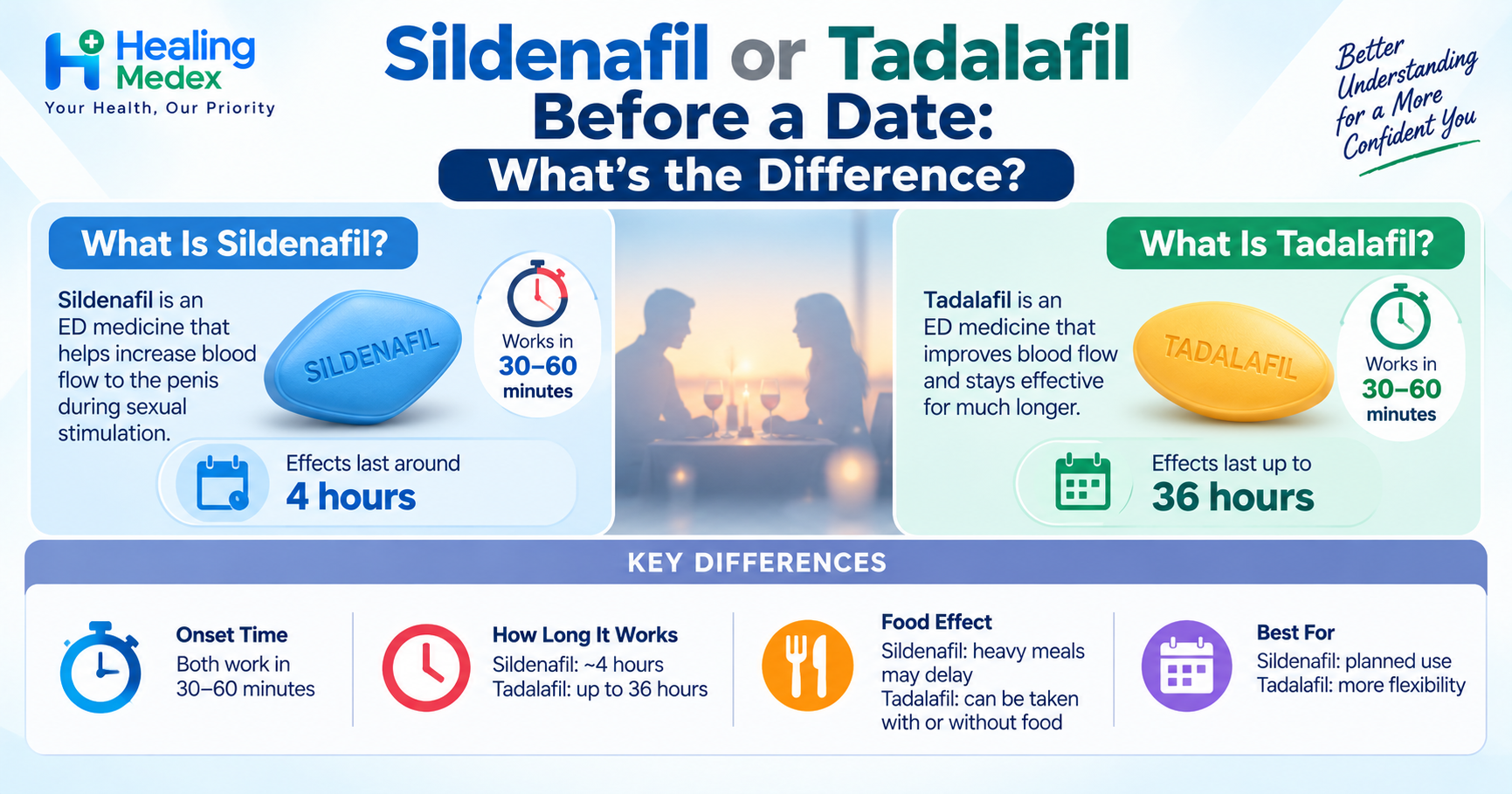
Feature | Sildenafil | Tadalafil |
|---|---|---|
Typical onset | 30–60 minutes | 30–60 minutes |
Duration of action | Around 4–5 hours | Up to 36 hours |
Sexual stimulation required | Yes | Yes |
Anxiety can interfere with arousal | Yes | Yes |
Automatically treats performance anxiety | No | No |
These figures are approximate. Response times vary, and the duration of action does not mean an erection will persist continuously.
Tadalafil's longer duration may reduce the need to plan intimacy around a narrow time window. For some people, this may help reduce timing-related pressure.
However, a longer duration does not necessarily eliminate performance anxiety, and neither medication treats its underlying psychological causes.
A healthcare professional can help determine which treatment is appropriate based on medical history, preferences, and other medications.
7. Signs That Performance Anxiety May Be Affecting Your ED Medication Results
Certain experiences may suggest that psychological factors are contributing to erection difficulties.
These include:
Erections are easier to achieve when alone than during partnered intimacy.
Erectile problems occur mainly with a new partner.
Morning or spontaneous erections still occur.
Erection quality changes depending on stress levels.
Worrying about medication effectiveness makes intimacy more difficult.
Erections become weaker when attention shifts toward performance.
Sexual confidence decreases after one unsuccessful experience.
Erectile difficulties occur mainly during emotionally stressful situations.
These patterns may indicate a psychological component, but they do not establish a diagnosis.
Physical and psychological causes can occur together.
A medical evaluation remains important, particularly when erection difficulties are persistent or worsening.
8. Other Reasons Erectile Dysfunction Medicines May Seem Less Effective
Performance anxiety is not the only reason ED treatments may produce disappointing results.
Several factors can influence medication effectiveness.
Incorrect timing: Taking medication without allowing sufficient time for it to work can lead to unsatisfactory results.
Lack of sexual stimulation: Sildenafil and tadalafil require sexual arousal to support an erection.
Heavy meals: A large, high-fat meal can delay sildenafil absorption and onset.
Excessive alcohol: Heavy alcohol consumption can make erections more difficult and may increase certain medication side effects.
Underlying health conditions: Diabetes, cardiovascular disease, nerve damage, hormonal abnormalities, and other medical conditions may affect erectile function.
Other medications: Some medicines can contribute to erectile difficulties or interact with ED treatments.
Inappropriate dosing: A prescribed dose may need medical reassessment, but changing the dose independently is not recommended.
Identifying the cause is essential before deciding whether a medication needs adjustment.
9. How to Reduce Performance Anxiety and Improve ED Treatment Outcomes
Managing performance anxiety often involves a combination of psychological strategies, lifestyle changes, and appropriate medical treatment.
Focus on intimacy rather than performance
Instead of concentrating entirely on maintaining an erection, try focusing on relaxation, affection, communication, and shared pleasure.
This may help reduce the pressure associated with sexual performance.
Communicate openly with your partner
Discussing concerns can help reduce misunderstandings and unrealistic expectations.
Supportive communication may make intimacy feel more comfortable.
Practice relaxation techniques
Slow breathing, mindfulness, and other stress-management techniques can help reduce anxiety.
These approaches may support emotional well-being, although they do not guarantee improved erections.
Avoid constantly checking erection firmness
Repeatedly monitoring an erection can reinforce anxiety.
Redirecting attention toward enjoyable sensations and connection may help interrupt this pattern.
Maintain healthy lifestyle habits
Regular physical activity, adequate sleep, limiting alcohol, and avoiding smoking can support vascular health and erectile function.
Consider cognitive behavioural therapy
Cognitive behavioural therapy (CBT) can help people identify unhelpful beliefs and develop healthier responses to performance-related fears.
Psychosexual counselling may also help address relationship concerns and anxiety associated with intimacy.
Use ED medication as prescribed
Follow the instructions provided by your healthcare professional.
Do not increase the dose, combine ED medicines, or change treatment independently.
Seek medical advice when difficulties continue
If medication repeatedly seems ineffective, consult a qualified healthcare professional.
The European Association of Urology recommends CBT when indicated, including partner involvement where appropriate, alongside medical treatment to maximise treatment outcomes.
10. Can Therapy and ED Medication Work Better Together?
For some people, combining psychological support with appropriate ED medication can be more helpful than focusing exclusively on medication.
This approach addresses two different aspects of erectile function.
ED medication helps support the physical process of achieving and maintaining an erection.
Psychological treatment helps address fear, anxiety, relationship stress, and negative expectations that may interfere with sexual arousal.
For example, someone with persistent performance anxiety may benefit from prescribed ED medication while also receiving CBT or psychosexual counselling.
The goal is not simply to achieve an erection but also to improve sexual confidence, emotional comfort, and overall sexual well-being.
The American Urological Association recommends considering referral to a mental health professional for men being treated for erectile dysfunction, including to help reduce performance anxiety.
11. Should You Increase Your ED Medicine Dose If Anxiety Is the Problem?
Increasing the dose is not automatically the correct solution.
If performance anxiety is interfering with arousal, taking more medicine may not address the underlying difficulty.
Higher doses can also increase the risk of adverse effects, including headaches, flushing, dizziness, and low blood pressure.
A clinician may review the medication, timing, medical history, and other possible causes before recommending any treatment changes.
Important safety precautions:
Never combine sildenafil or tadalafil with nitrate medications used for chest pain or with recreational nitrites, commonly called poppers.
Do not combine different ED medicines without specific medical instructions.
Tell your clinician about heart conditions, low blood pressure, and other prescribed medicines, including alpha-blockers.
Seek emergency medical attention for an erection lasting more than four hours, sudden vision or hearing loss, or chest pain associated with sexual activity.
12. When Should You Consult a Doctor?
Occasional erection difficulties may happen during periods of stress or fatigue.
However, professional evaluation is advisable when:
Erectile difficulties occur repeatedly.
ED medicines consistently produce unsatisfactory results.
Anxiety significantly affects intimacy or relationships.
Erectile problems occur both alone and with a partner.
Morning erections become noticeably less frequent alongside other symptoms.
You have diabetes, high blood pressure, cardiovascular disease, or other medical risk factors.
A healthcare professional may assess physical health, psychological factors, medication use, and relevant laboratory results to identify possible causes.
13. Frequently Asked Questions (FAQs)
Q1. Can anxiety stop sildenafil from working?
Anxiety can interfere with sexual arousal and make sildenafil seem less effective. Sildenafil supports blood flow but does not directly eliminate performance anxiety.
Q2. Does tadalafil work if you are nervous?
Q3. Can overthinking cause erectile dysfunction even after taking medication?
Yes. Excessive worry can distract from sexual stimulation and contribute to erectile difficulties despite medication use.
Q4. Is psychological erectile dysfunction permanent?
Not necessarily. Psychological erectile dysfunction can improve when underlying concerns are addressed through counselling, stress management, relationship support, or appropriate treatment.
Q5. Can performance anxiety affect younger men?
Yes. Performance anxiety can affect adults of different ages, including younger men who have no known underlying physical condition.
Q6. Does taking a higher dose of sildenafil help performance anxiety?
A higher dose does not directly treat performance anxiety and may increase adverse effects. Dose changes should only be made under medical supervision.
Q7. Can ED medication help restore sexual confidence?
Successful treatment may improve confidence for some people. However, medication alone may not resolve persistent anxiety or negative expectations.
Q8. Can performance anxiety occur with a new partner?
Yes. A new relationship, unfamiliar expectations, or fear of disappointing a partner can contribute to performance anxiety.
Q9. Can counselling improve erectile dysfunction treatment results?
Counselling, particularly CBT or psychosexual therapy, may improve outcomes when psychological factors are contributing to erectile difficulties.
Q10. What should I do if my ED medicine is not working?
Consult your healthcare professional. They can review how the medication is being used, assess possible psychological and physical factors, and recommend appropriate next steps.
Conclusion
Performance anxiety can make erectile dysfunction medicines feel less effective because successful erections depend on both physical blood flow and sexual arousal.
Medicines such as sildenafil and tadalafil can support the physical processes involved in erections, but they cannot automatically remove stress, fear, or negative expectations.
When someone becomes overly focused on sexual performance, anxiety may interfere with arousal and reduce satisfaction with treatment.
The good news is that performance-related anxiety can often be addressed through communication, stress management, psychological therapy, and appropriate medical care.
If erectile dysfunction medication is not producing the expected results, it is important to identify the underlying cause rather than independently increasing the dose.
At Healing Medex, we believe that understanding both the physical and psychological aspects of sexual health is an important step toward informed treatment decisions and better overall well-being.
Key Takeaways
Performance anxiety can make ED medicines feel less effective.
Sildenafil and tadalafil require sexual stimulation to support erections.
Stress, overthinking, and fear of failure can interfere with arousal.
Medication timing, underlying health conditions, and other factors can also influence treatment outcomes.
CBT and psychosexual counselling may help when anxiety contributes to erectile difficulties.
Increasing medication dosage without medical guidance is not recommended.
Persistent ED deserves evaluation for both physical and psychological causes.