Introduction
Starting a new relationship can be exciting. There is attraction, emotional connection, curiosity, and the anticipation of becoming physically intimate with someone new. However, alongside these positive feelings, some men experience unexpected pressure when it comes to sexual performance.
Imagine feeling attracted to your new partner, enjoying romantic moments, and looking forward to intimacy, only to find that getting or maintaining an erection becomes difficult.
This situation can feel confusing, especially if you have never experienced erectile difficulties before.
According to the National Institute of Diabetes and Digestive and Kidney Diseases (NIDDK), anxiety, stress, and low self-confidence can contribute to erectile dysfunction.
Understanding why this happens is an important first step toward rebuilding confidence and enjoying a healthier intimate relationship.
1. Why Can Erectile Dysfunction Happen With a New Partner?
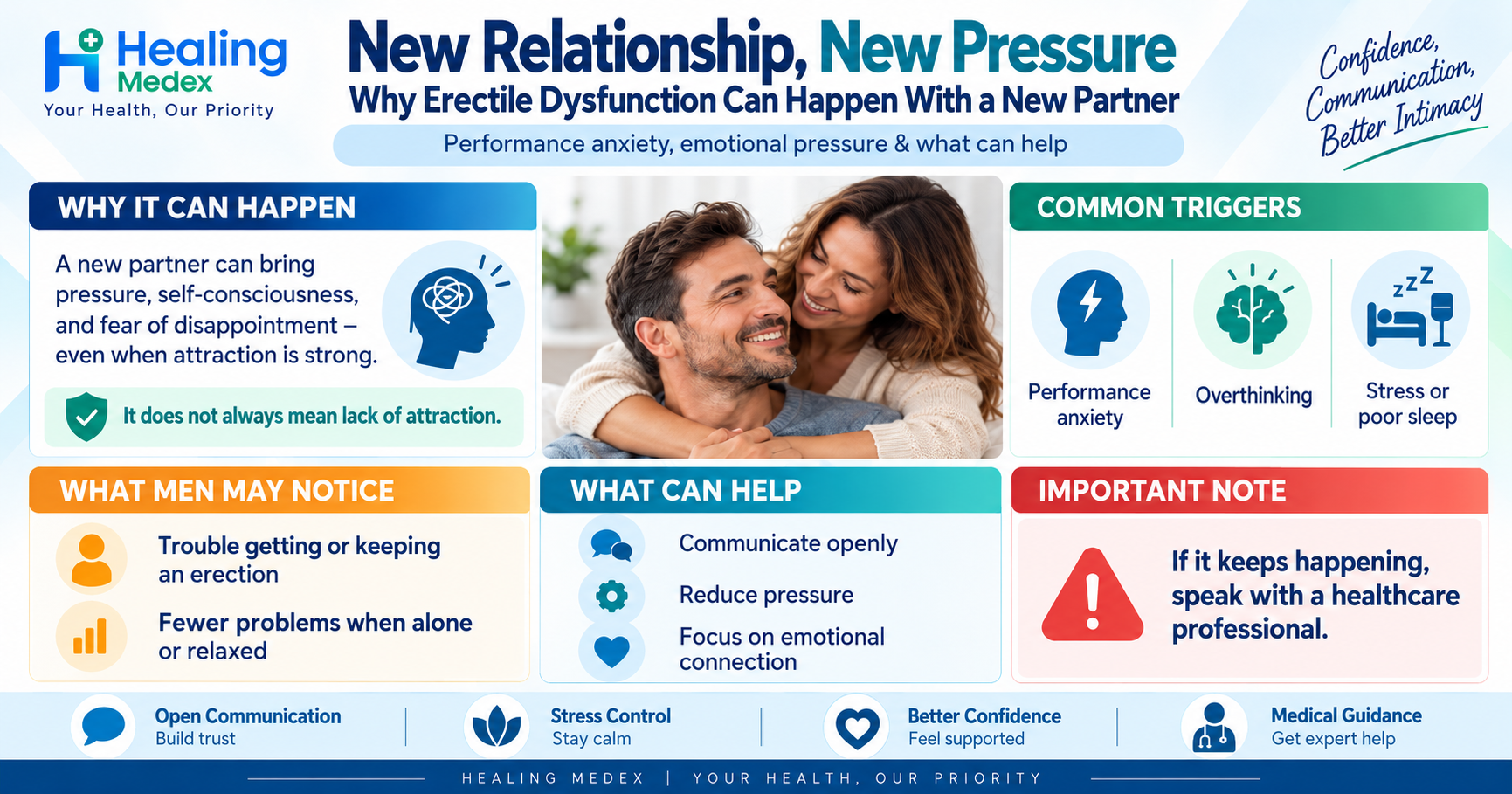
Although ED is often associated with physical health conditions, psychological and emotional factors can also affect erectile performance.
When entering a new relationship, several unfamiliar experiences may influence sexual confidence.
These may include:
Wanting to make a positive impression on a new partner.
Feeling nervous about sexual expectations.
Worrying about maintaining an erection.
Comparing current experiences with previous relationships.
Feeling self-conscious about physical appearance.
Experiencing emotional uncertainty or relationship stress.
Even when sexual attraction is strong, these concerns may interfere with the natural process of becoming aroused.
Importantly, experiencing an erection problem with a new partner does not automatically indicate a serious medical condition or a lack of attraction.
However, repeated erection difficulties should not automatically be attributed to anxiety without considering possible physical causes.
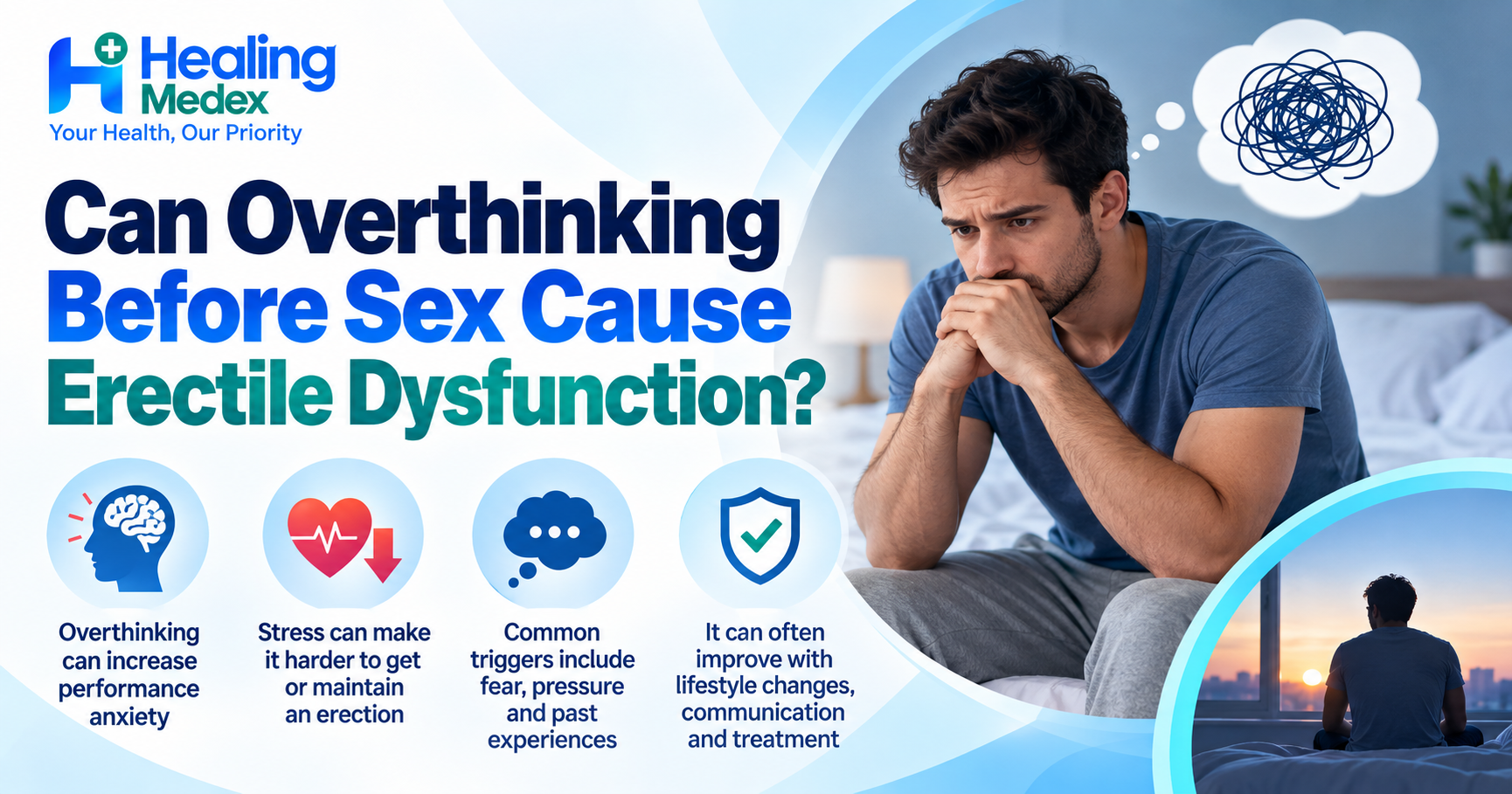
2. Performance Anxiety: One of the Main Psychological Triggers
It develops when someone becomes excessively concerned about how well they will perform during sexual activity.
Instead of enjoying intimacy, a person may begin focusing on questions such as:
Will I be able to get an erection?
What if I lose my erection?
Will my partner feel disappointed?
What if the same problem happens again?
These thoughts may increase stress and make it harder to remain sexually aroused.
How performance anxiety affects erections
An erection involves coordination between the brain, nerves, blood vessels, hormones, and psychological arousal.
When a person experiences anxiety, the body's stress response can interfere with the relaxation and blood-flow changes involved in erections.
This may create a repeating cycle:
Pressure to perform
Increased anxiety and self-monitoring
Difficulty getting or maintaining an erection
Fear of the problem happening again
This is sometimes called the sexual performance anxiety cycle.
Without appropriate reassurance or support, anxiety about a previous experience may influence future sexual encounters.
3. Fear of Disappointing a New Partner
A new relationship often brings a strong desire to be accepted and appreciated.
For some men, this desire extends into sexual intimacy.
They may believe that maintaining an erection is necessary to satisfy their partner or demonstrate sexual confidence.
However, treating sex as a performance test can create unnecessary pressure.
When sexual activity becomes focused on achieving a particular outcome, emotional connection and pleasure may receive less attention.
Over time, this pressure may contribute to erection difficulties.
What may help?
Focus on communication, affection, and mutual enjoyment rather than treating an erection as the only measure of a successful intimate experience.
4. Overthinking During Intimacy
Overthinking can interfere with sexual arousal because attention becomes divided between physical sensations and anxious thoughts.
For example, a man may repeatedly monitor whether his erection is firm enough instead of remaining engaged with his partner.
This constant self-monitoring can make intimacy feel stressful rather than enjoyable.
Some men may also compare their present sexual experiences with previous relationships or unrealistic expectations.
How to manage overthinking
Try to remain focused on the present experience rather than anticipating possible problems.
Relaxation techniques, calm breathing, and open conversations with a partner may help reduce tension.
Mindfulness-based approaches and psychosexual therapy may also be helpful for some individuals.
5. Emotional Vulnerability in a New Relationship
Physical intimacy often involves emotional vulnerability.
Even when two people feel attracted to each other, they may still be learning about each other's preferences, boundaries, and expectations.
A person entering a new relationship may experience concerns about:
Emotional acceptance.
Relationship compatibility.
Body image.
Past relationship experiences.
Sexual expectations.
Trust and emotional safety.
These concerns may temporarily affect sexual confidence.
Building trust and becoming more comfortable with a partner may help reduce relationship-related anxiety over time.
6. Can Erectile Dysfunction Happen Even When Attraction Is Strong?
Sexual attraction and erectile function are connected, but they are not identical.
An erection depends on multiple physical and psychological processes working together.
For example, someone may feel excited about intimacy while simultaneously experiencing anxiety.
The presence of nervousness does not necessarily mean that sexual desire is absent.
Similarly, difficulty maintaining an erection does not automatically suggest that a person is uninterested in their partner.
Understanding this distinction may help couples avoid unnecessary misunderstandings.
7. The Role of Stress, Sleep, and Lifestyle Habits
Stress Customizable Cartoon Illustrations
Stress and mental fatigue
Work pressure, financial concerns, and personal responsibilities can increase stress levels and make sexual arousal more difficult.
Man sleeping on the bed in flat design. Guy lying on comfortable bed on pillow.
Poor sleep
Inadequate sleep can affect mood, energy, and general health, potentially contributing to sexual difficulties.
Alcohol and Mounjaro: Safe or Risky?
Drinking too much alcohol may interfere with sexual arousal and erectile function, even when it initially makes someone feel more relaxed.
Other contributing factors may include smoking, limited physical activity, certain medications, diabetes, high blood pressure, and hormonal disorders.
The NHS identifies stress, fatigue, alcohol consumption, anxiety, and several medical conditions as possible causes of erection problems.
8. Why Erectile Dysfunction May Happen With a New Partner but Not When Alone
Some men notice that they can achieve erections during masturbation or upon waking but experience difficulties during partnered intimacy.
This pattern may suggest that situational or psychological factors are contributing to the problem.
During masturbation, a person may feel more relaxed and experience fewer concerns about judgment or expectations.
With a new partner, anxiety, unfamiliarity, or pressure may affect arousal.
However, being able to achieve erections alone does not completely rule out physical causes of erectile dysfunction.
A healthcare professional can assess the full pattern of symptoms and identify whether psychological, physical, or combined factors are involved.
9. How to Overcome Erectile Dysfunction With a New Partner
Several practical approaches may help reduce relationship-related anxiety and improve sexual confidence.
1. Communicate openly with your partner
Honest communication can reduce misunderstandings.
Explain that occasional erection difficulties may be related to nervousness, stress, or pressure rather than attraction.
A supportive conversation may help both partners feel more comfortable.
2. Stop treating intimacy as a performance test
Sexual experiences do not need to follow a fixed pattern.
Reducing the expectation that an erection must happen immediately or be maintained throughout intimacy can help lower anxiety.
3. Focus on emotional connection
Take time to develop trust, affection, and mutual understanding.
Physical closeness without pressure to have penetrative sex can allow partners to enjoy intimacy more comfortably.
4. Practice stress-reduction techniques
Regular physical activity, adequate sleep, meditation, and relaxation exercises may help manage everyday stress.
These habits may support overall physical and emotional health.
5. Avoid excessive alcohol before intimacy
Alcohol may temporarily reduce inhibitions, but excessive consumption can interfere with sexual function.
Avoid relying on alcohol to manage performance anxiety.
6. Challenge unrealistic expectations
Sexual performance naturally varies.
Fatigue, emotional stress, relationship circumstances, and general health can affect erections.
Occasional erection difficulties do not necessarily indicate an ongoing disorder.
7. Consider professional counselling
If performance anxiety continues, a qualified mental health professional or sex therapist may help address negative thoughts, sexual expectations, and relationship concerns.
The European Association of Urology recommends considering psychological and relationship factors when evaluating and managing erectile dysfunction.
10. Can Erectile Dysfunction Medicines Help With New Partner Anxiety?
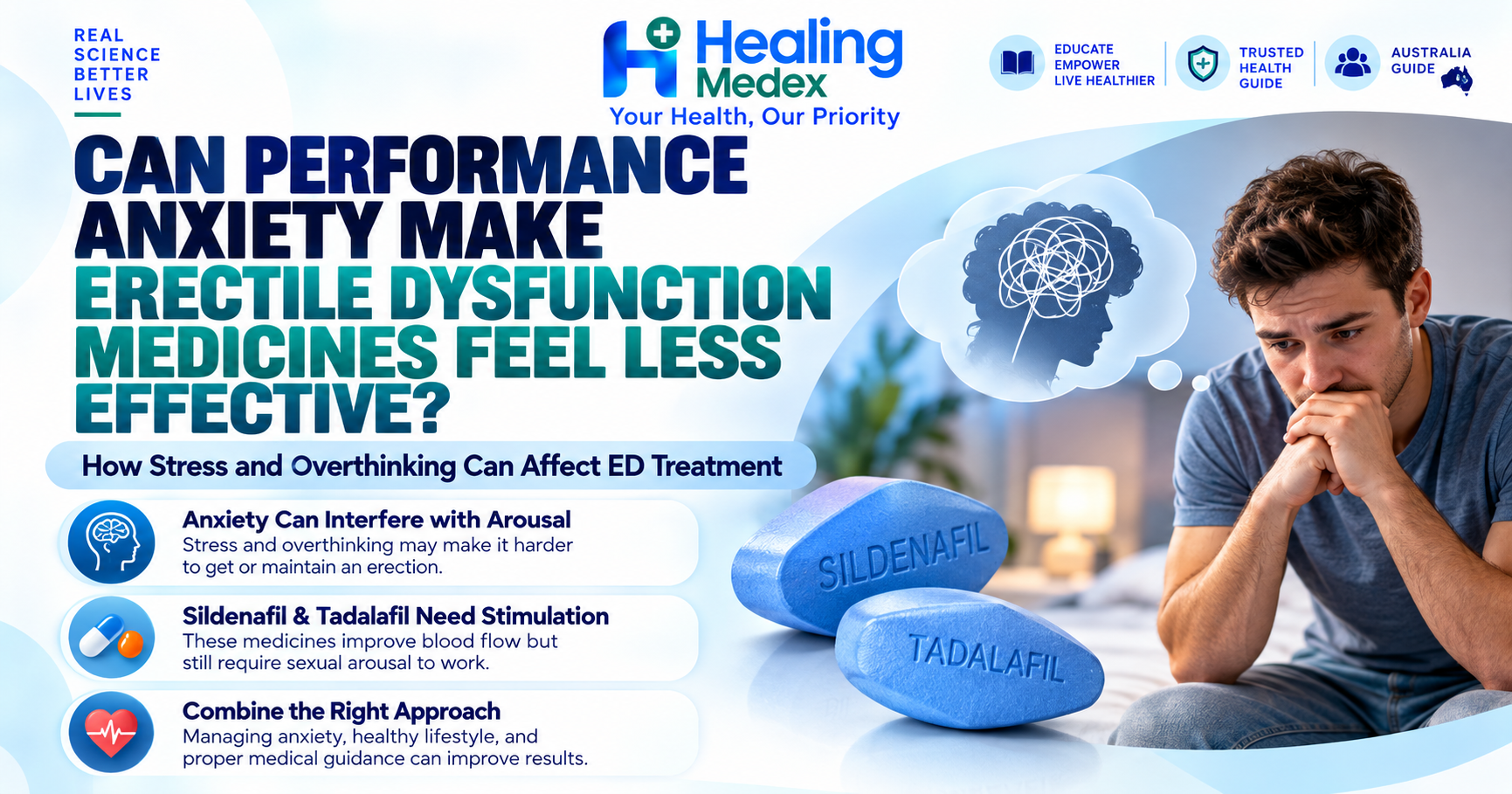
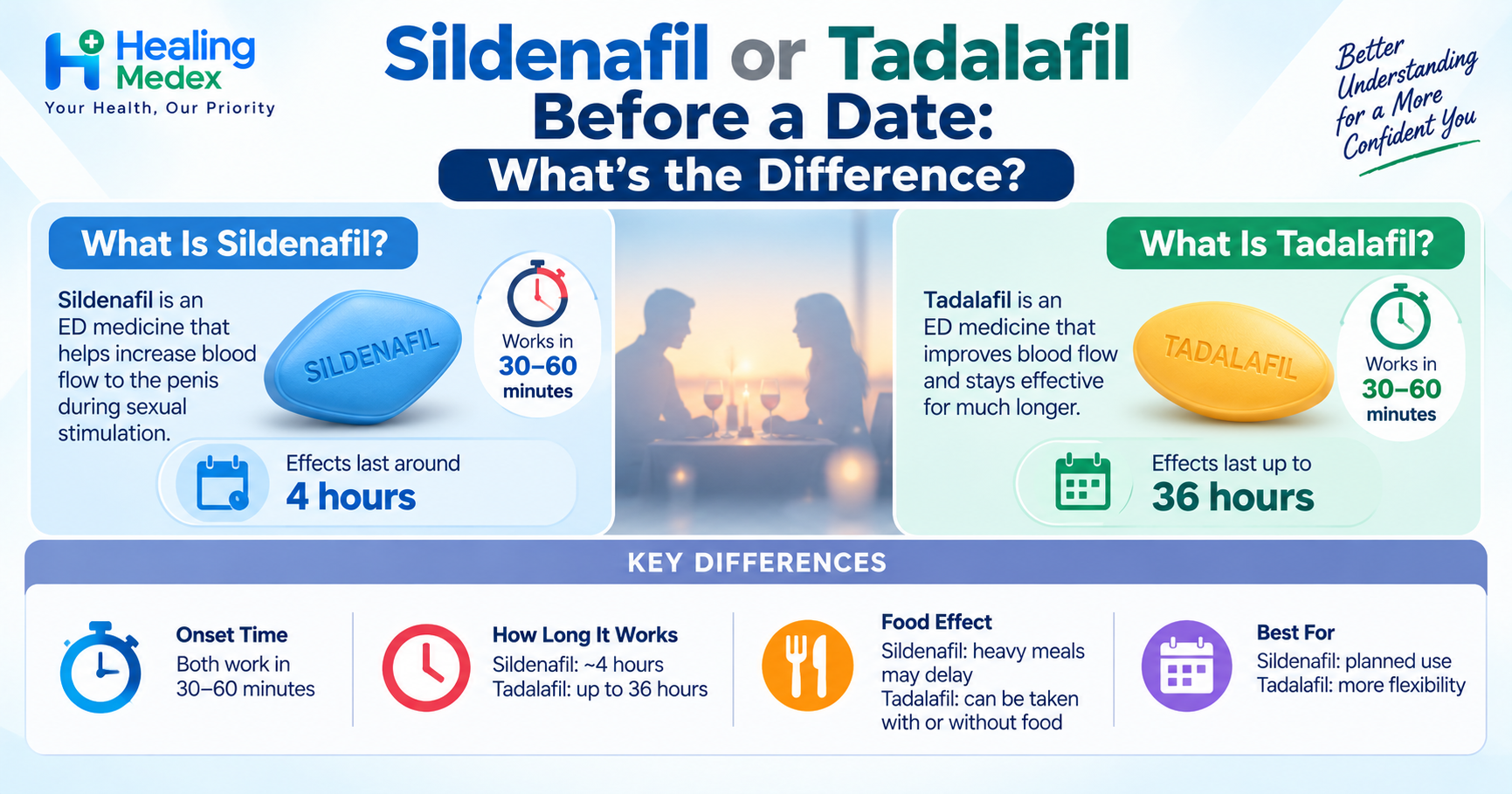
Medicines such as Sildenafil and Tadalafil are commonly used to treat erectile dysfunction.
They belong to a group of medicines called phosphodiesterase type 5 (PDE5) inhibitors.
These medicines improve the erectile response to sexual stimulation by supporting increased blood flow to the penis.
However, they do not directly treat the psychological causes of performance anxiety.
Important points to understand
ED medicines generally require sexual stimulation to work.
They do not automatically eliminate fear, stress, or relationship pressure.
They may help some men with situational ED when prescribed appropriately.
Psychological support may be beneficial alongside medication.
Not everyone experiencing occasional erection difficulties requires medication.
Safety note: Sildenafil and tadalafil must not be taken with nitrate medications or recreational nitrites, because the combination can cause a dangerous drop in blood pressure. Discuss heart conditions, other medications, and suitability with a healthcare professional before use.
Self-medicating or increasing doses without medical advice is not recommended.
11. How Long Does New Relationship Erectile Dysfunction Last?
There is no fixed timeframe for erectile difficulties associated with a new relationship.
Some men experience erection problems only during their first few intimate encounters.
For others, anxiety may continue, particularly if they begin worrying about repeated difficulties.
The duration may depend on factors such as:
The intensity of performance anxiety.
Relationship comfort and communication.
Stress and emotional wellbeing.
Sleep and lifestyle habits.
Underlying physical or psychological health conditions.
As comfort and confidence increase, situational erectile difficulties may improve.
However, persistent symptoms deserve medical evaluation rather than simply waiting for them to disappear.
12. When Should You See a Doctor?
Occasional erection difficulties are common, particularly during stressful or unfamiliar situations.
However, professional medical advice is important when:
Erection difficulties happen repeatedly.
Problems continue despite feeling comfortable with a partner.
Morning or spontaneous erections become less frequent.
Erectile difficulties occur during both masturbation and partnered intimacy.
You experience reduced sexual desire, pain, or changes in penile shape.
You have diabetes, high blood pressure, cardiovascular disease, or other relevant medical conditions.
Anxiety about erections significantly affects your wellbeing or relationship.
A doctor may review your health history, medications, blood pressure, and relevant laboratory results to identify possible contributing factors.
Erectile dysfunction can sometimes be an early indicator of cardiovascular or metabolic health problems, making proper evaluation important.
13. Can a Supportive Partner Make a Difference?
A supportive partner may play an important role in reducing relationship-related sexual pressure.
When both people understand that erection difficulties can have emotional and physical causes, they may be less likely to interpret the experience as rejection or lack of attraction.
Helpful approaches include communicating without blame, avoiding pressure to perform, respecting boundaries, and maintaining affection outside sexual activity.
Couples may also benefit from professional counselling when anxiety or communication difficulties persist.
14. Frequently Asked Questions (FAQs)
Q1. Is erectile dysfunction normal with a new partner?
Occasional erection difficulties can happen when someone feels nervous, stressed, or under pressure in a new relationship. Repeated difficulties should be assessed by a healthcare professional.
Q2. Why can I get an erection alone but not with my new partner?
Situational performance anxiety may be one explanation. However, the ability to achieve erections alone does not completely exclude physical or medication-related causes.
Q3. Can nervousness cause erectile dysfunction?
Yes. Anxiety and stress can interfere with sexual arousal and the physiological processes required for an erection.
Q4. Does erectile dysfunction mean I am not attracted to my partner?
No. Erectile dysfunction can occur even when sexual desire and attraction are strong.
Q5. Can a new relationship trigger performance anxiety?
Yes. Concerns about acceptance, compatibility, sexual expectations, and satisfying a new partner may contribute to performance anxiety.
Q6. Will erectile dysfunction improve as I become comfortable with my partner?
It may improve when anxiety and unfamiliarity are the main contributing factors. However, persistent symptoms may require medical evaluation or treatment.
Q7. Can sildenafil help with performance anxiety?
Sildenafil may improve erectile function in suitable patients, but it does not directly treat anxiety. Some individuals may benefit from counselling or psychological support.
Q8. Should I avoid intimacy after experiencing erection problems?
Not necessarily. Reducing pressure and focusing on enjoyable, consensual intimacy may be more helpful than avoiding closeness altogether.
Q9. Can young men experience erectile dysfunction in new relationships?
Q10. When should I seek treatment for erectile dysfunction?
Seek medical advice if erection difficulties are recurring, distressing, worsening, or accompanied by other symptoms or health concerns.
15. Final Thoughts
A new relationship can bring excitement, attraction, and emotional connection, but it can also introduce unfamiliar pressure around sexual intimacy.
For some men, this pressure may contribute to temporary erection difficulties.
Performance anxiety, overthinking, fear of disappointment, and emotional vulnerability can all influence erectile function.
However, erectile dysfunction is not always psychological. Physical health conditions, medications, and lifestyle factors may contribute as well.
The most effective approach involves understanding the potential causes, improving communication, reducing unrealistic expectations, and seeking medical guidance when needed.
Remember: Sexual confidence develops through comfort, communication, and mutual understanding—not through perfect performance.
About Healing Medex
At Healing Medex, we aim to provide accessible, informative health content that helps readers better understand men's sexual health, erectile dysfunction, wellness, and available treatment options.
Explore our website for educational information about sexual wellbeing, medications, and important health considerations.
Medical Disclaimer: This article is intended for educational purposes only and does not replace professional medical advice, diagnosis, or treatment. Consult a qualified healthcare professional before starting or changing any medication.