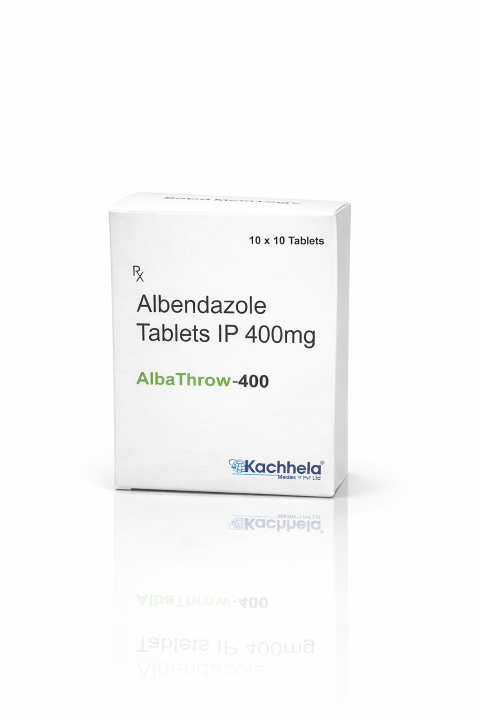
Albathrow 400 MG Tablet
$0.30 / unit
Available Options
| Pack Size | Price | Price / Unit | Quantity | Action |
|---|---|---|---|---|
| 180 tablets | $43.00 | $0.24/unit | ||
| 150 tablets | $37.00 | $0.25/unit | ||
| 120 tablets | $30.00 | $0.25/unit | ||
| 90 tablets | $24.00 | $0.27/unit | ||
| 60 tablets | $17.00 | $0.28/unit | ||
| 30 tablets | $9.45 | $0.30/unit |
Product Description
What is this medicine?
Alba Throw 400 mg contains albendazole, a broad-spectrum anthelmintic. It’s used to treat various parasitic worm infections including roundworms, tapeworms (neurocysticercosis, hydatid disease), hookworms, whipworms, pinworms, strongyloides, and giardiasis. Albendazole works by binding parasite β-tubulin, disrupting microtubules, depleting glucose stores, and killing the worms.
What should I tell my health care provider before I take this medicine?
They need to know if you have:
Liver disease or are taking medications that affect liver enzymes—albendazole is metabolized in the liver.
Bone marrow disorders or low blood counts—albendazole can rarely cause bone marrow suppression.
Pregnancy or breastfeeding—avoid in the first trimester, use effective contraception for 1 month after treatment, and consult a doctor before use.
Allergies to albendazole or similar benzimidazoles (e.g., mebendazole).
Seizure disorders—especially when treating neurocysticercosis, steroids or anticonvulsants may be needed.
Use of medications that affect CYP enzymes (e.g., carbamazepine, phenytoin, phenobarbital).
Intend to donate blood—you may need to wait after treatment.
How should I use this medicine?
Typical dose: 400 mg once or twice daily, depending on the infection:
Single dose for common intestinal worms.
Twice daily for 3 days for whipworms; up to 15 days for hydatid disease.
Take with food, ideally fatty, to improve absorption.
Swallow tablets whole (or crush/chew for young children).
Complete full course, even if symptoms improve.
Overdose: seek emergency care or call poison control immediately.
Missed Dose: take it when remembered unless it’s near the next dose; do not double up.
What may interact with this medicine?
CYP-inducing antiseizure meds (carbamazepine, phenytoin, phenobarbital) lower albendazole levels.
Cimetidine may increase albendazole concentration.
Liver-metabolized drugs — caution is advised.
Always disclose any prescription, OTC, or herbal supplements to your provider.
What should I watch for while using this medicine?
Liver function tests—especially with repeated or prolonged use.
Blood count monitoring, particularly for long courses .
Neurologic symptoms (headache, seizures, vision changes) if treating neurocysticercosis—may require steroids/anticonvulsants.
Signs of allergic reaction, like rash or swelling.
Avoid blood donation during treatment and shortly after.
Pregnant/breastfeeding women, handle cautiously and consult your doctor.
What side effects may I notice from this medicine?
Report immediately:
Severe allergic reactions: rash, swelling, breathing issues.
Signs of liver damage: yellowing of skin/eyes, dark urine, abdominal pain .
Bone marrow suppression: unusual bleeding, bruising, infection signs.
Neurologic changes: seizures, severe headache, vision issues (especially in brain infections) .
Common (usually mild):
Gastrointestinal upset: abdominal pain, nausea, vomiting, diarrhea .
Headache, dizziness, mild fever.
Temporary hair loss during longer therapy.
Mild elevation of liver enzymes.
Where should I keep my medicine?
Store at 20–25 °C (68–77 °F); can tolerate short exposure between 15–30 °C .
Protect from moisture, heat, and direct sunlight.
Keep in original container, tightly closed.
Do not use after the expiration date.
Keep out of reach of children.
Swallow whole—do not alter the tablets unless instructed for children.