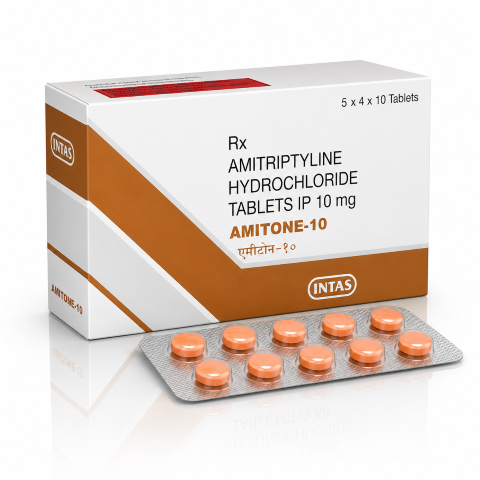
Amitone 10 MG Tablet
$0.06 / unit
Available Options
| Pack Size | Price | Price / Unit | Quantity | Action |
|---|---|---|---|---|
| 180 Tablets | $10.26 | $0.06/unit | ||
| 150 Tablets | $8.55 | $0.06/unit | ||
| 120 Tablets | $6.84 | $0.06/unit | ||
| 90 Tablets | $5.13 | $0.06/unit | ||
| 60 Tablets | $3.42 | $0.06/unit | ||
| 30 Tablets | $1.71 | $0.06/unit |
Product Description
What Is This Medicine?
AMITONE 10 MG TABLET contains Amitriptyline 10 mg , a medicine belonging to the tricyclic antidepressant (TCA) group. Amitriptyline works by increasing the activity of certain chemical messengers in the brain, particularly serotonin and norepinephrine (noradrenaline) . These chemicals are involved in regulating mood and the way pain signals are processed.
This medicine is commonly used for:
- depression major depressive disorder neuropathic (nerve) pain chronic nerve-related pain prevention of migraine headaches prevention of chronic tension-type headaches certain chronic pain conditions when prescribed by a doctor Current Indian product information describes Amitone as being used for depression and also prescribed for certain types of long-term nerve pain and migraine prevention. Important: The dose used for depression may differ from doses used for neuropathic pain or migraine prevention. Take Amitone only for the condition and at the dose prescribed by your healthcare professional
What Should I Tell My Health Care Provider Before I Take This Medicine?
They need to know if you have any of these conditions: allergy to amitriptyline or other tricyclic
- antidepressants
- heart disease recent heart attack abnormal heart rhythm low blood pressure epilepsy or seizures bipolar disorder history of mania history of suicidal thoughts or behavior glaucoma difficulty passing urine enlarged prostate
- liver disease
- kidney disease thyroid disease
- diabetes constipation or intestinal problems if you regularly consume alcohol if you take other
- antidepressants if you recently used a monoamine oxidase inhibitor (MAOI) if you are pregnant or planning pregnancy if you are
- breastfeeding Tell your healthcare professional about all prescription medicines, nonprescription medicines, vitamins, herbal products, and supplements you use.
How Should I Use This Medicine?
Take Amitone 10 mg Tablet exactly as prescribed by your healthcare professional . Current product information states that Amitone can be taken with or without food . Because amitriptyline commonly causes sleepiness, it is often taken before bedtime. For appropriate use: swallow the tablet whole with water do not chew, crush, or break it unless specifically instructed take it at approximately the same time each day it may be taken with or without food take only the prescribed dose do not increase the dose yourself do not suddenly stop treatment continue treatment for as long as your healthcare professional recommends The correct dose depends on the condition being treated, your age, response to treatment, and other medical factors. It may take several weeks to achieve the full antidepressant effect , so do not stop treatment simply because improvement is not immediate. Overdosage: Amitriptyline overdose can be dangerous and may cause serious heart-rhythm abnormalities, seizures, severe
- drowsiness, coma, or other life-threatening effects. Seek urgent medical attention for a suspected overdose. NOTE: This medicine is only for you. Do not share it with another person.
What If I Miss A Dose?
If you miss a dose of Amitone 10 mg , take it when you remember unless it is nearly time for your next scheduled dose. If the next dose is near, skip the missed dose and continue with your normal schedule. Do not take two doses together to compensate for a missed tablet. If Amitone is prescribed once daily at bedtime and you do not remember until the next day, follow your healthcare professional's instructions rather than taking extra medicine.
What May Interact With This Medicine?
Amitriptyline can interact with: monoamine oxidase inhibitors (MAOIs) other
- antidepressants SSRIs and SNRIs other tricyclic
- antidepressants tramadol certain opioid medicines sleeping medicines
- benzodiazepines sedating antihistamines antipsychotic medicines certain epilepsy medicines medicines that affect heart rhythm medicines with anticholinergic effects thyroid medicines certain blood-pressure medicines St. John's wort alcohol Combining amitriptyline with other medicines that increase serotonin may increase the risk of serotonin syndrome . Alcohol and other sedating medicines may significantly increase
- drowsiness,
- dizziness, and impaired coordination . Give your healthcare professional a complete list of all medicines and supplements you use before starting Amitone.
What Should I Watch For While Using This Medicine?
Amitone can cause sleepiness,
- dizziness, and reduced alertness , particularly when treatment is first started or the dose is increased. Avoid driving, operating machinery, or performing potentially dangerous activities until you know how the medicine affects you. Your healthcare professional may monitor your: mood and depressive symptoms response to pain treatment blood pressure heart rate body weight heart rhythm when clinically appropriate liver function when necessary Changes in mood or behavior Contact your healthcare professional promptly if you develop: new or worsening depression suicidal thoughts thoughts of self-harm unusual agitation severe anxiety aggressive or impulsive behavior extreme restlessness symptoms of mania unusual changes in mood or behavior Particular monitoring may be needed during the early stages of antidepressant treatment and after dose changes.
What Side Effects May I Notice From This Medicine?
Side effects that you should report to your healthcare professional as soon as possible: very fast or irregular heartbeat fainting seizures severe confusion severe agitation suicidal thoughts or significant behavioral changes difficulty passing urine severe constipation or abdominal swelling significant vision changes or severe eye pain severe allergic reaction swelling of the face, lips, tongue, or throat difficulty breathing or swallowing Side effects that may occur and should be reported if persistent or troublesome: sleepiness or
- drowsiness
- dizziness dry mouth constipation
- nausea
- headache increased sweating tremor weight gain palpitations increased heart rate blurred vision or difficulty focusing low blood pressure when standing nasal congestion Current Amitone product information lists
- nausea, constipation, sweating, dry mouth, sleepiness, tremor,
- dizziness,
- headache, palpitations, increased heart rate, orthostatic hypotension, and nasal congestion among reported adverse effects. What happens if I suddenly stop taking this medicine? Do not suddenly discontinue Amitone after taking it regularly. Abrupt discontinuation can cause symptoms such as:
- headache
- nausea tiredness irritability restlessness anxiety sleep disturbances unusual dreams general discomfort Current product information recommends that the dose be gradually reduced before stopping when appropriate rather than abruptly discontinued. Your healthcare professional will determine an appropriate tapering schedule based on your dose and duration of treatment.
Where Should I Keep My Medicine?
Keep out of the reach of children. Current product information for Amitone 10 mg Tablet specifies: Store below 25°C. Keep the medicine: in its original blister packaging below 25°C protected from excessive heat protected from moisture away from direct sunlight securely stored away from children Do not use the tablets after their expiration date or if the blister packaging has been damaged.