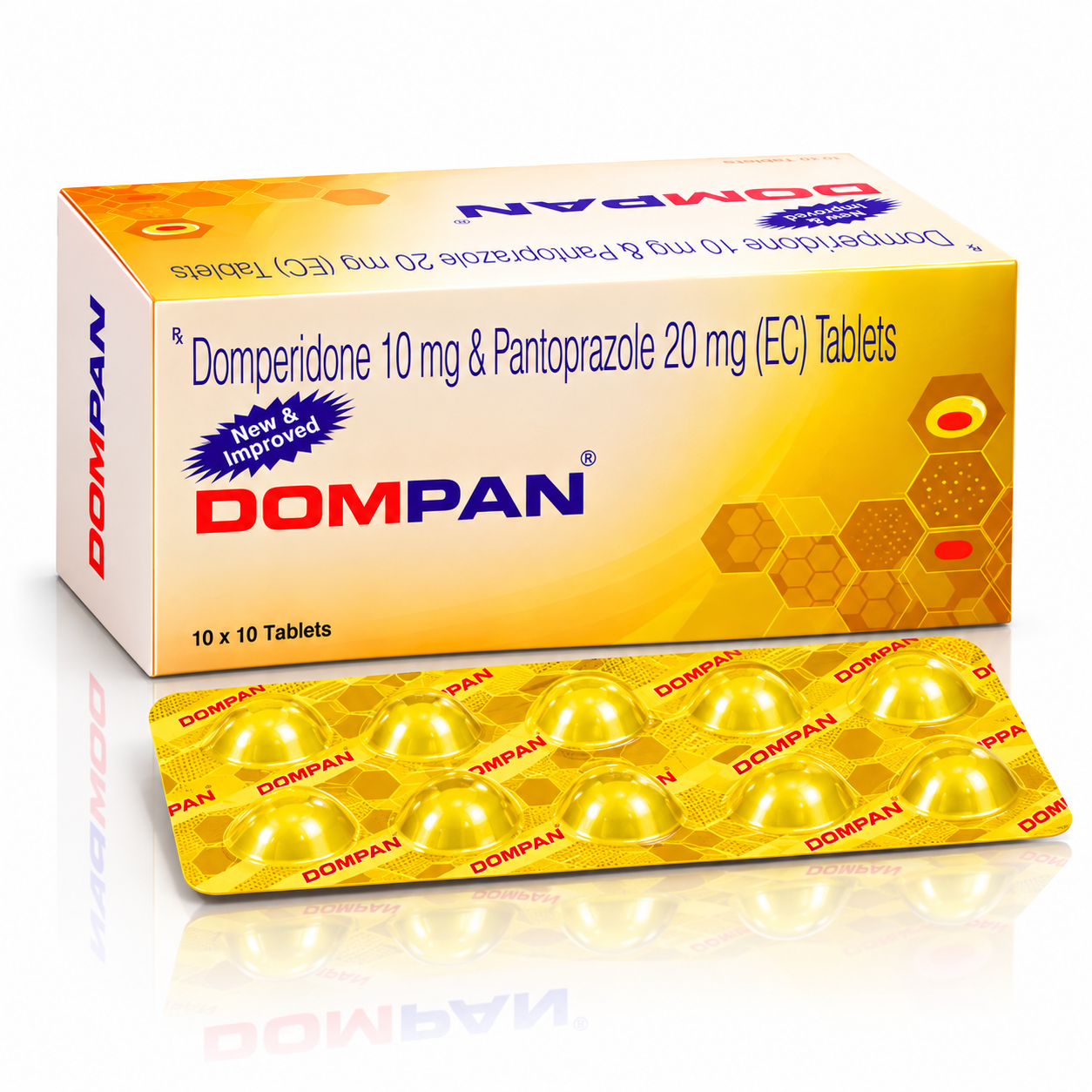
Dompan Tablet
$0.33 / unit
Available Options
| Pack Size | Price | Price / Unit | Quantity | Action |
|---|---|---|---|---|
| 180 Tablets | $47.00 | $0.26/unit | ||
| 150 Tablets | $41.00 | $0.27/unit | ||
| 120 Tablets | $33.00 | $0.28/unit | ||
| 90 Tablets | $26.00 | $0.29/unit | ||
| 60 Tablets | $19.00 | $0.32/unit | ||
| 30 Tablets | $10.00 | $0.33/unit |
Product Description
Dompan Tablet
Brand Name: Dompan Tablet
Generic Name: Domperidone + Pantoprazole
Strength: Domperidone 10 mg + Pantoprazole 20 mg
Dosage Form: Oral Tablet
Therapeutic Class: Proton Pump Inhibitor (PPI) / Prokinetic / Antiemetic
Manufacturer / Marketer: Medley Pharmaceuticals Ltd.
Pack Size: 1 × 10 Tablets (also available in 15-tablet strips)
What is this medicine?
DOMPAN TABLET contains Domperidone 10 mg and Pantoprazole 20 mg, a combination medicine used to manage gastroesophageal reflux disease (GERD), acid reflux, and associated digestive symptoms.
This medicine contains two active ingredients that work differently:
Pantoprazole 20 mg: A proton pump inhibitor (PPI) that reduces the production of stomach acid, helping relieve heartburn and allowing acid-damaged tissues to heal.
Domperidone 10 mg: A prokinetic and antiemetic medicine that improves movement of food through the upper digestive tract and helps reduce nausea and vomiting.
This combination helps manage symptoms associated with excess stomach acid and delayed gastric emptying in appropriately selected patients.
This medicine is commonly used for:
Gastroesophageal reflux disease (GERD)
Acid reflux and heartburn
Indigestion associated with acid reflux
Nausea and vomiting associated with certain digestive conditions
Acid regurgitation
Bloating associated with upper gastrointestinal motility problems
Selected acid-related gastrointestinal disorders under medical supervision
NOTE: Dompan Tablet should not be considered a routine treatment for all types of acidity or indigestion. The domperidone component carries specific heart-rhythm risks, so the combination should only be used when prescribed.
The product's composition, strength, manufacturer, and indications are supported by Indian pharmacy listings.
What should I tell my health care provider before I take this medicine?
They need to know if you have any of these conditions:
Allergy to domperidone, pantoprazole, or any ingredient of the tablet
Severe liver disease
Kidney disease
Heart disease or a history of irregular heartbeat
Prolonged QT interval or other cardiac rhythm disorders
Heart failure
Low potassium or magnesium levels
Gastrointestinal bleeding
Stomach or intestinal obstruction
Gastrointestinal perforation
Pituitary gland tumour known as prolactinoma
Osteoporosis or increased risk of bone fractures
Vitamin B12 deficiency
Low magnesium levels
History of severe allergic reactions to proton pump inhibitors
Pregnancy or planning pregnancy
Breastfeeding
Inform your healthcare provider about all medicines, supplements, vitamins, and herbal products you are currently taking.
Important: Domperidone may increase the risk of serious heart-rhythm disturbances, particularly in patients with underlying heart problems, electrolyte abnormalities, or when combined with certain interacting medicines.
How should I use this medicine?
Take this medicine exactly as prescribed by your healthcare provider.
Swallow the tablet whole with water.
Do not crush or chew the tablet.
Take the medicine on an empty stomach, usually before a meal.
It is commonly prescribed before breakfast.
Follow the dosage and treatment duration recommended by your physician.
Do not increase the dose without medical advice.
Avoid taking additional domperidone-containing medicines.
Follow dietary recommendations for managing acid reflux.
Do not continue treatment longer than prescribed without medical review.
Usual Dose: As prescribed by the physician. A common product instruction is one tablet before breakfast, but the appropriate frequency and duration depend on the condition and patient-specific risks.
Timing: Usually approximately 15–30 minutes before a meal, according to the prescribed schedule.
Duration of Treatment: Use for the shortest appropriate duration. Domperidone is generally recommended for short-term use because of its cardiac safety risks, and the need for continued combination therapy should be reviewed.
Overdosage: Seek immediate medical attention if an overdose is suspected. Symptoms may include severe dizziness, drowsiness, abnormal heart rhythm, confusion, or movement disturbances.
NOTE: Do not assume that a combination containing domperidone is appropriate for long-term GERD treatment. A healthcare professional should determine whether the domperidone component is necessary.
What if I miss a dose?
Take the missed dose when you remember, unless it is almost time for the next scheduled dose.
If your next dose is due soon, skip the missed dose.
Do not take a double dose to compensate for a missed dose.
Continue with your normal dosing schedule.
Contact your healthcare provider if you frequently miss doses.
Important: Do not take extra tablets to obtain faster relief from acidity or heartburn.
What may interact with this medicine?
Clarithromycin and erythromycin
Ketoconazole, itraconazole, and certain other antifungal medicines
Certain antiarrhythmic medicines, including amiodarone
Medicines known to prolong the QT interval
Certain antidepressants and antipsychotic medicines
Ritonavir and certain other HIV medicines
Digoxin
Methotrexate
Warfarin and other anticoagulants
Certain diuretics that may lower potassium or magnesium
Other domperidone-containing medicines
Other acid-suppressing medicines
Medicines requiring stomach acidity for absorption
Certain medicines affecting liver enzymes
Important Drug Interaction Considerations:
QT-Prolonging Medicines: Combining domperidone with certain medicines that affect heart rhythm can increase the risk of dangerous arrhythmias.
Strong CYP3A4 Inhibitors: Some antibiotics, antifungals, and antiviral medicines can increase domperidone exposure and cardiac risk.
Methotrexate: Pantoprazole may affect the elimination of high-dose methotrexate.
Digoxin: Long-term PPI therapy may contribute to low magnesium levels, which can increase the risk of digoxin-related complications.
Some combinations are contraindicated rather than merely requiring monitoring.
Inform your healthcare provider about all prescription medicines, over-the-counter products, and herbal supplements before starting treatment.
What should I watch for while using this medicine?
Seek immediate medical attention if you experience:
Fast, irregular, or pounding heartbeat
Fainting or unexplained loss of consciousness
Severe dizziness accompanied by palpitations
Chest pain
Severe allergic reactions
Difficulty breathing
Vomiting blood
Black or tarry stools
Severe or persistent abdominal pain
Severe or persistent diarrhoea accompanied by fever
Symptoms of severe electrolyte imbalance, such as muscle spasms or seizures
While using this medicine:
Follow the prescribed dosing schedule.
Do not exceed the recommended dose.
Avoid prolonged use without medical review.
Inform your doctor if symptoms persist or worsen.
Avoid large meals close to bedtime.
Limit foods that trigger reflux symptoms.
Reduce excessive consumption of alcohol and caffeine if they worsen symptoms.
Avoid lying down immediately after eating.
Maintain a healthy body weight.
Inform your healthcare provider if you develop palpitations or fainting.
Attend follow-up appointments if prolonged acid-suppressing treatment is necessary.
NOTE: Pantoprazole may be used for longer treatment periods in certain medical conditions, but domperidone is generally restricted to short-term use because of its potential cardiac adverse effects.
What side effects may I notice from this medicine?
Side effects that should be reported immediately:
Irregular heartbeat or serious cardiac arrhythmias
Severe dizziness or fainting
Severe allergic reactions
Difficulty breathing
Severe or persistent diarrhoea
Severe abdominal pain
Signs of low magnesium, such as muscle cramps, tremors, or abnormal heartbeat
Severe skin reactions
Symptoms of liver problems, including yellowing of the skin or eyes
Significant changes in breast tissue or persistent abnormal milk secretion
Side effects that usually do not require medical attention:
Dry mouth
Headache
Dizziness
Nausea
Mild abdominal discomfort
Diarrhoea
Constipation
Bloating
Flatulence
Mild stomach cramps
Fatigue
Some side effects may be temporary and improve during treatment. However, persistent or worsening symptoms should be reported to a healthcare professional.
Important: Domperidone-related heart-rhythm problems are uncommon but potentially serious. Risk may be greater in older patients, people with heart disease, and patients taking interacting medicines.
Where should I keep my medicine?
Keep out of the reach of children.
Store below 25°C.
Protect from moisture and direct sunlight.
Keep the tablets in their original blister packaging until use.
Store in a cool, dry place.
Avoid storing the medicine in excessively hot or humid environments.
Do not use after the expiry date.
Dispose of expired or unused tablets according to your pharmacist's instructions.
Storage Note: Product information for Dompan Tablet specifies storage below 25°C. Always follow the storage instructions printed on the original product packaging.
Manufacturer Details
Field | Information |
|---|---|
Brand Name | Dompan Tablet |
Generic Name | Domperidone + Pantoprazole |
Strength | Domperidone 10 mg + Pantoprazole 20 mg |
Dosage Form | Oral Tablet |
Therapeutic Class | Proton Pump Inhibitor (PPI) + Prokinetic / Antiemetic |
Indication | GERD, Acid Reflux, Heartburn and Associated Digestive Symptoms |
Manufacturer / Marketer | Medley Pharmaceuticals Ltd. |
Prescription Status | Prescription Only Medicine |
Storage | Store Below 25°C |
Route of Administration | Oral |
Pack Size | 1 × 10 Tablets / 1 × 15 Tablets |
Country of Origin | India |