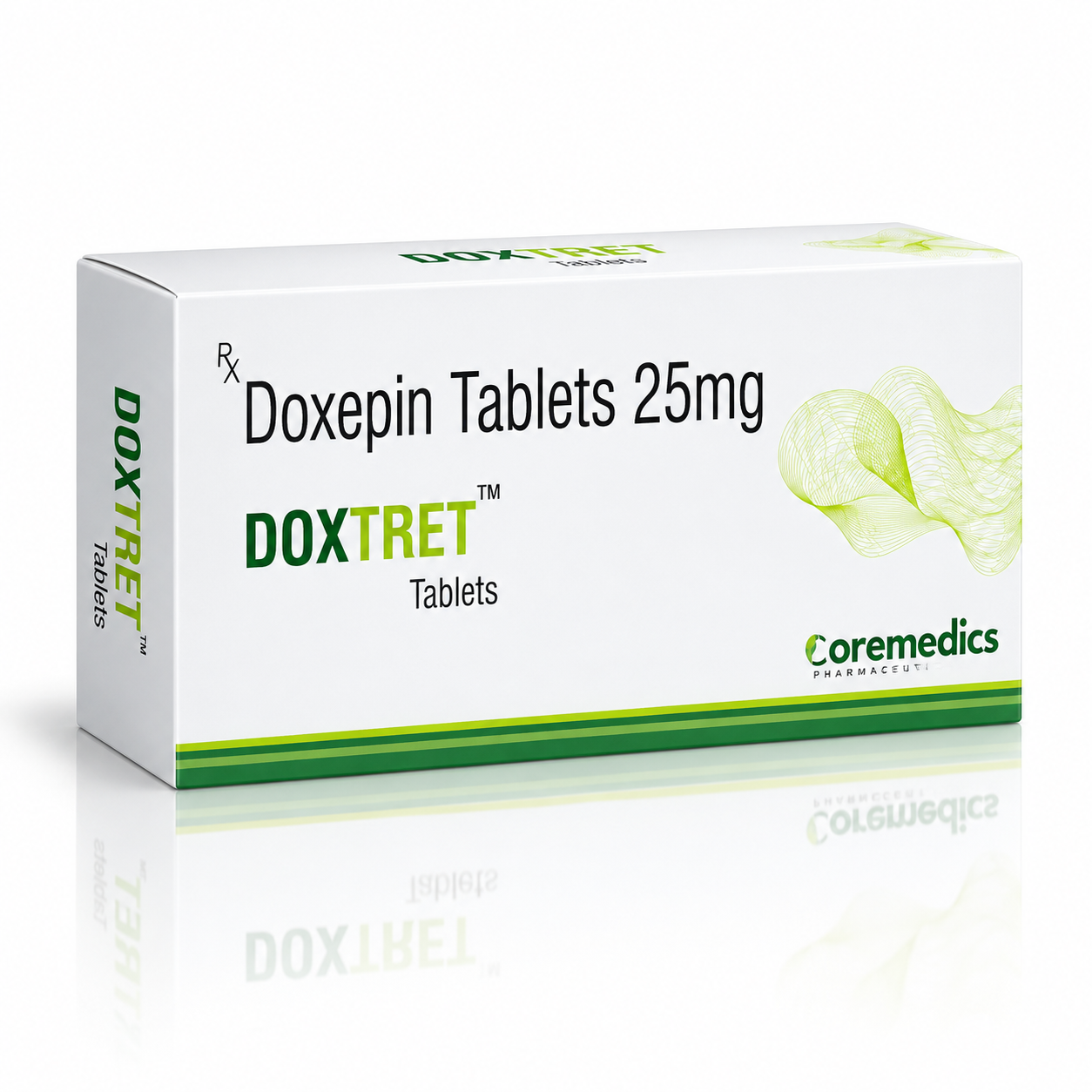
Doxtret 25 MG Tablet
$0.19 / unit
Available Options
| Pack Size | Price | Price / Unit | Quantity | Action |
|---|---|---|---|---|
| 180 Tablets | $33.48 | $0.19/unit | ||
| 150 Tablets | $27.90 | $0.19/unit | ||
| 120 Tablets | $22.32 | $0.19/unit | ||
| 90 Tablets | $16.74 | $0.19/unit | ||
| 60 Tablets | $11.16 | $0.19/unit | ||
| 30 Tablets | $5.58 | $0.19/unit |
Product Description
Doxtret 25 MG Tablet
Brand Name: Doxtret 25 MG Tablet
Generic Name: Doxepin Hydrochloride
Strength: 25 mg
Dosage Form: Oral Tablet
Therapeutic Class: Tricyclic Antidepressant (TCA) / Antidepressant Medicine
Manufacturer / Marketer: Coremedics Pharmaceutical Pvt. Ltd.
What is this medicine?
DOXTRET 25 MG TABLET contains Doxepin 25 mg, a medicine belonging to the tricyclic antidepressant (TCA) class. It is primarily used to treat depression and certain anxiety disorders.
Doxepin works by affecting the activity of chemical messengers in the brain, particularly serotonin and norepinephrine, which play important roles in regulating mood, emotions, and mental well-being.
It also has antihistamine properties that can produce sedation. Specially formulated, much lower-dose doxepin products are approved in certain countries for treating insomnia.
This medicine is commonly used for:
Depression associated with anxiety symptoms
Sleep disturbances associated with depression or anxiety
Selected cases of insomnia under medical supervision
Certain other psychiatric conditions when prescribed by a specialist
The product's doxepin composition, strength, therapeutic classification, and marketer are confirmed.
What should I tell my health care provider before I take this medicine?
They need to know if you have any of these conditions:
Allergy to doxepin, tricyclic antidepressants, or any ingredient of the tablet
Depression with suicidal thoughts or previous suicide attempts
Bipolar disorder or a history of mania
Heart disease or irregular heartbeat
Recent heart attack
Prolonged QT interval or other cardiac conduction disorders
Glaucoma, particularly untreated narrow-angle glaucoma
Difficulty urinating or urinary retention
Enlarged prostate
Liver disease
Kidney disease
Epilepsy or a history of seizures
Low blood pressure
History of fainting or severe dizziness
Sleep apnea or other breathing disorders
Pregnancy or planning pregnancy
Breastfeeding
Inform your healthcare provider about all medicines, supplements, vitamins, and herbal products you are currently taking.
Important: Doxepin should not be combined with monoamine oxidase inhibitors (MAOIs). It is also contraindicated in patients with glaucoma or a tendency toward urinary retention.
How should I use this medicine?
Take this medicine exactly as prescribed by your healthcare provider.
Swallow the tablet whole with water.
Do not crush, chew, or break the tablet.
It may be taken with or without food.
Take the medicine at the time recommended by your physician.
Doxepin may be prescribed once daily or in divided doses depending on the medical condition.
When prescribed once daily, it is often taken in the evening because it may cause drowsiness.
Take the medicine at approximately the same time each day.
Do not increase or decrease the dose without medical advice.
Avoid alcohol during treatment.
Do not drive or operate machinery until you know how the medicine affects you.
Do not stop taking the medicine suddenly without consulting your healthcare provider.
Attend regular medical appointments to monitor treatment response.
Usual Dose: The dosage depends on the medical condition, symptom severity, age, and individual response. Treatment for depression or anxiety may begin at a lower dose and be gradually adjusted by the prescribing physician.
Onset of Action: Sedation may occur after the first dose, while improvement in depression or anxiety symptoms may take approximately 2–4 weeks or longer.
Duration of Treatment: As prescribed by the physician, depending on the clinical response and ongoing treatment needs.
Route of Administration: Oral.
Overdosage: Seek emergency medical attention immediately if an overdose is suspected. Doxepin overdose can cause life-threatening heart rhythm disturbances, seizures, severe drowsiness, coma, and breathing difficulties.
NOTE: Doxtret 25 MG Tablet should not be used as a sleeping pill without medical supervision. Doxepin overdose can be extremely dangerous.
What if I miss a dose?
Take the missed dose when you remember, unless it is almost time for your next scheduled dose.
If the next dose is due soon, skip the missed dose.
Do not take a double dose to compensate for a missed dose.
Continue with your normal dosing schedule.
Contact your healthcare provider if you frequently miss doses.
Important: Do not discontinue doxepin suddenly. Abrupt withdrawal may cause nausea, headache, irritability, sleep disturbances, and other discontinuation symptoms.
What may interact with this medicine?
Monoamine oxidase inhibitors (MAOIs), including phenelzine and tranylcypromine
Other antidepressants, including certain SSRIs and SNRIs
Fluoxetine and paroxetine
Bupropion
Tramadol
Linezolid
Other medicines that increase serotonin activity
Benzodiazepines and sleeping medicines
Opioid pain medicines
Sedating antihistamines
Antipsychotic medicines
Medicines that prolong the QT interval
Antiarrhythmic medicines
Anticholinergic medicines
Certain blood pressure-lowering medicines
Cimetidine
Alcohol
Herbal supplements containing St. John's wort
Important Drug Interaction Considerations:
MAOIs: Combining doxepin with MAOIs is contraindicated because serious and potentially life-threatening reactions may occur.
Serotonergic Medicines: Certain combinations may increase the risk of serotonin syndrome.
Sedatives and Alcohol: Concurrent use may increase drowsiness, dizziness, and impaired coordination.
QT-Prolonging Medicines: Certain combinations may increase the risk of serious cardiac arrhythmias.
CYP2D6 Inhibitors: Medicines such as fluoxetine, paroxetine, and bupropion may increase doxepin concentrations.
Anticholinergic Medicines: Concurrent use may worsen dry mouth, constipation, blurred vision, and urinary retention.
Inform your healthcare provider about all medicines you are taking before starting treatment.
What should I watch for while using this medicine?
Seek immediate medical attention if you experience:
New or worsening suicidal thoughts
Severe changes in mood or behaviour
Symptoms of mania, such as unusually elevated mood or reduced need for sleep
Severe allergic reactions
Chest pain or serious heart rhythm disturbances
Fainting or loss of consciousness
Seizures
Severe confusion or hallucinations
Difficulty breathing
Severe difficulty urinating
Severe eye pain or sudden changes in vision
Symptoms of serotonin syndrome, including fever, agitation, sweating, tremors, and muscle stiffness
While using this medicine:
Attend regular medical checkups.
Monitor changes in mood, anxiety, and emotional well-being.
Report worsening depression or unusual behavioural changes.
Avoid alcohol and unnecessary sedating medicines.
Avoid driving if you experience drowsiness or dizziness.
Rise slowly from sitting or lying positions to reduce dizziness.
Maintain adequate hydration.
Report persistent constipation or urinary difficulties.
Monitor body weight and appetite.
Inform your healthcare provider if you develop palpitations or fainting.
Follow the prescribed treatment schedule.
Do not discontinue treatment without medical advice.
NOTE: Antidepressants, including doxepin, may increase the risk of suicidal thoughts and behaviours in children, adolescents, and young adults, particularly during early treatment or after dosage adjustments. Close monitoring is important.
What side effects may I notice from this medicine?
Side effects that should be reported immediately:
Suicidal thoughts or severe behavioural changes
Serious allergic reactions
Severe heart rhythm disturbances
Fainting or loss of consciousness
Seizures
Severe confusion or hallucinations
Serotonin syndrome
Severe urinary retention
Severe eye pain or sudden visual disturbances
Significant breathing difficulties
Symptoms of mania
Side effects that usually do not require medical attention:
Drowsiness
Dizziness
Dry mouth
Constipation
Blurred vision
Fatigue
Increased appetite
Weight gain
Nausea
Mild headache
Increased sweating
Difficulty concentrating
Mild tremors
Light-headedness when standing
Sexual dysfunction
Many common side effects are associated with doxepin's antihistamine and anticholinergic properties.
Most mild effects may improve as the body adjusts to treatment. However, persistent or worsening symptoms should be reported to a healthcare professional.
Important: Older adults may be more susceptible to excessive sedation, confusion, falls, constipation, and urinary retention. Doxepin at doses above 6 mg daily is generally considered potentially inappropriate for many older adults because of its anticholinergic and sedative effects.
Where should I keep my medicine?
Keep out of the reach of children.
Store below 25°C.
Protect from moisture and direct sunlight.
Keep the tablets in their original blister packaging until use.
Store in a cool, dry place.
Avoid excessive heat and humidity.
Do not use after the expiry date.
Do not use tablets if the packaging is damaged.
Dispose of expired or unused medicine according to your pharmacist's instructions.
Storage Note: Tata 1mg specifies storage below 25°C for Doxtret Tablet. Always follow the manufacturer's storage instructions printed on the supplied packaging.
Manufacturer Details
Field | Information |
|---|---|
Brand Name | |
Generic Name | Doxepin Hydrochloride |
Strength | 25 mg |
Dosage Form | Oral Tablet |
Therapeutic Class | |
Indication | Depression and Certain Anxiety Disorders |
Manufacturer / Marketer | Coremedics Pharmaceutical Pvt. Ltd. |
Prescription Status | Prescription Only Medicine |
Storage | Store Below 25°C |
Route of Administration | Oral |
Pack Size | 1 x 10 |
Country of Origin | India |