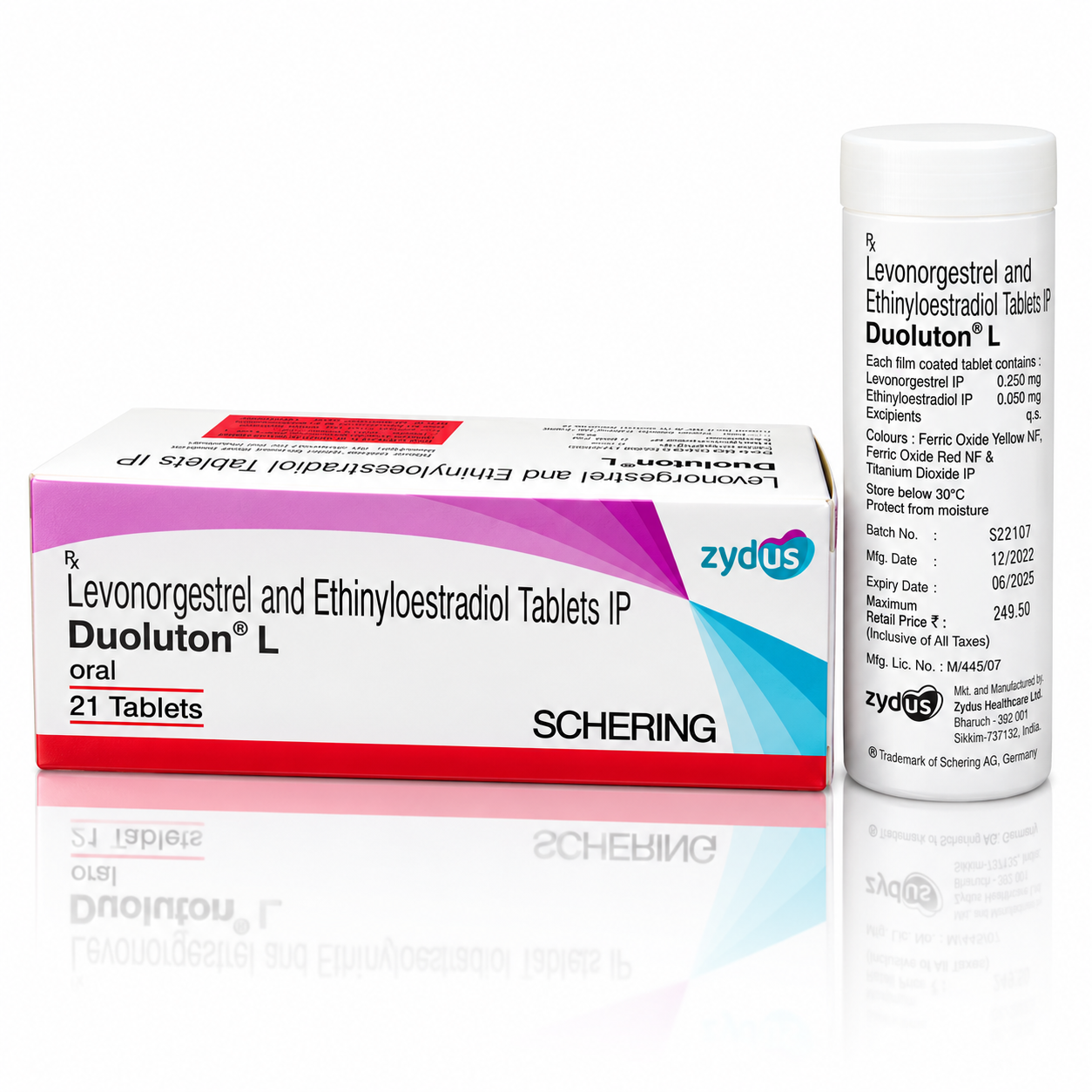
Duoluton-L Tablet
$0.14 / unit
Available Options
| Pack Size | Price | Price / Unit | Quantity | Action |
|---|---|---|---|---|
| 126 Tablets | $17.64 | $0.14/unit | ||
| 105 Tablets | $14.70 | $0.14/unit | ||
| 84 Tablets | $11.76 | $0.14/unit | ||
| 63 Tablets | $8.82 | $0.14/unit | ||
| 42 Tablets | $5.88 | $0.14/unit | ||
| 21 Tablets | $2.94 | $0.14/unit |
Product Description
Duoluton-L Tablet
Brand Name: Duoluton-L Tablet
Generic Name: Ethinylestradiol + Levonorgestrel
Strength: Ethinylestradiol 0.05 mg (50 mcg) + Levonorgestrel 0.25 mg (250 mcg)
Dosage Form: Oral Tablet
Therapeutic Class: Combined Oral Contraceptive (COC) / Estrogen + Progestin Hormonal Medicine
Manufacturer / Marketer: Zydus Healthcare Limited (formerly listed under Zydus Cadila)
Pack Size: 1 × 21 Tablets
Country of Origin: India
What is this medicine?
DUOLUTON-L TABLET is a combined hormonal medicine containing two active ingredients:
Ethinylestradiol 0.05 mg: A synthetic estrogen hormone.
Levonorgestrel 0.25 mg: A synthetic progestin hormone.
The combination is used primarily to prevent pregnancy and may also be prescribed for selected menstrual cycle disorders.
How does Duoluton-L work?
Duoluton-L acts through several mechanisms.
1. Prevents Ovulation
Ethinylestradiol and levonorgestrel suppress the hormonal signals responsible for ovulation.
This prevents the ovary from releasing an egg during most correctly treated cycles.
2. Thickens Cervical Mucus
Levonorgestrel increases the thickness of mucus around the cervix.
This makes it more difficult for sperm to pass through the cervix.
3. Changes the Uterine Lining
The hormonal combination changes the endometrium, the lining of the uterus.
These changes contribute to the overall contraceptive effect.
Medical Uses
Duoluton-L may be prescribed for:
Prevention of unintended pregnancy
Management of certain irregular menstrual cycles
Regulation of menstrual bleeding
Selected cases of heavy menstrual bleeding
Painful menstrual periods (dysmenorrhea)
Certain menstrual symptoms requiring hormonal management
NOTE: The established primary use of Duoluton-L is contraception. Other menstrual-related uses depend on a healthcare professional's assessment and applicable local prescribing guidance.
Important: Duoluton-L is not an emergency contraceptive pill. It should not be taken as a substitute for a medically recommended emergency contraception regimen.
It does not protect against sexually transmitted infections, including HIV. Condoms are still needed for STI protection.
The CDC identifies combined oral contraceptives as effective reversible contraception when used consistently and correctly.
What should I tell my health care provider before I take this medicine?
They need to know if you have any of these conditions:
Allergy to ethinylestradiol, levonorgestrel or other tablet ingredients
Previous deep vein thrombosis (DVT)
Pulmonary embolism
Known blood-clotting disorders
Previous heart attack
Stroke or transient ischemic attack
Coronary artery disease
Uncontrolled or severe high blood pressure
Migraine with aura
Diabetes with vascular complications
Severe liver disease
Liver tumours
Current or previous breast cancer
Certain hormone-sensitive cancers
Unexplained vaginal bleeding
Significant cardiovascular risk factors
High cholesterol or other lipid disorders
Smoking, particularly at age 35 or older
Recent childbirth
Planned major surgery or prolonged immobilisation
Gallbladder disease
Depression or significant mood disturbances
Pregnancy or suspected pregnancy
Breastfeeding
Current use of medicines that may reduce contraceptive effectiveness
Tell your healthcare provider about all prescription medicines, non-prescription medicines, herbal supplements and hormonal treatments you are taking.
Important Contraindications
Combined estrogen-containing contraceptives are generally unsuitable for patients with:
Current or previous serious blood clots, depending on clinical circumstances
Certain inherited thrombophilias
Migraine with aura
Severe or uncontrolled hypertension
Certain serious cardiovascular diseases
Current breast cancer
Serious active liver disease
Pregnancy
People aged 35 or older who smoke require particular caution. Depending on smoking intensity, combined hormonal contraception may be inappropriate or contraindicated.
Pregnancy Precautions
Duoluton-L is intended to prevent pregnancy.
It should not be used during an established pregnancy.
If pregnancy is suspected, contact a healthcare professional for assessment.
Breastfeeding Precautions
Estrogen-containing contraceptives may reduce breast milk production, particularly when started soon after childbirth.
Combined hormonal contraceptive use also requires consideration of postpartum blood clot risk.
A healthcare professional should recommend an appropriate contraceptive method based on breastfeeding status and the time since delivery.
Important: The CDC's medical eligibility criteria provide specific restrictions for combined hormonal contraception in people with migraine with aura, smoking-related risks, previous thromboembolism and certain postpartum conditions.
How should I use this medicine?
Take Duoluton-L Tablet exactly as prescribed by your healthcare professional.
Swallow the tablet with water.
Take one tablet daily at approximately the same time.
Follow the order indicated on the pack, if applicable.
Do not skip tablets intentionally.
Take the medicine with or without food.
Taking it after food or at bedtime may reduce nausea.
Follow your physician's instructions regarding when to begin the first pack.
Use additional contraception when indicated.
Inform your clinician about new medicines that may affect contraceptive effectiveness.
Do not change or discontinue the regimen without considering pregnancy prevention.
Dosage Information
Strength per Tablet:
Ethinylestradiol: 0.05 mg (50 mcg)
Levonorgestrel: 0.25 mg (250 mcg)
Usual Contraceptive Schedule: One tablet once daily for 21 consecutive days.
Pill-Free Interval: Under the conventional 21-day combined pill schedule, the 21 active tablets are followed by a seven-day tablet-free interval.
Starting the Next Pack: Begin the next pack after the seven-day interval, whether or not withdrawal bleeding has finished.
Important: These are standard instructions for a 21-active-tablet combined pill. Follow any differing regimen specifically prescribed by your clinician or supplied in the Duoluton-L leaflet.
Starting Treatment: If combined oral contraception is started within the first five days of menstrual bleeding, additional contraception is generally not required. If started later, use condoms or avoid intercourse for the next seven days, provided pregnancy has been reasonably excluded.
Dose Adjustment: Routine dose adjustment is not recommended without medical supervision. Patients experiencing adverse effects may need a different contraceptive formulation.
Maximum Recommended Dose: One tablet daily for the standard regimen. Do not take extra tablets to improve contraceptive protection.
Onset of Contraceptive Protection: Depends on the day treatment is started and whether appropriate backup contraception is used.
Route of Administration: Oral.
Treatment Duration: May be continued for contraception while medically appropriate, with periodic reassessment of risk factors.
Overdosage: Excessive intake may cause nausea, vomiting or vaginal bleeding. Seek medical advice if a substantial overdose occurs or concerning symptoms develop.
Important Warning: Higher Estrogen Strength
Duoluton-L contains 50 mcg ethinylestradiol, whereas many currently used combined contraceptives contain 20–35 mcg.
A higher estrogen dose does not automatically provide better contraception and may increase estrogen-related adverse effects.
A clinician should assess whether this higher-estrogen formulation is appropriate for the individual patient.
What if I miss a dose?
Missed combined oral contraceptive pills can reduce pregnancy protection.
The following reflects the CDC's standard guidance for combined oral contraceptives.
If One Tablet Is Late or Missed (Less Than 48 Hours Since It Was Due)
Take the late or missed tablet as soon as possible.
Take the next tablet at the usual scheduled time.
This may mean taking two tablets on the same day.
Additional contraceptive protection is generally unnecessary.
If Two or More Consecutive Tablets Are Missed (48 Hours or More Since a Tablet Was Due)
Take the most recently missed tablet as soon as possible.
Discard earlier missed tablets.
Continue taking the remaining tablets at the usual time.
Use condoms or avoid intercourse until seven consecutive active tablets have been taken.
If two or more tablets are missed during the final week of active tablets, the usual seven-day pill-free interval should be skipped and the next pack started immediately.
Emergency Contraception Considerations
Emergency contraception should be considered if two or more tablets are missed during the first week and unprotected intercourse occurred in the preceding five days.
The appropriate emergency contraception option matters because ulipristal acetate can interact with the timing of restarting hormonal contraception.
Important: Missing tablets near the beginning or end of a pack can be particularly significant.
If uncertain, consult a pharmacist or healthcare professional promptly rather than relying on guesswork.
What may interact with this medicine?
Potential interactions include:
Rifampicin
Rifabutin
Carbamazepine
Phenytoin
Phenobarbital
Primidone
Oxcarbazepine
Topiramate at certain doses
Certain antiretroviral medicines
St. John's wort
Lamotrigine
Certain hepatitis C antiviral combinations
Tirzepatide
Other medicines that induce liver drug-metabolising enzymes
Important Drug Interaction Considerations
Rifampicin and Rifabutin: These antibiotics can increase the breakdown of contraceptive hormones and reduce pregnancy protection.
Certain Antiseizure Medicines: Carbamazepine, phenytoin, phenobarbital, primidone and some other antiseizure medicines can lower hormone concentrations and reduce contraceptive effectiveness.
St. John's Wort: May reduce the effectiveness of hormonal contraception and increase breakthrough bleeding.
Certain HIV Medicines: Some antiretroviral combinations can alter estrogen or progestin concentrations. The effect depends on the specific regimen.
Lamotrigine: Estrogen-containing contraceptives can lower lamotrigine levels, potentially reducing seizure control. Lamotrigine levels can also rise during a pill-free interval.
Certain Hepatitis C Treatments: Some direct-acting antiviral combinations are contraindicated with ethinylestradiol-containing products because of liver enzyme elevation risks.
Tirzepatide: May reduce the absorption of oral hormonal contraceptives, particularly when started or after a dose increase. Additional or alternative contraception may be required.
Important: Most routinely prescribed antibiotics do not significantly reduce combined pill effectiveness. Rifampicin and rifabutin are important exceptions.
A clinician or pharmacist should review the exact medications and advise whether backup or alternative contraception is necessary.
What should I watch for while using this medicine?
Seek immediate medical attention if you experience:
Sudden chest pain
Severe shortness of breath
Coughing up blood
Painful swelling in one leg
Sudden weakness or numbness affecting one side of the body
Difficulty speaking
Sudden loss of vision
Severe or unusual headache
New migraine with aura
Severe upper abdominal pain
Yellowing of the skin or eyes
Severe allergic reactions
While using Duoluton-L:
Take tablets consistently at the prescribed time.
Monitor unexpected vaginal bleeding.
Report persistent headaches or significant mood changes.
Have blood pressure assessed before starting and periodically thereafter.
Avoid smoking, particularly if aged 35 or older.
Inform healthcare professionals before surgery or prolonged immobilisation.
Report new medications that may interfere with hormonal contraception.
Seek assessment if pregnancy is suspected.
Attend recommended contraceptive reviews.
Use condoms for protection against sexually transmitted infections.
Important Warning: Blood Clots
Combined oral contraceptives increase the risk of venous thromboembolism, including deep vein thrombosis and pulmonary embolism.
Risk may increase further with:
Previous blood clots
Inherited clotting disorders
Smoking
Obesity
Prolonged immobilisation
Recent childbirth
Certain other cardiovascular risk factors
Seek emergency care for sudden chest pain, breathlessness or painful swelling of one leg.
Important Warning: Stroke and Heart Attack
Estrogen-containing contraceptives may increase the risk of stroke or heart attack in susceptible individuals.
Particular caution is required with severe hypertension, smoking at older ages, migraine with aura and existing cardiovascular disease.
Important Warning: High Blood Pressure
Combined hormonal contraception may increase blood pressure.
A blood pressure assessment is recommended before starting treatment.
Important Warning: Menstrual Changes
Duoluton-L may cause:
Breakthrough bleeding
Spotting between periods
Changes in withdrawal bleeding
Occasional absence of withdrawal bleeding
Persistent or unusual bleeding requires medical assessment.
Important Warning: Liver Problems
Severe liver disease and certain liver tumours are important contraindications to estrogen-containing contraception.
Seek medical advice for jaundice, persistent severe abdominal pain or other signs of liver dysfunction.
What side effects may I notice from this medicine?
Side effects that should be reported immediately:
Blood clots in the legs or lungs
Severe chest pain
Stroke-like symptoms
Sudden vision loss
Severe or unusual headaches
New migraine with aura
Significant increases in blood pressure
Severe liver problems
Severe abdominal pain
Serious allergic reactions
Severe mood changes, particularly suicidal thoughts
Side effects that usually do not require immediate medical attention:
Nausea
Headache
Breast tenderness
Mild abdominal discomfort
Bloating
Spotting between periods
Changes in menstrual bleeding
Mild mood changes
Weight fluctuations
Acne or changes in skin condition
Mild fatigue
Changes in sexual desire
These are recognised possible adverse effects of combined hormonal contraceptives.
Current Duoluton-L product information identifies headache, nausea, breast discomfort, abdominal pain and menstrual irregularities among reported adverse effects.
The individual risk of serious complications depends on the patient's medical history, age, smoking status and other cardiovascular factors.
Where should I keep my medicine?
Keep out of the reach of children.
Store below 30°C, according to current Indian pharmacy listings.
Protect from excessive heat, moisture and direct sunlight.
Keep tablets in their original packaging.
Avoid storing them in humid conditions.
Do not use after the expiry date.
Do not use tablets from damaged packaging.
Follow the original manufacturer's storage instructions.
Dispose of unused or expired medicine according to your pharmacist's guidance.
Storage Note: Tata 1mg's associated brand listings and Truemeds specify storage below 30°C for Duoluton-L. The original product carton remains the preferred source for batch-specific instructions.
Manufacturer Details
Field | Information |
|---|---|
Brand Name | Duoluton-L Tablet |
Generic Name | Ethinylestradiol + Levonorgestrel |
Ethinylestradiol Strength | 0.05 mg (50 mcg) |
Levonorgestrel Strength | 0.25 mg (250 mcg) |
Dosage Form | Oral Tablet |
Therapeutic Class | Combined Oral Contraceptive |
Hormonal Classification | Synthetic Estrogen + Progestin |
Primary Indication | Prevention of Pregnancy |
Additional Uses | Selected Menstrual Cycle Disorders |
Manufacturer / Marketer | Zydus Healthcare Limited |
Former / Alternative Company Listing | Zydus Cadila |
Manufacturing Facility | Zydus Healthcare Ltd., Rangpo, East Sikkim (Pharmacy-Listed) |
Prescription Status | Prescription Medicine |
Storage | Below 30°C |
Route of Administration | Oral |
Pack Size | 1 × 21 Tablets |
Country of Origin | India |
Conventional Dosing Schedule | 21 Daily Tablets Followed by a 7-Day Pill-Free Interval |
Important Safety Concerns | Blood Clots, Stroke, Cardiovascular Disease, Hypertension and Estrogen-Related Risks |