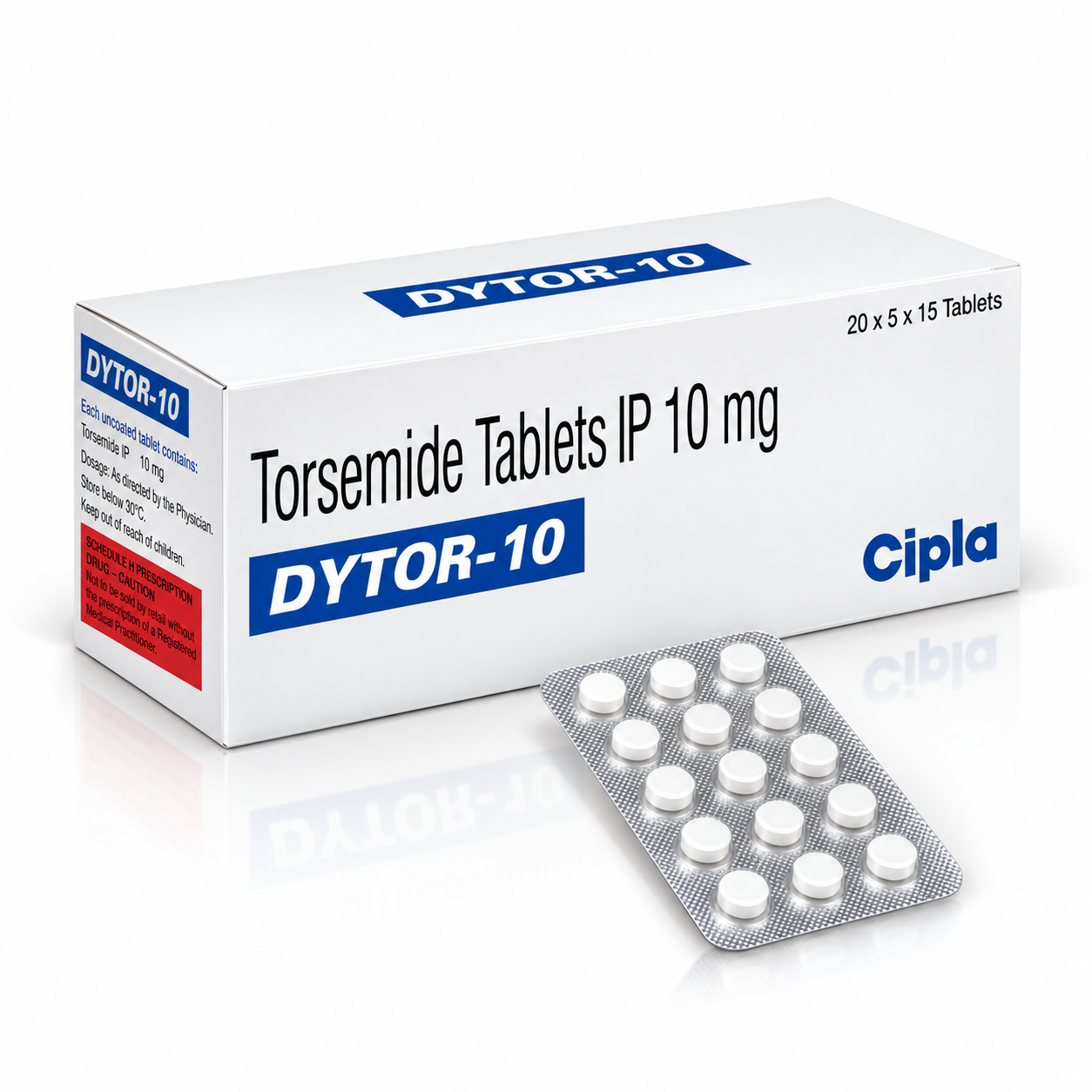
Dytor 10 MG Tablet
$0.36 / unit
Available Options
| Pack Size | Price | Price / Unit | Quantity | Action |
|---|---|---|---|---|
| 180 Tablets | $50.00 | $0.28/unit | ||
| 150 Tablets | $43.00 | $0.29/unit | ||
| 120 Tablets | $35.00 | $0.29/unit | ||
| 90 Tablets | $28.00 | $0.31/unit | ||
| 60 Tablets | $20.00 | $0.33/unit | ||
| 30 Tablets | $11.00 | $0.37/unit |
Product Description
Dytor 10 MG Tablet
Brand Name: Dytor 10 MG Tablet
Generic Name: Torasemide (Torsemide)
Strength: 10 mg
Dosage Form: Oral Tablet
Therapeutic Class: Loop Diuretic / Antihypertensive Medicine
Manufacturer / Marketer: Cipla Limited
Pack Size 1 × 15 Tablets
Country of Origin: India
Prescription Status: Prescription Medicine
What is this medicine?
DYTOR 10 MG TABLET contains Torasemide 10 mg, a medicine belonging to the loop diuretic class.
Diuretics are sometimes called water tablets because they increase the removal of excess water and salt from the body through urine.
Dytor is commonly prescribed when fluid accumulates in body tissues due to certain heart, liver or kidney conditions.
Fluid retention can cause swelling in the legs, ankles, feet, abdomen or other parts of the body.
How does Dytor work?
Torasemide works primarily in the kidneys, specifically in a region called the thick ascending limb of the loop of Henle.
It inhibits the sodium-potassium-chloride cotransporter, known as NKCC2.
This reduces the reabsorption of sodium, potassium and chloride from the kidney filtrate, increasing the elimination of salt and water through urine.
Main Effects
1. Increases Urine Production
Dytor encourages the kidneys to remove excess salt and water.
2. Reduces Fluid Retention
By removing excess fluid, it may reduce swelling associated with certain medical conditions.
3. Helps Relieve Fluid-Related Breathlessness
In selected patients with heart failure, reducing excess fluid may improve breathing and reduce congestion.
4. Helps Lower Blood Pressure
Torasemide reduces fluid volume and has antihypertensive effects.
5. Supports Fluid Management in Kidney and Liver Disorders
It may be prescribed as part of a monitored treatment plan for oedema associated with renal or hepatic disease.
Medical Uses
Dytor 10 MG Tablet may be prescribed for:
Oedema associated with congestive heart failure
Swelling of the feet, legs and ankles caused by fluid retention
Selected cases of pulmonary congestion associated with heart failure
Fluid retention associated with chronic kidney disease
Oedema associated with certain kidney disorders
Fluid retention associated with liver cirrhosis
Selected cases of ascites
High blood pressure (hypertension)
Other conditions involving excess fluid accumulation when diuretic treatment is appropriate
NOTE: Dytor helps remove excess fluid but does not cure the underlying heart, kidney or liver disease.
It may be prescribed alongside other treatments addressing the underlying condition.
Important: Dytor is not a weight-loss medicine. Weight reduction caused by diuretics primarily reflects water loss rather than a reduction in body fat.
Official torasemide prescribing information identifies oedema associated with heart failure, renal disease and hepatic disease, as well as hypertension, among its indications.
What should I tell my health care provider before I take this medicine?
Tell your healthcare provider if you have any of these conditions:
Allergy to torasemide
Allergy to any ingredient of the tablet
Previous serious reactions to diuretics
Severe dehydration
Low blood pressure
Low potassium levels
Low sodium levels
Low magnesium levels
Kidney disease
Sudden deterioration in kidney function
Inability to produce urine (anuria)
Severe liver disease
Hepatic coma
Hepatic encephalopathy
Heart disease
Irregular heartbeat
Diabetes mellitus
Gout
High uric acid levels
History of hearing problems
Persistent vomiting or diarrhoea
Difficulty passing urine due to urinary obstruction
Enlarged prostate with urinary problems
Frequent dizziness or fainting
Pregnancy or plans to become pregnant
Breastfeeding
Current use of other diuretics
Current use of medicines affecting kidney function
Current use of potassium supplements
Inform your healthcare provider about all prescription medicines, over-the-counter medicines, herbal supplements and vitamins you are taking.
Important Contraindications
Torasemide should not be used in patients with:
Known hypersensitivity to torasemide or relevant tablet ingredients
Anuria, meaning an inability to produce urine
Hepatic coma
Significant dehydration or severe electrolyte abnormalities may also require correction before treatment.
Important Kidney Precaution
Although torasemide may be used to treat fluid retention associated with kidney disease, it can also worsen kidney function if excessive diuresis occurs.
Patients may require monitoring of:
Serum creatinine
Blood urea
Estimated glomerular filtration rate (eGFR)
Potassium
Sodium
Hydration status
Important Liver Precaution
Patients with cirrhosis may be particularly vulnerable to changes in fluid and electrolyte balance.
Excessive diuresis can contribute to worsening kidney function or hepatic encephalopathy.
Treatment for ascites may require additional medicines and close supervision.
Important Electrolyte Precaution
Dytor may increase the loss of potassium, sodium and magnesium.
Significant electrolyte disturbances may cause muscle weakness, confusion, cramps or abnormal heart rhythms.
Pregnancy Precautions
There are limited human pregnancy data for torasemide.
Dytor should be used during pregnancy only when a healthcare professional determines that the expected benefit justifies the potential risks.
Diuretics should not be used for ordinary pregnancy-related swelling without appropriate medical assessment.
Breastfeeding Precautions
Information about torasemide transfer into human breast milk is limited.
Diuretic treatment may also affect milk production.
A healthcare professional should assess whether Dytor is appropriate during breastfeeding.
Important: Official torasemide prescribing information identifies hypotension, worsening kidney function, electrolyte abnormalities and ototoxicity as important precautions.
How should I use this medicine?
Take Dytor 10 MG Tablet exactly as prescribed by your healthcare professional.
Swallow the tablet with water.
Take it at approximately the same time each day.
It is often taken in the morning to reduce nighttime urination.
It may be taken with or without food.
Do not increase or decrease the dose without medical advice.
Follow any prescribed fluid or salt restrictions.
Monitor blood pressure if recommended.
Monitor body weight if prescribed for heart failure or oedema.
Attend scheduled blood tests.
Report severe dizziness or weakness.
Do not stop treatment without discussing the underlying medical condition with your clinician.
Dosage Information
Strength per Tablet: Torasemide 10 mg.
Usual Adult Dose: Depends on the underlying medical condition and treatment response.
For Oedema Associated with Heart Failure
Reference Starting Dose: 10–20 mg once daily.
The dose may be adjusted according to clinical response and tolerance.
For Oedema Associated with Chronic Kidney Disease
Reference Starting Dose: Often 20 mg once daily, with adjustments based on the patient's response and kidney function.
A 10 mg tablet is not necessarily the correct starting dose for every patient with kidney disease.
For Oedema Associated with Liver Cirrhosis
Reference Starting Dose: 5–10 mg once daily, generally alongside an aldosterone antagonist or potassium-sparing diuretic when appropriate.
Close monitoring is important because excessive fluid removal may cause serious complications.
For High Blood Pressure
Reference Starting Dose: 5 mg once daily.
If blood pressure remains inadequately controlled after approximately four to six weeks, the clinician may increase the dose to 10 mg daily.
If 10 mg is insufficient, another blood-pressure-lowering medicine may be added rather than continuing to increase torasemide.
These are reference regimens from generic torasemide prescribing information, not individual Dytor prescriptions.
Additional Dosage Information
Dose Frequency: Usually once daily, although certain patients may receive a different schedule.
Dose Adjustment: May be required based on kidney function, blood pressure, electrolyte concentrations, urine output and fluid balance.
Maximum Recommended Dose: Depends on the indication. Generic prescribing information reports that doses above 200 mg daily for heart-failure or renal oedema, and above 40 mg daily for cirrhotic oedema, have not been adequately studied. These are not suggested targets or self-adjustment limits. The approved routine hypertension regimen generally does not require more than 10 mg daily.
Onset of Action: Oral torasemide generally begins increasing urine production within approximately one hour.
Peak Diuretic Effect: Usually occurs during the first few hours after administration.
Duration of Diuretic Effect: Approximately 6–8 hours in many patients.
Route of Administration: Oral.
Treatment Duration: Depends on the underlying medical condition. Some patients require long-term treatment.
Overdosage: Excessive intake may cause marked diuresis, dehydration, low blood pressure, electrolyte imbalances and impaired kidney function.
Seek urgent medical care if an overdose causes fainting, severe weakness, confusion, marked palpitations or substantially reduced urination.
NOTE: Do not increase the dose simply because swelling has not improved immediately. Treatment adjustments should be based on medical assessment and monitoring.
What if I miss a dose?
Take the missed tablet when remembered unless the next scheduled dose is nearly due.
If the next dose is approaching, skip the missed dose.
Do not take two doses together.
Do not increase the next day's dose.
Resume the prescribed treatment schedule.
If you remember late in the evening, consult your pharmacist or follow your prescribed instructions, as a late dose may cause frequent nighttime urination.
Important: Patients receiving Dytor for heart failure should seek medical advice if missed doses are followed by rapid weight gain, increasing swelling or worsening breathlessness.
What may interact with this medicine?
Potentially important medicines include:
Ibuprofen
Naproxen
Diclofenac
Other nonsteroidal anti-inflammatory drugs (NSAIDs)
Lithium
Ramipril
Enalapril
Losartan
Telmisartan
Other ACE inhibitors and angiotensin receptor blockers
Other blood pressure medicines
Spironolactone
Other diuretics
Digoxin
Prednisolone and other corticosteroids
Aminoglycoside antibiotics such as gentamicin
Certain other medicines associated with hearing problems
Cholestyramine
Probenecid
Warfarin
Phenytoin
Certain medicines affecting CYP2C9 metabolism
Important Drug Interaction Considerations
NSAIDs: Medicines such as ibuprofen, diclofenac and naproxen may reduce the diuretic and blood-pressure-lowering effects of torasemide.
They can also increase the risk of kidney injury, particularly in dehydrated patients.
Lithium: Diuretics may increase lithium concentrations and cause toxicity. This combination requires close medical assessment and monitoring.
ACE Inhibitors and ARBs: These medicines may increase the risk of low blood pressure or worsening kidney function when used with diuretics, especially if the patient is dehydrated.
Other Diuretics: Combining diuretics may produce stronger fluid and electrolyte losses. Some combinations are intentionally prescribed, but monitoring is essential.
Spironolactone: Torasemide may be deliberately combined with spironolactone in certain fluid-retention conditions. The combination requires potassium and kidney function monitoring.
Digoxin: Low potassium or magnesium may increase the risk of digoxin-related heart rhythm problems.
Corticosteroids: Corticosteroids may contribute to potassium depletion, increasing the risk of electrolyte disturbances.
Aminoglycoside Antibiotics: Concurrent use of medicines associated with hearing damage may increase concerns about ototoxicity.
Cholestyramine: May reduce gastrointestinal absorption of torasemide and decrease its effectiveness.
Probenecid: May interfere with the renal handling of torasemide and reduce its diuretic effect.
Warfarin and Phenytoin: Torasemide may affect the activity or exposure of certain medicines metabolised through CYP2C9. Additional monitoring may be appropriate.
Important: Do not independently discontinue prescribed heart, kidney or blood pressure medicines. Many combinations are used intentionally and should be managed by a healthcare professional.
Official torasemide prescribing information identifies NSAIDs, lithium, cholestyramine, renin-angiotensin system inhibitors and certain other medicines as clinically important interaction considerations.
What should I watch for while using this medicine?
Seek immediate medical attention if you experience:
Severe dizziness or fainting
Chest pain
Irregular heartbeat
Severe muscle weakness
Confusion or altered consciousness
Severe dehydration
Markedly reduced urination
Severe allergic reactions
Swelling of the face, lips or tongue
Sudden hearing loss or significant hearing changes
Severe breathing difficulty
While taking Dytor:
Monitor your blood pressure if advised.
Attend regular blood tests.
Monitor kidney function.
Monitor potassium, sodium and magnesium.
Follow prescribed fluid restrictions.
Follow recommended dietary salt limits.
Monitor body weight when managing heart failure.
Report rapid changes in weight.
Report muscle cramps or weakness.
Seek assessment if swelling or breathlessness worsens.
Avoid using additional diuretics without medical advice.
Important Warning: Dehydration
Torasemide increases urine production and may cause excessive fluid loss.
Symptoms of dehydration include:
Increased thirst
Dry mouth
Dizziness
Weakness
Low blood pressure
Reduced urination after excessive fluid loss
Severe dehydration may affect kidney function.
Patients with heart failure or kidney disease should follow their individual fluid management plan rather than automatically increasing water intake.
Important Warning: Low Potassium
Torasemide may cause hypokalaemia, or low blood potassium.
Possible symptoms include:
Muscle weakness
Muscle cramps
Palpitations
Irregular heartbeat
Fatigue
Low potassium can be dangerous, especially in patients with heart disease.
Important Warning: Low Sodium
Torasemide may reduce sodium concentrations.
Symptoms may include:
Headache
Nausea
Weakness
Confusion
Severe drowsiness
Seizures in serious cases
Significant symptoms require urgent medical attention.
Important Warning: Kidney Dysfunction
Excessive diuresis can reduce circulating blood volume and decrease kidney perfusion.
This may cause a rise in creatinine or acute kidney injury.
Patients require monitoring based on their clinical condition and dosage.
Important Warning: Low Blood Pressure
Dytor may cause dizziness and postural hypotension.
Patients should rise slowly from sitting or lying positions, especially when treatment begins or the dosage changes.
Important Warning: Hearing Problems
Loop diuretics have occasionally been associated with hearing impairment or tinnitus.
The risk may be greater with excessive doses, significant kidney impairment or certain interacting medicines.
Important Warning: Gout and Diabetes
Torasemide may increase uric acid and blood glucose levels in some patients.
Patients with gout or diabetes should discuss appropriate monitoring with their healthcare professional.
What side effects may I notice from this medicine?
Side effects that should be reported immediately:
Severe dehydration
Significant low blood pressure
Fainting
Severe potassium or sodium disturbances
Irregular heartbeat
Chest pain
Acute kidney injury
Markedly reduced urine output
Severe allergic reactions
Sudden hearing impairment
Severe confusion or seizures
Side effects that usually do not require immediate medical attention:
Increased urination
Mild dizziness
Headache
Increased thirst
Dry mouth
Muscle cramps
Nausea
Mild abdominal discomfort
Constipation
Mild weakness
Temporary changes in blood pressure
Increased urination is an expected pharmacological effect of torasemide.
However, excessive urination accompanied by dizziness, dehydration or weakness may indicate a need for medical reassessment.
Important: Official torasemide prescribing information identifies excessive urination as a commonly reported adverse effect and describes electrolyte disturbances, dehydration, hypotension and kidney dysfunction as important potential complications.
Where should I keep my medicine?
Keep out of the reach of children.
Store below 30°C, according to current Tata 1mg product information.
Protect from excessive heat and direct sunlight.
Keep tablets in their original blister packaging.
Protect from moisture.
Do not use after the expiry date.
Do not use tablets from damaged packaging.
Store away from children and pets.
Dispose of expired or unused medicine according to your pharmacist's instructions.
Storage Note: Current Tata 1mg information specifies storage below 30°C for Dytor 10 Tablet. Always follow the original Cipla carton if its instructions differ.
Manufacturer Details
Field | Information |
|---|---|
Brand Name | Dytor 10 MG Tablet |
Generic Name | Torasemide (Torsemide) |
Strength | 10 mg |
Dosage Form | Oral Tablet |
Therapeutic Class | Loop Diuretic |
Primary Indication | Oedema / Fluid Retention |
Additional Indication | Hypertension |
Common Clinical Conditions | Heart Failure, Kidney Disease and Liver Disease |
Manufacturer / Marketer | Cipla Limited |
Corporate Address | Cipla House, Peninsula Business Park, Ganpatrao Kadam Marg, Lower Parel, Mumbai 400013, India |
Manufacturing Facility | Malpur, Solan, Himachal Pradesh (PharmEasy-Listed; Verify Product Carton) |
Prescription Status | Prescription Medicine |
Storage | Below 30°C (Pharmacy-Listed) |
Route of Administration | Oral |
Pack Size | 1 × 10 Tablets |
Alternative Pack Size | 1 × 15 Tablets |
Country of Origin | India |
Typical Dose Frequency | Often Once Daily, as Prescribed |
Important Safety Concerns | Dehydration, Electrolyte Disturbances, Hypotension and Kidney Dysfunction |