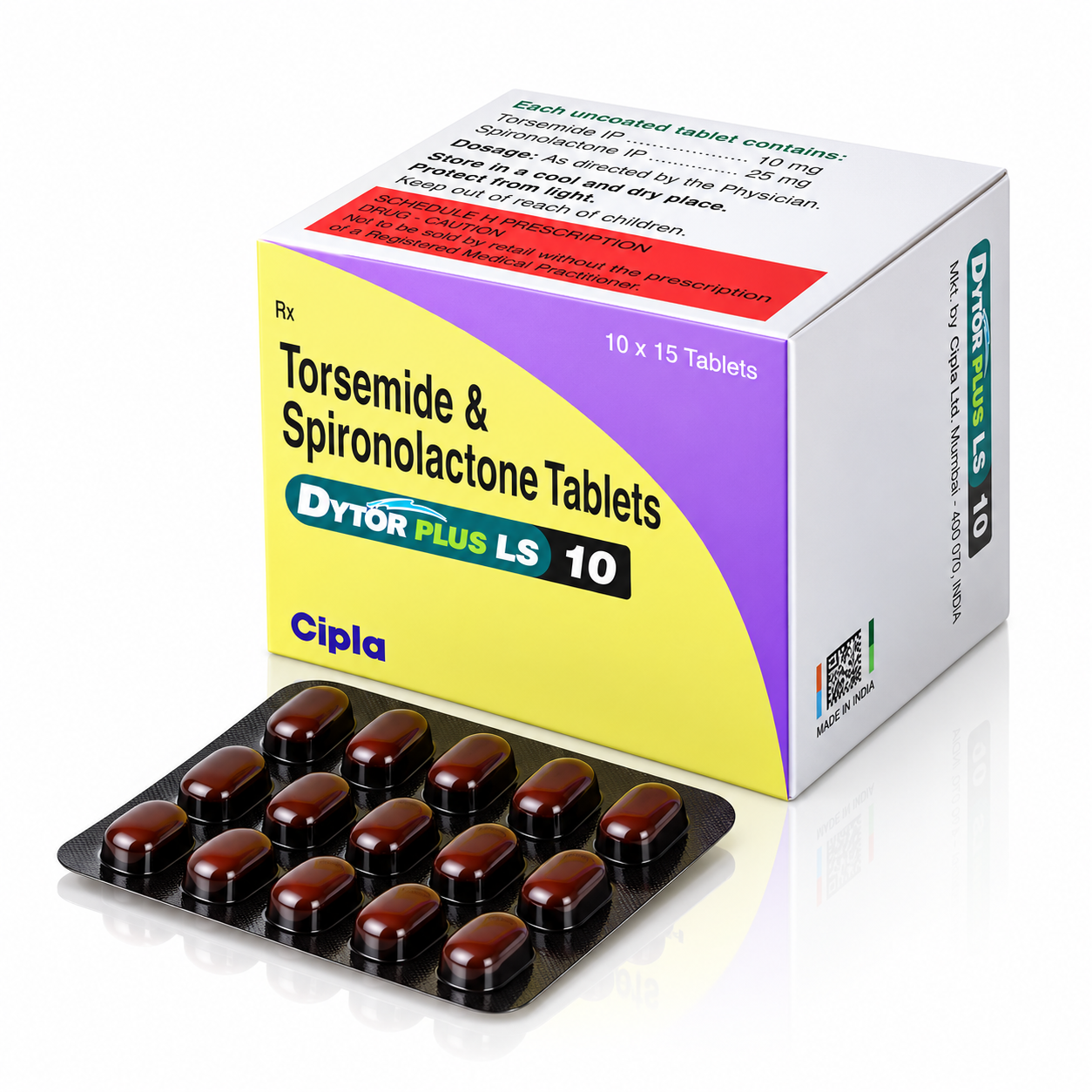
Dytor Plus -LS 10 MG Tablet
$0.10 / unit
Available Options
| Pack Size | Price | Price / Unit | Quantity | Action |
|---|---|---|---|---|
| 90 Tablets | $8.70 | $0.10/unit | ||
| 75 Tablets | $7.25 | $0.10/unit | ||
| 60 Tablets | $5.80 | $0.10/unit | ||
| 45 Tablets | $4.35 | $0.10/unit | ||
| 30 Tablets | $2.90 | $0.10/unit | ||
| 15 Tablets | $1.45 | $0.10/unit |
Product Description
Dytor Plus LS 10 MG Tablet
Brand Name: Dytor Plus LS 10 MG Tablet
Generic Name: Spironolactone + Torasemide
Strength: Spironolactone 25 mg + Torasemide 10 mg
Dosage Form: Oral Tablet
Therapeutic Class: Potassium-Sparing Diuretic + Loop Diuretic
Manufacturer / Marketer: Cipla Limited
Pack Size: 1 × 15 Tablets
Country of Origin: India
Prescription Status: Prescription Medicine
What is this medicine?
DYTOR PLUS LS 10 MG TABLET is a combination medicine containing two diuretics:
Spironolactone 25 mg: A potassium-sparing diuretic that blocks the effects of aldosterone, helping remove excess salt and water while limiting potassium loss.
Torasemide 10 mg: A loop diuretic that increases the removal of salt and water through urine.
These medicines work together to help reduce excess fluid accumulation in the body.
Fluid retention may cause swelling in the legs, ankles, feet, abdomen or other body tissues.
In certain conditions, excess fluid may also accumulate in the lungs and contribute to breathing difficulties.
How does Dytor Plus LS 10 work?
1. Spironolactone
Spironolactone is an aldosterone receptor antagonist.
Aldosterone is a hormone involved in maintaining sodium, potassium and water balance.
It encourages the kidneys to retain sodium and water while increasing potassium excretion.
Spironolactone blocks these effects.
This helps:
Reduce sodium retention
Increase water elimination
Limit potassium loss
Reduce fluid accumulation
Counteract excessive aldosterone activity
Support treatment of selected heart failure conditions
2. Torasemide
Torasemide is a loop diuretic.
It works in the thick ascending limb of the loop of Henle, a part of the kidneys.
Torasemide inhibits the sodium-potassium-chloride cotransporter, known as NKCC2.
This increases the amount of sodium, chloride and water eliminated through urine.
Its effects include:
Increasing urine production
Reducing swelling
Removing excess body fluid
Helping relieve fluid-related breathlessness
Reducing blood pressure in selected patients
Why are both medicines combined?
Spironolactone and torasemide work through different mechanisms.
Torasemide helps remove excess fluid more directly, while spironolactone blocks aldosterone and helps conserve potassium.
The combination may be useful when a healthcare professional determines that both medicines are necessary.
Important: The two medicines do not always perfectly balance potassium levels. Patients may develop either high potassium or low potassium, depending on kidney function, other medicines and their medical condition.
Medical Uses
Dytor Plus LS 10 may be prescribed for:
Oedema associated with congestive heart failure
Fluid retention associated with liver cirrhosis
Selected cases of ascites caused by liver disease
Fluid retention associated with certain kidney disorders
Selected cases of nephrotic syndrome
Swelling of the legs, ankles and feet caused by excess fluid
Selected cases of difficult-to-control hypertension
Fluid overload associated with certain cardiovascular conditions
NOTE: Dytor Plus LS 10 helps manage excess fluid accumulation but does not cure the underlying heart, kidney or liver condition.
It is usually used as part of a broader medical treatment plan.
Important: Dytor Plus LS 10 is not a medicine for weight loss. Any rapid weight reduction caused by its diuretic effect mainly represents water loss rather than fat loss.
Current Indian pharmacy information identifies oedema due to heart, liver and kidney disease as the medicine's principal use.
What should I tell my health care provider before I take this medicine?
Tell your healthcare provider if you have any of these conditions:
Allergy to spironolactone
Allergy to torasemide
Allergy to any other tablet ingredients
Previous serious reactions to diuretics
High potassium levels
Low potassium levels
Low sodium levels
Severe dehydration
Low blood pressure
Kidney disease
Sudden deterioration in kidney function
Inability to produce urine (anuria)
Addison's disease
Severe liver disease
Hepatic encephalopathy
Hepatic coma
Heart disease
Irregular heartbeat
Diabetes mellitus
Gout
Elevated uric acid levels
History of hearing problems
Persistent vomiting or diarrhoea
Difficulty passing urine
Urinary tract obstruction
Frequent dizziness or fainting
Pregnancy or plans to become pregnant
Breastfeeding
Current use of potassium supplements
Use of potassium-containing salt substitutes
Current use of other diuretics
Current use of blood pressure medicines
Inform your healthcare professional about all prescription medicines, over-the-counter medicines, vitamins, herbal products and dietary supplements you take.
Important Contraindications
Dytor Plus LS 10 may be unsuitable or contraindicated in patients with:
Serious hypersensitivity to either active ingredient
Hyperkalaemia
Addison's disease
Concurrent treatment with eplerenone
Anuria
Hepatic coma
Spironolactone prescribing information identifies hyperkalaemia, Addison's disease and concomitant eplerenone use as contraindications.
Torasemide prescribing information identifies anuria and hepatic coma as contraindications.
Important Kidney Precaution
Both ingredients influence kidney function, sodium balance and potassium regulation.
Patients with kidney impairment may be at increased risk of:
High potassium
Low potassium
Low sodium
Excessive dehydration
Elevated blood creatinine
Acute kidney injury
Regular monitoring may be necessary.
Important Liver Precaution
This medicine may be prescribed to selected patients with fluid retention associated with liver cirrhosis.
However, excessive diuresis can worsen kidney function, electrolyte imbalances or hepatic encephalopathy.
Patients with significant liver disease require close medical supervision.
Important Potassium Precaution
Spironolactone conserves potassium, while torasemide may increase potassium loss.
Blood testing is necessary because the overall effect varies from patient to patient.
Pregnancy Precautions
Dytor Plus LS 10 should generally be avoided during pregnancy unless a specialist determines that treatment is necessary.
Spironolactone has antiandrogenic properties that may pose risks to fetal development.
Diuretics should not be used for routine pregnancy-related swelling without medical assessment.
Breastfeeding Precautions
Use during breastfeeding requires individual assessment.
Diuretic treatment may affect milk production in some circumstances, and information about torasemide exposure in breast milk is limited.
Consult a healthcare professional before using this combination during breastfeeding.
How should I use this medicine?
Take Dytor Plus LS 10 MG Tablet exactly as prescribed by your healthcare professional.
Swallow the tablet with water.
Take it at approximately the same time each day.
It is commonly taken in the morning to reduce nighttime urination.
It may be taken with food to help minimise stomach discomfort.
Do not increase or decrease the prescribed dose.
Follow the prescribed fluid and salt intake recommendations.
Monitor blood pressure if advised.
Monitor body weight if recommended for heart failure or fluid retention.
Attend scheduled blood tests.
Report significant dizziness or weakness.
Do not stop the medicine without discussing the underlying condition with your doctor.
Dosage Information
Strength per Tablet:
Spironolactone: 25 mg
Torasemide: 10 mg
Usual Adult Dose: Determined by the prescribing physician according to the underlying medical condition, degree of fluid retention, blood pressure, kidney function and electrolyte levels.
Starting Dose: Some patients may receive one tablet once daily, but this must not be assumed appropriate for everyone.
Dose Frequency: Often once daily, according to the prescription.
Dose Adjustment: May depend on:
Serum potassium
Serum sodium
Serum magnesium
Kidney function
Blood pressure
Body weight
Urine output
Fluid retention severity
Other medicines being taken
Maximum Recommended Dose: A verified product-specific maximum daily dose for Dytor Plus LS 10 is not available from the sources checked. Do not exceed the prescribed quantity.
Onset of Action: The torasemide component generally begins increasing urine production within approximately one hour after oral administration.
Duration of Diuretic Effect: Torasemide's diuretic action generally lasts approximately 6–8 hours. Spironolactone's full effects develop more gradually.
Route of Administration: Oral.
Treatment Duration: Depends on the underlying condition. Treatment may be long-term, with regular clinical monitoring.
Overdosage: Excessive intake may cause severe dehydration, low blood pressure, abnormal potassium or sodium levels, kidney injury and heart rhythm disturbances.
Seek urgent medical attention if an overdose causes fainting, severe muscle weakness, confusion, chest pain or significant palpitations.
NOTE: Dytor Plus LS 10 contains half the spironolactone strength of regular Dytor Plus 10, but the same torasemide strength.
These formulations should not be substituted without medical advice.
What if I miss a dose?
Take the missed tablet when remembered unless the next dose is nearly due.
If the next dose is approaching, skip the missed dose.
Do not take two tablets together.
Do not increase the next dose to compensate.
Continue the prescribed schedule.
If the dose is remembered late in the evening, follow your healthcare professional's instructions because it may cause frequent nighttime urination.
Important: Patients taking Dytor Plus LS 10 for heart failure should seek medical advice if missed doses are followed by increasing swelling, rapid weight gain or worsening breathlessness.
What may interact with this medicine?
Potentially important medicines and substances include:
Potassium supplements
Potassium-containing salt substitutes
Eplerenone
Amiloride
Triamterene
Ramipril
Enalapril
Losartan
Telmisartan
Other ACE inhibitors and angiotensin receptor blockers
Sacubitril/valsartan
Ibuprofen
Diclofenac
Naproxen
Other NSAIDs
Lithium
Digoxin
Other diuretics
Trimethoprim
Co-trimoxazole
Heparin
Corticosteroids
Aminoglycoside antibiotics
Cholestyramine
Certain blood pressure medicines
Alcohol
Important Drug Interaction Considerations
Potassium Supplements: Spironolactone increases potassium retention. Supplements and potassium-containing salt substitutes may increase hyperkalaemia risk.
ACE Inhibitors and ARBs: These medicines can increase potassium concentrations and affect kidney function. They are sometimes combined with spironolactone for heart failure, but monitoring is essential.
Eplerenone: Concurrent use with spironolactone is contraindicated.
Other Potassium-Sparing Diuretics: May increase the risk of dangerous potassium accumulation.
NSAIDs: Ibuprofen, diclofenac and similar medicines may reduce diuretic effectiveness and increase kidney injury risk.
Lithium: Diuretics can increase lithium concentrations and cause toxicity.
Digoxin: Changes in potassium or magnesium may increase susceptibility to digoxin-related heart rhythm problems.
Trimethoprim and Co-trimoxazole: Can substantially increase potassium levels when combined with spironolactone.
Other Diuretics: Additional diuretics may increase fluid and electrolyte loss. Certain combinations are appropriate in selected patients but require supervision.
Corticosteroids: Some corticosteroids may increase potassium loss.
Aminoglycoside Antibiotics: Concurrent use can increase concerns about kidney injury or hearing damage in susceptible patients.
Cholestyramine: May reduce torasemide absorption and diuretic effectiveness.
Alcohol: May increase dizziness or low blood pressure.
Important: Patients with heart failure may appropriately receive several medicines that affect blood pressure, kidney function or potassium. Do not stop these medicines independently. The treating clinician should manage potential interactions.
Official prescribing information for spironolactone and torasemide supports these monitoring and interaction precautions.
What should I watch for while using this medicine?
Seek immediate medical attention if you experience:
Severe dizziness or fainting
Chest pain
Irregular or unusually slow heartbeat
Severe muscle weakness
Confusion or reduced consciousness
Severe dehydration
Markedly reduced urine output
Sudden hearing loss
Severe allergic reactions
Swelling of the face, lips, tongue or throat
Severe breathing difficulty
While taking Dytor Plus LS 10:
Monitor blood pressure as advised.
Attend regular kidney function and electrolyte tests.
Monitor body weight if recommended.
Follow prescribed fluid and salt restrictions.
Avoid potassium supplements unless specifically prescribed.
Avoid potassium-containing salt substitutes without medical approval.
Report unusual muscle cramps or weakness.
Monitor changes in urine output.
Inform your clinician if vomiting or diarrhoea occurs.
Seek assessment if swelling or breathlessness worsens.
Do not adjust the dose independently.
Important Warning: High Potassium
Spironolactone can cause hyperkalaemia, meaning excessive potassium in the blood.
Possible symptoms include:
Muscle weakness
Unusual fatigue
Tingling sensations
Palpitations
Slow or irregular heartbeat
High potassium may occur without noticeable symptoms.
Official spironolactone prescribing information recommends checking serum potassium within approximately one week after starting or adjusting treatment, followed by regular monitoring.
Important Warning: Low Potassium and Sodium
Torasemide can increase the elimination of electrolytes through urine.
Potential complications include:
Low potassium
Low sodium
Low magnesium
Muscle cramps
Weakness
Confusion
Abnormal heart rhythms
Although spironolactone helps conserve potassium, it does not eliminate electrolyte-related risks.
Important Warning: Dehydration and Kidney Injury
Excessive diuresis can reduce circulating blood volume.
Possible consequences include:
Severe thirst
Dry mouth
Dizziness
Low blood pressure
Fainting
Worsening kidney function
Acute kidney injury
Patients with heart failure or kidney disease should follow their prescribed fluid management plan.
Important Warning: Hormonal Side Effects
Spironolactone has antiandrogenic properties and may cause:
Breast enlargement in men (gynaecomastia)
Breast tenderness
Erectile dysfunction
Menstrual irregularities
Changes in sexual function
These effects may occur even at lower spironolactone doses.
Important Warning: Hearing Problems
Torasemide and other loop diuretics have occasionally been associated with tinnitus or hearing impairment.
The risk may increase with excessive doses, severe renal impairment or certain interacting medicines.
Important Warning: Diabetes and Gout
Torasemide may increase blood glucose and uric acid concentrations in some patients.
People with diabetes or gout may require closer monitoring.
Important Warning: Worsening Heart Failure
Contact a healthcare professional promptly if you develop:
Rapid weight gain
Increasing leg or ankle swelling
Worsening breathlessness
Difficulty breathing while lying down
Reduced exercise tolerance
Severe breathlessness, chest pain or fainting requires emergency medical assessment.
What side effects may I notice from this medicine?
Side effects that should be reported immediately:
Severe dehydration
Significant low blood pressure
Fainting or loss of consciousness
Severe potassium or sodium abnormalities
Irregular heartbeat
Chest pain
Markedly reduced urine output
Acute kidney injury
Serious allergic reactions
Severe skin reactions
Sudden hearing impairment
Severe confusion or seizures
Side effects that usually do not require immediate medical attention:
Increased urination
Mild dizziness
Headache
Nausea
Vomiting
Diarrhoea
Mild abdominal discomfort
Muscle cramps
Increased thirst
Dry mouth
Mild weakness
Breast tenderness
Breast enlargement in men
Menstrual irregularities
Changes in sexual function
These are possible adverse effects of spironolactone and torasemide. Not every patient will experience them.
Current Dytor Plus LS product information identifies increased urination, dizziness, headache, diarrhoea and menstrual discomfort among reported adverse effects.
Important: Serious potassium or kidney-function abnormalities may occur without early symptoms. Routine blood tests remain important even when the patient feels well.
Where should I keep my medicine?
Keep out of the reach of children.
Store below 25°C, according to the current Tata 1mg product listing.
Protect from excessive heat and direct sunlight.
Keep tablets in their original blister packaging.
Protect from moisture.
Do not use after the expiry date.
Do not use tablets from damaged packaging.
Dispose of expired or unused medicine according to your pharmacist's instructions.
Storage Note: Follow the instructions on the original Cipla carton if they differ from the pharmacy listing.
Manufacturer Details
Field | Information |
|---|---|
Brand Name | Dytor Plus LS 10 MG Tablet |
Generic Name | Spironolactone + Torasemide |
Spironolactone Strength | 25 mg |
Torasemide Strength | 10 mg |
Dosage Form | Oral Tablet |
Therapeutic Class | Potassium-Sparing Diuretic + Loop Diuretic |
Primary Indication | Oedema / Fluid Retention |
Additional Clinical Uses | Selected Cases of Hypertension |
Common Clinical Conditions | Heart Failure, Liver Cirrhosis and Certain Kidney Disorders |
Manufacturer / Marketer | Cipla Limited |
Licensed Manufacturing Facility | Verify Original Product Carton |
Prescription Status | Prescription Medicine |
Storage | Below 25°C (Pharmacy-Listed) |
Route of Administration | Oral |
Pack Size | 1 × 15 Tablets |
Alternative Listed Pack Size | 1 × 10 Tablets |
Country of Origin | India |
Dose Frequency | As Prescribed; Often Once Daily |
Major Safety Concerns | Potassium Imbalance, Dehydration, Hypotension and Kidney Dysfunction |