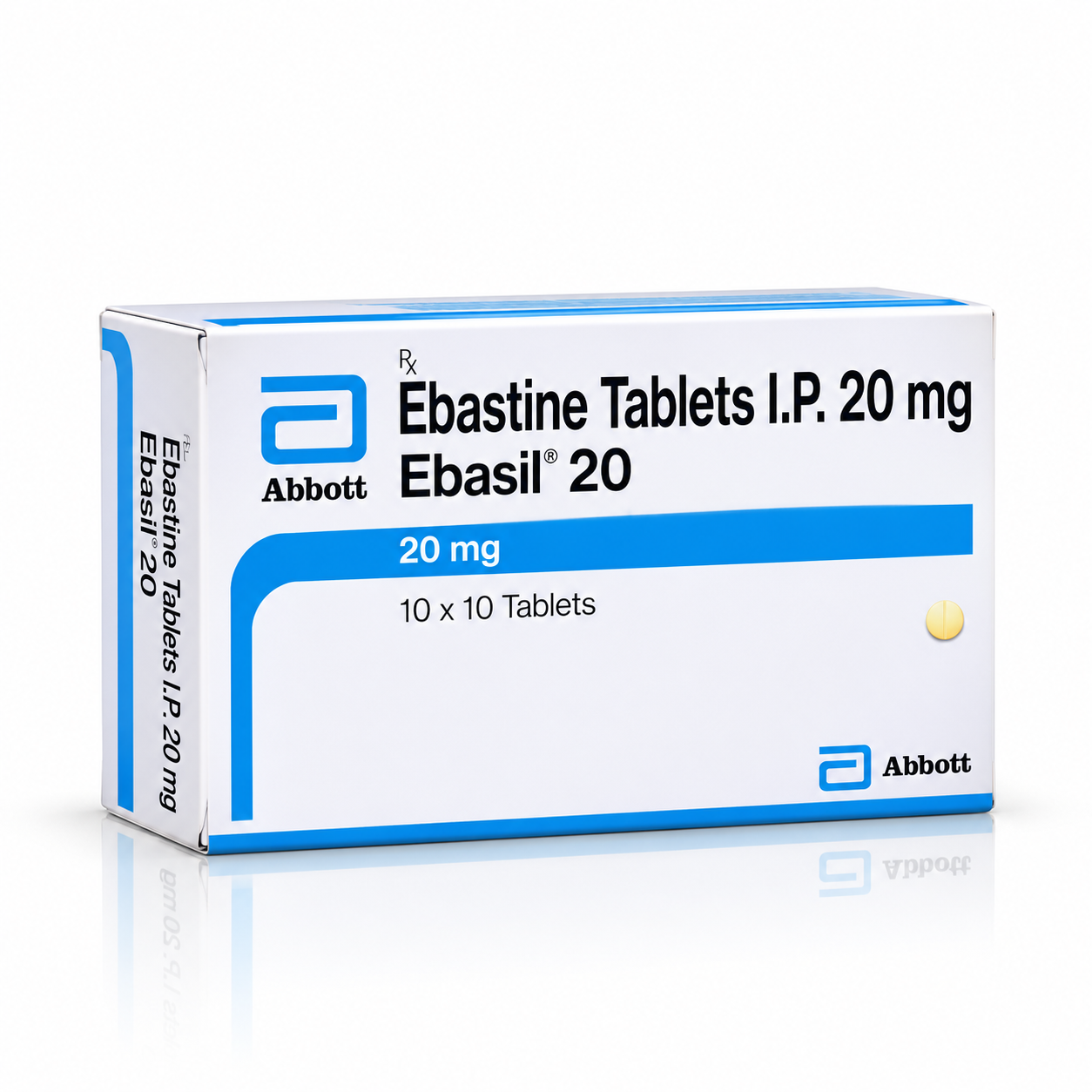
Ebasil 20 MG Tablet
$0.54 / unit
Available Options
| Pack Size | Price | Price / Unit | Quantity | Action |
|---|---|---|---|---|
| 180 Tablets | $71.00 | $0.39/unit | ||
| 150 Tablets | $61.00 | $0.41/unit | ||
| 120 Tablets | $50.00 | $0.42/unit | ||
| 90 Tablets | $40.00 | $0.44/unit | ||
| 60 Tablets | $28.00 | $0.47/unit | ||
| 30 Tablets | $16.00 | $0.53/unit |
Product Description
Ebasil 20 MG Tablet
Brand Name: Ebasil 20 MG Tablet
Generic Name: Ebastine
Strength: 20 mg
Dosage Form: Oral Tablet
Therapeutic Class: Second-Generation H1 Antihistamine / Anti-Allergic Medicine
Manufacturer / Marketer: Abbott India Limited / Abbott Healthcare Pvt. Ltd.
Pack Size: 1 × 10 Tablets
Country of Origin: India
Prescription Status: Prescription Medicine
What is this medicine?
EBASIL 20 MG TABLET contains Ebastine 20 mg, an anti-allergic medicine belonging to the second-generation antihistamine class.
Ebastine is primarily prescribed to relieve symptoms caused by histamine, a chemical released during allergic reactions.
When the body encounters an allergen such as pollen, dust mites or animal dander, histamine can contribute to:
Sneezing
Runny nose
Itching
Watery eyes
Nasal discomfort
Skin redness
Raised, itchy skin welts (hives)
Ebasil helps reduce these symptoms by blocking histamine activity.
How does Ebasil work?
Ebastine selectively blocks peripheral histamine H1 receptors.
Histamine normally binds to these receptors and contributes to allergic symptoms.
By blocking H1 receptors, ebastine reduces the effects of histamine in the body.
After absorption, ebastine is extensively metabolised into carebastine, its active metabolite, which provides much of its antihistamine activity.
Main Effects
1. Reduces Sneezing
Ebastine helps control frequent sneezing caused by environmental allergens.
2. Relieves Runny Nose
It may reduce excessive watery nasal discharge associated with allergic rhinitis.
3. Reduces Itching
Ebastine helps relieve itching of the nose, eyes and skin.
4. Improves Allergic Eye Symptoms
It may help reduce itchy or watery eyes associated with allergic rhinitis.
5. Controls Hives
Ebastine can reduce histamine-related raised, itchy skin welts in patients with urticaria.
Why is Ebastine Called a Second-Generation Antihistamine?
Compared with many older antihistamines, ebastine is designed to have relatively limited effects on the central nervous system at usual doses.
This means it generally causes less sedation than older medicines such as chlorpheniramine.
However, ebastine can still cause sleepiness or dizziness in some patients, particularly when used with alcohol or other sedating medicines.
Medical Uses
Ebasil may be prescribed for:
Seasonal allergic rhinitis
Perennial (year-round) allergic rhinitis
Hay fever
Sneezing caused by allergies
Allergic runny nose
Itchy or watery eyes associated with nasal allergies
Chronic idiopathic or spontaneous urticaria
Hives and allergic skin itching
Selected histamine-mediated allergic skin symptoms
Important: The 20 mg strength may be used when allergic rhinitis symptoms are more severe or when the prescriber determines that a higher antihistamine dose is appropriate.
For chronic urticaria, common ebastine prescribing references recommend 10 mg daily initially, with higher doses requiring clinician assessment according to the applicable product information.
NOTE: Ebasil is not an antibiotic, corticosteroid or asthma reliever medicine.
It does not cure the underlying allergy and does not provide emergency treatment for anaphylaxis.
The clinical indications for ebastine include seasonal and perennial allergic rhinitis and chronic idiopathic urticaria.
What should I tell my health care provider before I take this medicine?
Tell your healthcare provider if you have any of these conditions:
Allergy to ebastine
Allergy to other tablet ingredients
Previous serious allergic reactions to antihistamines
Heart disease
Irregular heartbeat
Congenital long QT syndrome
Previous abnormal electrocardiogram (ECG)
Low potassium levels
Low magnesium levels
Significant liver disease
Severe liver impairment
Kidney disease
History of fainting
Persistent dizziness
Epilepsy or seizure disorders
Persistent or unexplained skin reactions
Severe breathing problems
Pregnancy or plans to become pregnant
Breastfeeding
Current use of antifungal medicines
Current use of certain antibiotics
Current use of other antihistamines
Current use of medicines that affect heart rhythm
Inform your healthcare professional about all prescription medicines, non-prescription medicines, vitamins and herbal supplements you use.
Important Contraindications
Ebasil should not be used in patients with known serious hypersensitivity to ebastine or any of its inactive ingredients.
Other restrictions depend on the patient's medical conditions and the locally approved product information.
Important Heart Rhythm Precaution
Ebastine should be used cautiously in patients with conditions that increase the risk of QT interval prolongation.
These include:
Congenital long QT syndrome
Certain abnormal heart rhythms
Low potassium
Low magnesium
Use of medicines that prolong the QT interval
Use of certain medicines that increase ebastine exposure
QT prolongation may increase the risk of serious heart rhythm disturbances in susceptible patients.
Important Liver Precaution
Ebastine is extensively metabolised by the liver.
Patients with severe liver impairment may have increased exposure to the medicine.
Patients with severe hepatic impairment should generally not exceed 10 mg of ebastine daily, according to established prescribing information.
This is especially important because Ebasil 20 contains twice that amount in one tablet.
Important Kidney Precaution
Dose adjustment is not ordinarily required solely because of kidney impairment under some international ebastine product labels.
However, patients with significant kidney disease should inform their healthcare professional before treatment.
Pregnancy Precautions
Available pregnancy safety information for ebastine is limited.
Ebasil should generally be avoided during pregnancy unless a clinician determines that treatment is necessary.
Alternative antihistamines with more extensive pregnancy safety experience may be preferred.
Breastfeeding Precautions
It is not well established whether ebastine or its metabolites enter human breast milk in clinically relevant amounts.
Breastfeeding patients should seek medical advice before using Ebasil.
How should I use this medicine?
Take Ebasil 20 MG Tablet exactly as prescribed by your healthcare professional.
Swallow the tablet with water.
Take it at approximately the same time each day if prescribed for regular use.
It may be taken with or without food.
Do not exceed the prescribed dose.
Do not take other antihistamines without medical advice.
Avoid drinking alcohol if it causes increased drowsiness or dizziness.
Avoid driving if the medicine affects your alertness.
Attend follow-up appointments if allergy symptoms persist.
Inform your clinician if symptoms worsen or new symptoms appear.
Dosage Information
Strength per Tablet: Ebastine 20 mg.
Usual Adult Dose for Allergic Rhinitis: Ebastine 10 mg once daily is a common starting dose.
For More Severe Allergic Rhinitis: A healthcare professional may prescribe 20 mg once daily.
For Chronic Idiopathic Urticaria: A common reference dose is ebastine 10 mg once daily. The use of 20 mg should follow the clinician's assessment and applicable prescribing information.
Adolescents: Some ebastine product information permits adult dosing in patients aged over 12 years; however, the suitability of the 20 mg strength must be determined by a healthcare professional.
Children Under 12 Years: Ebasil 20 mg tablets are generally not recommended without specific paediatric guidance.
Patients With Severe Liver Impairment: Do not exceed 10 mg daily according to reference prescribing information.
Dose Frequency: Usually once daily.
Maximum Routine Adult Dose: For approved allergic rhinitis regimens, commonly 20 mg daily. Do not exceed this without specialist direction.
Onset of Action: Ebastine generally begins providing antihistamine relief within approximately 1–3 hours after oral administration.
Duration of Effect: Its antihistamine action generally lasts approximately 24 hours, supporting once-daily administration.
Route of Administration: Oral.
Treatment Duration: Depends on the type and duration of the allergy. Some patients need short-term seasonal treatment, while others require ongoing management.
Overdosage: Excessive intake may cause drowsiness, dizziness or other adverse effects. Significant overdose requires medical evaluation, including cardiac monitoring when appropriate.
Seek urgent medical advice if an overdose is suspected.
Important: Ebastine is not suitable as the sole treatment for sudden, life-threatening allergic reactions because it does not act rapidly enough and cannot reverse anaphylactic airway or circulatory problems.
These dosing recommendations are supported by established ebastine clinical prescribing information.
What if I miss a dose?
Take the missed tablet when remembered unless the next dose is nearly due.
If the next dose is approaching, skip the missed dose.
Do not take two tablets together.
Do not take extra tablets to compensate.
Resume the prescribed schedule.
Important: If Ebasil is prescribed only when allergy symptoms occur, follow the clinician's instructions rather than treating it as a medicine that always requires daily administration.
What may interact with this medicine?
Potentially important medicines and substances include:
Ketoconazole
Itraconazole
Erythromycin
Clarithromycin
Rifampicin (rifampin)
Certain medicines that prolong the QT interval
Some medicines for abnormal heart rhythm
Other antihistamines
Sedatives
Sleeping medicines
Alcohol
Certain medicines that inhibit CYP3A4 metabolism
Important Drug Interaction Considerations
Ketoconazole and Itraconazole: These antifungal medicines may increase ebastine exposure and raise concerns about QT interval prolongation.
Erythromycin and Clarithromycin: Some macrolide antibiotics can increase ebastine concentrations or contribute to QT-related interaction risks.
Rifampicin: May reduce exposure to the active metabolite carebastine, potentially reducing the antihistamine effect.
QT-Prolonging Medicines: Combining ebastine with medicines that affect cardiac electrical activity may increase arrhythmia risk in susceptible patients.
Other Antihistamines: Taking multiple antihistamines together may increase side effects without necessarily improving symptoms. Such combinations should be supervised.
Sedatives and Alcohol: May increase drowsiness or impair alertness.
Important: These interactions may depend on the exact medicine, dose and patient's medical history. A pharmacist or prescribing clinician should review the full medication list.
Prescribing information specifically identifies interactions involving azole antifungals, macrolide antibiotics and rifampicin.
What should I watch for while using this medicine?
Seek immediate medical attention if you experience:
Severe allergic reactions
Difficulty breathing
Swelling of the face, lips, tongue or throat
Severe dizziness or fainting
Rapid or irregular heartbeat with significant symptoms
Chest pain
Severe or unusual weakness
Loss of consciousness
While taking Ebasil:
Monitor allergy symptoms.
Report persistent sneezing or nasal congestion.
Watch for drowsiness or dizziness.
Avoid driving if your alertness is affected.
Discuss persistent hives with your doctor.
Avoid combining multiple antihistamines without advice.
Inform your doctor about liver disease.
Report palpitations or fainting.
Follow the recommended treatment duration.
Important Warning: Heart Rhythm Changes
Ebastine should be used cautiously in people with known QT prolongation or other significant cardiac risk factors.
Certain interacting medicines and low potassium levels may increase the risk of abnormal heart rhythms.
Important Warning: Drowsiness
Ebastine generally causes less sedation than many first-generation antihistamines, but sleepiness may still occur.
Patients should understand how the medicine affects them before driving or using machinery.
Important Warning: Severe Allergic Reactions
Ebasil may relieve mild to moderate histamine-related symptoms, but it does not replace adrenaline (epinephrine) for anaphylaxis.
Sudden breathing difficulty, throat swelling or collapse requires emergency medical care.
Important Warning: Allergy Skin Testing
Ebastine may interfere with skin-prick allergy testing by suppressing the skin's histamine response.
Some prescribing references recommend stopping ebastine approximately 5–7 days before skin allergy testing, depending on the test protocol.
Follow the allergy specialist's instructions and do not discontinue prescribed medicine without advice.
Important Warning: Severe Liver Impairment
Patients with severe liver impairment should not routinely receive the 20 mg strength because reference product information limits ebastine to 10 mg daily in this population.
Important Warning: Persistent Urticaria
Hives lasting more than six weeks may be classified as chronic urticaria.
Persistent symptoms may require a broader treatment plan and assessment for potential triggers.
What side effects may I notice from this medicine?
Side effects that should be reported immediately:
Severe allergic reactions
Swelling of the face, lips or tongue
Difficulty breathing
Serious palpitations or irregular heartbeat
Severe dizziness or fainting
Loss of consciousness
Severe or persistent allergic skin reactions
Side effects that usually do not require immediate medical attention:
Headache
Dry mouth
Sleepiness
Mild dizziness
Mild nausea
Abdominal discomfort
Fatigue
Headache, dry mouth and drowsiness are among the commonly reported side effects of ebastine.
Most mild effects do not require emergency treatment, but persistent or troublesome symptoms should be discussed with a healthcare professional.
Where should I keep my medicine?
Keep out of the reach of children.
Store below 25°C, according to current Tata 1mg product information.
Protect from direct sunlight.
Keep tablets in their original blister packaging.
Protect from excessive heat and moisture.
Do not use after the expiry date.
Do not use tablets from damaged packaging.
Dispose of expired or unused medicine according to your pharmacist's instructions.
Storage Note: Follow the original Abbott product packaging if its instructions differ.
Manufacturer Details
Field | Information |
|---|---|
Brand Name | Ebasil 20 MG Tablet |
Generic Name | Ebastine |
Strength | 20 mg |
Dosage Form | Oral Tablet |
Therapeutic Class | Second-Generation H1 Antihistamine |
Primary Indication | Allergic Rhinitis |
Additional Indication | Urticaria / Hives |
Other Symptom Relief | Sneezing, Runny Nose, Itching and Watery Eyes |
Manufacturer / Marketer | Abbott India Limited / Abbott Healthcare Pvt. Ltd. |
Manufacturing Facility | Micro Labs Limited, Hosur, Tamil Nadu (PharmEasy-Listed; Verify Original Carton) |
Prescription Status | Prescription Medicine |
Storage | Below 25°C (Pharmacy-Listed) |
Route of Administration | Oral |
Pack Size | 1 × 10 Tablets |
Country of Origin | India |
Typical Adult Dose | 10–20 mg Once Daily, According to Indication |
Treatment Duration | Depends on Allergy Type and Response |
Major Safety Concerns | QT Prolongation Risk, Drowsiness, Liver Impairment and Drug Interactions |