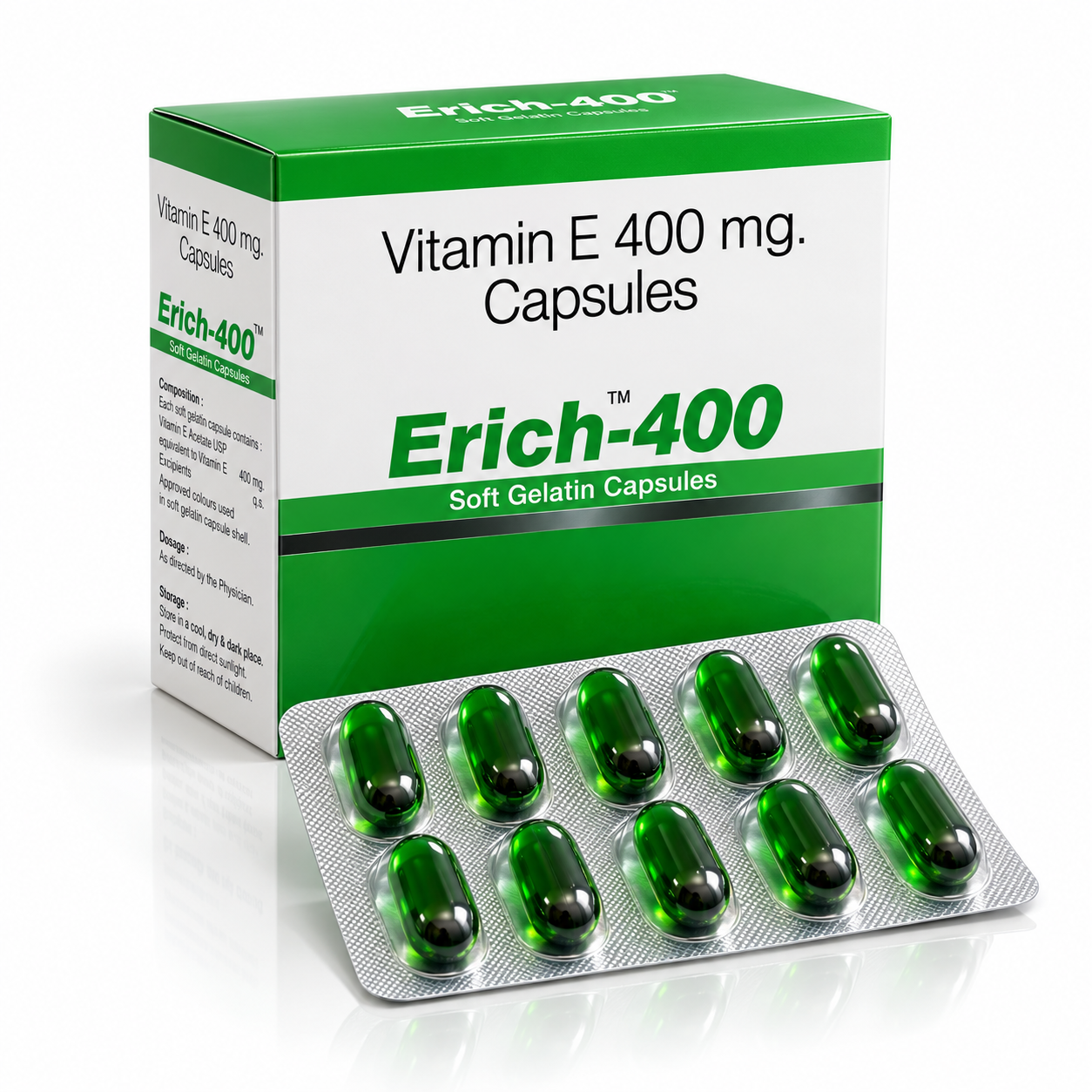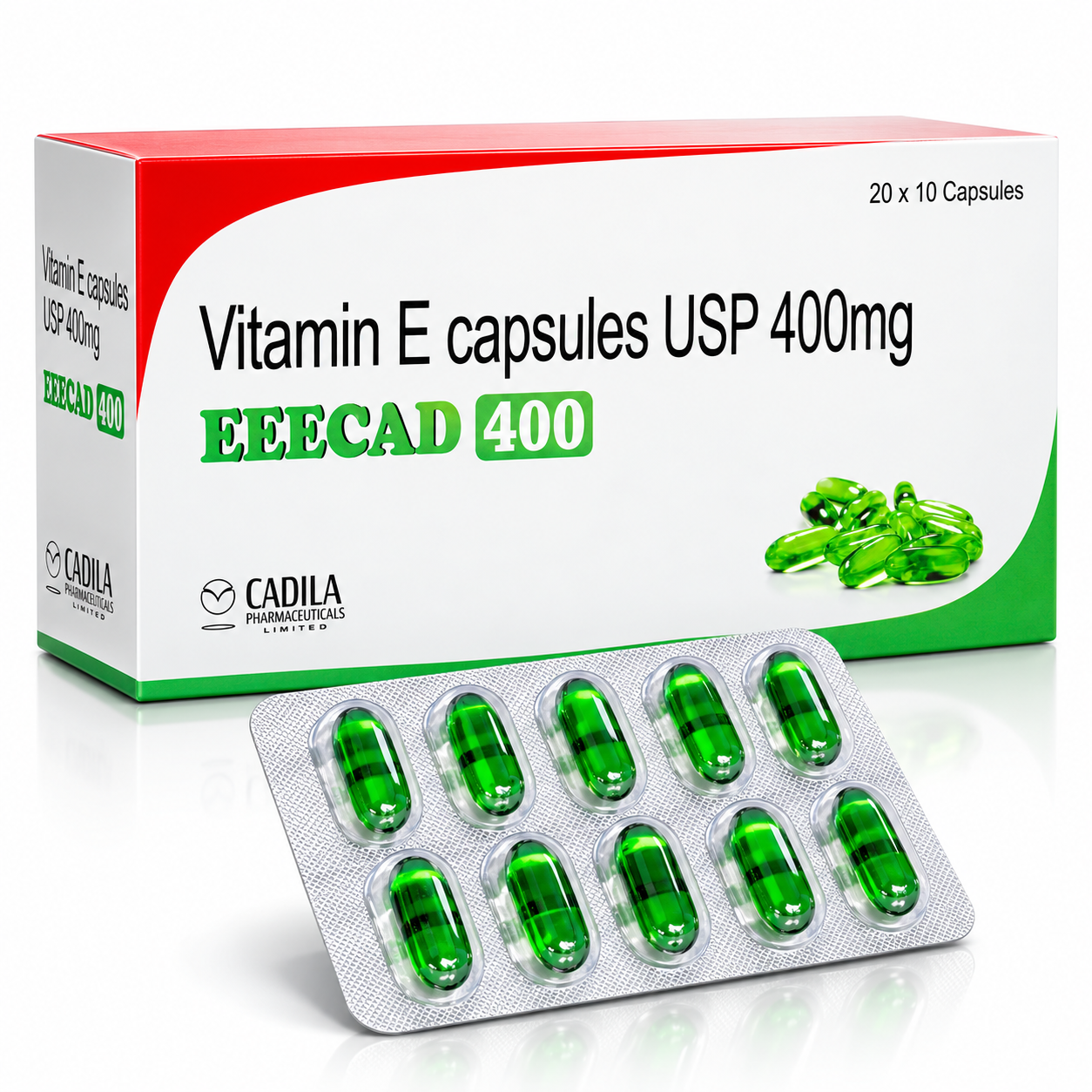
Eeecad 400 MG Capsule
$0.16 / unit
Available Options
| Pack Size | Price | Price / Unit | Quantity | Action |
|---|---|---|---|---|
| 180 Capsule | $29.16 | $0.16/unit | ||
| 150 Capsule | $24.30 | $0.16/unit | ||
| 120 Capsule | $19.44 | $0.16/unit | ||
| 90 Capsule | $14.58 | $0.16/unit | ||
| 60 Capsule | $9.72 | $0.16/unit | ||
| 30 Capsule | $4.86 | $0.16/unit |
Product Description
Eeecad 400 MG Capsule
Brand Name: Eeecad 400 MG Capsule
Generic Name: Vitamin E
Strength: 400 mg
Dosage Form: Oral Soft Gelatin Capsule
Therapeutic Class: Fat-Soluble Vitamin / Antioxidant / Nutritional Supplement
Manufacturer / Marketer: Cadila Pharmaceuticals Limited
Pack Size: 1 × 10 Softgel Capsules
Country of Origin: India
What is this medicine?
EEECAD 400 MG CAPSULE contains Vitamin E Acetate 400 mg, a form of vitamin E used in nutritional supplementation.
Vitamin E is a fat-soluble nutrient that supports normal cellular function and helps protect cell membranes against oxidative damage.
The human body requires vitamin E for several physiological processes, including:
Antioxidant protection
Normal immune function
Maintenance of cell membranes
Normal nerve function
Muscle function
Red blood cell integrity
Vitamin E deficiency is uncommon in otherwise healthy people eating a varied diet. It is more likely to occur in certain fat-malabsorption disorders or rare inherited conditions.
How does Eeecad 400 work?
Vitamin E acts mainly as an antioxidant.
During normal metabolism, the body produces reactive molecules called free radicals. Excessive accumulation can contribute to oxidative damage.
Vitamin E helps protect the fatty components of cell membranes from this type of damage.
Main Effects
1. Antioxidant Protection
Vitamin E helps limit the oxidation of lipids within cell membranes.
2. Supports Normal Immune Function
Adequate vitamin E is necessary for normal immune-system activity.
3. Supports Nerve Function
Vitamin E contributes to the maintenance of normal neurological function. Severe deficiency can cause neurological complications.
4. Supports Muscle Health
Adequate vitamin E is important for normal muscle function.
5. Helps Correct Vitamin E Deficiency
When a patient has inadequate vitamin E levels, appropriate supplementation can help restore nutritional status.
Why is Vitamin E Acetate Used?
Vitamin E acetate, also known as tocopheryl acetate, is a more chemically stable esterified form of vitamin E.
Following ingestion, it is processed in the digestive tract to release biologically active vitamin E.
Because vitamin E is fat-soluble, its absorption depends partly on normal fat digestion and absorption.
Medical Uses
Eeecad 400 may be recommended for:
Prevention of vitamin E deficiency in selected patients
Treatment of diagnosed vitamin E deficiency
Nutritional supplementation when dietary intake is insufficient
Supplementation in certain fat-malabsorption conditions
Vitamin E deficiency associated with selected gastrointestinal disorders
Nutritional management of certain inherited conditions affecting vitamin E metabolism
Specialist-supervised treatment of deficiency-related neurological complications
Important: Patients with severe malabsorption or inherited vitamin E transport disorders may need specialised formulations and doses. Eeecad 400 is not necessarily sufficient for these conditions.
Is Eeecad Used for Skin and Hair Health?
Vitamin E is frequently marketed for skin and hair wellness.
However, adequate vitamin E intake is important for normal health; taking extra vitamin E has not been reliably shown to improve acne, remove scars, prevent hair loss or reverse skin ageing in people without deficiency.
Does Eeecad Prevent Heart Disease or Cancer?
There is no reliable evidence that routine high-dose vitamin E supplementation prevents heart attacks, strokes or cancer.
Some long-term studies have identified potential harms, including increased bleeding risk. A major trial involving 400 IU of synthetic vitamin E daily also found an increased risk of prostate cancer in men.
These findings should not be interpreted as proof that every formulation or dose carries an identical risk, but they reinforce the need to avoid unnecessary prolonged high-dose supplementation.
The NIH Office of Dietary Supplements provides detailed guidance on vitamin E deficiency, physiological functions and the limitations of supplementation.
What should I tell my health care provider before I take this medicine?
Tell your healthcare provider if you have any of these conditions:
Allergy to vitamin E
Allergy to tocopheryl acetate
Allergy to gelatin or other capsule ingredients
Previous allergic reactions to supplements
Bleeding disorders
Low platelet counts
History of gastrointestinal bleeding
Previous haemorrhagic stroke
Liver disease
Kidney disease
Vitamin K deficiency
Fat-malabsorption disorders
Chronic pancreatitis
Cystic fibrosis
Cholestatic liver disorders
History of intestinal surgery
Previous vitamin E deficiency
Pregnancy or plans to become pregnant
Breastfeeding
Current use of blood-thinning medicines
Current use of antiplatelet medicines
Current use of other vitamin E supplements
Planned surgery or dental procedures
Cancer treatment involving chemotherapy or radiotherapy
Inform the healthcare professional about all prescription medicines, non-prescription medicines, vitamins, herbal products and dietary supplements being used.
Important Contraindications
Eeecad 400 should not be taken by individuals with a known serious allergy to its ingredients.
Additional precautions are required for patients with bleeding disorders or those taking medicines that affect blood clotting.
Important Bleeding Precaution
High-dose vitamin E supplementation may interfere with normal blood-clotting mechanisms.
Patients taking anticoagulants or antiplatelet medicines should consult their healthcare professional before use.
Important Vitamin K Precaution
Vitamin E can interfere with vitamin K-related clotting processes, particularly at higher doses.
This may increase bleeding risk in susceptible patients.
Important Malabsorption Precaution
Patients with significant fat-malabsorption disorders may not absorb ordinary oil-based vitamin E preparations adequately.
Such patients may require specialist monitoring and alternative formulations.
Pregnancy Precautions
Vitamin E is an essential nutrient during pregnancy.
However, high-dose supplementation is not routinely necessary for pregnant patients receiving adequate nutrition.
Eeecad 400 should be taken during pregnancy only when advised by an obstetrician or another qualified healthcare professional.
Breastfeeding Precautions
Vitamin E is naturally present in breast milk.
The suitability of additional 400 mg supplementation during breastfeeding should be assessed by a healthcare professional, particularly when other vitamin-containing supplements are already being used.
Children's Precaution
Eeecad 400 is a high-strength adult-oriented formulation.
Children should receive only age-appropriate vitamin E supplementation when recommended by a healthcare professional.
How should I use this medicine?
Take Eeecad 400 MG Capsule according to the instructions provided by your doctor or pharmacist.
Instructions for Oral Administration
Check the product name, strength and expiry date.
Swallow the softgel capsule whole with water.
Do not crush, chew or puncture the capsule.
Take it with a meal if recommended.
Follow the prescribed dosage schedule.
Do not combine it with additional high-dose vitamin E products without advice.
Avoid exceeding the recommended dose.
Inform your clinician if unusual bleeding or bruising develops.
Attend follow-up assessments if the supplement is being used to treat a diagnosed deficiency.
Dosage Information
Strength per Capsule: Vitamin E Acetate 400 mg.
Usual Adult Dose: Individualised according to the reason for supplementation and the healthcare professional's instructions.
Dose Frequency: Some patients are prescribed one capsule daily, but this is not a universal recommendation.
Recommended Dietary Allowance: The usual recommended intake of vitamin E for most healthy adults is approximately 15 mg of alpha-tocopherol daily.
Important Strength Distinction: A capsule labelled Vitamin E Acetate 400 mg does not necessarily provide 400 mg of pure alpha-tocopherol. The exact biological vitamin E equivalent depends on the chemical form and the product's declared standardisation.
Vitamin E in IU: A strength expressed in milligrams must not automatically be treated as the same numerical quantity in international units (IU).
Maximum Recommended Dose: There is no universal high-dose requirement for Eeecad. The adult tolerable upper intake level for supplemental alpha-tocopherol is 1,000 mg per day, but this is a safety threshold, not a recommended dose or a guarantee of safety.
Onset of Action: Vitamin E is absorbed after oral administration. The time required to correct deficiency depends on the cause and severity.
Time to Noticeable Benefit: Correction of deficiency-related symptoms may take weeks or longer. Established neurological complications may not fully reverse.
Route of Administration: Oral.
Treatment Duration: Determined by the underlying nutritional problem and the clinician's assessment.
Overdosage: Excessive vitamin E supplementation may increase bleeding risk and cause gastrointestinal or other adverse effects.
Seek medical advice promptly if excessive use is accompanied by unusual bleeding, severe weakness or other concerning symptoms.
NOTE: Taking more vitamin E does not necessarily produce greater health benefits.
NIH nutritional guidance distinguishes ordinary dietary requirements from the substantially higher quantities found in many vitamin E supplements.
What if I miss a dose?
Take the missed capsule when remembered unless the next scheduled dose is nearly due.
If the next dose is approaching, skip the missed dose.
Do not take two capsules together.
Do not increase the next day's dose.
Continue the prescribed schedule.
Consult your healthcare professional if several doses have been missed during treatment of a medically significant deficiency.
What may interact with this medicine?
Potentially important medicines and treatments include:
Warfarin
Acenocoumarol
Aspirin
Clopidogrel
Ticagrelor
Apixaban
Rivaroxaban
Dabigatran
Heparin
Other anticoagulants
Other antiplatelet medicines
Cholestyramine
Orlistat
Mineral oil used as a laxative
Other high-dose vitamin E supplements
Chemotherapy medicines
Radiotherapy
Certain herbal supplements associated with bleeding risk
Important Drug Interaction Considerations
Warfarin and Acenocoumarol: High-dose vitamin E may increase bleeding risk or alter anticoagulant response.
Aspirin and Clopidogrel: Taking vitamin E alongside antiplatelet medicines may increase bleeding concerns, especially at high supplement doses.
Other Anticoagulants: Patients taking apixaban, rivaroxaban, dabigatran or similar medicines should obtain professional advice before taking high-dose vitamin E.
Cholestyramine: May reduce the absorption of fat-soluble vitamins, including vitamin E.
Orlistat: Reduces fat absorption and may also reduce vitamin E absorption.
Mineral Oil: Prolonged use as a laxative may reduce the absorption of some fat-soluble vitamins.
Other Vitamin E Supplements: Combining products can lead to excessive vitamin E intake.
Chemotherapy and Radiotherapy: High-dose antioxidant supplements may interfere with the intended effects of some cancer treatments. Patients should consult their oncology team before use.
Important: Some patients may need vitamin E supplementation despite taking other medicines. Such combinations should be professionally assessed rather than automatically stopped or started.
What should I watch for while using this medicine?
Seek prompt medical attention if you experience:
Unusual or excessive bleeding
Black or bloody stools
Vomiting blood
Frequent or unexplained nosebleeds
Severe headaches with neurological symptoms
Sudden weakness affecting one side of the body
Difficulty speaking
Severe allergic reactions
Swelling of the face, lips or tongue
Persistent severe abdominal discomfort
While taking Eeecad 400:
Follow the prescribed dosage.
Avoid unnecessary long-term high-dose supplementation.
Inform your doctor about blood-thinning medicines.
Monitor for unusual bruising or bleeding.
Avoid taking multiple vitamin E supplements together.
Follow a balanced diet.
Seek professional advice during pregnancy or breastfeeding.
Inform your healthcare team before surgery.
Review supplementation with your clinician if you have a malabsorption disorder.
Important Warning: Increased Bleeding Risk
High-dose vitamin E supplements may interfere with normal blood clotting.
The risk may be greater when combined with anticoagulants or antiplatelet medicines.
Important Warning: Haemorrhagic Stroke
Some clinical trials of vitamin E supplementation have identified an increased risk of haemorrhagic stroke.
Vitamin E should not be taken at high doses specifically to prevent strokes or cardiovascular disease.
Important Warning: Prostate Cancer Risk
The SELECT clinical trial identified an increased risk of prostate cancer among men taking 400 IU of synthetic vitamin E daily.
This study used a particular vitamin E formulation and dose. Its findings should not be treated as establishing the exact risk of Eeecad 400 mg, but they are relevant when considering prolonged high-dose supplementation without a clear indication.
Important Warning: Surgery
Patients taking vitamin E supplements should inform their surgeon or anaesthetist before undergoing a procedure.
The healthcare team can determine whether supplementation should be paused because of bleeding risk.
Important Warning: Vitamin E Deficiency
Patients with suspected vitamin E deficiency should undergo appropriate medical evaluation.
Severe deficiency may cause:
Muscle weakness
Peripheral neuropathy
Difficulty coordinating movements
Balance problems
Visual disturbances
Treatment should address both the vitamin deficiency and its underlying cause.
NIH clinical guidance discusses bleeding risk, haemorrhagic stroke, possible cancer-related risks and the medical consequences of vitamin E deficiency.
What side effects may I notice from this medicine?
Side effects that should be reported immediately:
Severe allergic reactions
Difficulty breathing
Swelling of the face, lips or tongue
Unusual or uncontrolled bleeding
Blood in urine or stools
Vomiting blood
Severe unexplained bruising
Sudden neurological symptoms
Severe persistent abdominal pain
Side effects that usually do not require immediate medical attention:
Mild nausea
Abdominal discomfort
Diarrhoea
Mild headache
Temporary stomach upset
Fatigue
Not every patient experiences these effects. Many people tolerate appropriately prescribed vitamin E supplementation, but the risk of adverse effects may increase with higher doses or prolonged use.
Important: Unexplained bleeding is not a minor supplement side effect and requires medical assessment.
Where should I keep my medicine?
Keep out of the reach of children.
Store in a cool, dry place according to the original label.
Protect from direct sunlight.
Avoid excessive heat and moisture.
Keep capsules in their original blister strip.
Do not use after the expiry date.
Do not use damaged, leaking or discoloured softgel capsules.
Dispose of expired or unused capsules according to pharmacist guidance.
Storage Note: The exact numerical storage temperature has not been confirmed from an official Eeecad manufacturer-issued leaflet. Follow the original Cadila product packaging.
Manufacturer Details
Field | Information |
|---|---|
Brand Name | Eeecad 400 MG Capsule |
Generic Name | Vitamin E Acetate / Tocopheryl Acetate |
Strength | 400 mg |
Dosage Form | Oral Softgel Capsule |
Therapeutic Class | Fat-Soluble Vitamin / Antioxidant |
Primary Indication | Prevention or Treatment of Vitamin E Deficiency |
Additional Use | Nutritional Supplementation When Clinically Appropriate |
Manufacturer / Marketer | Cadila Pharmaceuticals Limited (best-supported listing) |
Alternative Retailer Identification | Cadila Healthcare Limited |
Actual Manufacturing Facility | Verify Original Product Carton |
Regulatory Status | Confirm on Original Packaging |
Storage | Follow Original Product Label |
Route of Administration | Oral |
Pack Size | 1 × 10 Capsules |
Country of Origin | India |
Dose Frequency | As Directed by Healthcare Professional |
Treatment Duration | Depends on Nutritional Requirement |
Major Safety Concerns | Bleeding Risk, Excess Supplementation and Drug Interactions |