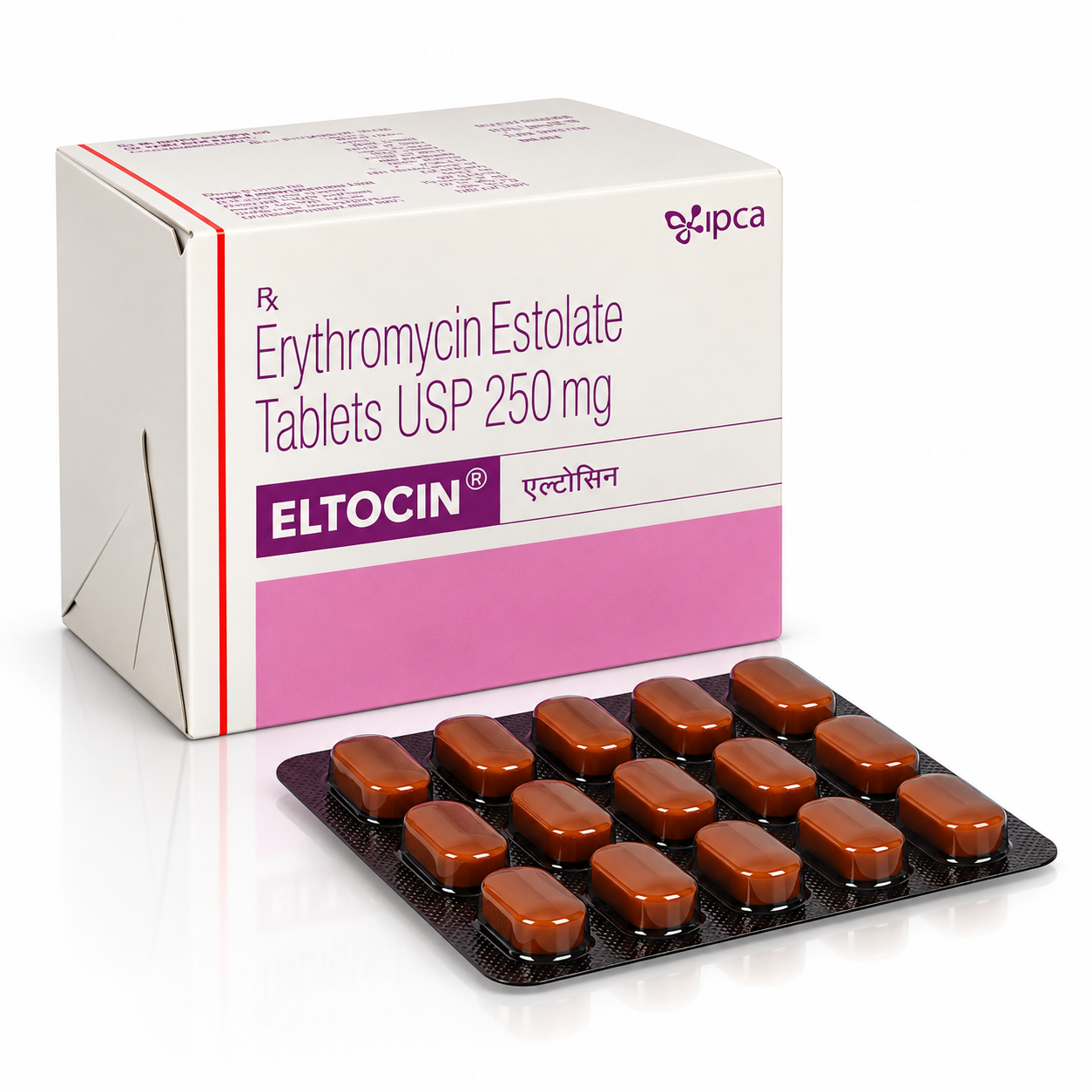
Eltocin 250 MG Tablet
$0.36 / unit
Available Options
| Pack Size | Price | Price / Unit | Quantity | Action |
|---|---|---|---|---|
| 180 Tablets | $52.00 | $0.29/unit | ||
| 150 Tablets | $44.00 | $0.29/unit | ||
| 120 Tablets | $36.00 | $0.30/unit | ||
| 90 Tablets | $29.00 | $0.32/unit | ||
| 60 Tablets | $21.00 | $0.35/unit | ||
| 30 Tablets | $11.00 | $0.37/unit |
Product Description
ELTOCIN 250 MG Tablet
Brand Name: ELTOCIN 250 MG Tablet
Generic Name: Erythromycin
Active Ingredient: Erythromycin Estolate equivalent to Erythromycin 250 mg
Strength: 250 mg
Dosage Form: Oral Tablet
Therapeutic Class: Antibiotic / Antibacterial Medicine
Pharmacological Class: Macrolide Antibiotic
Manufacturer / Marketer: Ipca Laboratories Limited
Current Pack Size: 1 × 15 Tablets
Alternative Pack Size: 1 × 10 Tablets
Country of Origin: India
Route of Administration: Oral
Prescription Status: Prescription Medicine
Composition
Active Ingredient | Strength |
|---|---|
Erythromycin Estolate USP | Equivalent to Erythromycin 250 mg |
Inactive Ingredients | As specified on the original product packaging |
What is this medicine?
ELTOCIN 250 MG TABLET contains erythromycin, a macrolide antibiotic used to treat certain bacterial infections.
Bacterial infections occur when harmful bacteria enter the body, multiply and produce illness.
Depending on the organism, bacterial infections may affect the respiratory tract, throat, skin, ears and other tissues.
Erythromycin helps treat susceptible infections by interfering with bacterial protein synthesis.
How does Eltocin 250 work?
Erythromycin binds to the 50S subunit of bacterial ribosomes.
Ribosomes are cellular structures that produce proteins.
By interfering with bacterial protein synthesis, erythromycin prevents susceptible bacteria from producing proteins necessary for growth and multiplication.
Its action is generally bacteriostatic, meaning it inhibits bacterial growth, although its effect depends on the organism and drug concentration.
Main Effects
1. Helps Treat Susceptible Respiratory Infections
Erythromycin may be prescribed for certain bacterial infections involving the respiratory tract.
2. Treats Selected Throat Infections
It may be considered for streptococcal infections in selected patients when the organism is susceptible and the medicine is appropriate.
3. Helps Treat Certain Skin Infections
Erythromycin has activity against some bacteria responsible for skin and soft-tissue infections.
4. Treats Certain Atypical Bacterial Infections
Macrolides may be useful against selected atypical organisms, including Mycoplasma pneumoniae.
5. May Be Used for Selected Other Bacterial Infections
The medicine may be prescribed for other infections according to the organism, antimicrobial susceptibility and applicable clinical guidance.
Medical Uses
Eltocin 250 MG Tablet may be prescribed for:
Selected bacterial throat infections
Certain upper respiratory tract infections
Certain lower respiratory tract infections
Selected skin and soft-tissue infections
Certain atypical bacterial infections
Selected bacterial infections requiring an alternative antibiotic
Other infections caused by susceptible bacteria, as determined by a healthcare professional
Is Eltocin Used for Tonsillitis?
Erythromycin may be considered for certain bacterial cases of tonsillitis, including infections caused by susceptible streptococci.
However, many cases of tonsillitis are viral and do not require antibiotics.
Antibiotic selection should take account of allergy history and local resistance patterns.
Can Eltocin Treat Pneumonia?
Erythromycin has been used for certain bacterial pneumonias.
However, it is not appropriate for every type of pneumonia.
The choice of antibiotic depends on the likely organism, severity of infection, local resistance and patient-specific medical factors.
Is Eltocin Used for Acne?
Oral erythromycin has historically been used for inflammatory acne.
However, antibiotic resistance limits its usefulness, and current acne treatment usually favours other evidence-based regimens.
Oral antibiotics should not be used alone as long-term acne treatment.
Can Eltocin Treat Sexually Transmitted Infections?
Erythromycin has historically been used for selected bacterial sexually transmitted infections.
However, treatment recommendations have changed because of resistance, tolerability and the availability of other antibiotics.
Eltocin should not be used for a suspected STI without professional diagnosis and an appropriate treatment plan.
Can Eltocin Treat a Common Cold?
No.
The common cold is generally caused by viruses.
Erythromycin does not treat viral colds, influenza or other routine viral respiratory infections.
Does Eltocin Work for Every Bacterial Infection?
No.
Some bacteria are naturally resistant to erythromycin, while others have acquired resistance.
A healthcare professional may use clinical findings or laboratory testing to determine whether the medicine is appropriate.
Why Is Correct Antibiotic Use Important?
Taking antibiotics unnecessarily or using an inappropriate dose can contribute to antimicrobial resistance.
Erythromycin should be used only when a bacterial infection is confirmed or strongly suspected and the treatment is clinically appropriate.
Official erythromycin prescribing information identifies its role in treating susceptible bacterial infections and stresses appropriate antibacterial use.
What should I tell my health care provider before I take this medicine?
Tell your healthcare provider if you have any of these conditions:
Allergy to erythromycin
Allergy to other macrolide antibiotics
Previous antibiotic-associated liver injury
Liver disease
Jaundice
Kidney disease
Irregular heartbeat
Prolonged QT interval
Previous ventricular arrhythmia
Unusually slow heart rate
Low potassium levels
Low magnesium levels
Myasthenia gravis
History of severe antibiotic-associated diarrhoea
Pregnancy or plans to become pregnant
Breastfeeding
Current use of medicines that prolong the QT interval
Current use of simvastatin or lovastatin
Current use of ergotamine or dihydroergotamine
Current use of warfarin or other anticoagulants
Current use of medicines metabolised through CYP3A4
Inform your clinician about all prescription medicines, non-prescription medicines, herbal products and supplements.
Important Contraindications
Erythromycin must not be used in patients with serious hypersensitivity to erythromycin.
Certain medicine combinations are contraindicated, including combinations with drugs such as:
Pimozide
Cisapride
Ergotamine
Dihydroergotamine
Certain other medicines associated with severe arrhythmia or toxicity risks
Additional contraindications depend on the particular erythromycin formulation and locally applicable prescribing information.
Important Liver Precaution
Erythromycin may cause liver dysfunction, including cholestatic hepatitis.
The estolate form has an established historical association with this adverse reaction.
Patients should report:
Yellowing of the skin or eyes
Dark urine
Pale stools
Severe itching
Persistent nausea
Loss of appetite
Right upper abdominal pain
Patients with a previous reaction to erythromycin estolate require particular caution.
Important Heart Rhythm Precaution
Erythromycin may prolong the QT interval.
The risk is greater in patients who have heart rhythm disorders, electrolyte abnormalities or interacting medications.
Serious arrhythmias, including torsades de pointes, have been reported.
Important Myasthenia Gravis Precaution
Erythromycin may worsen muscle weakness in patients with myasthenia gravis.
Patients with this condition should inform their healthcare professional before treatment.
Important Kidney Precaution
Erythromycin may require additional assessment in patients with severe kidney disease, particularly when high doses or prolonged treatment are considered.
Pregnancy Precautions
Erythromycin may be prescribed during pregnancy when clinically appropriate, but the estolate formulation needs particular caution because of liver-related safety concerns.
Pregnant patients should not take Eltocin without the prescribing clinician confirming that this specific formulation is suitable.
Breastfeeding Precautions
Erythromycin passes into breast milk in small amounts.
Use during breastfeeding may be appropriate when prescribed, but infants should be monitored for symptoms such as diarrhoea, vomiting or feeding difficulties.
Children's Precaution
Erythromycin is used in children for certain infections.
However, paediatric doses depend on body weight, age, diagnosis and formulation.
The 250 mg tablet is not automatically suitable for young children.
Use age-appropriate preparations as directed by the prescriber.
How should I use this medicine?
Take Eltocin 250 MG Tablet exactly as prescribed by a healthcare professional.
Instructions for Oral Administration
Confirm the prescribed antibiotic and strength.
Swallow the tablet with water.
Follow the specific food instructions printed on the Eltocin pack.
Take the medicine at evenly spaced intervals.
Do not exceed the prescribed dose.
Complete the prescribed treatment course.
Do not share antibiotics with another person.
Report serious diarrhoea or allergic symptoms.
Inform the doctor if the infection is worsening.
Do not reuse leftover antibiotics for a future illness.
Dosage Information
Strength per Tablet: Erythromycin 250 mg, as erythromycin estolate.
Usual Adult Reference Regimen: Conventional erythromycin references commonly describe 250 mg every six hours or 500 mg every 12 hours for selected bacterial infections.
Dose Frequency: Depends on the infection and specific formulation.
Treatment Duration: Determined by the infection, organism, clinical response and prescribing guidelines.
Maximum Reference Adult Dose: Some erythromycin formulations have reference regimens allowing up to 4 g daily for severe infections under medical supervision. This is not a product-specific maximum established for Eltocin estolate and should not be used to self-adjust treatment.
Administration With Food: Follow the exact Eltocin estolate label. General erythromycin references may advise taking some formulations on an empty stomach, but instructions differ among erythromycin salts and formulations.
Route: Oral.
Onset of Antibacterial Action: Begins after absorption, although visible clinical improvement may take several days.
Overdosage: Excessive erythromycin may cause severe gastrointestinal symptoms, liver complications or serious heart rhythm abnormalities.
Reference Dosage Table
Patient Group | General Reference Information |
|---|---|
Adults | Common erythromycin regimen: 250 mg every 6 hours or 500 mg every 12 hours |
Children | Weight-based dosing according to age, indication and formulation |
Patients with significant liver disease | Individual assessment; erythromycin estolate may be unsuitable |
Patients taking interacting medicines | Antibiotic or interacting medicine may need to be changed |
Severe infections | Specialist-selected treatment and dosing |
Important: These are general erythromycin references, not a substitute for the original Eltocin estolate prescribing instructions.
How Long Does Eltocin Take to Work?
Some patients experience improvement within a few days of starting appropriate antibiotic treatment.
The response depends on the infection and susceptibility of the organism.
If symptoms worsen or fail to improve as expected, contact the prescribing clinician.
Can Eltocin Be Taken on an Empty Stomach?
Some erythromycin products are better absorbed without food.
However, erythromycin formulations differ. Follow the original Eltocin estolate product directions rather than applying instructions for a different erythromycin salt.
How Long Should Eltocin Be Taken?
The treatment duration depends on the diagnosis.
For example, properly treated group A streptococcal throat infections traditionally require a full course of appropriate antibiotic therapy.
Do not assume every infection requires the same duration.
Can Eltocin Be Stopped When Symptoms Improve?
Complete the course prescribed by your healthcare professional unless they advise stopping because of an adverse reaction or another clinical reason.
Do not independently shorten, repeat or prolong antibiotic treatment.
What if I miss a dose?
Take the missed tablet when remembered unless the next scheduled dose is nearly due.
If the next dose is approaching, skip the missed dose.
Do not take two doses together.
Continue the prescribed schedule.
Contact your healthcare professional if several doses have been missed.
Important: Do not take additional erythromycin tablets to make up for missed treatment.
What may interact with this medicine?
Eltocin has several clinically important drug interactions because erythromycin inhibits CYP3A4 and can affect cardiac electrical conduction.
Potentially important medicines include:
Simvastatin
Lovastatin
Atorvastatin
Warfarin
Rivaroxaban
Apixaban
Pimozide
Domperidone
Amiodarone
Sotalol
Quinidine
Ergotamine
Dihydroergotamine
Colchicine
Carbamazepine
Theophylline
Ciclosporin
Tacrolimus
Digoxin
Midazolam
Triazolam
Certain antifungal medicines
Other QT-prolonging antibiotics
St John's wort
Important Drug Interaction Considerations
Simvastatin and Lovastatin
Erythromycin can substantially increase concentrations of certain statins, increasing the risk of serious muscle injury and rhabdomyolysis.
These combinations should be avoided.
Atorvastatin
Erythromycin can increase atorvastatin exposure. A different antibiotic or temporary statin adjustment may be necessary under professional supervision.
Warfarin
Erythromycin may increase the anticoagulant effects of warfarin, raising the risk of bleeding.
Additional INR monitoring may be required.
Direct Oral Anticoagulants
Erythromycin can affect the exposure of certain anticoagulants, increasing bleeding concerns.
Domperidone
Concurrent treatment may increase the risk of dangerous heart rhythm abnormalities.
Antiarrhythmic Medicines
Amiodarone, sotalol and certain other heart rhythm medicines may increase QT-related risks when combined with erythromycin.
Ergotamine and Dihydroergotamine
These combinations can cause serious ergot toxicity, including harmful narrowing of blood vessels.
Colchicine
Erythromycin can increase colchicine exposure and potentially cause severe toxicity.
Ciclosporin and Tacrolimus
Concentrations of these immunosuppressants may increase. Monitoring or alternative antibiotic selection may be required.
Theophylline
Erythromycin may increase theophylline concentrations and the risk of toxicity.
Other Antibiotics and Antifungals
Certain combinations may increase the risk of abnormal heart rhythms.
Important: The prescriber or pharmacist should review all medicines before Eltocin treatment. Erythromycin has a substantial interaction burden, and a different antibiotic may be preferable for some patients.
What should I watch for while using this medicine?
Seek immediate medical attention if you experience:
Difficulty breathing
Swelling of the face, lips, tongue or throat
Severe skin rash or blistering
Fainting or sudden collapse
Severe palpitations
Yellowing of the skin or eyes
Severe or persistent abdominal pain
Bloody or persistent watery diarrhoea
Significant hearing changes
While taking Eltocin:
Complete the prescribed antibiotic course.
Monitor for persistent vomiting or diarrhoea.
Report liver-related symptoms.
Inform your doctor about heart rhythm problems.
Avoid taking interacting medicines without professional review.
Maintain adequate hydration.
Seek reassessment if the infection worsens.
Do not use the antibiotic for routine viral illnesses.
Do not reuse leftover medicine.
Important Warning: Liver Injury
Erythromycin can cause liver dysfunction.
Erythromycin estolate is particularly associated with cholestatic hepatitis.
Symptoms may include:
Jaundice
Dark urine
Pale stools
Itching
Right upper abdominal pain
Fever
Nausea and vomiting
Patients with these symptoms need prompt medical assessment.
Important Warning: QT Interval Prolongation
Erythromycin may interfere with the heart's electrical conduction.
Potential complications include serious ventricular arrhythmias.
Risk may increase in patients with:
Existing QT prolongation
Low potassium
Low magnesium
Significant bradycardia
Heart disease
Concurrent QT-prolonging medicines
Seek urgent care for fainting or palpitations accompanied by dizziness.
Important Warning: Antibiotic-Associated Diarrhoea
Erythromycin can disrupt normal intestinal bacteria.
In some patients, this may lead to Clostridioides difficile-associated diarrhoea or colitis.
Symptoms can include severe watery diarrhoea, abdominal pain and fever.
This may occur during treatment or after the antibiotic course has ended.
Important Warning: Antibiotic Resistance
Using erythromycin unnecessarily may contribute to bacterial resistance.
Eltocin should only be used for infections where antibacterial treatment is indicated.
Important Warning: Myasthenia Gravis
Macrolide antibiotics may worsen muscle weakness in people with myasthenia gravis.
New swallowing difficulty, respiratory weakness or severe muscle weakness requires urgent assessment.
Important Warning: Hearing Changes
Temporary hearing impairment has occasionally been reported with erythromycin, particularly with high doses or in patients with kidney impairment.
Any sudden hearing change should be evaluated.
These precautions are supported by official erythromycin prescribing information.
What side effects may I notice from this medicine?
Side effects requiring immediate medical attention
Severe allergic reactions
Anaphylaxis
Cholestatic hepatitis
Serious liver injury
Dangerous abnormal heart rhythms
Severe antibiotic-associated colitis
Severe skin reactions
Significant hearing loss
Persistent severe vomiting or dehydration
Common or Other Reported Side Effects
Nausea
Vomiting
Abdominal cramps
Stomach pain
Diarrhoea
Loss of appetite
Mild skin rash
Bloating
Indigestion
Can Eltocin Cause Stomach Pain?
Yes.
Erythromycin commonly causes gastrointestinal adverse effects, including abdominal cramps, nausea and diarrhoea.
These effects result partly from its activity on gastrointestinal motility.
Can Eltocin Cause Diarrhoea?
Yes.
Mild diarrhoea may occur, but severe, persistent or bloody diarrhoea requires medical assessment.
Can Eltocin Cause Liver Problems?
Yes.
Erythromycin estolate has a recognised association with cholestatic hepatitis.
Patients should immediately report jaundice, dark urine or significant right upper abdominal discomfort.
Can Eltocin Cause Heart Rhythm Problems?
Yes, rarely.
QT prolongation and serious ventricular arrhythmias have been reported, particularly in patients with predisposing conditions or interacting medicines.
The official erythromycin references identify gastrointestinal symptoms as common adverse reactions and liver injury, QT prolongation and severe hypersensitivity as important serious risks.
Where should I keep my medicine?
Store below 30°C, according to the current Tata 1mg product listing.
Keep tablets in the original blister strip.
Protect from excessive heat and moisture.
Avoid direct sunlight.
Keep out of the reach of children.
Do not use after the expiry date.
Do not use damaged tablets or strips.
Dispose of expired or unused antibiotics according to pharmacist instructions.
Storage Note: Follow the original Ipca Laboratories product label if it specifies different storage conditions.
Manufacturer Details
Field | Information |
|---|---|
Brand Name | Eltocin 250 MG Tablet |
Generic Name | Erythromycin |
Active Ingredient | Erythromycin Estolate |
Strength | Equivalent to Erythromycin 250 mg |
Dosage Form | Oral Tablet |
Therapeutic Class | Macrolide Antibiotic |
Primary Indication | Susceptible Bacterial Infections |
Additional Uses | Selected Respiratory, Throat and Skin Infections |
Manufacturer / Marketer | Ipca Laboratories Limited |
Marketer Address | Plot No. 125, M.G. Road, Kandivli Industrial Estate, Kandivli West, Mumbai – 400067, Maharashtra |
Manufacturing Facility Listed in Government Record | C-6, Sara Industrial Estate, Chakrata Road, Rampur, Dehradun – 248197, Uttarakhand |
Actual Manufacturing Site for Current Batch | Verify Original Strip |
Prescription Status | Prescription Medicine |
Route | Oral |
Current Listed Pack Size | 1 × 15 Tablets |
Alternative Retail Pack | 1 × 10 Tablets |
Country of Origin | India |
Dose Frequency | As Prescribed |
Treatment Duration | Depends on Infection |
Storage | Below 30°C |
Major Safety Concerns | Liver Injury, QT Prolongation, Drug Interactions, Severe Diarrhoea and Allergic Reactions |