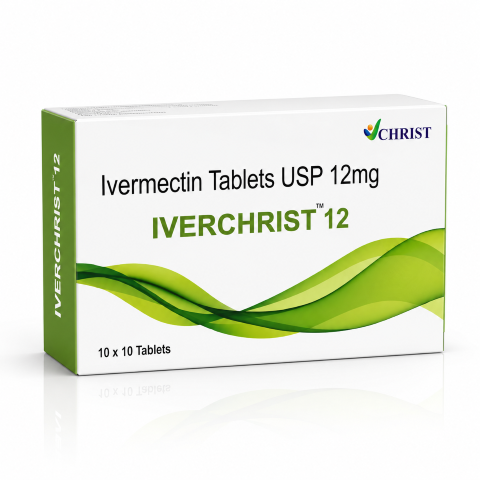
Iverchrist 12 MG Tablets
$0.11 / unit
Available Options
| Pack Size | Price | Price / Unit | Quantity | Action |
|---|---|---|---|---|
| 180 Tablets | $18.90 | $0.11/unit | ||
| 150 Tablets | $15.75 | $0.11/unit | ||
| 120 Tablets | $12.60 | $0.11/unit | ||
| 90 Tablets | $9.45 | $0.11/unit | ||
| 60 Tablets | $6.30 | $0.11/unit | ||
| 30 Tablets | $3.15 | $0.11/unit |
Product Description
What Is This Medicine?
IVERCHRIST 12 MG TABLET contains Ivermectin 12 mg , an antiparasitic (anthelmintic) medicine used to treat certain parasitic infections. Current product listings identify Iverchrist 12 as an ivermectin 12 mg tablet associated with Christ Business Hub . Ivermectin works by interfering with the nerve and muscle activity of susceptible parasites , causing paralysis and death of the parasite and helping the body clear the infection. Oral ivermectin has established uses for infections including: intestinal strongyloidiasis caused by Strongyloides stercoralis onchocerciasis (river blindness) caused by Onchocerca volvulus Ivermectin is also used in clinical practice for some other parasitic conditions, such as certain forms of scabies or lice , when considered appropriate by a healthcare professional. Important: Ivermectin dosing is generally based on body weight and the parasite being treated . A 12 mg tablet is a tablet strength, not a universal dose for every patient or infection.
What Should I Tell My Health Care Provider Before I Take This Medicine?
They need to know if you have any of these conditions: allergy to ivermectin or any ingredient in the tablet
- liver disease
- kidney disease significant heart problems low blood pressure or frequent fainting seizure disorder neurological or brain disorders weakened immune system HIV or another condition affecting immunity asthma any serious ongoing infection if you have lived in or recently traveled to areas of West or Central Africa where Loa loa infection occurs if you take
- warfarin or another anticoagulant medicine if you are pregnant or planning to become pregnant if you are
- breastfeeding People with heavy Loa loa infection may rarely develop serious neurological complications after treatment with ivermectin. Patients with significant exposure to areas where loiasis occurs may require assessment before treatment. Safety and effectiveness of oral ivermectin have not been established in children who weigh less than 15 kg in established prescribing information. Ivermectin passes into breast milk in small amounts, and treatment during
- breastfeeding should be discussed with a healthcare professional. Its use during pregnancy also requires careful medical consideration.
How Should I Use This Medicine?
Take IVERCHRIST 12 MG TABLET exactly as prescribed by your healthcare professional . Ivermectin dosing is based primarily on the type of parasitic infection and body weight rather than simply the available tablet strength. For established oral ivermectin treatment: Strongyloidiasis: approximately 200 micrograms/kg as a single oral dose Onchocerciasis: approximately 150 micrograms/kg as a single oral dose Depending on the condition, follow-up testing or additional treatment may sometimes be required. For proper use: take the prescribed dose on an empty stomach swallow the tablet with water take only the number of tablets prescribed for your body weight and condition do not take additional doses without medical advice do not use ivermectin more frequently than instructed follow any recommended follow-up examinations after treatment For strongyloidiasis, follow-up stool examinations may be necessary to confirm that the infection has cleared. In onchocerciasis, ivermectin does not kill adult Onchocerca worms, so follow-up and repeat treatment may sometimes be required. Important: A single Iverchrist 12 mg tablet is not automatically the correct dose for every person. The prescribed dose should be calculated according to body weight and the infection being treated.
What If I Miss A Dose?
Ivermectin for many parasitic infections is given as a single-dose or specifically scheduled treatment , rather than as a routine daily medicine. If you have been prescribed a particular dose and forget to take it: take it when you remember unless your healthcare professional has given different instructions if another scheduled dose is approaching, ask your healthcare provider or pharmacist what to do do not take two doses together do not take additional tablets to compensate for a missed dose If ivermectin is being used as part of a repeat-treatment schedule, follow the exact dates or intervals recommended by your healthcare professional.
What May Interact With This Medicine?
Tell your healthcare provider if you take:
- warfarin other anticoagulant or blood-thinning medicines medicines that cause
- dizziness or
- drowsiness sedatives medicines used for seizures medicines that affect liver enzymes other antiparasitic medicines prescription medicines for other chronic medical conditions herbal medicines or supplements Rare post-marketing reports have described an increase in INR when ivermectin was taken together with
- warfarin , so patients using
- warfarin may require closer monitoring. Because ivermectin may sometimes cause
- dizziness, sleepiness, or neurological effects , taking it with other medicines that impair alertness may potentially increase these effects. This list may not describe all possible interactions. Give your healthcare provider a complete list of all prescription medicines, non-prescription medicines, herbal products, vitamins, and supplements you use.
What Should I Watch For While Using This Medicine?
Some people may experience
- dizziness, weakness, sleepiness,
- nausea, or other symptoms after taking ivermectin. Until you know how the medicine affects you: avoid driving if you feel dizzy or sleepy avoid operating machinery if your alertness is affected rise slowly from sitting or lying down if you feel light-headed follow your healthcare provider's recommended follow-up tests do not repeat the treatment without medical advice Seek medical attention promptly if you develop: severe
- dizziness or fainting confusion or disorientation extreme sleepiness difficulty walking or loss of coordination seizure loss of consciousness severe skin rash blistering or peeling of the skin swelling of the face, lips, tongue, or throat difficulty breathing yellowing of the skin or eyes severe weakness very low blood pressure severe eye symptoms after treatment for onchocerciasis Rare reports of serious neurotoxicity , including confusion, altered consciousness, seizures, stupor, and coma, have occurred with ivermectin. Patients treated for onchocerciasis may also develop inflammatory reactions related to the death of microfilariae, sometimes called Mazzotti-type reactions , which may include itching, rash, swelling, fever, joint symptoms, or low blood pressure.
What Side Effects May I Notice From This Medicine?
Side effects that you should report to your doctor or health care professional as soon as possible: severe allergic reaction swelling of the face, lips, tongue, or throat difficulty breathing severe skin rash blistering or peeling skin fainting severe low blood pressure seizure severe confusion unusual
- drowsiness or altered consciousness difficulty standing or walking severe eye pain or vision changes yellowing of the skin or eyes signs of liver problems unusually rapid heartbeat Serious post-marketing reactions reported with ivermectin include hypotension, seizures, hepatitis, severe skin reactions, and neurotoxicity , although these events are uncommon. Side effects that usually do not require medical attention (report to your doctor if they continue or are bothersome):
- dizziness
- headache tiredness or weakness sleepiness
- nausea
- vomiting diarrhea abdominal pain or discomfort decreased appetite constipation itching mild rash muscle discomfort Clinical studies of ivermectin for strongyloidiasis reported effects including
- dizziness,
- nausea, diarrhea, itching,
- fatigue, abdominal discomfort, and rash in some patients. People being treated for onchocerciasis may additionally experience: itching skin swelling fever swollen or tender lymph nodes joint or muscle discomfort temporary eye-related symptoms Some of these symptoms may result from the body's inflammatory response to dying parasites rather than from ivermectin itself. This list may not describe all possible side effects.
Where Should I Keep My Medicine?
Keep IVERCHRIST 12 MG TABLETS out of the reach of children. Keep the tablets in their original blister packaging and follow the storage instructions printed on the manufacturer's carton. Protect the medicine from: excessive heat moisture direct sunlight Keep the tablets in a cool, dry, secure place. Do not use tablets that are damaged or past the expiration date printed on the strip or carton.