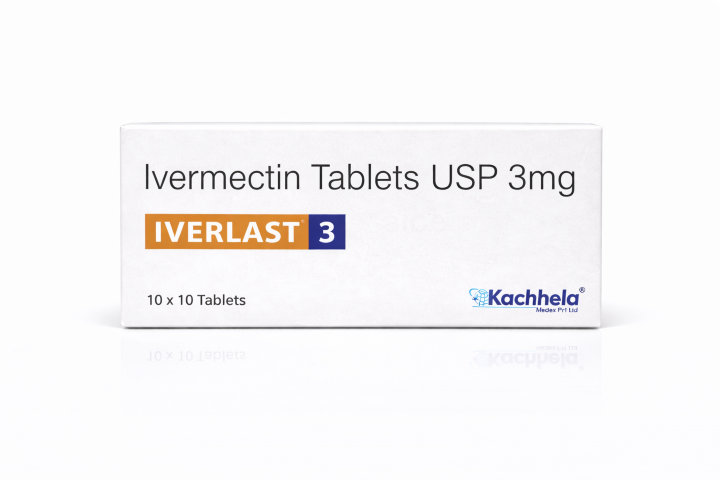
Iverlast 3 MG Tablet
$0.30 / unit
Available Options
| Pack Size | Price | Price / Unit | Quantity | Action |
|---|---|---|---|---|
| 180 tablets | $57.00 | $0.30/unit | ||
| 150 tablets | $47.00 | $0.30/unit | ||
| 120 tablets | $38.00 | $0.30/unit | ||
| 90 tablets | $28.00 | $0.30/unit | ||
| 60 tablets | $19.00 | $0.30/unit | ||
| 30 tablets | $9.00 | $0.30/unit |
Product Description
What is this medicine?
IVERLAST 3 MG TABLET contains Ivermectin 3 mg. It is an oral antiparasitic / anthelmintic medicine manufactured by Kachhela Medex Pvt. Ltd. Indian product listings identify Iverlast 3 as ivermectin 3 mg and commonly list it in 10 × 10 tablet packaging.
Ivermectin belongs to the avermectin class of antiparasitic medicines. It acts on susceptible parasites by interfering with their nerve and muscle function, resulting in paralysis and death of the parasite.
This medicine is commonly used for:
strongyloidiasis caused by intestinal threadworms
onchocerciasis (river blindness)
certain other parasitic roundworm infections
scabies, when prescribed by a doctor
head lice, in selected cases
other ivermectin-sensitive parasitic infections when specifically diagnosed and prescribed
The exact dose of ivermectin is often based on body weight and the type of parasite being treated, so the number of 3 mg tablets required can vary considerably.
What should I tell my health care provider before I take this medicine?
They need to know if you have any of these conditions:
allergy to ivermectin or any ingredient in the tablet
liver disease
kidney disease
asthma or significant allergic disorders
weakened immune system
HIV/AIDS or another condition affecting immunity
previous treatment for strongyloidiasis or onchocerciasis
recent or planned travel to areas where Loa loa infection occurs
neurological or seizure disorders
if you take warfarin or other anticoagulants
pregnancy or plans to become pregnant
breast-feeding
if the medicine is intended for a young child or a child weighing less than 15 kg
Tell your doctor if you have lived in or traveled to West or Central Africa, particularly areas where Loa loa infection is common. People with heavy Loa loa infection can rarely develop serious neurological reactions after ivermectin treatment.
How should I use this medicine?
Take Iverlast 3 mg exactly as prescribed by your doctor.
For labeled oral ivermectin therapy:
swallow the tablets with water
take them on an empty stomach
the dose is commonly calculated according to body weight
some parasitic infections require only a single dose, while others may require repeat treatment or follow-up testing
do not repeat ivermectin doses yourself simply because symptoms persist
complete any follow-up examination or laboratory testing recommended by your doctor
Official ivermectin labeling recommends administration on an empty stomach with water.
For example, labeled treatment for onchocerciasis uses approximately 150 micrograms/kg as a single oral dose, demonstrating why the number of 3 mg tablets depends on body weight. Different infections can require different regimens, so this schedule should not be applied to every ivermectin use.
Do not use ivermectin for viral illnesses such as cold, influenza, or COVID-19 unless there is a separate diagnosed parasitic indication.
Overdosage: Excessive ivermectin can cause nausea, vomiting, diarrhea, dizziness, weakness, rash, swelling, low blood pressure, confusion, loss of coordination, seizures, breathing problems, or loss of consciousness. If you think you have taken too much, contact a poison control center, doctor, or emergency room at once.
NOTE: This medicine is only for you. Do not share this medicine with others.
What if I miss a dose?
Many ivermectin treatments involve a single weight-based dose, so a conventional daily missed-dose schedule may not apply.
If your doctor has prescribed more than one dose and you miss one, contact your doctor or pharmacist for instructions.
Do not take two doses at the same time or take additional ivermectin to make up for a missed dose.
What may interact with this medicine?
Tell your doctor if you take:
warfarin or other anticoagulants
medicines that cause dizziness or drowsiness
certain seizure medicines
other antiparasitic medicines
medicines that significantly affect liver drug-metabolizing enzymes or transport proteins
herbal or dietary supplements
Particular monitoring may be needed in people taking warfarin, because changes in anticoagulant effect have been reported with ivermectin.
Alcohol may worsen dizziness or drowsiness and is best avoided or limited during treatment.
This list may not describe all possible interactions. Give your health care provider a complete list of prescription medicines, non-prescription drugs, herbs, vitamins, and dietary supplements you use. Also tell them if you drink alcohol or use recreational drugs.
What should I watch for while using this medicine?
Your doctor may arrange follow-up testing to confirm that the parasitic infection has been successfully treated.
For strongyloidiasis, stool examinations may be required after treatment because ivermectin may not kill every developmental stage of the parasite, and additional treatment can sometimes be necessary.
Ivermectin may cause dizziness, sleepiness, weakness, or reduced alertness. Avoid driving or operating machinery if you experience these effects.
Contact your doctor promptly if you develop:
severe dizziness or fainting
confusion
difficulty walking or loss of coordination
seizures
unusual sleepiness or altered consciousness
severe rash
swelling of the face or limbs
difficulty breathing
severe eye symptoms
persistent fever or swollen lymph nodes
Some symptoms following treatment can result from the body's inflammatory response to dying parasites rather than a direct toxic effect of ivermectin. These reactions can occasionally require medical treatment.
What side effects may I notice from this medicine?
Side effects that you should report to your doctor or health care professional as soon as possible:
severe dizziness or fainting
significant low blood pressure
severe weakness
confusion or altered mental state
difficulty walking or standing
seizures
severe skin rash
blistering or peeling skin
swelling of the face, lips, tongue, or throat
difficulty breathing or swallowing
severe eye pain or visual changes
yellowing of the skin or eyes
unusual bleeding or bruising
other signs of a severe allergic reaction
Side effects that usually do not require medical attention (report them if they continue or are bothersome):
headache
dizziness
nausea
vomiting
diarrhea
stomach discomfort or pain
weakness or tiredness
loss of appetite
mild skin rash or itching
The frequency and type of reactions can vary according to the parasite being treated, because treatment can trigger inflammatory responses to dying parasites.
This list may not describe all possible side effects.
Where should I keep my medicine?
Keep out of the reach of children.
Official ivermectin 3 mg labeling recommends controlled room-temperature storage, generally below 30°C, with protection from inappropriate heat and moisture.
Keep the tablets:
in their original blister packaging
in a cool and dry place
protected from moisture
protected from excessive heat
away from direct sunlight
Do not use the medicine after the expiration date printed on the strip or carton. Dispose of expired or unused tablets appropriately.