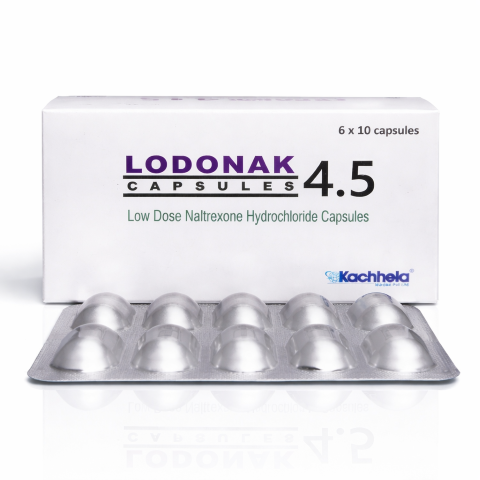
What is this medicine? Lodonak 4.5 mg contains naltrexone , an opioid antagonist used at low doses (≤ 4.5 mg daily). Known as Low‐Dose Naltrexone (LDN), it’s primarily prescribed off-label for multiple conditions: Chronic pain , including fibromyalgia and complex regional pain syndrome Autoimmune diseases like Crohn’s disease, multiple sclerosis, and thyroid disorders Fatigue syndromes , such as chronic fatigue syndrome/myalgic encephalomyelitis Emerging uses include long COVID, inflammation, and certain cancers. LDN dosage is much lower than standard high-dose naltrexone (50–100 mg) used for alcohol or opioid dependence. What should I tell my health care provider before I take this medicine? They need to know if you have: Liver disease , including hepatitis, as even low‐dose naltrexone can stress the liver. Kidney impairment , which may require caution. Current or recent opioid use , or opioid dependence; you need to be off opioids for at least 7–14 days before starting to avoid withdrawal. Allergic reactions to naltrexone or its components. If you are pregnant or breastfeeding – the safety of LDN hasn’t been well established. Planned surgery – you should stop LDN at least 7 days beforehand. How should I use this medicine? Start low (e.g., 1.5 mg nightly), increasing by ~1 mg every week to reach 4.5 mg once daily , often taken in the morning or before bed. Swallow capsules whole , with or without food. Benefits may take 6–10 weeks to appear for pain or fatigue. Do not stop suddenly without your doctor’s advice. Overdosage: Seek emergency care or call poison control immediately. Missed dose: Take as soon as you remember, unless it’s almost time for the next dose—do not double up. What may interact with this medicine? Opioids — LDN blocks their effects and can cause severe withdrawal. CYP450-interacting medications — as naltrexone may affect liver enzymes. CNS depressants , such as alcohol, sedatives, or tranquilizers. Herbal supplements (e.g., St. John’s wort). Always disclose all prescription medications, supplements, and OTC drugs to your doctor. What should I watch for while using this medicine? Liver function tests periodically to ensure safety . Avoid opioids and alcohol during treatment. If pregnant or breastfeeding , avoid crushing capsules—handle with caution. Monitor for signs of liver damage —jaundice, dark urine, abdominal pain. Mood changes , such as depression or anxiety. Do not donate blood during treatment and for a few months afterward. What side effects may I notice from this medicine? Report immediately if you experience: Signs of liver injury : jaundice, dark urine, pain in upper right abdomen. Allergic reactions : rash, itching, swelling, breathing issues. Severe mood changes , suicidal thoughts. Common (usually mild): Insomnia or vivid dreams (~8% occurrence) Headache , dizziness, anxiety, nausea Fatigue , muscle or joint pain, decreased appetite Rare: Priapism (prolonged erections), unusual for low dose Long‐term side effects are not well studied . Where should I keep my medicine? Store at 20–25 °C (68–77 °F) , can tolerate short exposure between 15–30 °C . Keep in a cool, dry place , away from heat, moisture, and direct light. Keep out of reach of children . Do not use after expiration . Do not crush or open the capsules—swallow whole.