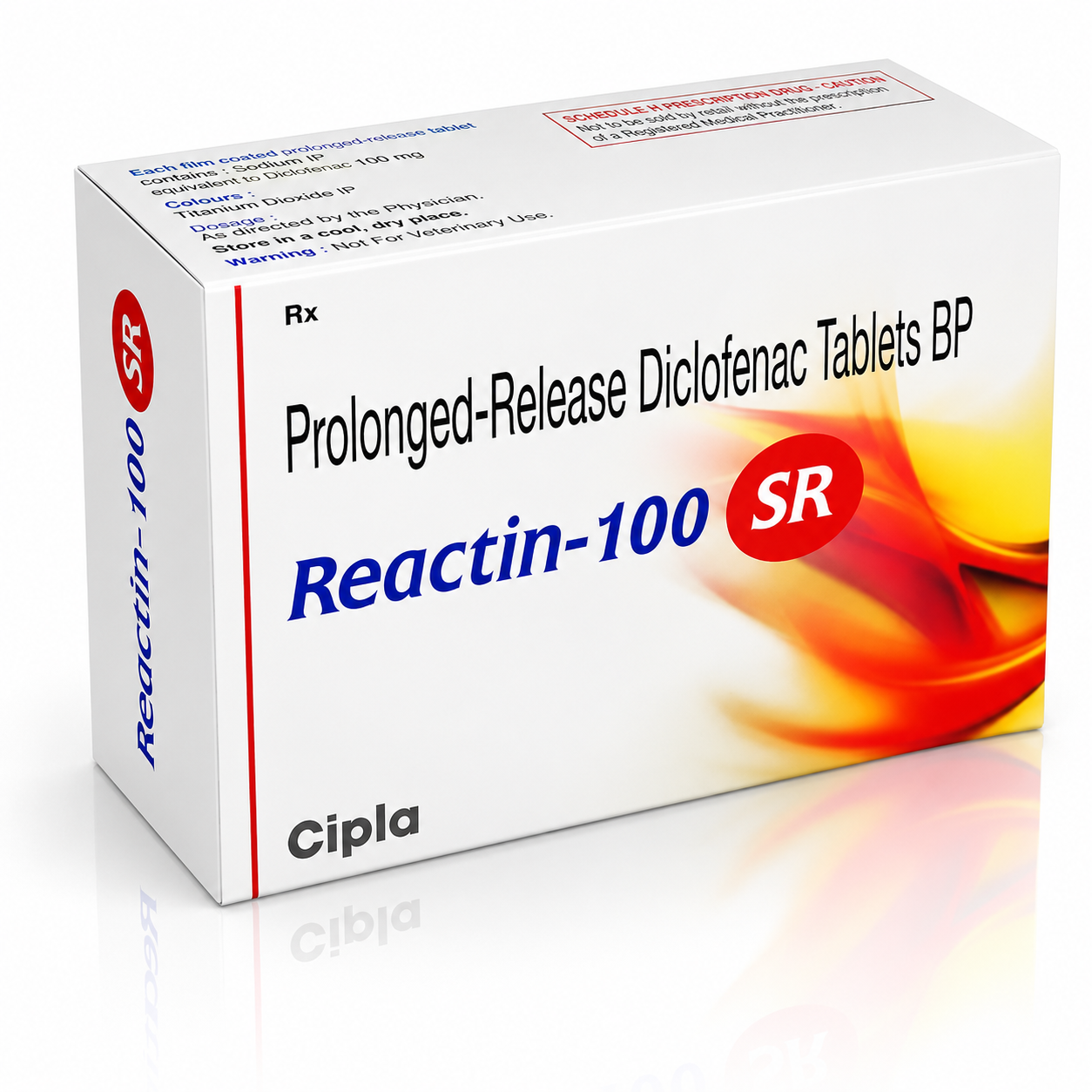
Reactin SR 100 MG Tablet
$0.20 / unit
Available Options
| Pack Size | Price | Price / Unit | Quantity | Action |
|---|---|---|---|---|
| 180 tablets | $27.00 | $0.15/unit | ||
| 150 tablets | $23.00 | $0.15/unit | ||
| 120 tablets | $19.00 | $0.16/unit | ||
| 90 tablets | $15.00 | $0.17/unit | ||
| 60 tablets | $11.00 | $0.18/unit | ||
| 30 tablets | $6.00 | $0.20/unit |
Product Description
What is this medicine?
REACTIN 100 SR is a nonsteroidal anti-inflammatory drug (NSAID). This medicine is used to treat pain and inflammation associated with conditions such as osteoarthritis, rheumatoid arthritis, ankylosing spondylitis, muscle pain, and post-operative pain. It works by reducing substances in the body that cause pain and inflammation.
What should I tell my health care provider before I take this medicine?
They need to know if you have any of these conditions:
history of asthma or allergic reactions to NSAIDs
stomach ulcers or gastrointestinal bleeding
heart disease or circulation problems
high blood pressure
kidney or liver disease
history of stroke or blood clot
if you smoke or drink alcohol frequently
bleeding disorders
fluid retention or swelling (edema)
inflammatory bowel disease (Crohn’s or ulcerative colitis)
an unusual or allergic reaction to diclofenac, aspirin, ibuprofen, other NSAIDs, or any other medicines, foods, dyes, or preservatives
pregnant or trying to get pregnant
breast-feeding
How should I use this medicine?
Take this medicine by mouth with a full glass of water. Swallow the tablet whole; do not crush or chew sustained-release tablets. It is best taken with food or milk to reduce stomach upset.
Take your doses at regular intervals. Do not take your medicine more often than directed. Do not stop taking this medicine except on the advice of your doctor or health care professional.
Overdosage: If you think you have taken too much of this medicine contact a poison control center or emergency room at once.
What if I miss a dose?
If you miss a dose, take it as soon as you can. If it is almost time for your next dose, take only that dose. Do not take double or extra doses.
What may interact with this medicine?
other NSAIDs (ibuprofen, naproxen, etc.)
aspirin
blood thinners like warfarin
corticosteroids (prednisone)
lithium
methotrexate
certain antidepressants (SSRIs/SNRIs like fluoxetine, sertraline, venlafaxine)
ACE inhibitors or ARBs for blood pressure
diuretics
cyclosporine
digoxin
alcohol
This list may not describe all possible interactions. Give your health care provider a list of all the medicines, herbs, non-prescription drugs, or dietary supplements you use. Also tell them if you smoke, drink alcohol, or use illegal drugs. Some items may interact with your medicine.
What should I watch for while using this medicine?
Visit your doctor or health care professional for regular checks on your progress. This medicine may increase the risk of heart attack, stroke, or serious gastrointestinal issues, especially when used long-term.
Do not take other NSAIDs or pain relievers unless advised by your doctor.
Avoid alcohol — it may increase the risk of stomach bleeding.
Tell your doctor if you notice any unusual symptoms such as black stools, vomiting blood, swelling, shortness of breath, or chest pain.
Avoid activities that require alertness until you know how this medicine affects you. It may cause dizziness or drowsiness.
This medicine should be used with caution in the elderly, as they may be more sensitive to side effects.
Women should inform their doctor if they plan to become pregnant. This medicine should be avoided in late pregnancy as it may cause complications.
What side effects may I notice from this medicine?
Side effects that you should report to your doctor or health care professional as soon as possible:
allergic reactions (skin rash, itching, swelling of the face, lips, or tongue, difficulty breathing)
chest pain or shortness of breath
black, tarry stools or vomiting blood
severe stomach pain
yellowing of the skin or eyes (jaundice)
swelling in your hands, feet, or legs
unusual bleeding or bruising
visual disturbances
weight gain or changes in urine output
Side effects that usually do not require medical attention (report if they continue or are bothersome):
nausea
headache
upset stomach
dizziness
gas or bloating
mild rash
drowsiness
This list may not describe all possible side effects.
Where should I keep my medicine?
Keep out of the reach of children.
Store at room temperature between 20 and 25 degrees C (68 and 77 degrees F).
Protect from moisture and heat.
Do not use after the expiration date.
Properly dispose of any unused or expired medication.