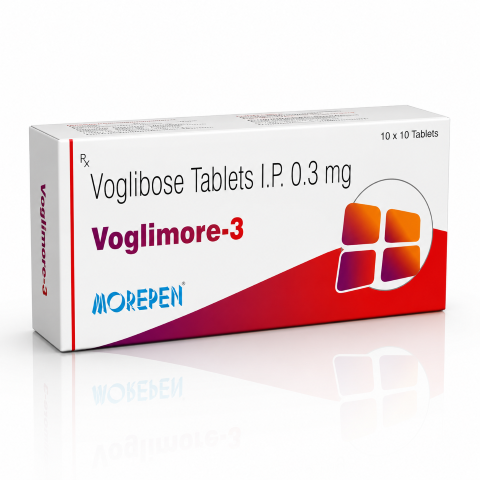
Voglimore 3 MG Tablet
$0.40 / unit
Available Options
| Pack Size | Price | Price / Unit | Quantity | Action |
|---|---|---|---|---|
| 180 tablets | $56.00 | $0.31/unit | ||
| 150 tablets | $48.00 | $0.32/unit | ||
| 120 tablets | $39.00 | $0.33/unit | ||
| 90 tablets | $31.00 | $0.34/unit | ||
| 60 tablets | $22.00 | $0.37/unit | ||
| 30 tablets | $12.00 | $0.40/unit |
Product Description
What is this medicine?
VOGLIMORE 0.3 MG TABLET contains Voglibose 0.3 mg, an oral antidiabetic medicine belonging to the alpha-glucosidase inhibitor class.
Voglibose works mainly in the intestine by inhibiting enzymes responsible for breaking complex carbohydrates into simple sugars such as glucose. This slows carbohydrate digestion and absorption and helps prevent a sharp increase in blood glucose after meals.
This medicine is commonly used for:
type 2 diabetes mellitus
controlling high post-meal blood-glucose levels
reducing postprandial glucose spikes
improving overall glycemic control
treatment when diet and exercise alone do not adequately control blood glucose
combination treatment with other antidiabetic medicines when prescribed
Voglimore is particularly useful for controlling the rise in blood glucose after meals.
Important: Voglimore should be used as part of a diabetes-management program that includes appropriate diet, exercise, weight management, and regular blood-glucose monitoring.
What should I tell my health care provider before I take this medicine?
They need to know if you have any of these conditions:
allergy to voglibose or any ingredient in the tablet
kidney disease
liver disease
severe digestive or intestinal disorders
intestinal obstruction
inflammatory bowel disease
ulcerative colitis
Crohn's disease
severe infection
diabetic ketoacidosis
if you take insulin
if you take sulfonylureas or other diabetes medicines
if you frequently experience low blood sugar
if you are pregnant or planning pregnancy
if you are breastfeeding
Current product information specifically cautions patients with kidney or liver problems and states that the medicine should not be used in patients with certain inflammatory or ulcerative bowel conditions.
Tell your healthcare professional about all prescription medicines, nonprescription medicines, vitamins, herbal preparations, and supplements you use.
How should I use this medicine?
Take Voglimore 0.3 mg Tablet exactly as prescribed by your healthcare professional.
For appropriate use:
it is generally taken immediately before meals
swallow the tablet whole with water
do not crush or chew it unless specifically instructed
take it consistently as prescribed
continue your recommended diabetic diet
maintain regular physical activity
monitor your blood glucose as instructed
do not increase or decrease your dose yourself
do not stop treatment without medical advice
Current product information recommends taking Voglimore just before a meal, because its main purpose is to reduce the post-meal rise in blood glucose.
Important: 0.3 mg is the tablet strength. Your healthcare professional determines the appropriate dosing frequency according to your blood-glucose levels and other medicines.
What if I miss a dose?
Because Voglimore is generally taken in relation to meals:
follow your healthcare professional's instructions if you miss a dose
if the meal has already passed, do not routinely double the next dose
continue with your normal dosing schedule at the next appropriate meal
Do not take two doses together to compensate for a missed tablet.
What may interact with this medicine?
Voglibose may have clinically important effects when combined with:
insulin
sulfonylureas such as glimepiride, gliclazide, or glipizide
other antidiabetic medicines
medicines that can increase blood glucose
medicines that can lower blood glucose
excessive alcohol
When Voglimore is combined with insulin or certain other diabetes medicines, the risk of hypoglycemia may increase.
What should I watch for while using this medicine?
Your healthcare professional may monitor your:
fasting blood glucose
post-meal blood glucose
HbA1c
kidney function when appropriate
liver function when appropriate
gastrointestinal tolerance
Post-meal glucose monitoring can be particularly useful because voglibose primarily reduces postprandial glucose elevations.
What side effects may I notice from this medicine?
Common side effects may include:
flatulence (gas)
abdominal pain
diarrhea
constipation
loss of appetite
abdominal discomfort
skin rash
Current product information lists flatulence, abdominal pain, diarrhea, and skin rash among recognized adverse effects.
These gastrointestinal effects occur because voglibose delays carbohydrate digestion in the intestine.
Side effects that you should report promptly:
severe or persistent abdominal pain
severe diarrhea
persistent vomiting
severe abdominal swelling
inability to pass stool or gas
jaundice or yellowing of the skin/eyes
severe allergic reaction
difficulty breathing
swelling of the face, lips, tongue, or throat
What about low blood sugar?
Voglibose used alone generally does not commonly cause hypoglycemia.
However, low blood sugar can occur when Voglimore is combined with:
insulin
sulfonylureas
other medicines capable of causing hypoglycemia
Current product guidance specifically warns that hypoglycemia may occur when Voglimore is combined with insulin or sulfonylureas.
Symptoms can include:
sweating
shaking
intense hunger
dizziness
weakness
confusion
headache
rapid heartbeat
blurred vision
Important: treating hypoglycemia
Because voglibose delays the digestion of complex sugars, hypoglycemia occurring during treatment should generally be corrected using glucose (dextrose) rather than relying on ordinary table sugar (sucrose). Current Voglimore guidance specifically makes this distinction.
Follow your healthcare professional's individualized hypoglycemia plan.
What happens if I take too much?
If you accidentally take substantially more Voglimore than prescribed, contact your healthcare professional.
An excessive dose may increase gastrointestinal symptoms such as:
severe gas
abdominal bloating
abdominal discomfort
diarrhea
Do not take additional tablets to compensate for a high blood-glucose reading or a high-carbohydrate meal.
What happens if I suddenly stop taking this medicine?
Do not stop Voglimore simply because your blood-glucose readings have improved.
Stopping treatment without an appropriate alternative may cause:
post-meal blood glucose to rise
overall blood-glucose control to worsen
HbA1c to increase
Poorly controlled diabetes over time can increase the risk of complications affecting the kidneys, eyes, nerves, heart, and blood vessels. Current product guidance advises against stopping Voglimore without consulting the prescribing doctor.
Diet and lifestyle while taking Voglimore
Voglimore works best as part of a complete diabetes-management program.
Follow your healthcare professional's recommendations regarding:
balanced carbohydrate intake
appropriate portion sizes
limiting excessive refined sugars
regular physical activity
maintaining an appropriate body weight
regular blood-glucose monitoring
post-meal glucose monitoring
HbA1c testing
routine eye examinations
appropriate diabetic foot care
Diet, regular exercise, and weight management remain important during treatment.
Where should I keep my medicine?
Keep Voglimore 0.3 mg Tablet:
in its original blister packaging
according to the storage temperature printed on the pack
in a dry place
protected from excessive heat and moisture
away from direct sunlight
securely out of the reach of children
Do not use the tablets after their expiration date or if the packaging has been damaged.