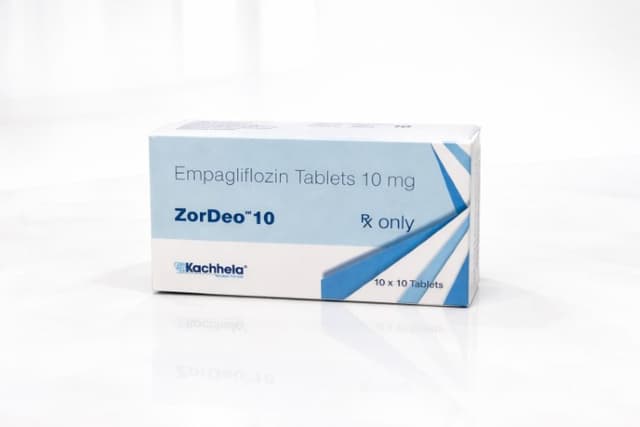
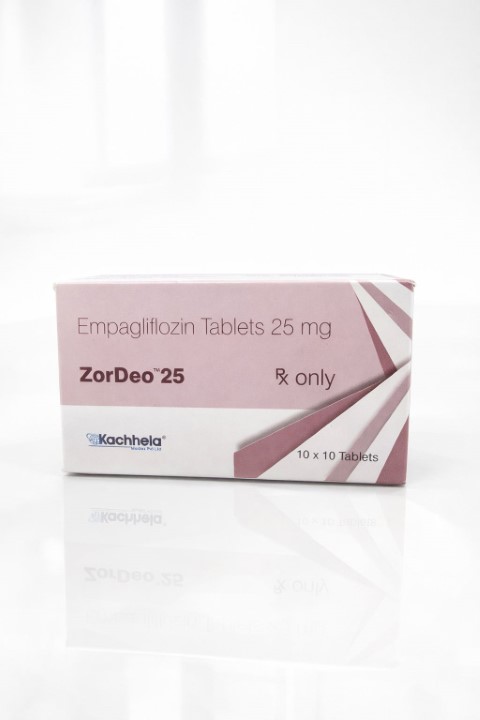
Zordeo 25 MG Tablet
$1.50 / unit
Available Options
| Pack Size | Price | Price / Unit | Quantity | Action |
|---|---|---|---|---|
| 180 Tablets | $270.00 | $1.50/unit | ||
| 150 Tablets | $225.00 | $1.50/unit | ||
| 120 Tablets | $180.00 | $1.50/unit | ||
| 90 Tablets | $135.00 | $1.50/unit | ||
| 60 Tablets | $90.00 | $1.50/unit | ||
| 30 Tablets | $45.00 | $1.50/unit |
Product Description
What Is This Medicine?
ZORDEO 25 MG TABLET contains Empagliflozin 25 mg , an oral antidiabetic medicine belonging to the SGLT2 inhibitor class. Empagliflozin works mainly in the kidneys by blocking sodium-glucose cotransporter-2 (SGLT2) . This reduces the reabsorption of glucose from urine back into the bloodstream and allows excess glucose to leave the body through urine. This helps: lower elevated blood-glucose levels improve overall glycemic control reduce fasting blood glucose lower HbA1c increase urinary glucose excretion support cardiovascular and kidney risk reduction in appropriately selected patients Current Zordeo listings specifically identify it for the treatment of type 2
- diabetes mellitus .
This medicine is commonly used for:
- type 2
- diabetes mellitus controlling high blood-glucose levels improving glycemic control use alongside diet and exercise combination treatment with other antidiabetic medicines when prescribed reducing cardiovascular risk in appropriate patients with type 2
- diabetes and cardiovascular disease empagliflozin may also be prescribed for heart failure or chronic
- kidney disease in appropriate patients Important: The specific indication and suitability of empagliflozin depend on the patient's medical history and kidney function
What Should I Tell My Health Care Provider Before I Take This Medicine?
They need to know if you have any of these conditions: allergy to empagliflozin or any ingredient in the tablet
- kidney disease or reduced kidney function
- liver disease type 1
- diabetes history of diabetic ketoacidosis dehydration low blood pressure frequent urinary tract infections recurrent genital fungal infections severe infection or serious illness severe
- vomiting or diarrhea if you are eating substantially less than usual if you follow a ketogenic or very-low-carbohydrate diet if you take insulin if you take sulfonylureas or other
- diabetes medicines if you take diuretics or "water tablets" if you are undergoing major surgery if you will be fasting for a medical procedure if you are pregnant or planning pregnancy if you are
- breastfeeding Tell your healthcare professional about all prescription medicines, nonprescription medicines, vitamins, herbal products, and supplements you use.
How Should I Use This Medicine?
Take Zordeo 25 mg Tablet exactly as prescribed by your healthcare professional . For appropriate use: swallow the tablet whole with water it is generally taken once daily it may be taken with or without food take it at approximately the same time each day take only the prescribed dose maintain adequate hydration unless your healthcare professional has restricted fluids continue your recommended diabetic diet maintain regular physical activity monitor your blood glucose as instructed do not increase or decrease your dose yourself do not stop treatment without medical advice A current Zordeo product listing describes empagliflozin 25 mg as generally taken orally once daily, with or without food. Important: 25 mg is the tablet strength. It does not mean that 25 mg is the correct starting dose for every patient.
What If I Miss A Dose?
If you miss a dose of Zordeo: take it when you remember unless it is nearly time for your next dose if your next dose is near, skip the missed dose continue with your regular dosing schedule do not take two doses together to compensate for a missed tablet Do not take additional Zordeo tablets simply because your blood-glucose reading is higher than expected.
What May Interact With This Medicine?
Empagliflozin may have clinically important additive effects with: insulin sulfonylureas such as glimepiride, gliclazide, and glipizide other antidiabetic medicines diuretics or "water tablets" medicines that lower blood pressure medicines that may affect kidney function Combining Zordeo with insulin or medicines that stimulate insulin secretion may increase the risk of hypoglycemia. Diuretics can increase fluid loss and may contribute to dehydration or low blood pressure .
What Should I Watch For While Using This Medicine?
Your healthcare professional may monitor your: fasting blood glucose post-meal blood glucose HbA1c kidney function/eGFR blood pressure hydration status body weight symptoms of urinary tract infection symptoms of genital fungal infection heart-failure symptoms when relevant Empagliflozin causes excess glucose to be removed through urine, which is its primary glucose-lowering mechanism. Diabetic ketoacidosis warning SGLT2 inhibitors such as empagliflozin can rarely cause diabetic ketoacidosis (DKA) . Importantly, DKA may sometimes occur even when blood-glucose levels are not extremely high. Seek urgent medical attention if you develop:
- nausea
- vomiting abdominal pain excessive thirst unusual or severe tiredness rapid or difficult breathing confusion unusual sleepiness fruity-smelling breath The risk may increase during: prolonged fasting severe illness dehydration major surgery substantially reduced food intake ketogenic or very-low-carbohydrate diets circumstances involving insufficient insulin Dehydration and low blood pressure Empagliflozin increases urinary glucose excretion and can increase urination. This may contribute to dehydration or low blood pressure , particularly in susceptible patients. Watch for: excessive thirst dry mouth
- dizziness light-headedness weakness fainting Maintain appropriate hydration unless your healthcare professional has advised you to restrict fluids. Urinary and genital infections Because empagliflozin increases glucose in the urine, it can increase the likelihood of genital fungal infections and urinary tract infections . Contact your healthcare professional if you develop: burning or pain during urination frequent or urgent urination accompanied by discomfort fever pelvic or back pain genital itching redness swelling unusual genital discharge Maintaining good personal hygiene may help reduce the risk of genital infections. Fournier's gangrene warning A rare but serious infection called necrotizing fasciitis of the perineum (Fournier's gangrene) has been associated with SGLT2 inhibitors. Seek urgent medical attention if you develop: severe pain or tenderness around the genital or perineal area redness swelling fever feeling severely unwell This condition requires urgent medical treatment.
What Side Effects May I Notice From This Medicine?
Common or possible side effects include: increased urination increased thirst genital fungal infections urinary tract infections
- dizziness dehydration low blood pressure in susceptible patients hypoglycemia when combined with insulin or certain other antidiabetic medicines Side effects that you should report promptly: symptoms suggesting diabetic ketoacidosis severe dehydration severe
- dizziness or fainting severe urinary tract infection severe genital or perineal infection persistent
- vomiting significant reduction in urination severe hypoglycemia severe allergic reaction swelling of the face, lips, tongue, or throat difficulty breathing or swallowing What about low blood sugar? Empagliflozin used alone generally has a relatively low risk of causing significant hypoglycemia. However, low blood sugar may occur when Zordeo is combined with: insulin sulfonylureas other medicines capable of independently causing hypoglycemia inadequate food intake Symptoms may include: sweating shaking or trembling intense hunger
- dizziness weakness confusion
- headache rapid heartbeat blurred vision Your healthcare professional may need to adjust insulin or another glucose-lowering medicine when it is combined with Zordeo. What happens if I take too much? If you accidentally take more Zordeo than prescribed, contact your healthcare professional or seek medical attention. An overdose may increase the risk of: excessive urination dehydration
- dizziness low blood pressure electrolyte disturbances hypoglycemia when combined with certain other
- diabetes medicines Do not take additional Zordeo tablets to compensate for a high blood-glucose reading or a high-carbohydrate meal. What happens if I suddenly stop taking this medicine? Do not stop Zordeo simply because your blood-glucose readings have improved. Stopping
- diabetes treatment without an appropriate alternative may cause: blood glucose to rise HbA1c to increase worsening
- diabetes control Poorly controlled
- diabetes over time can increase the risk of complications affecting the: kidneys eyes nerves heart blood vessels If empagliflozin has been prescribed for a cardiovascular, heart-failure, or kidney indication, stopping it may also remove its intended protective benefit. Diet and lifestyle while taking Zordeo When Zordeo is prescribed for type 2
- diabetes, it should form part of a complete
- diabetes-management program. Follow your healthcare professional's recommendations regarding: balanced carbohydrate intake appropriate portion sizes limiting excessive refined sugars regular physical activity maintaining an appropriate body weight adequate hydration regular blood-glucose monitoring HbA1c testing kidney-function monitoring routine eye examinations appropriate foot care Current Zordeo information describes the medicine as helping control high blood sugar and thereby reducing the risk of serious
- diabetes-related complications. Surgery and prolonged fasting Tell your healthcare professional that you take Zordeo before undergoing: major surgery prolonged fasting treatment for a severe acute illness procedures requiring substantially reduced food intake Empagliflozin may need to be temporarily withheld because surgery, prolonged fasting, and serious illness can increase the risk of ketoacidosis. Follow your healthcare professional's specific instructions about when to stop and restart treatment.
Where Should I Keep My Medicine?
Keep Zordeo 25 mg Tablet : in its original blister packaging according to the storage conditions printed on the product pack in a cool, dry place protected from excessive heat protected from moisture away from direct sunlight securely out of the reach of children Do not use tablets after their expiration date or if the packaging has been damaged.