Nitric oxide is an important molecule produced naturally by the human body. It helps blood vessels relax, supports healthy circulation and plays a role in cardiovascular health. It is also involved in erectile function because healthy blood flow is essential for achieving and maintaining an erection.
Although the body produces nitric oxide naturally, certain foods provide nutrients that support its production or help maintain healthy blood vessel function.
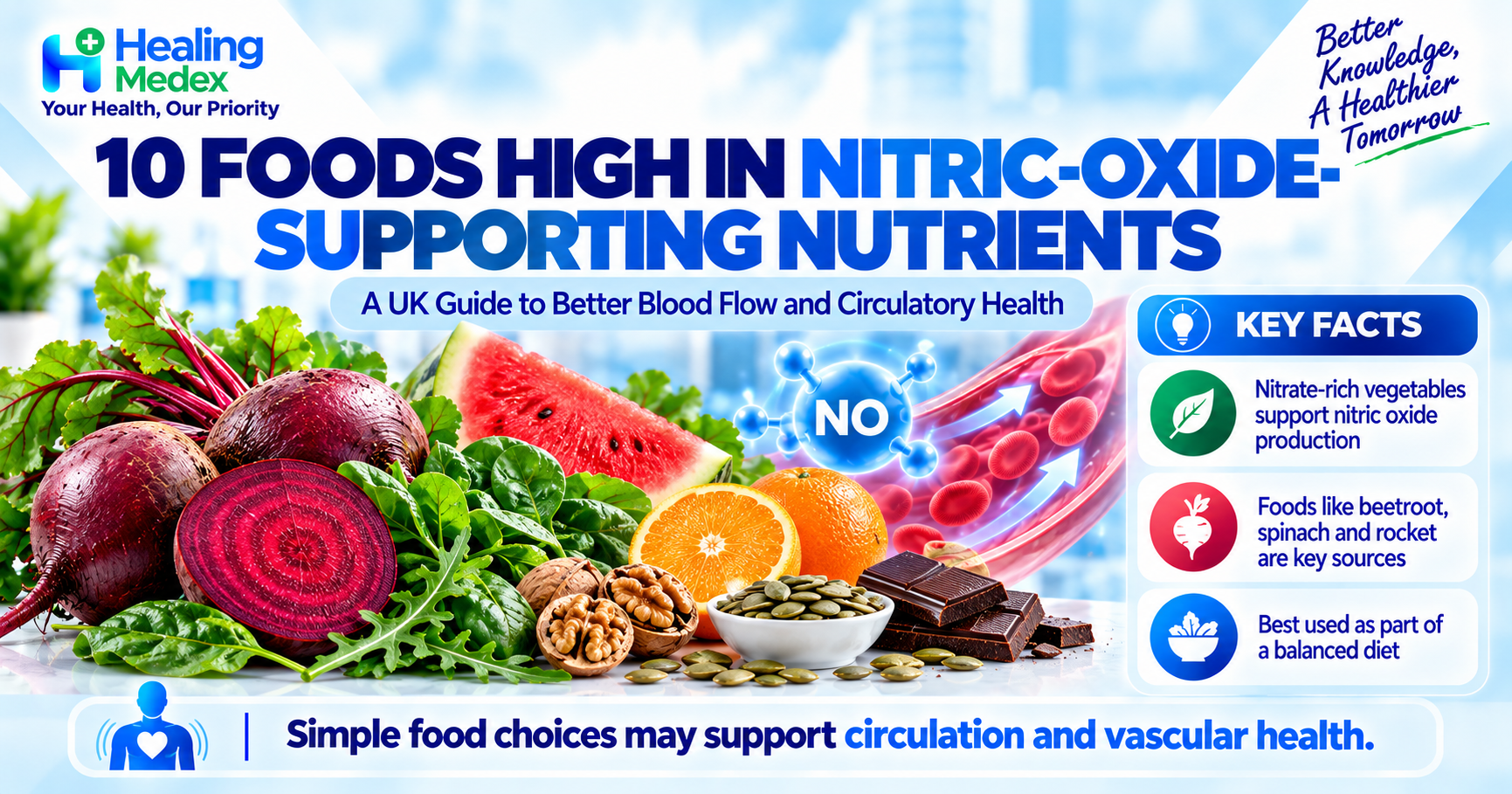
Vegetables such as beetroot, spinach and rocket contain dietary nitrates, which the body can convert into nitric oxide. Other foods, including watermelon, citrus fruits and nuts, provide amino acids, vitamins and antioxidants that may support nitric oxide-related processes.
For people living in the United Kingdom, these foods are generally easy to find in supermarkets and can be included in everyday meals.
In this Healing Medex guide, we explore 10 foods containing nitric-oxide-supporting nutrients, their potential health benefits and practical ways to include them in a balanced diet.
What Is Nitric Oxide and Why Is It Important?
Nitric oxide (NO) is a signalling molecule produced by cells throughout the body, including cells lining the blood vessels.
One of its main functions is to help blood vessels relax and widen, a process known as vasodilation.
This allows blood to flow more easily and helps regulate blood pressure.
Key Functions of Nitric Oxide
1. Supports healthy blood circulation
Nitric oxide relaxes the smooth muscles surrounding blood vessels, helping blood travel more efficiently around the body.
2. Helps regulate blood pressure
By supporting blood vessel relaxation, nitric oxide contributes to normal blood pressure regulation.
3. Plays a role in erectile function
Nitric oxide is involved in the signalling process that allows increased blood flow into penile tissue during sexual arousal.
4. Supports exercise performance
Dietary nitrate may improve exercise efficiency in certain situations, although results vary between individuals and activities.
5. Contributes to blood vessel health
Nitric oxide helps maintain endothelial function, which refers to the ability of the inner lining of blood vessels to regulate circulation.
Research discussed by the British Heart Foundation suggests that nitrate-rich vegetables may improve some measures of vascular function. However, they should not be considered a replacement for prescribed treatment.
10 Foods High in Nitric-Oxide-Supporting Nutrients
1. Beetroot – A Rich Natural Source of Dietary Nitrates
Beetroot is one of the most widely researched vegetables for its potential effects on nitric oxide production and blood pressure.
It contains naturally occurring dietary nitrates, which the body converts into nitrite and subsequently nitric oxide.
Potential Benefits
Supports nitric oxide production through the nitrate pathway.
May help reduce blood pressure in some individuals.
Supports normal blood vessel function.
May improve exercise efficiency under certain conditions.
Provides fibre, folate and other useful nutrients.
Research supported by the British Heart Foundation has found that nitrate-rich beetroot juice can lower blood pressure in some adults with hypertension. However, more research is needed to establish long-term benefits and specific dietary recommendations.
How to include beetroot in your diet: Add roasted beetroot to salads, mix grated beetroot into sandwiches or enjoy steamed beetroot alongside dinner. Whole beetroot provides more fibre than beetroot juice.
2. Spinach – A Leafy Green That Supports Nitric Oxide Production
Spinach contains naturally occurring nitrates and several vitamins and minerals important for overall health.
It is also a source of folate, which contributes to normal cellular function.
Potential Benefits
Provides dietary nitrates that can contribute to nitric oxide formation.
Supplies folate and other essential nutrients.
Supports a balanced, heart-healthy eating pattern.
Provides fibre and important minerals.
Spinach is a practical food choice for people wanting to increase their consumption of nitrate-rich vegetables.
How to include spinach in your diet: Add fresh spinach to salads, omelettes, lentil dishes or wholemeal wraps. Lightly cooked spinach can also be served with fish, chicken or beans.
3. Rocket – A Nitrate-Rich Salad Vegetable
Rocket, also known as arugula, is a leafy vegetable commonly used in British salads.
It can contain substantial concentrations of dietary nitrates, although the amount varies depending on growing conditions and storage.
Potential Benefits
Supplies natural dietary nitrates.
Supports the nitrate-to-nitric-oxide pathway.
Contributes to a varied vegetable intake.
Provides vitamins and plant compounds.
Supports a balanced diet associated with cardiovascular health.
Rocket offers a convenient way to incorporate nitrate-rich vegetables into everyday meals without relying on concentrated vegetable juices.
How to include rocket in your diet: Add rocket to salads, sandwiches and wraps. It also works well with tomatoes, olive oil and grilled vegetables.
4. Celery – A Hydrating Vegetable With Natural Nitrates
Celery is another vegetable that provides naturally occurring nitrates.
It also contains water, fibre and plant compounds, making it a useful addition to a balanced diet.
Potential Benefits
Provides dietary nitrates that may contribute to nitric oxide formation.
Supports hydration through its high water content.
Offers fibre for digestive health.
Can replace higher-salt snacks when eaten fresh.
Although celery is sometimes promoted as a natural blood pressure remedy, there is insufficient evidence that eating celery alone produces a meaningful therapeutic effect.
How to include celery in your diet: Eat celery sticks with hummus, add chopped celery to soups or mix it into salads and homemade vegetable dishes.
5. Watermelon – A Natural Source of Citrulline
Watermelon differs from nitrate-rich vegetables because it contains the amino acid citrulline.
The body can convert citrulline into arginine, which is used to produce nitric oxide.
This process has attracted research interest in cardiovascular and exercise health.
Potential Benefits
Provides citrulline, a precursor involved in nitric oxide production.
Contributes to hydration.
Supports overall fruit intake.
May contribute to vascular health as part of a balanced diet.
Some small studies have investigated citrulline supplementation for circulation and erectile function. However, eating watermelon has not been shown to reliably treat erectile dysfunction, and ordinary portions contain much less citrulline than many research supplements.
How to include watermelon in your diet: Enjoy fresh watermelon as a snack, add it to fruit salads or combine it with mint for a refreshing dessert.
6. Oranges and Other Citrus Fruits – Rich in Vitamin C
Vitamin C may help protect nitric oxide from oxidative breakdown, although this does not mean that eating citrus fruits will directly increase nitric oxide levels in every person.
Potential Benefits
Support normal blood vessel health.
Help protect cells from oxidative stress.
Contribute to a balanced, heart-healthy eating pattern.
Supply fibre when eaten as whole fruit.
Citrus fruits can support cardiovascular health as part of a diet rich in fruit and vegetables.
How to include citrus fruits in your diet: Eat whole oranges as snacks, add lemon juice to salads or include citrus segments in fruit bowls.
Whole fruit is generally preferable to juice because it provides more fibre. Grapefruit can interact with certain medicines, so check with your pharmacist if you take regular medication.
7. Pomegranate – A Fruit Rich in Polyphenols
Pomegranate contains polyphenols, including compounds with antioxidant activity.
Researchers have explored whether pomegranate extracts and juice can improve markers of blood vessel function.
Potential Benefits
Provides antioxidant polyphenols.
May help protect nitric oxide-related signalling from oxidative stress.
Supports overall vascular health through a varied diet.
Supplies vitamins and beneficial plant compounds.
Can contribute to daily fruit intake.
Although some studies suggest potential cardiovascular benefits, research has not established that pomegranate directly improves erections or reliably increases nitric oxide availability in humans.
How to include pomegranate in your diet: Sprinkle pomegranate seeds over porridge, yoghurt or salads. Choose whole seeds more often than sweetened pomegranate drinks.
8. Walnuts – A Source of Arginine and Healthy Fats
Walnuts provide the amino acid arginine, which the body uses to produce nitric oxide.
They also contain unsaturated fats, fibre and plant-based omega-3 fatty acids.
Potential Benefits
Supply arginine, a nitric oxide precursor.
Provide heart-healthy unsaturated fats.
Support a balanced cholesterol-conscious diet.
Contribute fibre and minerals.
Support overall cardiovascular health when replacing foods high in saturated fat.
The arginine contained in walnuts participates in normal physiological processes, but eating walnuts should not be expected to cause a measurable immediate improvement in nitric oxide or erectile function.
How to include walnuts in your diet: Add a small handful of unsalted walnuts to porridge, yoghurt or salads. They can also be eaten as a snack.
9. Pumpkin Seeds – A Plant-Based Source of Arginine
Pumpkin seeds are a convenient source of plant protein, arginine, magnesium and other nutrients.
Arginine is one of the building blocks the body uses for nitric oxide production.
Potential Benefits
Provide arginine for normal nitric oxide synthesis.
Supply magnesium and zinc.
Contribute to healthy protein intake.
Support a varied, nutrient-rich diet.
Offer an alternative to highly processed snacks.
While pumpkin seeds contain nutrients involved in blood vessel function, direct evidence that eating them raises nitric oxide levels or improves erectile dysfunction is limited.
How to include pumpkin seeds in your diet: Sprinkle unsalted pumpkin seeds over soup, yoghurt, porridge or salads. They can also be mixed with other nuts and seeds.
10. Dark Chocolate – Contains Cocoa Flavanols
Dark chocolate made with cocoa-rich ingredients contains flavanols, a group of plant compounds studied for their effects on blood vessel function.
Certain cocoa flavanols may support endothelial nitric oxide-related signalling.
Potential Benefits
Contains cocoa flavanols that may support endothelial function.
May improve certain measures of blood vessel responsiveness.
Provides antioxidant plant compounds.
Can be enjoyed occasionally within a balanced diet.
Offers an alternative to some lower-cocoa confectionery products.
However, the flavanol content varies substantially between products. A high cocoa percentage does not guarantee a high flavanol concentration, and ordinary dark chocolate can contain substantial calories, sugar and saturated fat.
How to include dark chocolate in your diet: Enjoy a small portion occasionally, choosing products with less added sugar where possible.
It should not be treated as a nitric oxide supplement or a treatment for circulation problems.
Which Foods Are Best for Supporting Nitric Oxide?
Different foods support nitric oxide-related processes through different nutrients.
Food | Key supporting nutrient | Main role |
|---|---|---|
Beetroot | Dietary nitrates | Nitric oxide formation |
Spinach | Dietary nitrates | Nitrate-to-nitric-oxide pathway |
Rocket | Dietary nitrates | Nitric oxide formation |
Celery | Dietary nitrates | Contributes dietary nitrate |
Watermelon | Citrulline | Precursor to arginine |
Oranges | Vitamin C | Antioxidant support |
Pomegranate | Polyphenols | Vascular antioxidant support |
Walnuts | Arginine | Nitric oxide synthesis precursor |
Pumpkin seeds | Arginine | Nitric oxide synthesis precursor |
Dark chocolate | Cocoa flavanols | Endothelial function support |
Important: These foods should not be ranked as equally effective. The strongest direct evidence for increasing nitric oxide through diet relates to nitrate-rich vegetables such as beetroot and leafy greens. Evidence for the other foods is more indirect or preliminary.
Can Nitric-Oxide-Supporting Foods Improve Erectile Function?
Nitric oxide plays an essential role in the body's normal erectile response.
During sexual arousal, nitric oxide helps activate processes that relax smooth muscle within erectile tissue. This allows increased blood flow, which is necessary for an erection.
How Diet May Support Erectile Health
A balanced diet may contribute to better erectile health by supporting cardiovascular function, healthy blood pressure, blood sugar regulation and weight management.
Research suggests that dietary patterns containing vegetables, fruits, wholegrains, legumes, nuts and unsaturated fats may reduce the risk of erectile dysfunction or help improve symptoms in some individuals.
However, there are important limitations:
Eating nitrate-rich foods does not guarantee stronger erections.
Increasing nitric oxide through diet is not the same as treating ED.
Erectile dysfunction may involve cardiovascular, hormonal, neurological, psychological or medication-related factors.
No individual food has been proven to cure erectile dysfunction.
Persistent erectile difficulties deserve medical assessment rather than relying exclusively on dietary changes.
How to Include Nitric-Oxide-Supporting Foods in a UK Diet
Improving your diet does not require expensive supplements or complicated meal plans.
Most of the foods discussed above can be incorporated into familiar meals using ingredients available in UK supermarkets.
Sample One-Day Meal Plan
Meal | Suggested foods |
|---|---|
Breakfast | Porridge topped with walnuts and orange slices |
Mid-morning snack | Watermelon or another seasonal fruit |
Lunch | Wholemeal sandwich with spinach, rocket and roasted beetroot |
Afternoon snack | Unsalted pumpkin seeds |
Dinner | Grilled fish, lentils or tofu with steamed spinach and vegetables |
Evening treat | A small portion of dark chocolate |
This is an illustrative menu rather than a prescribed eating plan. Portions and food choices should be adjusted according to individual needs.
The NHS Eatwell Guide recommends consuming at least five portions of varied fruit and vegetables each day, alongside higher-fibre starchy foods, suitable protein sources and small amounts of unsaturated fats.
Other Natural Ways to Support Healthy Nitric Oxide Function
Food is only one part of maintaining healthy blood vessel function.
1. Exercise regularly
2. Maintain a healthy weight
Managing excess body weight may improve blood pressure, insulin sensitivity and overall vascular health.
3. Avoid smoking
Smoking damages blood vessels and can impair the normal processes involved in nitric oxide signalling.
4. Manage blood pressure and cholesterol
High blood pressure and unhealthy cholesterol levels can damage the blood vessels over time.
5. Get adequate sleep
Good sleep supports general cardiovascular and metabolic health.
6. Follow a balanced dietary pattern
A diet containing vegetables, fruit, wholegrains, legumes, nuts and healthy fats has broader evidence for cardiovascular benefit than focusing on any single nitric oxide-related food.
Are There Any Risks to Eating Nitric-Oxide-Supporting Foods?
For most healthy adults, the foods listed above are safe when consumed in normal dietary amounts.
However, certain health conditions and medicines require additional care.
People taking blood pressure medication: Concentrated nitrate-rich products, particularly beetroot juice, may contribute to lower blood pressure. Discuss regular use with a healthcare professional if you take blood pressure-lowering medicines.
People with kidney disease: Some people need to limit potassium or other dietary components. Food choices should follow their individual renal dietary advice.
People prone to calcium oxalate kidney stones: Spinach and beetroot contain oxalates and may need to be limited according to medical advice.
People with food allergies: Nuts and seeds can cause allergic reactions.
People considering nitric oxide supplements: High-dose arginine, citrulline or nitrate supplements should not be assumed to have the same safety profile as ordinary foods.
The British Heart Foundation advises caution with regular beetroot juice intake in people taking blood pressure-lowering medication because excessive blood pressure reduction can be harmful.
Frequently Asked Questions
1. What food is highest in nitric oxide?
Foods generally do not supply significant amounts of nitric oxide itself. Instead, vegetables such as beetroot, rocket and spinach provide nitrates that the body can convert into nitric oxide.
2. Can beetroot increase nitric oxide naturally?
Yes. Beetroot contains dietary nitrates, which can be converted to nitric oxide through processes involving bacteria in the mouth and chemical reactions within the body.
3. Is watermelon good for nitric oxide production?
Watermelon contains citrulline, which can be converted to arginine, a precursor used to make nitric oxide. However, the clinical impact of eating normal amounts of watermelon remains uncertain.
4. Can nitric oxide improve blood circulation?
Nitric oxide is essential for normal blood vessel relaxation and blood flow regulation. Increasing nitric oxide availability can influence vascular function, but outcomes depend on an individual's health and the intervention used.
5. Can eating these foods cure erectile dysfunction?
No. A nutritious diet can support cardiovascular and erectile health, but no single food has been proven to cure ED. Persistent symptoms should be discussed with a GP or another qualified healthcare professional.
6. How quickly do nitrate-rich foods work?
Dietary nitrate can influence certain physiological markers within hours, depending on the food, quantity and individual. However, this does not mean that eating a nitrate-rich meal will immediately improve erectile function or provide a guaranteed clinical benefit.
7. Are nitric oxide supplements better than food?
Not necessarily. Supplements may contain concentrated doses that differ substantially from normal dietary intake. They may also cause side effects or interact with medicines. A varied, balanced diet is generally the preferred starting point unless a clinician recommends otherwise.
8. How many portions of vegetables should UK adults eat daily?
The NHS recommends at least five portions of fruit and vegetables combined each day. For adults, a typical portion of fresh, frozen or canned fruit or vegetables is 80 g.
When Should You Speak to a GP?
A UK-based GP can assess potential causes, review medication use and recommend appropriate investigations or treatment.
Sudden or severe chest pain, particularly with breathlessness, sweating or faintness, requires emergency medical help. In the UK, call 999.
Conclusion
Nitric oxide is an essential molecule involved in blood vessel relaxation, circulation and normal erectile function.
Foods such as beetroot, spinach, rocket and celery provide dietary nitrates that the body can convert into nitric oxide. Watermelon, citrus fruits, pomegranate, walnuts, pumpkin seeds and cocoa-containing foods supply additional nutrients associated with nitric oxide production or vascular health.
For people in the UK, these foods can be incorporated into everyday meals without relying on expensive supplements.
However, no single food can guarantee increased nitric oxide levels, improve erections or reverse cardiovascular disease.
The most reliable dietary approach is to eat a varied, balanced diet, remain physically active and manage underlying health conditions with appropriate medical guidance.
At Healing Medex, we encourage readers to make informed decisions about nutrition, circulation and sexual health based on credible medical evidence and advice from qualified healthcare professionals.
Medical Disclaimer
This article is for general educational purposes only and does not replace advice from a qualified doctor or pharmacist. Medical guidance, approved medicines and prescribing rules differ between countries. Always follow the advice of a healthcare professional licensed in your country of residence