Premature ejaculation (PE) is one of the most common sexual concerns among men. It can happen during a first sexual experience, with a new partner, or even after years of satisfactory sexual performance. When ejaculation happens sooner than desired, it may lead to frustration, embarrassment, performance anxiety, or reduced sexual confidence.
If you are wondering how to last longer tonight, you may have come across numerous suggestions, from breathing techniques and special condoms to numbing sprays and medications. But which methods actually work?
The encouraging news is that premature ejaculation can often be managed with practical techniques, behavioral strategies, and medically supported treatments. However, not every method works immediately, and there is no guaranteed solution that suits everyone.
This Healing Medex guide explains what can help you gain better ejaculation control, which approaches are supported by medical evidence, and when professional treatment may be necessary.
What Is Premature Ejaculation?
Premature ejaculation occurs when a man repeatedly ejaculates sooner than he wishes, experiences difficulty delaying ejaculation, and feels distressed or dissatisfied because of it.
Medical definitions generally distinguish two main types:
Lifelong premature ejaculation: Ejaculation usually occurs within approximately one to two minutes of penetration, beginning with early sexual experiences.
Acquired premature ejaculation: Ejaculation becomes noticeably faster after a period of previously satisfactory control.
Importantly, occasional early ejaculation does not necessarily mean someone has a medical disorder. Ejaculation timing naturally varies, and concerns become more significant when the problem occurs repeatedly and causes distress.
Why Do Some Men Ejaculate Too Quickly?
Premature ejaculation does not always have one identifiable cause. Physical, psychological, and relationship-related factors may contribute.
Common contributing factors include:
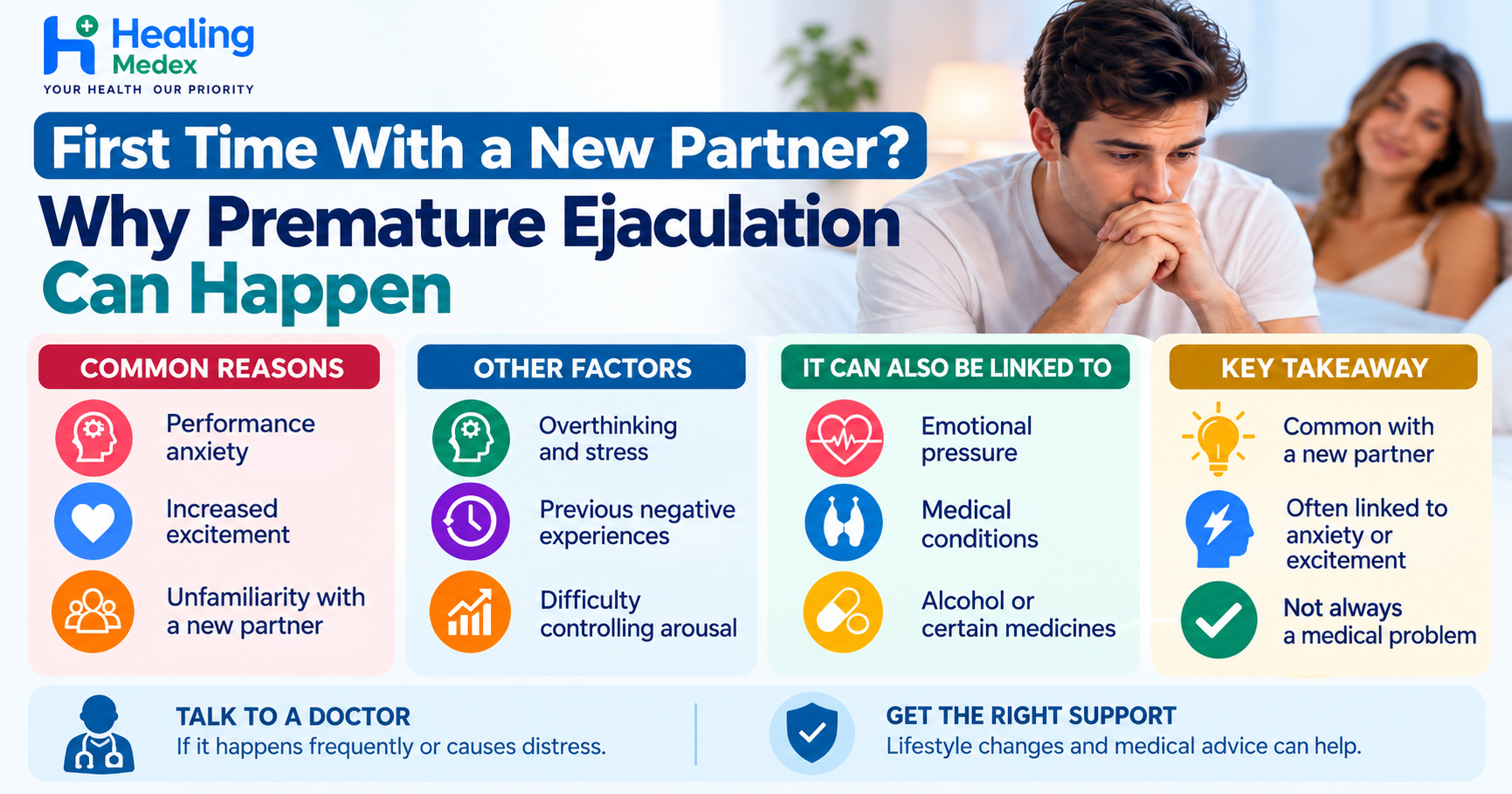
Performance anxiety or fear of disappointing a partner.
Stress, nervousness, or excessive self-monitoring during intimacy.
Relationship tension or unfamiliarity with a new partner.
Possible underlying medical conditions, including prostate-related or thyroid problems.
Individual differences in ejaculation control.
Understanding what contributes to early ejaculation can help determine which treatment is most appropriate.
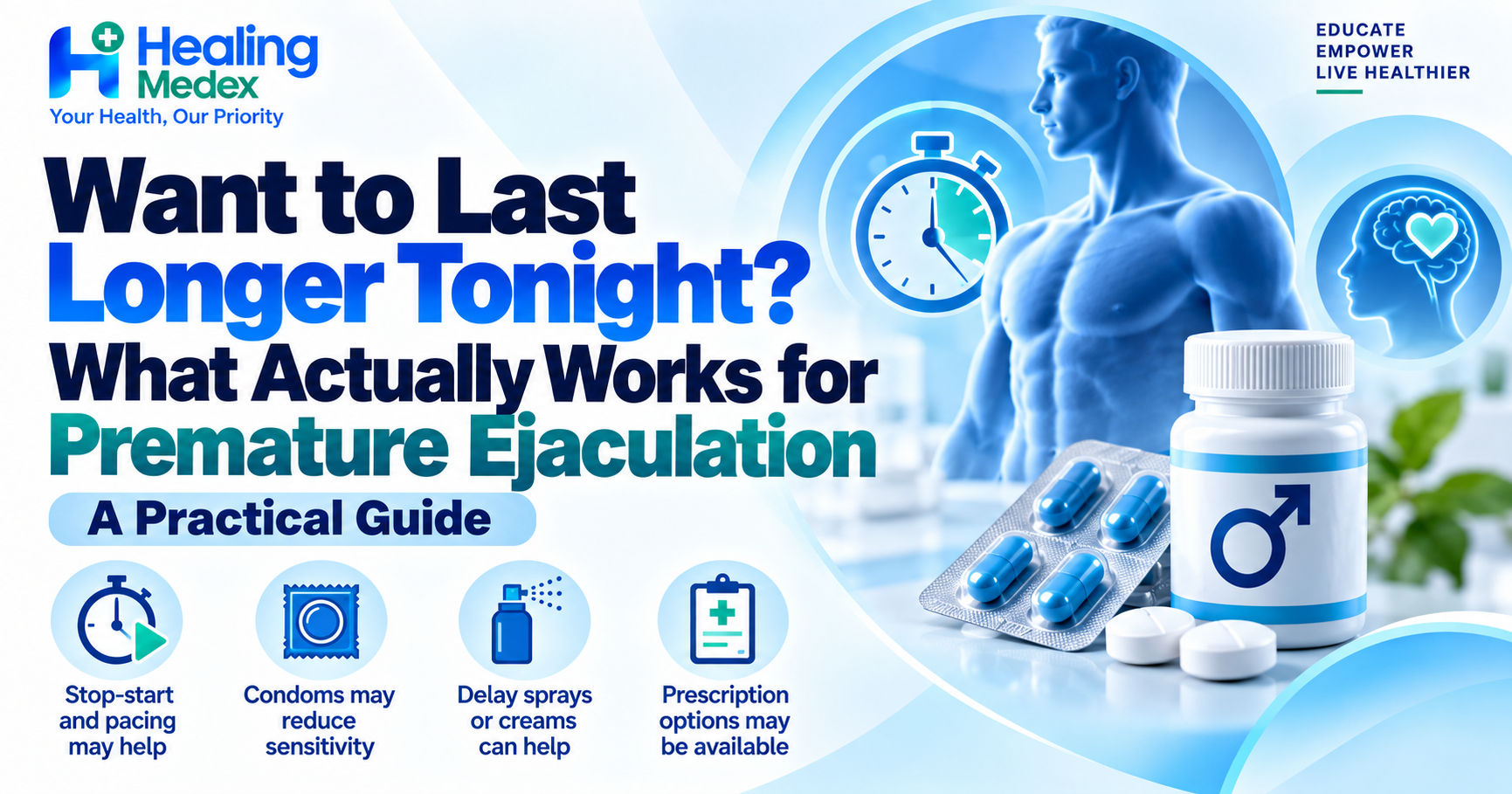
10 Ways to Last Longer: What Actually Works for Premature Ejaculation?
1. Try the Stop-Start Technique
The stop-start technique is a behavioral method intended to improve awareness of arousal and ejaculation control.
It involves temporarily stopping sexual stimulation when ejaculation feels close, allowing arousal to decrease, and then restarting.
How it works:
Notice when you are approaching ejaculation.
Pause stimulation before reaching the point where ejaculation feels unavoidable.
Allow the sensation to decrease.
Resume when you feel more in control.
Practicing this approach regularly may help some men improve their ability to recognize and manage increasing arousal.
Does it work tonight? It may be useful immediately, but consistent improvement usually requires practice. Clinical evidence for behavioral techniques alone is less robust than evidence for certain medical treatments.
2. Use Condoms to Reduce Sensitivity
Condoms may help some men last longer by reducing direct stimulation.
Thicker condoms or products specifically designed to reduce sensitivity may provide additional benefit.
Condoms can also help prevent sexually transmitted infections and unintended pregnancy when used correctly.
Does it work tonight? Potentially. A condom is one of the simpler options to try immediately, although its effects on ejaculation timing vary between individuals.
Avoid wearing multiple condoms simultaneously, because friction between them can increase the risk of breakage.
3. Practice Slow, Controlled Breathing
Anxiety can increase tension and make ejaculation control feel more difficult.
When a person becomes nervous, breathing may become faster and shallower. Slowing the breath can help reduce stress and support relaxation.
Try breathing gently and steadily, keeping the shoulders and abdominal muscles relaxed.
Does it work tonight? Controlled breathing may help with nervousness, particularly when anxiety contributes to early ejaculation. However, breathing exercises alone are not an established treatment for persistent premature ejaculation.
4. Consider a Clinically Appropriate Delay Spray or Cream
Certain topical anesthetic products contain ingredients such as lidocaine or prilocaine.
These medicines temporarily reduce sensation and can delay ejaculation in some men.
Medical guidelines recognize appropriately formulated topical anesthetics as effective treatment options for premature ejaculation.
Important precautions include:
Use only a product intended for genital application.
Follow the prescribed or labeled application instructions.
Avoid excessive application.
Remove excess product or follow instructions about condom use to help prevent transferring the anesthetic to a partner.
Avoid products containing ingredients to which you or your partner are allergic.
Does it work tonight? Some topical products can provide an effect after a relatively short application period, according to product-specific instructions.
They should be used carefully because excessive numbness may reduce pleasure or interfere with erections.
5. Reduce Performance Pressure
One of the most overlooked contributors to premature ejaculation is the pressure to perform perfectly.
Thoughts such as “What if I finish too quickly?” or “Will my partner be disappointed?” may make it harder to relax.
Instead of focusing entirely on ejaculation timing, pay attention to comfort, communication, and shared satisfaction.
It can help to discuss concerns with a partner rather than feeling responsible for meeting an exact time target.
Does it work tonight? Reducing pressure may improve the experience immediately, particularly when anxiety is a major contributing factor.
For persistent concerns, sex therapy or psychological counseling may offer more structured support.
6. Change the Pace and Take Short Pauses
Maintaining continuous, intense stimulation can make ejaculation feel harder to control.
Slowing down or briefly pausing stimulation may allow arousal to decrease.
The goal is not to eliminate pleasure but to recognize changes in arousal before reaching the point of ejaculation.
Does it work tonight? Some men find pacing helpful during the same encounter. However, the benefit is individual, and this approach is best viewed as a practical behavioral strategy rather than a guaranteed medical treatment.
7. Practice Pelvic Floor Muscle Exercises
Pelvic floor muscles contribute to urinary control, erections, and ejaculation.
Some research suggests that pelvic floor training may improve ejaculation control in certain men.
These exercises typically involve gently contracting and relaxing the muscles used to control urine flow.
However, correctly identifying the muscles is important, and repeatedly interrupting urination should not be used as a regular exercise method.
Does it work tonight? No immediate benefit should be expected. Pelvic floor rehabilitation generally requires repeated training over weeks, and some men may benefit from guidance from a pelvic health physiotherapist.
Men with pelvic pain or excessive pelvic muscle tension should seek professional assessment before starting strengthening exercises.
8. Ask a Healthcare Professional About Dapoxetine
It works by influencing serotonin signaling involved in ejaculation control.
Unlike daily SSRIs prescribed for some other conditions, dapoxetine is designed for use on demand under medical guidance.
Its availability and approved use vary by country.
Potential side effects include:
Nausea
Headache
Dizziness
Fainting in some individuals
Dapoxetine is not suitable for everyone and can interact with other medicines, including certain antidepressants and other serotonin-affecting drugs.
Does it work tonight? It may help during a planned sexual encounter when appropriately prescribed, but it should not be started or combined with other medicines without medical assessment.
9. Understand When Sildenafil or Tadalafil May Help
However, these medicines primarily help improve erections by increasing blood flow to the penis in response to sexual stimulation.
They are not interchangeable with treatments specifically intended for premature ejaculation.
They may be useful when a man experiences both erectile dysfunction and premature ejaculation.
For men without erectile dysfunction, recommendations concerning their use for premature ejaculation differ across clinical guidelines.
Does it work tonight? Sildenafil and tadalafil may help erection problems when appropriately prescribed, but they do not reliably solve premature ejaculation on their own.
Never combine these medicines with nitrate medications, and seek medical advice before combining them with other sexual-health treatments.
10. Seek Treatment When Premature Ejaculation Keeps Happening
Occasional early ejaculation is common and may not require medical treatment.
However, if it happens frequently, causes distress, or develops suddenly, speaking with a healthcare professional can help identify the cause.
Depending on the situation, treatment may include behavioral techniques, psychosexual counseling, topical anesthetics, or prescription medication.
Daily SSRIs, such as sertraline or paroxetine, are sometimes prescribed off-label for PE. They require medical supervision, are not immediate solutions, and can cause side effects.
Does it work tonight? A single appointment may not provide instant improvement, but identifying the underlying problem offers a better chance of sustainable results.
What Can You Actually Try Tonight?
The following comparison helps distinguish between approaches that may be practical immediately and those more suited to ongoing management.
Method | Possible short-term benefit | Important consideration |
|---|---|---|
Stop-start technique | May help | Often requires practice |
Condoms | May help immediately | Individual results vary |
Controlled breathing | May reduce anxiety | Limited direct evidence for PE |
Delay spray or cream | Can help when used correctly | Follow medical and product guidance |
Slower pacing | May help | Not reliably effective for everyone |
Pelvic floor exercises | Not an immediate solution | Requires consistent training |
Dapoxetine | Can help when prescribed | Requires clinical assessment |
Sildenafil or tadalafil | Mainly helps associated ED | Not a routine standalone PE solution |
For someone looking for an option on the same day, appropriately used condoms and topical anesthetic products are among the more practical possibilities. Relaxation and pacing can also be tried, but persistent PE may require medical treatment.
What Does Not Reliably Work for Premature Ejaculation?
Many products and online recommendations promise dramatic improvements in sexual stamina. Unfortunately, these claims are not always supported by scientific evidence.
Alcohol Before Sex
Alcohol may temporarily reduce inhibitions, but it can also interfere with erections, judgment, and sexual responsiveness.
It should not be used as a treatment for premature ejaculation.
Unverified Herbal Supplements
Many products marketed for male stamina contain herbal combinations without strong clinical evidence demonstrating reliable benefits for ejaculation control.
Some sexual enhancement supplements may also contain undisclosed prescription ingredients.
Taking Extra Erectile Dysfunction Tablets
Unapproved Numbing Products
Using household anesthetic preparations or unverified delay products on genital skin can cause irritation, excessive numbness, or injury.
Choose only medically appropriate products and follow professional advice.
Can Premature Ejaculation Be Permanently Cured?
The answer depends on the underlying cause and type of premature ejaculation.
For others, particularly those with lifelong premature ejaculation, treatment may focus on improving control and reducing distress rather than producing a permanent cure.
A combination of medical treatment and behavioral or psychological support may be beneficial for selected patients.
When Should You See a Doctor?
Consider consulting a healthcare professional when:
Premature ejaculation occurs repeatedly and causes distress.
Ejaculation control has changed significantly or suddenly.
You also experience difficulty obtaining or maintaining erections.
There is genital or pelvic pain, urinary discomfort, or other new symptoms.
Anxiety or relationship difficulties are affecting your sexual well-being.
You are considering prescription medicines or regularly using delay products.
A clinician may review your symptoms, medication history, general health, and relevant psychological factors before recommending treatment.
Frequently Asked Questions (FAQs)
1. How can I last longer in bed naturally?
Behavioral approaches such as the stop-start technique, changing the pace of stimulation, improving communication, and managing anxiety may help some men. Pelvic floor training can also be considered for longer-term improvement.
2. Can I treat premature ejaculation in one night?
Some treatments, including appropriately used topical anesthetics and certain prescribed on-demand medicines, can help during a single encounter. However, no method guarantees an immediate cure.
3. Do condoms help delay ejaculation?
Yes, condoms may reduce sensation and help some men delay ejaculation. The benefit varies, and condoms do not treat every underlying cause of PE.
4. Is dapoxetine better than sildenafil for premature ejaculation?
Dapoxetine is specifically used for premature ejaculation in jurisdictions where it is approved. Sildenafil primarily treats erectile dysfunction. The appropriate choice depends on whether the main concern is ejaculation control, erections, or both.
5. Can anxiety cause premature ejaculation?
6. Are delay sprays safe?
Appropriately formulated delay sprays can be safe and effective when used according to medical or product instructions. Potential problems include skin irritation, excessive numbness, and transfer of anesthetic to a partner.
7. Can premature ejaculation improve without medication?
Yes. Some men improve with behavioral strategies, counseling, better management of anxiety, and treatment of contributing conditions. Others benefit from medication as part of a comprehensive approach.
Final Thoughts
Wanting to last longer during intimacy is a common concern, but sexual satisfaction should not be measured by a specific number of minutes.
Premature ejaculation is a manageable condition, and there are several evidence-supported treatments available.
For short-term management, condoms, appropriate topical anesthetics, and practical pacing techniques may help some men. When symptoms continue, medical assessment can identify whether prescription treatments, counseling, or management of another health condition would be more effective.
The most important step is choosing safe, realistic approaches rather than relying on exaggerated promises of instant results.
At Healing Medex, we believe that understanding men's sexual health is the first step toward making informed, confident, and responsible healthcare decisions.
Medical Disclaimer
This article is intended for educational and informational purposes only. It does not replace professional medical advice, diagnosis, or treatment. Premature ejaculation treatments, including prescription medicines and topical anesthetics, may not be suitable for everyone. Always consult a qualified healthcare professional before starting, stopping, or combining medicines.