Starting a new relationship can bring excitement, attraction, anticipation, and sometimes unexpected nervousness. For many men, being intimate with a new partner may also create concerns about sexual performance. One common experience is ejaculating sooner than expected, especially during the first few intimate encounters.
If you have experienced premature ejaculation with a new partner, you may wonder whether something is wrong with your sexual health. The good news is that occasional early ejaculation does not necessarily indicate a medical problem.
Emotional excitement, performance anxiety, unfamiliarity, and relationship expectations can all influence sexual responses. Understanding these factors can help reduce unnecessary worry and make intimacy more comfortable.
In this Healing Medex guide, we explain why premature ejaculation can happen with a new partner, how anxiety may affect ejaculation control, and what you can do to manage the situation.
What Is Premature Ejaculation?
Men with premature ejaculation may experience:
Ejaculation sooner than they or their partner would prefer.
Difficulty controlling or delaying ejaculation.
Worry about sexual performance.
Reduced sexual confidence.
Frustration or avoidance of intimacy.
Clinically, persistent premature ejaculation is assessed through ejaculation timing, control, frequency, and personal distress—not timing alone.
Occasionally ejaculating quickly, particularly during a new sexual experience, is not the same as having a persistent premature ejaculation disorder.
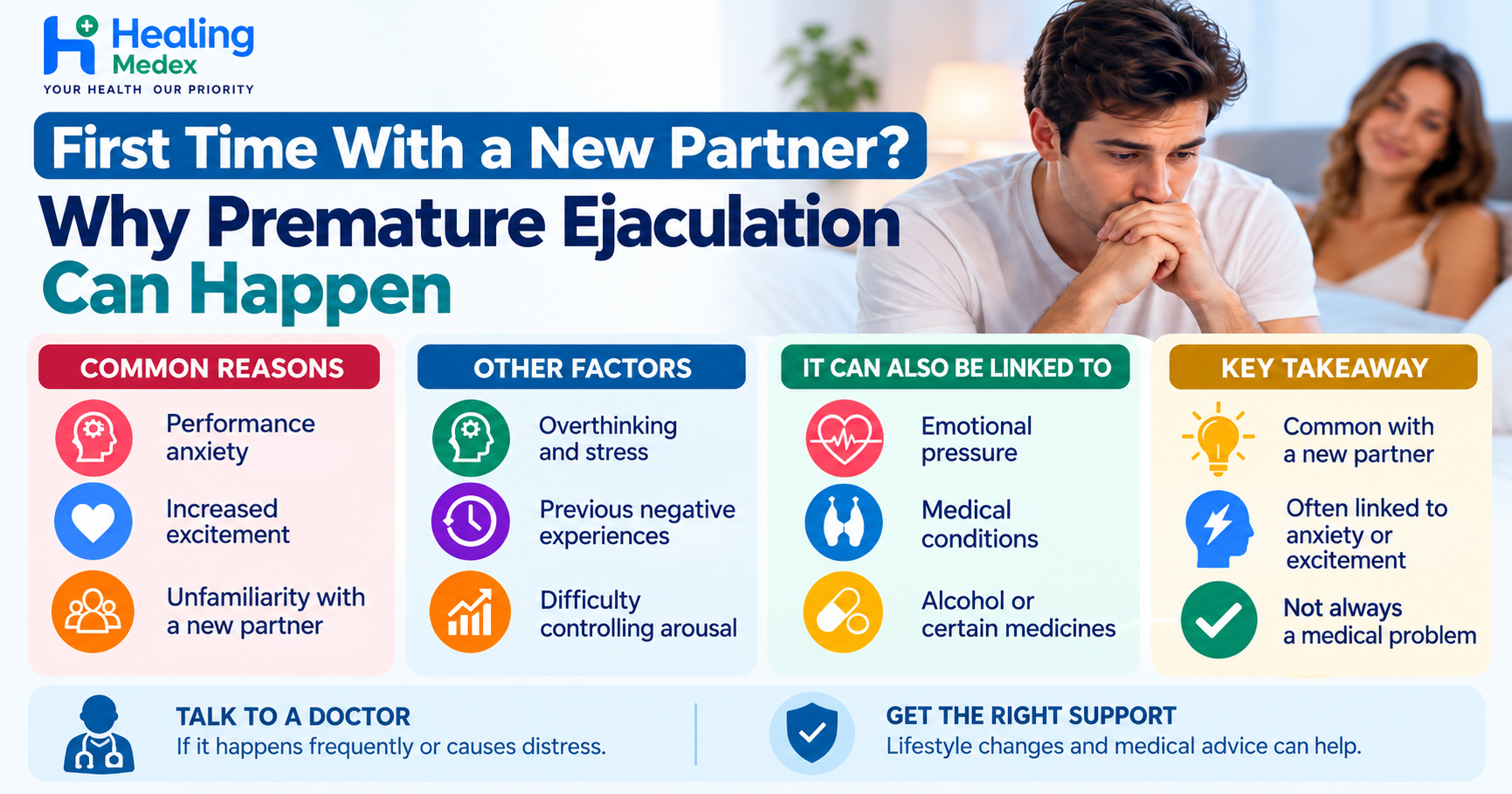
Why Can Premature Ejaculation Happen With a New Partner?
A new romantic relationship introduces different emotional and psychological experiences. Even someone who previously had good ejaculation control may notice changes when becoming intimate with a new partner.
Here are 10 possible contributing factors.
1. Performance Anxiety
Performance anxiety is one of the most recognized psychological factors associated with premature ejaculation.
When meeting a new partner, some men may worry about:
Whether they will satisfy their partner.
How long they will last.
Whether they will maintain an erection.
How their partner will react.
These concerns can make it difficult to relax and enjoy intimacy.
Anxiety may also increase self-monitoring, making a person overly focused on ejaculation timing rather than the overall experience.
2. Increased Excitement and Anticipation
A new relationship can create strong feelings of excitement and anticipation.
During the first few intimate encounters, sexual arousal may feel more intense than usual.
For some men, this heightened excitement may make ejaculation more difficult to delay.
However, increased excitement does not automatically mean someone has premature ejaculation. Occasional variations in timing are normal.
3. Fear of Disappointing a New Partner
Many men feel pressure to make a positive impression during their first intimate experience with someone.
They may believe they need to demonstrate confidence, endurance, or exceptional sexual performance.
These expectations can contribute to emotional tension and performance-related anxiety.
A more helpful approach is to focus on mutual comfort, communication, and enjoyment rather than trying to meet an imagined standard.
4. Unfamiliarity With a Partner's Preferences
When two people begin a sexual relationship, they may not yet understand each other's preferences, communication styles, or comfort levels.
This unfamiliarity can create uncertainty.
Questions about what a partner likes, whether they feel comfortable, or how the experience is progressing may increase nervousness.
As communication improves, some of this uncertainty may decrease.
5. Stress and Overthinking
Overthinking before intimacy can sometimes create a cycle of worry.
A man might think:
What if I finish too quickly?
What if this happens again?
Will my partner be disappointed?
Does this mean I have a sexual problem?
Focusing repeatedly on these possibilities may increase anxiety.
If early ejaculation occurs once, worrying about a repeat experience can make subsequent encounters feel more stressful.
This does not mean premature ejaculation is always psychological. Physical and emotional factors may both contribute.
6. Previous Negative Sexual Experiences
Past experiences can influence expectations in a new relationship.
For example, someone who previously experienced premature ejaculation may worry that it will happen again.
This anticipation can contribute to performance anxiety, especially when intimacy involves someone new.
Psychosexual counselling may be helpful when previous experiences continue to cause significant distress.
7. Difficulty Managing Sexual Arousal
Ejaculation control involves recognizing changes in sexual arousal and responding to them.
Some men may find it difficult to notice when they are approaching ejaculation, particularly during an unfamiliar or highly stimulating experience.
Behavioral approaches, such as the stop-start technique, may help certain men recognize their arousal patterns and develop greater control.
8. Worry About Erectile Dysfunction
A man who is concerned about losing his erection may rush sexual activity.
This pattern can sometimes contribute to ejaculation happening earlier than intended.
When both conditions are present, healthcare professionals may assess and treat erectile difficulties alongside premature ejaculation.
9. Relationship-Related Emotional Pressure
Beginning a relationship can involve vulnerability, uncertainty, and expectations about emotional and physical closeness.
Some men may feel anxious about acceptance or about how their partner perceives them.
These feelings can influence sexual confidence and satisfaction.
Developing trust and discussing concerns openly may help reduce relationship-related stress.
10. Underlying Physical or Medical Factors
Although nervousness may play a role during new relationships, not every case of premature ejaculation is related to anxiety.
Potential medical contributors include:
Certain medication or substance-related factors.
Other sexual health conditions.
If ejaculation difficulties develop suddenly, happen repeatedly, or occur in different situations, medical evaluation may be appropriate.
Is Premature Ejaculation Normal the First Time With a New Partner?
Occasional early ejaculation during the first few sexual encounters with a new partner can happen and does not necessarily indicate a medical condition.
Sexual responses naturally vary depending on emotional state, arousal, stress, and other circumstances.
A single episode is usually not enough to diagnose premature ejaculation.
However, if early ejaculation happens consistently, feels difficult to control, and causes significant distress, it may be worth discussing with a healthcare professional.
How Can You Manage Premature Ejaculation With a New Partner?
Several practical approaches may help improve comfort, reduce performance anxiety, and support ejaculation control.
1. Reduce Pressure to Perform
Try not to measure sexual satisfaction entirely by how long intercourse lasts.
Intimacy involves emotional connection, communication, affection, and mutual enjoyment.
Reducing unrealistic expectations may help ease performance anxiety.
2. Communicate With Your Partner
Open communication can make a new sexual relationship feel less stressful.
Discussing comfort levels, concerns, and preferences may reduce uncertainty and help both partners feel more relaxed.
Avoid interpreting one episode of early ejaculation as a failure.
3. Try the Stop-Start Technique
The stop-start technique is a behavioral method sometimes used to manage premature ejaculation.
It involves temporarily stopping sexual stimulation when ejaculation feels close, allowing arousal to decrease, and then resuming.
Practising this technique may help some men become more aware of their arousal levels.
Results vary, and professional guidance may be useful when the difficulty persists.
4. Practise Relaxation and Mindful Breathing
Slow breathing and relaxation exercises may help reduce anxiety before intimacy.
For example, a person can practise breathing slowly, relaxing tense muscles, and shifting attention away from performance-related worries.
These strategies are not guaranteed treatments for premature ejaculation, but they can be useful for managing associated stress.
5. Consider Condom Use
Condoms may reduce penile sensitivity for some men, which can sometimes help delay ejaculation.
However, the effect varies between individuals.
Condoms also provide important protection against sexually transmitted infections, and certain types help prevent pregnancy when used correctly.
6. Improve General Well-Being
Healthy everyday habits can support physical and psychological well-being.
These include getting adequate sleep, exercising regularly, managing stress, and limiting excessive alcohol consumption.
Lifestyle improvements may support sexual health, although they do not replace evidence-based treatment for persistent premature ejaculation.
7. Seek Psychosexual Counselling
When performance anxiety, relationship concerns, or repeated worries contribute to premature ejaculation, counselling may be beneficial.
A qualified therapist can help address unhelpful expectations, develop coping strategies, and improve communication.
Couples-based counselling may also be appropriate.
8. Discuss Medical Treatment When Necessary
Persistent premature ejaculation can sometimes be treated with medications or topical products.
A healthcare professional can help determine whether treatment is appropriate, considering the individual's symptoms, health conditions, and other medications.
Can Premature Ejaculation Medicines Help?
When premature ejaculation continues to cause distress despite behavioral or psychological approaches, medical treatments may be considered.
Treatment | How it may help |
|---|---|
Dapoxetine | A short-acting SSRI used on demand for PE in countries where approved |
Other SSRIs | Certain prescription antidepressants may delay ejaculation |
Lidocaine or prilocaine products | Topical anesthetics that reduce penile sensitivity |
Sildenafil or tadalafil | May be considered in selected cases, particularly when erectile dysfunction is also present |
Psychosexual therapy | Helps address performance anxiety, relationship difficulties, and behavioral factors |
Medications should not be used simply because ejaculation happened quickly once with a new partner.
Topical anesthetics can cause irritation or numbness in either partner if used incorrectly. SSRIs and other prescription medicines can cause side effects and interactions. Treatments should therefore be selected with appropriate medical guidance.
Can Premature Ejaculation Improve as You Become More Comfortable With a Partner?
Yes, in some cases.
When early ejaculation is associated with unfamiliarity, nervousness, or performance anxiety, symptoms may improve as partners become more comfortable communicating and being intimate.
Greater trust and reduced pressure may help improve sexual confidence.
However, this is not guaranteed. Persistent premature ejaculation can have several contributing factors, and treatment may still be needed.
It is also important not to assume that a new partner is responsible for ejaculation difficulties.
Premature Ejaculation vs Performance Anxiety: What's the Difference?
Premature ejaculation describes difficulty controlling ejaculation, whereas performance anxiety refers to worry or fear related to sexual performance.
Premature ejaculation | Performance anxiety |
|---|---|
Involves ejaculation occurring sooner than desired | Involves nervousness or worry about sexual performance |
May occur in multiple sexual situations | May be more noticeable in unfamiliar situations |
Can involve psychological and physical factors | Primarily involves psychological and emotional factors |
May require behavioral, psychological, or medical treatment | May improve with counselling, communication, and anxiety-management strategies |
Both can occur together, but one does not automatically indicate the other.
When Should You See a Doctor?
Consider speaking with a qualified healthcare professional if:
Premature ejaculation happens frequently or consistently.
You experience significant difficulty delaying ejaculation.
The problem causes ongoing emotional distress or relationship difficulties.
Symptoms begin suddenly after previously normal ejaculation control.
You also have erectile dysfunction.
You experience pelvic pain, urinary symptoms, or other concerning changes.
A doctor may review your sexual and medical history, assess medications, and consider further testing when appropriate.
Frequently Asked Questions
1. Why do I ejaculate quickly with a new partner but not during masturbation?
Different situations can involve different levels of arousal, stimulation, anxiety, and perceived control. These differences may affect ejaculation timing. A clinician can help evaluate the pattern if it is persistent or distressing.
2. Can nervousness cause premature ejaculation?
Yes. Performance anxiety and nervousness can contribute to early ejaculation, particularly at the beginning of a new relationship. However, anxiety is not the only possible cause.
3. Does premature ejaculation mean I am not sexually healthy?
Not necessarily. Occasional early ejaculation is common and does not automatically indicate a medical condition.
4. Can premature ejaculation go away naturally?
Some occasional or situation-related difficulties may improve as stress decreases or partners become more comfortable. Persistent premature ejaculation may require professional assessment and treatment.
5. Should I take sildenafil or tadalafil for premature ejaculation?
6. How long should a man last during intercourse?
There is no single required duration that defines satisfying sex. Clinical assessment considers ejaculation timing together with control, frequency, and associated distress. Comparing performance to an arbitrary time target can create unnecessary anxiety.
Final Thoughts
Experiencing premature ejaculation for the first time with a new partner can feel frustrating or embarrassing, but it does not necessarily mean there is an underlying sexual health problem.
Excitement, unfamiliarity, performance anxiety, and relationship-related pressure can all influence ejaculation timing.
For some men, improving communication, reducing anxiety, and learning behavioral strategies may make a meaningful difference.
If premature ejaculation becomes frequent, persistent, or distressing, consulting a healthcare professional can help identify possible causes and appropriate treatment options.
The key takeaway: Sexual confidence is not defined by how long intercourse lasts. Understanding your body's responses, managing expectations, and seeking help when needed are more useful than putting pressure on yourself to perform.
About Healing Medex
Healing Medex provides educational information on men's sexual health, erectile dysfunction, premature ejaculation, medications, and general wellness. Our goal is to help readers understand common health concerns and make informed decisions about their well-being.
Medical Disclaimer: This article is intended for general educational purposes only and should not replace professional medical advice, diagnosis, or treatment. Always consult a qualified healthcare professional before starting or changing medication for premature ejaculation or any other sexual health condition.