Waking up with an erection is a normal experience for many men. Often called morning wood, it is a natural process that occurs during sleep and can offer useful clues about sexual health, hormone activity, nerve function, and blood circulation.
But what happens when morning erections become less frequent or disappear altogether?
If you have recently noticed that you no longer wake up with an erection, you may wonder whether it is a sign of erectile dysfunction (ED), low testosterone, poor circulation, or another health condition.
The good news is that missing a morning erection occasionally does not necessarily mean something is wrong. However, a persistent change, especially when accompanied by other sexual health symptoms, may deserve medical attention.
In this Healing Medex guide, we explain why morning erections happen, what their absence may indicate, and how to support healthy erectile function.
What Are Morning Erections?
Morning erections are spontaneous erections that occur during sleep or around the time of waking. The medical term for these sleep-related erections is nocturnal penile tumescence (NPT).
Men commonly experience multiple erections throughout the night, particularly during rapid eye movement (REM) sleep.
These erections do not necessarily result from sexual thoughts or stimulation. Instead, they are part of the body's normal neurological and physiological processes.
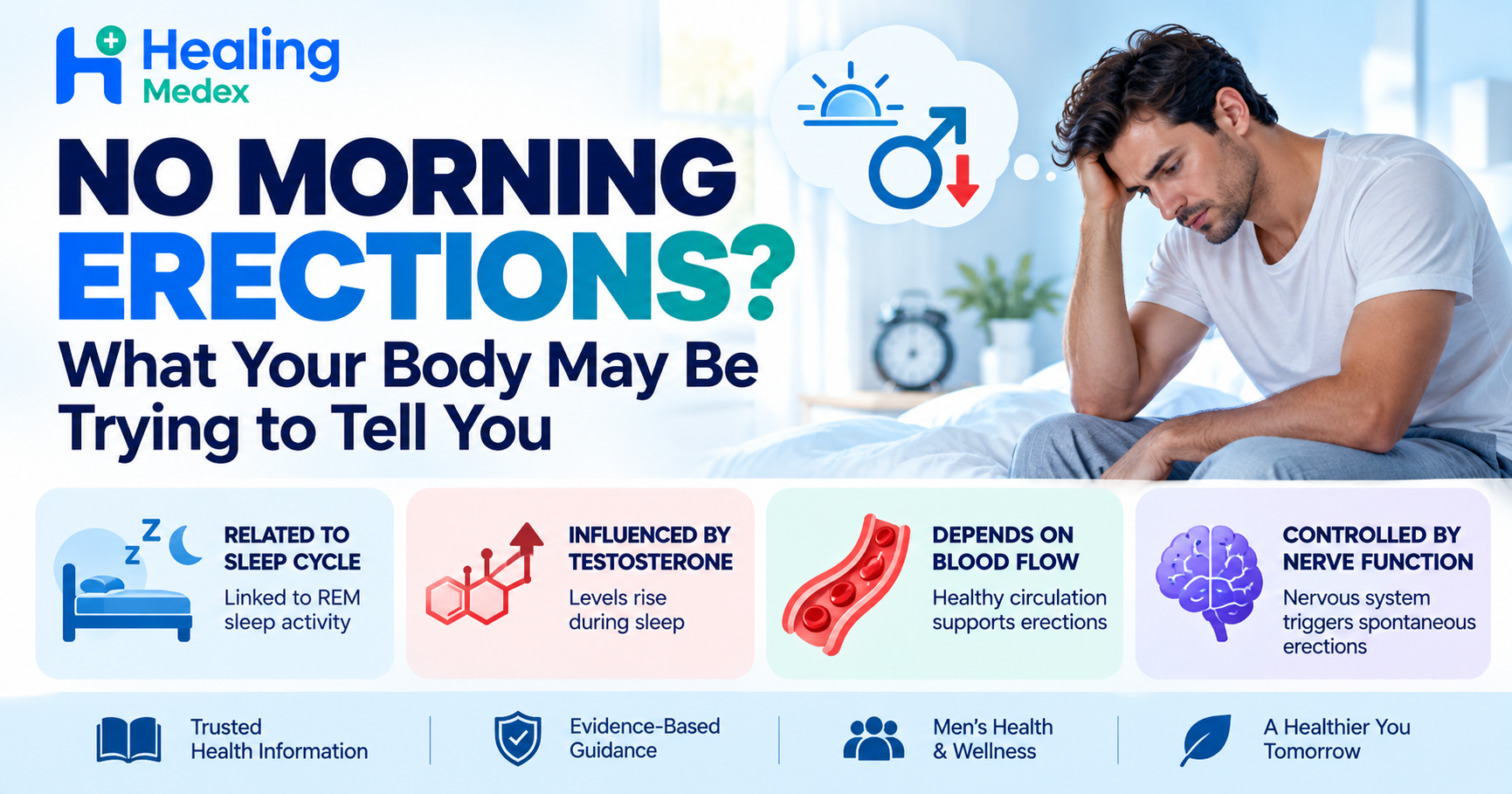
Morning erections depend on several factors, including:
Healthy blood flow to the penis
Proper functioning of the nervous system
Hormonal activity, including testosterone
Normal sleep cycles
Relaxation of smooth muscle in penile tissue
Because erections involve blood vessels, nerves, and hormones, changes in their frequency may sometimes provide clues about overall health.
Why Do Morning Erections Happen?
Morning erections are closely associated with the body's sleep cycle and autonomic nervous system.
1. REM Sleep Activity
During REM sleep, changes in brain and nervous system activity can trigger spontaneous erections.
If you wake up during or shortly after REM sleep, you are more likely to notice an erection.
2. Testosterone Activity
Testosterone plays an important role in sexual desire and erectile function.
Testosterone levels typically rise during sleep and are often higher in the morning. Although testosterone is not the only factor responsible for morning erections, hormonal changes may influence their frequency.
3. Healthy Blood Circulation
An erection requires blood to flow into the penile tissues.
Normal nighttime erections involve coordinated activity between blood vessels, smooth muscles, and nerves.
4. Nervous System Function
The parasympathetic nervous system helps regulate the relaxation and blood flow necessary for erections.
During sleep, this system contributes to spontaneous erectile activity without conscious sexual stimulation.
No Morning Erections? 10 Possible Reasons Your Body May Be Trying to Tell You Something
1. You May Not Be Getting Enough Quality Sleep
Morning erections are strongly connected to REM sleep. Poor sleep, irregular sleep schedules, frequent awakenings, and sleep disorders can interfere with normal sleep patterns.
Obstructive sleep apnea may also be associated with erectile difficulties.
What may help: Maintain a consistent sleep schedule, aim for 7–9 hours of sleep as an adult, and seek evaluation for persistent snoring or daytime sleepiness.
2. Your Testosterone Levels May Be Low
Testosterone helps regulate sexual desire and contributes to normal erectile function.
Low testosterone may be associated with fewer spontaneous erections, particularly when accompanied by reduced libido, fatigue, or other symptoms.
However, missing morning erections alone cannot diagnose testosterone deficiency.
What may help: If symptoms suggest low testosterone, a healthcare professional may recommend morning blood tests, usually repeated to confirm an abnormal result.
3. Stress and Anxiety May Be Affecting You
Long-term stress, anxiety, and emotional strain can influence sexual functioning and sleep quality.
Stress may also contribute to performance anxiety, making erections more difficult during sexual activity.
What may help: Try regular exercise, relaxation techniques, better sleep habits, and professional mental health support when necessary.
4. Blood Circulation May Be Changing
Healthy erections depend on adequate blood flow.
What may help: Monitor blood pressure, cholesterol, blood glucose, physical activity, and cardiovascular risk factors with your healthcare provider.
5. Diabetes May Be Affecting Nerves or Blood Vessels
Men with poorly controlled diabetes may experience erectile problems, including changes in spontaneous erections.
What may help: Maintain appropriate blood sugar management, follow your diabetes treatment plan, and attend regular health checkups.
6. Certain Medicines May Be Contributing
Some prescription medications can affect erectile function.
Examples include certain antidepressants, blood pressure medications, sedatives, and hormonal treatments.
Not everyone taking these medications experiences sexual side effects.
What may help: Ask your healthcare professional to review your medicines. Never stop or change prescribed treatment without medical guidance.
7. Smoking or Excessive Alcohol Use May Be Affecting Erectile Health
Smoking can damage blood vessels, while excessive alcohol consumption may interfere with sexual functioning, hormone regulation, and sleep.
Over time, these habits can increase the risk of ED.
What may help: Stop smoking, limit alcohol consumption, and seek support if reducing alcohol or nicotine use is difficult.
8. Natural Aging May Be Playing a Role
Morning erections can become less frequent or less firm as men grow older.
Changes in sleep patterns, hormonal activity, and general health may contribute.
However, persistent erectile dysfunction should not automatically be dismissed as a normal part of aging.
What may help: Stay physically active, manage chronic conditions, and discuss significant changes with a healthcare professional.
9. Physical Inactivity and Excess Weight May Be Contributing
Being physically inactive or carrying excess weight can increase the risk of diabetes, cardiovascular disease, and hormonal disturbances.
These conditions may affect erection quality.
What may help: Include regular aerobic activity, resistance training, and a balanced diet in your routine. Sustainable weight management may improve erectile health.
10. It May Be an Early Clue to Erectile Dysfunction
A persistent reduction in spontaneous erections, particularly alongside difficulty achieving or maintaining erections during sexual activity, may indicate an underlying erectile problem.
ED may involve vascular, neurological, hormonal, psychological, or combined causes.
What may help: Consult a healthcare professional for assessment rather than relying on morning erections alone to determine whether you have ED.
These potential causes are consistent with clinical guidance on erectile dysfunction and nighttime erections.
Does Not Having Morning Erections Mean You Have Erectile Dysfunction?
No. The absence of morning erections does not automatically mean you have ED.
Not every nighttime erection continues until waking. Sometimes, you may wake up at a point in your sleep cycle when an erection is not occurring.
However, morning erection patterns can provide useful information when evaluating erectile difficulties.
Situation | What it may indicate |
|---|---|
Occasionally waking without an erection | Often a normal variation |
Fewer morning erections during poor sleep | Possible sleep-related influence |
Reduced morning erections with low sexual desire | Possible hormonal or other health issue |
No morning erections and difficulty during sexual activity | Warrants evaluation for ED and related causes |
Morning erections present but difficulty with a partner | Psychological factors may contribute, although physical causes remain possible |
The presence or absence of morning erections is only one part of evaluating sexual health. It cannot independently establish whether an erectile problem is physical or psychological.
Can Morning Erections Return Naturally?
Yes. If changes in morning erections are linked to reversible factors such as inadequate sleep, stress, inactivity, or certain health conditions, improving those factors may help restore more regular spontaneous erections.
However, the outcome depends on the underlying cause.
Healthy Habits That May Support Morning Erections
Prioritize sleep: Aim for consistent, sufficient sleep and address suspected sleep disorders.
Exercise regularly: Walking, cycling, swimming, and appropriate strength training can support cardiovascular health.
Eat a heart-healthy diet: Include fruits, vegetables, whole grains, legumes, nuts, and other nutrient-rich foods.
Manage stress: Practice relaxation, mindfulness, or breathing exercises.
Avoid smoking: Quitting smoking supports long-term blood vessel health.
Limit excessive alcohol: Reducing heavy alcohol consumption may improve sleep and erectile function.
Manage chronic illnesses: Keep diabetes, high blood pressure, and cholesterol under appropriate medical control.
Maintain a healthy weight: Weight management may improve metabolic and vascular health.
Review medications: Discuss possible sexual side effects with your healthcare provider.
Seek professional advice: Persistent changes should be assessed rather than treated through guesswork.
These measures can support overall erectile health, but they do not guarantee that morning erections will return.
When Should You See a Doctor About Missing Morning Erections?
Occasional changes generally do not require urgent medical attention.
Consider consulting a doctor or urologist if:
Morning erections have become consistently absent over several weeks.
You are also experiencing difficulty getting or maintaining erections.
Your sexual desire has significantly decreased.
You have unexplained fatigue or other symptoms suggesting a hormonal problem.
You have diabetes, high blood pressure, or cardiovascular risk factors.
The change began after starting a new medication.
You have symptoms of a sleep disorder, such as loud snoring or excessive daytime sleepiness.
A medical evaluation may include your health and medication history, blood pressure measurement, physical examination, and selected blood tests for diabetes, cholesterol, testosterone, or other suspected conditions.
In some circumstances, a specialist may recommend testing nighttime erections.
Can Sildenafil or Tadalafil Help If Morning Erections Have Disappeared?
Medications such as sildenafil and tadalafil are commonly prescribed to treat erectile dysfunction.
However, these medicines are not specifically intended to restore morning erections, and the absence of morning erections alone is not a reason to begin ED medication.
If a person also experiences erectile difficulties during sexual activity, a healthcare professional may consider these treatments after evaluating the underlying cause.
Important considerations include:
Sildenafil and tadalafil do not automatically produce erections without sexual stimulation.
They do not directly correct low testosterone or sleep disorders.
They should not be combined with nitrate medications or riociguat because of the risk of dangerously low blood pressure.
A healthcare professional should assess potential interactions, cardiovascular health, and suitability before prescribing them.
For ongoing sexual health concerns, addressing the cause is more important than focusing only on temporary symptom relief.
Frequently Asked Questions
1. Is it normal not to wake up with an erection every day?
Yes. Morning erections can vary depending on your sleep cycle and other factors. Missing them occasionally is generally not concerning.
2. Can low testosterone cause a lack of morning erections?
Low testosterone may contribute to fewer spontaneous erections, especially when accompanied by reduced sexual desire or other symptoms. Blood testing is needed to investigate suspected testosterone deficiency.
3. Can stress stop morning erections?
4. Does not having morning erections mean poor blood circulation?
5. Can younger men experience fewer morning erections?
Yes. Younger men can notice changes due to sleep disruption, stress, medication effects, and other health factors. Persistent changes accompanied by erectile difficulties warrant assessment regardless of age.
6. Can exercise help bring back morning erections?
Regular physical activity can improve cardiovascular health and may improve erectile function, particularly when inactivity or metabolic health problems contribute. It is not a guaranteed treatment for absent morning erections.
7. Are morning erections proof of normal testosterone levels?
No. Morning erections are influenced by several physiological systems. Their presence does not confirm normal testosterone levels, and their absence does not prove a deficiency.
8. How long should I wait before consulting a doctor?
If morning erections remain consistently absent for several weeks, especially with other sexual or general health symptoms, consider seeking medical advice. There is no universal waiting period, and concerning symptoms can justify an earlier appointment.
Final Thoughts: What Your Body May Be Telling You
Morning erections are a normal part of male sexual physiology and can offer clues about sleep quality, blood circulation, neurological activity, and hormonal health.
If you occasionally wake up without an erection, it is usually not a reason to worry.
However, if morning erections have become consistently absent, particularly alongside erectile difficulties, reduced libido, or other health changes, further evaluation may be useful.
Remember that morning erections are one indicator of sexual health, not a complete test of it.
Maintaining good sleep habits, managing stress, exercising regularly, and addressing underlying medical conditions may help support healthy erectile function.
At Healing Medex, we aim to provide educational information about men's sexual health, erectile dysfunction, and responsible medication use so readers can make informed healthcare decisions.
Medical Disclaimer
This article is intended for educational and informational purposes only and does not replace professional medical advice, diagnosis, or treatment. Changes in morning erections do not independently diagnose erectile dysfunction, testosterone deficiency, or cardiovascular disease. Consult a qualified healthcare professional about persistent symptoms or before starting any medication.