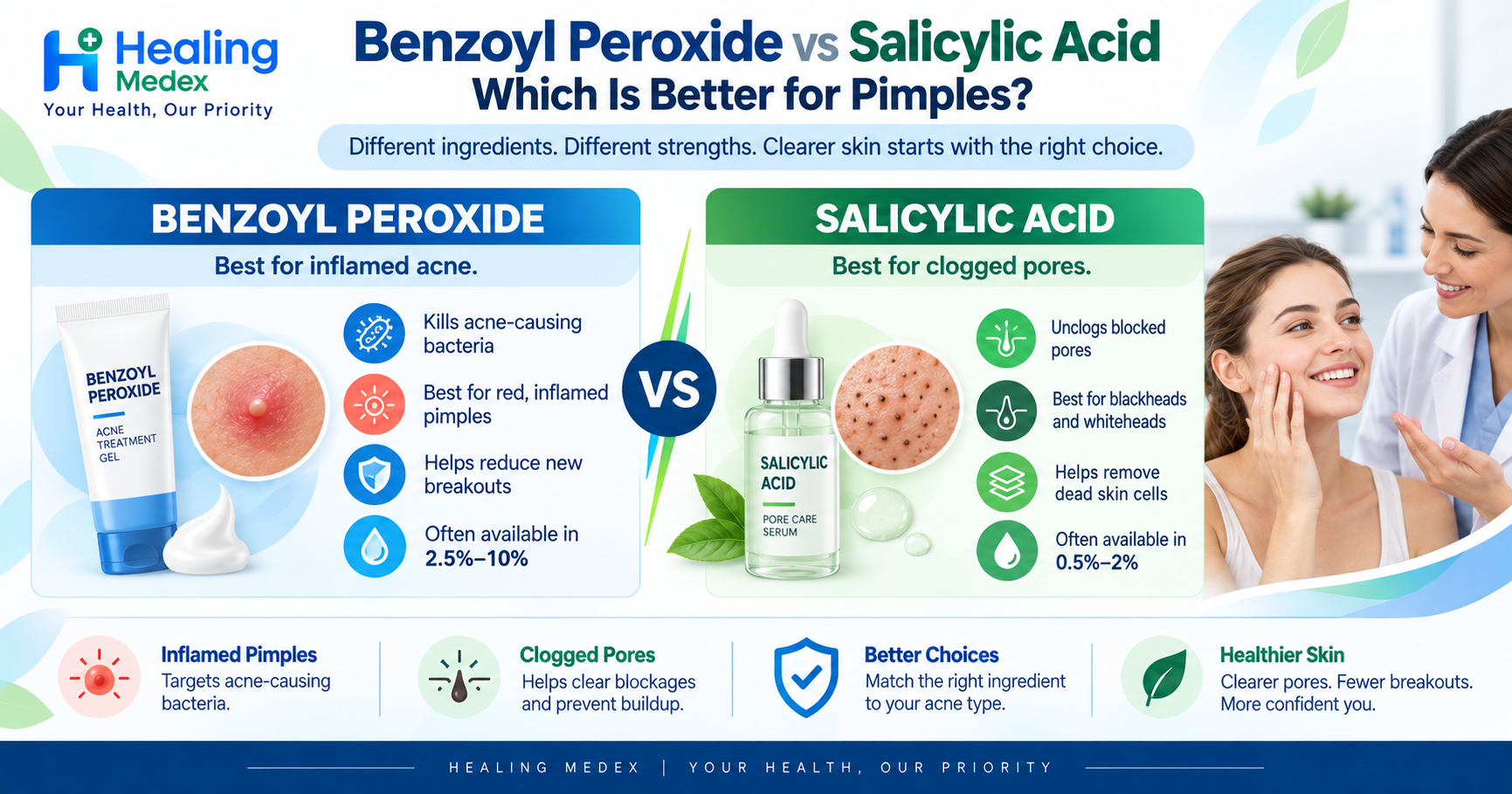
Two of the most popular acne-fighting ingredients are benzoyl peroxide and salicylic acid. Both are widely used in face washes, gels, creams, and other skincare products. However, they work differently and are better suited to different types of acne.
So, which one is better for pimples?
In this Healing Medex guide, we'll explain how benzoyl peroxide and salicylic acid work, their benefits, differences, side effects, and how to choose the right option for your skin.
What Is Benzoyl Peroxide?
It also helps remove excess dead skin cells and reduce blocked pores.
Benzoyl peroxide is particularly useful for red, inflamed pimples and pus-filled acne lesions.
Key Benefits of Benzoyl Peroxide
Reduces acne-causing bacteria.
Helps control inflammatory pimples.
Can improve red bumps and pus-filled spots.
Helps reduce new acne breakouts with consistent use.
Can be combined with other acne treatments when appropriate.
Common Benzoyl Peroxide Strengths
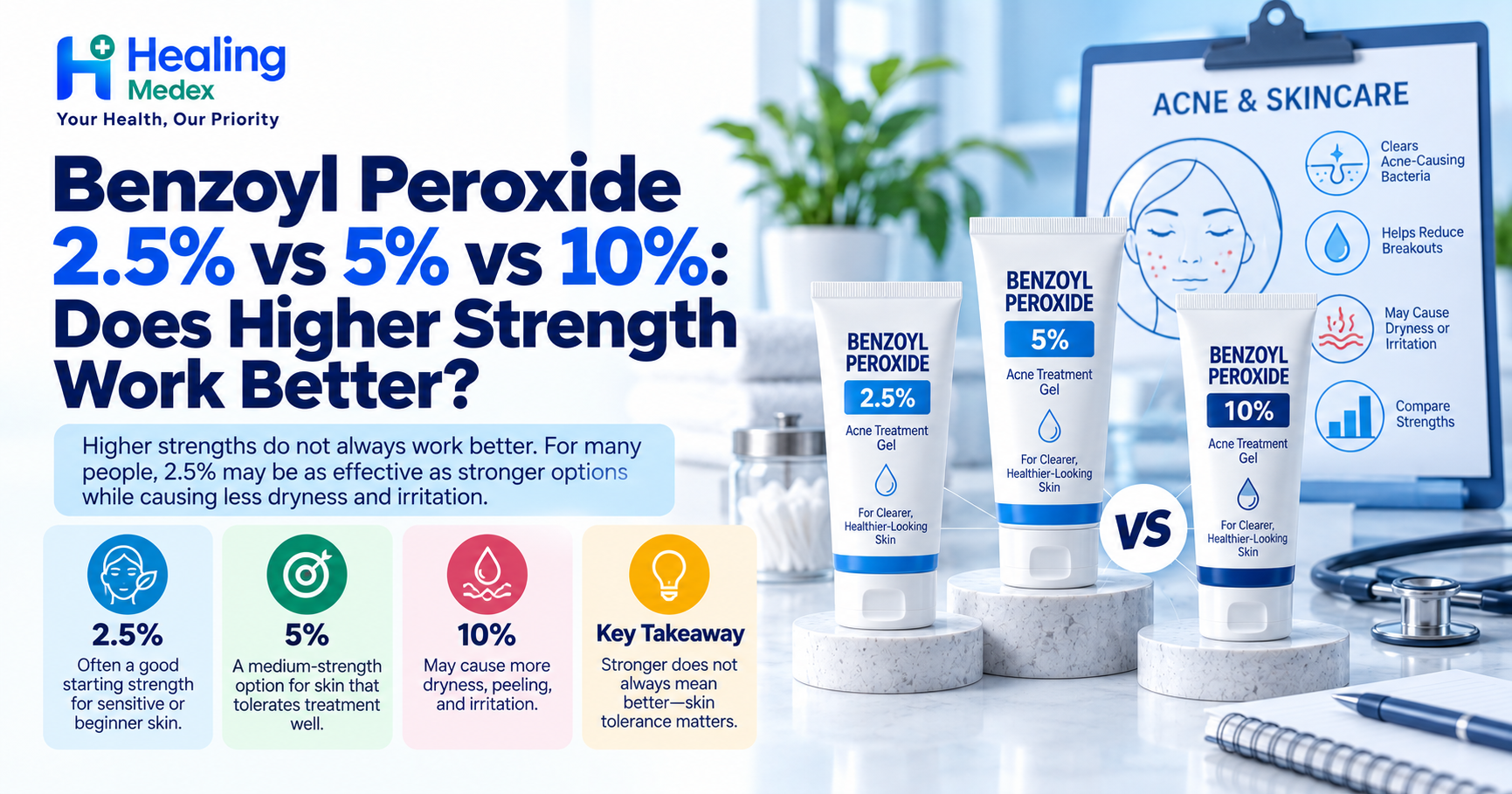
Benzoyl peroxide is commonly available in 2.5%, 5%, and 10% concentrations.
The American Academy of Dermatology recommends starting with a lower concentration to reduce dryness and irritation.
What Is Salicylic Acid?
Salicylic acid is a beta-hydroxy acid (BHA) widely used in acne cleansers, exfoliating products, and leave-on treatments.
It helps loosen and remove dead skin cells that contribute to blocked pores. Because it is oil-soluble, salicylic acid can work within oily pores and help prevent the buildup of material that leads to blackheads and whiteheads.
Salicylic acid is especially helpful for clogged pores, blackheads, and whiteheads.
Key Benefits of Salicylic Acid
Helps unclog blocked pores.
Removes excess dead skin cells.
Improves blackheads and whiteheads.
Helps reduce the formation of certain types of acne.
Can improve rough skin texture caused by clogged pores.
Common Salicylic Acid Strengths
Over-the-counter acne products commonly contain 0.5% to 2% salicylic acid.
Beginners may prefer starting with a lower-strength product and increasing frequency only if their skin tolerates it.
Benzoyl Peroxide vs Salicylic Acid: Key Differences
Although both ingredients treat acne, they target different contributing factors.
Feature | Benzoyl Peroxide | Salicylic Acid |
|---|---|---|
Main action | Reduces acne-causing bacteria | Exfoliates and unclogs pores |
Best suited for | Red, inflamed pimples | Blackheads and whiteheads |
Common strengths | 2.5%, 5%, 10% | 0.5%–2% |
Effect on bacteria | Strong antibacterial activity | Not primarily antibacterial |
Effect on clogged pores | Helps somewhat | Main benefit |
Common side effects | Dryness, peeling, redness | Dryness, stinging, peeling |
Best starting approach | Lower-strength application | Gentle, infrequent application |
The main difference: Benzoyl peroxide generally has the advantage for inflammatory acne, while salicylic acid is often a useful choice for clogged pores and comedonal acne.
The 2024 American Academy of Dermatology guidelines give benzoyl peroxide a strong recommendation for acne treatment and salicylic acid a conditional recommendation, reflecting differences in the available evidence.
Which Is Better for Different Types of Pimples?
Not every pimple develops in the same way. Identifying your type of acne can help you choose a suitable treatment.
1. Red and Inflamed Pimples
Better option: Benzoyl peroxide
Inflamed pimples develop when blocked follicles trigger inflammation, often involving acne-associated bacteria.
Benzoyl peroxide can help reduce these bacteria and improve inflammatory lesions.
2. Blackheads
Often a better option: Salicylic acid
Blackheads form when pores become clogged with oil and dead skin cells, and the material at the surface darkens through oxidation.
Salicylic acid helps loosen dead skin cells and clear pore blockages.
3. Whiteheads
Often a better option: Salicylic acid
Whiteheads are closed clogged pores. Salicylic acid can help prevent further buildup and may improve mild whitehead acne.
Persistent whiteheads may respond better to a topical retinoid, such as adapalene.
4. Pus-Filled Pimples
Better option: Benzoyl peroxide
Pus-filled pimples, also called pustules, are inflammatory acne lesions.
Benzoyl peroxide can be helpful because of its antibacterial activity and benefits for inflammatory acne.
5. Oily Skin With Clogged Pores
Useful option: Salicylic acid
Salicylic acid can help remove the buildup of dead skin cells and oil within pores. However, neither ingredient permanently changes how much oil the skin produces.
6. Mixed Acne
Possible approach: A combination treatment
People with both blackheads and inflamed pimples may benefit from targeting multiple causes of acne.
A dermatologist may recommend a combination regimen, potentially involving benzoyl peroxide, salicylic acid, or a topical retinoid.
Which Works Faster for Pimples?
Salicylic acid can gradually improve clogged pores, blackheads, and whiteheads. Visible improvement may also take several weeks.
Treatment | General timeframe |
|---|---|
Benzoyl peroxide | Initial improvement often within about 4 weeks |
Salicylic acid | Improvement may become noticeable over several weeks |
Both treatments | Assess progress after approximately 6–8 weeks; some regimens need up to 12 weeks |
Results depend on acne severity, product formulation, skin tolerance, and consistency. Neither ingredient should be expected to clear acne overnight.
Can You Use Benzoyl Peroxide and Salicylic Acid Together?
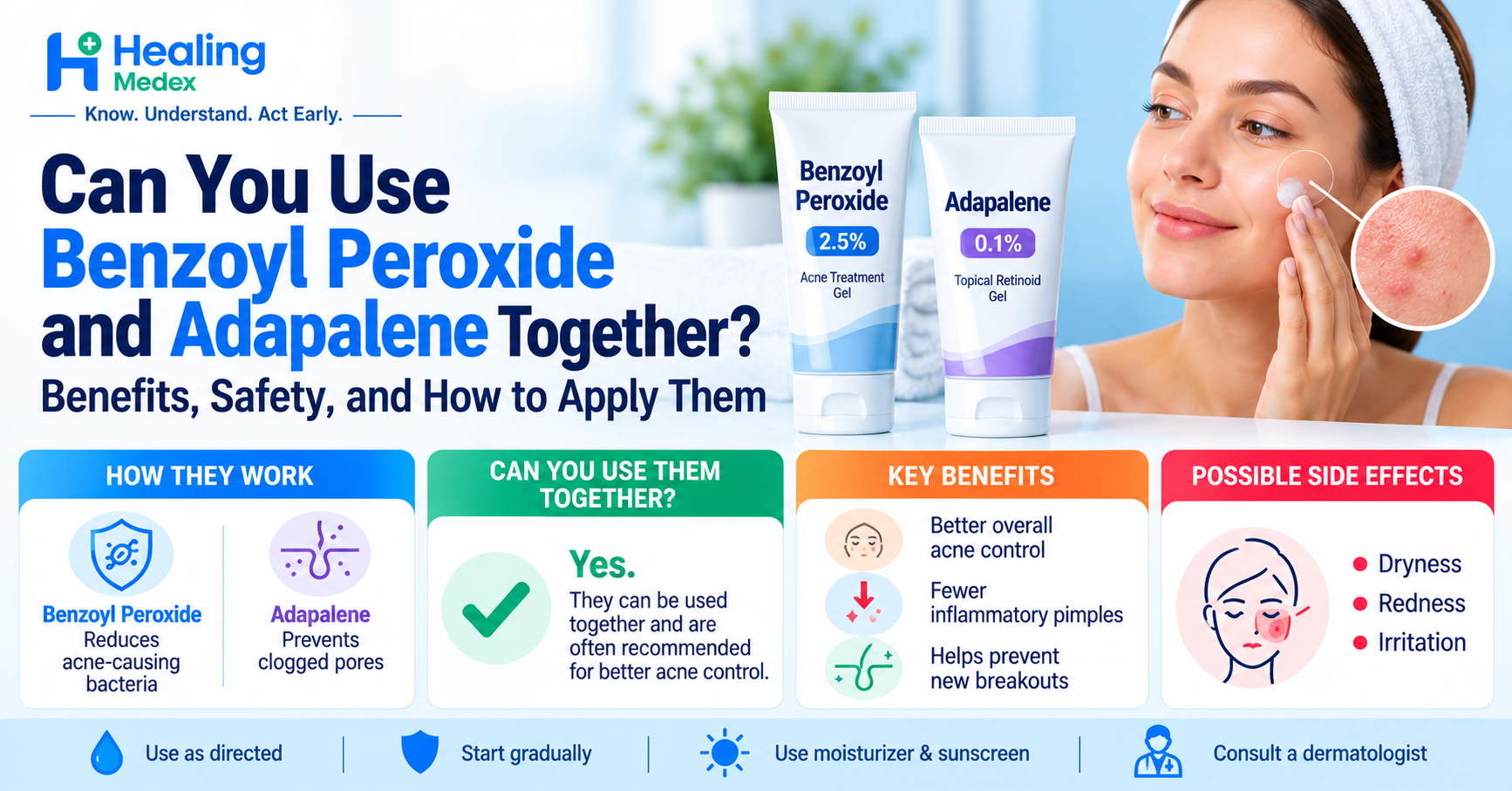
Yes, some people can use benzoyl peroxide and salicylic acid in the same skincare routine.
Because they work through different mechanisms, combining them may help address both inflamed pimples and blocked pores.
However, applying both together can increase the risk of dryness, redness, burning, and peeling.
How to Introduce Both Ingredients
A cautious approach is to:
Start with one acne treatment and assess skin tolerance.
Introduce the second ingredient gradually if needed.
Consider using salicylic acid at one time of day and benzoyl peroxide at another, if your skin tolerates both.
Apply a non-comedogenic moisturizer to reduce dryness.
Reduce frequency if irritation develops.
Using more acne treatments does not automatically produce faster results. People with sensitive skin, eczema, or other skin conditions should seek professional advice before combining active ingredients.
How to Use Benzoyl Peroxide for Pimples
Benzoyl peroxide is available in gels, creams, and cleansers.
For a typical leave-on product:
Wash your face with a gentle cleanser.
Pat your skin dry.
Apply a thin layer to acne-prone areas, following the product instructions.
Begin with a low concentration and less frequent use if your skin is sensitive.
Apply a lightweight moisturizer.
Use sunscreen during the daytime.
Avoid applying benzoyl peroxide to broken or severely irritated skin. Keep it away from the eyes and mouth.
Important: Benzoyl peroxide can bleach towels, pillowcases, clothing, and hair. Allow the product to dry before it touches fabrics.
How to Use Salicylic Acid for Pimples
Salicylic acid is commonly found in facial cleansers, toners, gels, and leave-on products.
For a leave-on salicylic acid product:
Cleanse your face gently.
Apply the recommended amount to the intended areas.
Start a few times per week if you are prone to irritation.
Follow with a non-comedogenic moisturizer.
Use broad-spectrum SPF 30 or higher sunscreen during the daytime.
If you use a salicylic acid cleanser, follow the directions for rinsing rather than leaving it on your skin.
Avoid combining multiple exfoliating acids, harsh scrubs, and strong acne treatments without a clear skincare plan.
Side Effects of Benzoyl Peroxide vs Salicylic Acid
Both ingredients can cause irritation, especially when introduced too quickly or used too frequently.
Benzoyl Peroxide Side Effects
Dryness and flaking
Redness or skin irritation
Mild burning or stinging
Peeling
Itching
Rare allergic contact dermatitis
Salicylic Acid Side Effects
Dryness
Skin tightness
Mild stinging
Redness
Flaking or peeling
Increased irritation when combined with other exfoliants
If severe swelling, blistering, or a widespread rash develops, stop using the product and seek medical advice. Breathing difficulty or swelling of the face or throat requires emergency care.
Which Is Better for Sensitive Skin?
Neither benzoyl peroxide nor salicylic acid is automatically suitable for every person with sensitive skin.
Benzoyl peroxide may cause irritation, particularly at higher concentrations.
Salicylic acid can also cause dryness and stinging, especially in strong leave-on formulations or when used alongside other exfoliants.
If your skin is sensitive:
Start with one active ingredient.
Choose a gentle formulation and lower concentration.
Use it less frequently at first.
Avoid harsh scrubbing.
Apply moisturizer regularly.
Stop or reduce use if significant irritation occurs.
Skin tolerance depends on the entire product formulation, not just the active ingredient.
Can Benzoyl Peroxide or Salicylic Acid Prevent Future Pimples?
Both ingredients may help reduce future acne breakouts when used consistently.
However, neither treatment addresses every cause of acne.
Persistent acne may be influenced by hormonal changes, excess sebum, genetics, and inflammation. Some people require additional treatments such as topical retinoids, prescription medication, or dermatologist-supervised therapy.
Common Mistakes to Avoid
Even effective acne treatments can cause problems when used incorrectly.
1. Using Too Much Product
Applying thick layers can increase skin irritation without improving treatment results.
2. Starting With High Strengths
A stronger concentration is not always better. Lower strengths may provide useful results with improved tolerability.
3. Using Multiple Active Ingredients Immediately
Combining benzoyl peroxide, salicylic acid, retinoids, and exfoliating acids at once may damage the skin barrier.
4. Skipping Moisturizer
Moisturizer can help reduce dryness and support the skin barrier during acne treatment.
5. Expecting Overnight Results
Acne treatment requires consistency. Frequently switching products can make it difficult to determine what works.
6. Scrubbing Pimples Aggressively
Harsh scrubbing can irritate skin and worsen inflammation.
7. Ignoring Severe Acne
Deep, painful pimples and acne that causes scarring often require professional treatment rather than over-the-counter products alone.
When Should You See a Dermatologist?
Consult a dermatologist if:
Pimples are deep, painful, or frequently recurring.
Acne is causing scars or persistent dark marks.
Over-the-counter treatments have not improved acne after about 8–12 weeks.
Acne affects your confidence or emotional well-being.
Products cause persistent irritation.
You are uncertain whether your skin condition is acne.
Early treatment of severe or scarring acne can help prevent long-term skin damage.
Frequently Asked Questions
1. Is benzoyl peroxide better than salicylic acid for pimples?
2. Can salicylic acid remove pimples overnight?
No. Salicylic acid can improve clogged pores and mild acne, but noticeable results generally take several weeks.
3. Is 2.5% benzoyl peroxide enough for acne?
4. Which ingredient is better for blackheads?
Salicylic acid is generally a more targeted option because it helps unclog pores and remove dead skin cells.
5. Can I use salicylic acid in the morning and benzoyl peroxide at night?
Some people can tolerate this routine. However, introduce treatments gradually rather than starting both at once, and reduce use if irritation occurs.
6. Does benzoyl peroxide help with acne scars?
7. Can I use benzoyl peroxide every day?
Many products are designed for daily use, but beginners may need to start less frequently. Follow the product instructions and adjust based on skin tolerance.
8. Can salicylic acid help prevent whiteheads?
Yes. By helping clear dead skin cells from pores, salicylic acid may reduce the formation of new whiteheads.
Final Verdict: Benzoyl Peroxide or Salicylic Acid?
Both benzoyl peroxide and salicylic acid can be useful acne treatments, but the best option depends on your skin concerns.
Choose benzoyl peroxide if you primarily experience inflamed, red, or pus-filled pimples.
Consider salicylic acid if your main concerns are blackheads, whiteheads, and clogged pores.
For mixed or persistent acne, a combination treatment or another medication, such as a topical retinoid, may be more appropriate.
The key is to identify your acne type, introduce treatments gradually, maintain a gentle skincare routine, and allow enough time for improvement.
At Healing Medex, we believe understanding how skincare ingredients work can help you make more informed decisions about acne care. Choosing a suitable treatment and using it consistently can support clearer, healthier-looking skin.
Medical Disclaimer
This article is provided by Healing Medex for general educational and informational purposes only. It is not a substitute for professional medical advice, diagnosis, or treatment. Individual skin conditions and treatment responses vary. Consult a dermatologist or qualified healthcare professional before beginning or combining acne treatments, particularly if you have persistent acne, sensitive skin, or an existing skin condition.