Erectile dysfunction (ED) is a common condition in which a man has difficulty getting or maintaining an erection firm enough for sexual activity. Although occasional erection problems can happen because of stress, tiredness or alcohol, persistent ED may be associated with health conditions such as high blood pressure, high cholesterol, diabetes, obesity or cardiovascular disease.
Because erections depend heavily on healthy blood flow, lifestyle factors that support the heart and blood vessels may also support erectile function. One eating pattern that has attracted particular attention is the Mediterranean diet.
Research suggests that following a Mediterranean-style diet may be associated with better erectile function, particularly in men who also have cardiovascular or metabolic risk factors. However, diet should be viewed as part of an overall ED management plan rather than as a guaranteed cure.
What Is a Mediterranean Diet?
The Mediterranean diet is based on traditional eating patterns found in countries such as Greece, Italy and Spain.
It generally emphasises:
Vegetables and fruit
Beans, peas, chickpeas and lentils
Wholegrain bread, pasta and rice
Nuts and seeds
Fish, especially oily fish
Olive oil and other unsaturated fats
Moderate amounts of poultry, eggs and dairy
Smaller amounts of red and processed meat
Fewer highly processed foods
Less added sugar and foods high in saturated fat
The British Heart Foundation describes Mediterranean-style eating as being broadly consistent with healthy eating principles recommended in the UK, including plenty of plant foods, whole grains and unsaturated fats.
Can a Mediterranean Diet Help Erectile Dysfunction?
Potentially, yes.
Research has found an association between greater adherence to Mediterranean-style diets and a lower likelihood of erectile dysfunction or better erectile function. A recent review also found that healthier dietary patterns, including Mediterranean-style diets, were associated with improvements in sexual function.
However, this does not mean that eating Mediterranean foods will immediately restore erections.
ED has many possible causes, including:
Obesity
Hormonal problems
Certain medicines
Smoking
Excess alcohol
Anxiety, stress or depression
The effectiveness of dietary changes therefore depends partly on what is causing the erectile problem.
How Could a Mediterranean Diet Support Erections?
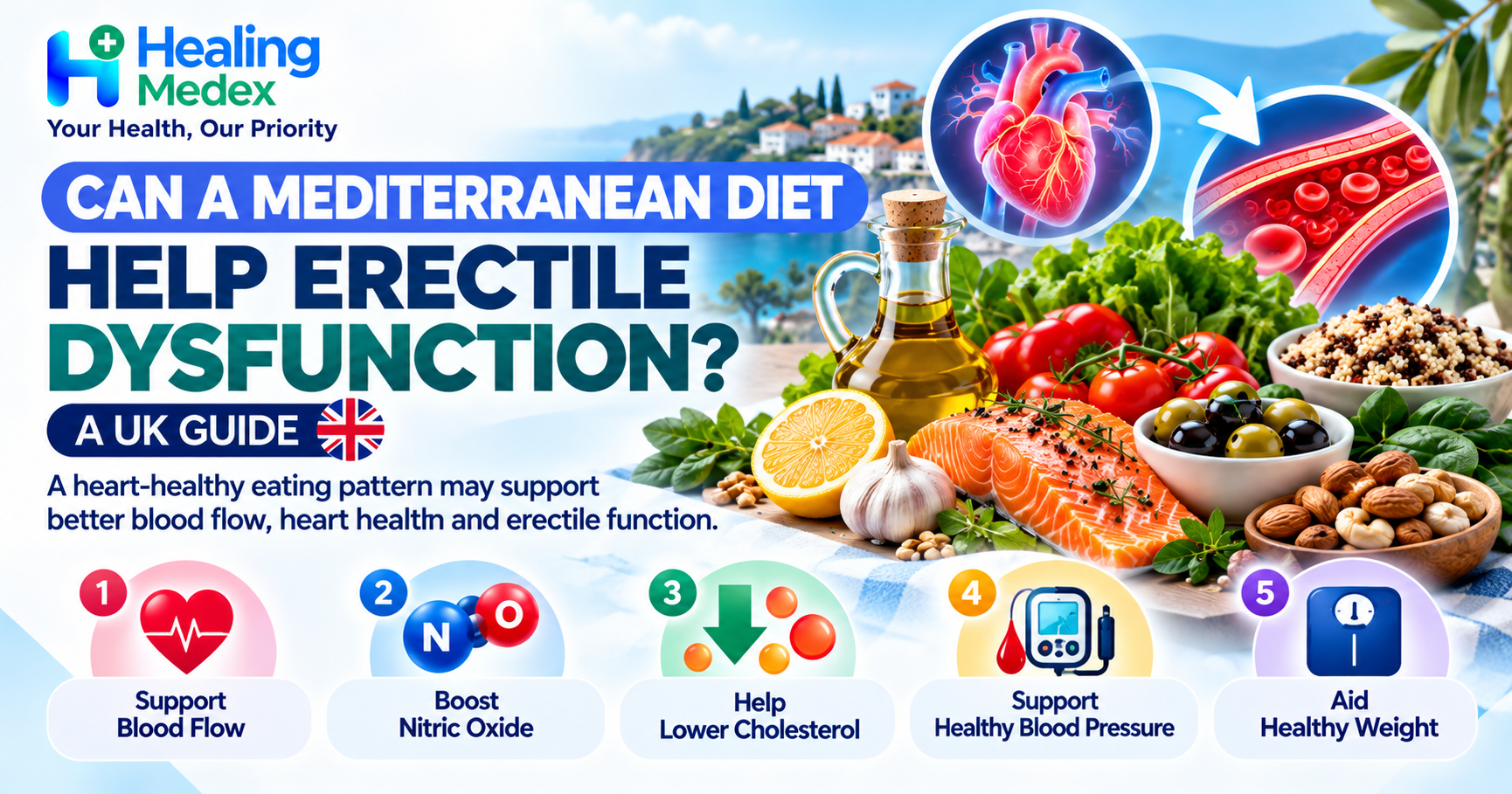
1. It May Support Healthy Blood Flow
An erection occurs when blood vessels supplying the penis widen and allow increased blood flow.
Conditions that damage or narrow blood vessels can interfere with this process.
A Mediterranean diet is associated with cardiovascular benefits and can help support healthier cholesterol, blood pressure, blood sugar and body weight.
Because cardiovascular and erectile health share many of the same risk factors, improving vascular health may also benefit erections.
2. It May Support Nitric Oxide Function
Nitric oxide is a signalling molecule that helps blood vessels relax and widen.
This process is important for increasing blood flow during an erection.
Mediterranean diets contain plenty of foods rich in antioxidants and plant nutrients, including:
Leafy vegetables
Beetroot
Tomatoes
Berries
Citrus fruits
Nuts
Olive oil
Research examining Mediterranean diets and ED has proposed improved nitric oxide activity as one possible mechanism linking this eating pattern with better erectile function.
3. It May Improve Cholesterol
High LDL cholesterol can contribute to fatty deposits developing inside the arteries.
Over time, narrowed arteries can reduce blood flow throughout the body, including blood flow to the penis.
The British Heart Foundation notes that Mediterranean-style eating can help improve cardiovascular risk factors, including cholesterol levels.
Replacing foods high in saturated fat with foods containing unsaturated fats may be particularly useful.
For example, consider replacing:
Butter or ghee → olive or rapeseed oil
Processed meats → fish, beans or lentils
Biscuits and pastries → fruit or unsalted nuts
4. It May Help Control Blood Pressure
High blood pressure can damage blood vessels and is one of the health conditions associated with ED.
Mediterranean-style diets naturally emphasise foods such as fruit, vegetables, pulses, whole grains and nuts while limiting heavily processed and salty foods.
This pattern can help support cardiovascular health and healthier blood pressure.
5. It May Help People With Type 2 Diabetes
Diabetes can damage both blood vessels and nerves involved in producing an erection.
Research involving men with type 2 diabetes has found that those who followed Mediterranean-style diets more closely had a lower prevalence of ED compared with men with lower adherence.
This does not prove that the diet alone prevented ED, because men following healthier diets may also have other healthier lifestyle habits.
Nevertheless, Mediterranean-style eating can also support blood glucose management and cardiovascular health.
6. It May Help With Weight Management
Being overweight or obese is associated with cardiovascular and metabolic conditions that can contribute to erectile problems.
A Mediterranean diet is not specifically a rapid weight-loss programme. Instead, it promotes a sustainable pattern based largely on whole and minimally processed foods.
If it helps an overweight person achieve gradual weight loss, the improvement in cardiovascular and metabolic health may also contribute to better erectile function.
Current European urology guidance recognises weight loss, exercise and management of cardiovascular risk factors as lifestyle measures that may improve sexual function in some men with ED.
7. It May Reduce Inflammation and Oxidative Stress
Chronic metabolic disease and cardiovascular disease are often associated with inflammation and oxidative stress, both of which may affect the lining of blood vessels.
Mediterranean-style diets contain antioxidants and anti-inflammatory nutrients from foods such as:
Extra-virgin olive oil
Vegetables
Fruit
Nuts
Seeds
Whole grains
Fish
A recent review suggested that improvements in vascular health, inflammation and metabolic health may partly explain the association between Mediterranean-style diets and better sexual function.
Which Mediterranean Foods May Be Particularly Helpful?
No single food has been shown to cure erectile dysfunction.
The strongest evidence relates to the overall dietary pattern, rather than one individual “ED superfood.”
Useful foods to include regularly include:
Leafy Green Vegetables
Examples include:
Spinach
Rocket
Kale
Lettuce
These provide vitamins, minerals and naturally occurring dietary nitrates.
Tomatoes
Tomatoes contain antioxidants including lycopene and are easy to include in soups, salads, pasta dishes and sauces.
Berries
Blueberries, strawberries, raspberries and blackberries provide polyphenols and other antioxidants.
Frozen berries can be a convenient and affordable UK option.
Nuts
Walnuts, almonds and pistachios provide unsaturated fats, fibre and minerals.
Choose unsalted varieties where possible.
Olive Oil
Olive oil is one of the main fat sources used in Mediterranean-style eating.
Using olive or rapeseed oil instead of butter or other fats high in saturated fat can fit well within a heart-healthy eating pattern.
Oily Fish
Examples commonly available in the UK include:
Salmon
Sardines
Mackerel
Trout
These provide omega-3 fatty acids and can be incorporated into a heart-healthy diet.
Beans and Lentils
Kidney beans, chickpeas, lentils and other pulses are inexpensive sources of fibre and plant protein.
Whole Grains
Examples include:
Wholemeal bread
Brown rice
Wholewheat pasta
Oats
Barley
Whole grains generally provide more fibre than highly refined alternatives.
A Simple Mediterranean-Style Day for Someone in the UK
You do not need to eat traditional Greek or Italian dishes at every meal.
A Mediterranean-style pattern can easily be adapted to foods available in UK supermarkets.
Breakfast:
Porridge topped with blueberries, walnuts and plain yoghurt.
Lunch:
Wholegrain wrap containing chicken, mixed salad, tomato, cucumber and hummus.
Snack:
A piece of fruit with a small handful of unsalted almonds.
Dinner:
Grilled salmon with roasted vegetables, chickpeas and brown rice.
Dessert:
Fresh fruit or plain yoghurt.
Water can be the main drink throughout the day.
Foods to Eat Less Often
Following a Mediterranean diet does not require completely banning particular foods.
However, it generally involves reducing:
Processed meats
Large amounts of red meat
Fried fast foods
Pastries
Cakes
Biscuits
Sugary drinks
Highly processed snacks
Foods high in salt
Foods high in saturated fat
The overall pattern matters much more than eating perfectly at every meal.
What About Alcohol?
Some traditional descriptions of Mediterranean eating include wine.
That does not mean alcohol should be started to improve erections.
Excessive alcohol consumption can itself contribute to erectile problems. The NHS advises adults who drink alcohol not to regularly exceed 14 units per week.
Someone who does not drink alcohol does not need to start because they are following a Mediterranean-style diet.
How Quickly Could Diet Improve Erectile Function?
There is no fixed timeline.
Changes in cardiovascular health, body weight, blood pressure, cholesterol and blood glucose generally occur gradually.
Some men may notice improvement after making sustained lifestyle changes, whereas others may still require specific ED treatment.
Diet is therefore better viewed as a long-term cardiovascular and metabolic health strategy rather than a quick erectile dysfunction treatment.
Is the Mediterranean Diet Better Than ED Medicines?
They serve different purposes.
Diet works much more gradually by potentially improving some of the health factors contributing to ED.
European urology guidelines recommend lifestyle and cardiovascular risk-factor modification alongside, rather than necessarily instead of, established ED treatments. PDE5 inhibitors remain a standard first-line treatment for many men with ED.
Can You Combine a Mediterranean Diet With Sildenafil or Tadalafil?
In general, following a healthy Mediterranean-style diet does not prevent someone from using prescribed ED medication.
However, ED medicines are not appropriate for everyone.
Certain combinations can be dangerous, particularly PDE5 inhibitors with nitrate medicines used for angina or certain heart conditions.
Speak with a doctor or pharmacist before starting ED medication, especially if you:
Take medicines for blood pressure
Use nitrate medicines
Have experienced a recent serious cardiovascular event
Take several prescription medicines
Never stop prescribed heart or blood-pressure medication simply because you think it may be contributing to ED. Discuss it with your prescriber first.
Mediterranean Diet + Exercise May Be Even More Helpful
Diet is only one part of lifestyle management.
Evidence reviewed in current ED guidelines supports lifestyle measures including:
Regular physical activity
Weight loss when appropriate
Smoking cessation
Cardiovascular risk-factor management
Healthy eating
The NHS also recommends healthy eating, regular exercise, losing excess weight and reducing stress as lifestyle measures that may help with ED.
Combining these approaches is likely to provide greater overall health benefits than focusing on one food or supplement alone.
When Should You Speak to a GP About Erectile Dysfunction?
Occasional erection problems are common.
However, the NHS advises seeing a GP or attending a sexual health clinic when erection problems keep happening.
Persistent ED can sometimes be associated with:
Hormonal disorders
ED can also sometimes be an early sign of problems affecting the arteries. The British Heart Foundation notes that because penile arteries are relatively narrow, problems with erections can sometimes appear before more obvious cardiovascular symptoms.
A healthcare professional may therefore check factors such as your:
Blood pressure
Blood glucose
Cholesterol
Weight
Current medicines
Lifestyle
Hormonal health when appropriate
The Bottom Line
A Mediterranean diet may help support erectile function, particularly when ED is associated with cardiovascular or metabolic risk factors.
It may help by supporting healthier blood vessels, cholesterol, blood pressure, blood glucose, body weight and overall cardiovascular health.
Research generally shows an association between greater adherence to Mediterranean-style eating and better erectile health, but it should not be considered a guaranteed cure for ED.
For someone in the UK, a practical Mediterranean-style diet can include plenty of vegetables, fruit, beans, whole grains, nuts, olive or rapeseed oil and fish while reducing processed foods, processed meats, excess sugar and saturated fat.
Most importantly, persistent erectile dysfunction deserves medical assessment rather than relying solely on dietary changes.
Medical Disclaimer
THIS ARTICLE IS FOR GENERAL EDUCATIONAL PURPOSES ONLY AND DOES NOT REPLACE ADVICE FROM A QUALIFIED DOCTOR OR PHARMACIST. MEDICAL GUIDANCE, APPROVED MEDICINES AND PRESCRIBING RULES DIFFER BETWEEN COUNTRIES. ALWAYS FOLLOW THE ADVICE OF A HEALTHCARE PROFESSIONAL LICENSED IN YOUR COUNTRY OF RESIDENCE.