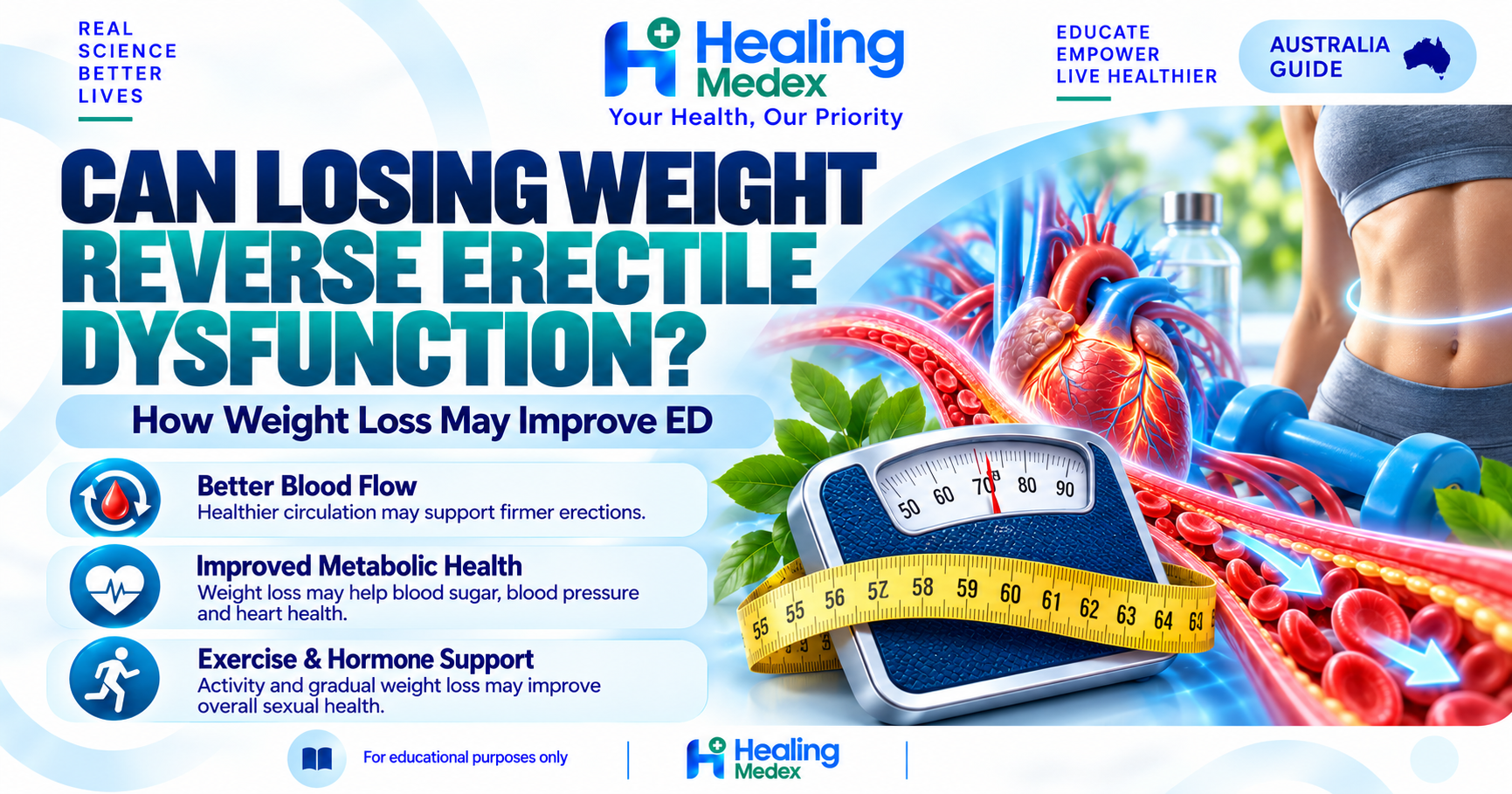
Erectile dysfunction (ED) is often discussed in terms of hormones, stress, medications, or aging, but healthy blood flow is one of the most important factors involved in achieving and maintaining an erection.
That is where nitric oxide (NO) comes in.
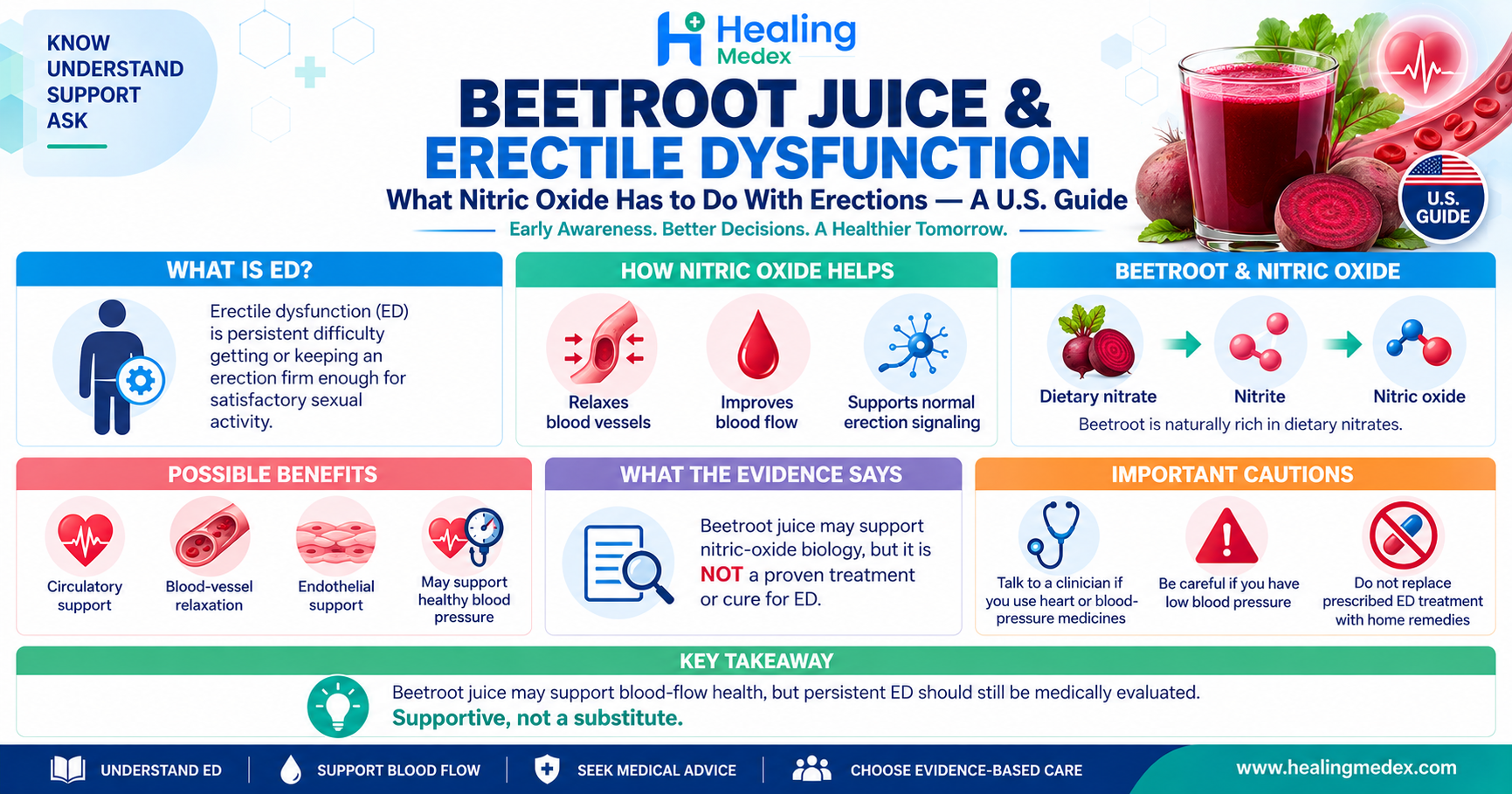
Nitric oxide is a signaling molecule that helps blood vessels relax and widen. It plays a central role in the normal erection process. Because beetroot is naturally rich in dietary nitrates that the body can convert into nitric oxide, beetroot juice has attracted interest as a possible way to support circulation and vascular health.
But does that mean drinking beetroot juice can actually treat erectile dysfunction?
The answer is more complicated. Beetroot juice may support some of the biological processes involved in erections, particularly nitric-oxide availability and vascular function, but it should not be considered a proven treatment for ED.
Here is what men in the United States should know.
What Is Erectile Dysfunction?
An occasional erection problem can happen because of stress, fatigue, alcohol, anxiety, or other temporary factors. Persistent ED, however, may be associated with conditions such as:
Obesity
Smoking
Low testosterone in some men
Certain prescription medicines
Depression, anxiety, or relationship difficulties
Neurological or hormonal disorders
The American Urological Association notes that ED may be associated with cardiovascular risk factors and recommends attention to healthy diet, physical activity, and other lifestyle measures as part of overall management.
What Does Nitric Oxide Have to Do With Erections?
Nitric oxide is one of the key chemical messengers involved in an erection.
When sexual stimulation occurs, nerves and cells lining blood vessels in the penis release nitric oxide. Nitric oxide activates a signaling pathway involving cyclic guanosine monophosphate (cGMP).
This causes smooth muscle in the erectile tissue of the penis to relax.
As those muscles relax:
Penile arteries widen.
More blood flows into the erectile tissue.
The erectile chambers expand.
Blood leaving the penis is temporarily restricted.
The penis becomes firmer and erect.
Research has established nitric oxide as a major mediator of penile smooth-muscle relaxation and normal erection physiology.
If endothelial function is impaired—for example because of diabetes, smoking, high cholesterol or cardiovascular disease—nitric-oxide signaling may also become less effective, which can contribute to vascular ED.
How Does Beetroot Juice Affect Nitric Oxide?
Beetroot is naturally high in inorganic nitrate.
After nitrate-containing foods or drinks are consumed, the body can convert nitrate through a series of steps:
Dietary nitrate → nitrite → nitric oxide
Bacteria in the mouth play an important role in the early stages of this process.
The resulting increase in nitric-oxide availability may help blood vessels relax and influence vascular function.
Human studies of beetroot juice and dietary nitrate have demonstrated measurable effects on nitric-oxide biomarkers and, in some settings, blood pressure or vascular physiology.
This provides a scientifically plausible reason why researchers are interested in nitrate-rich foods in relation to cardiovascular and erectile health.
Can Beetroot Juice Help Erectile Dysfunction?
Possibly indirectly—but evidence is limited.
Beetroot juice may support factors that are important for erectile function, including:
Nitric-oxide production
Blood-vessel relaxation
Endothelial function
Circulatory health
Blood-pressure regulation
However, there is an important distinction between supporting nitric-oxide biology and proving that beetroot juice treats erectile dysfunction.
At present, there is not strong clinical evidence from large, high-quality trials showing that beetroot juice alone reliably restores erections in men diagnosed with ED.
Most research involving beetroot juice has investigated areas such as blood pressure, exercise performance, circulation, vascular function, or nitric-oxide metabolism—not ED treatment specifically.
Therefore, men should not replace a medical ED evaluation or prescribed treatment with beetroot juice.
Why Better Blood Flow May Support Erections
For many men, ED has a vascular component.
The penile arteries need to dilate rapidly during sexual stimulation. Conditions that damage the blood-vessel lining can interfere with this response.
Examples include:
Elevated LDL cholesterol
Smoking
Obesity
Physical inactivity
Atherosclerosis
A diet rich in vegetables and other whole plant foods may support cardiovascular and endothelial health. A recent review also highlighted mechanisms through which plant foods—including their nitrate, L-arginine and L-citrulline content—could support nitric-oxide availability and vascular health relevant to erections.
Beetroot can fit within this type of heart-healthy dietary pattern.
Is Beetroot Juice Similar to Viagra?
No.
Beetroot juice and sildenafil work through different parts of the nitric oxide–cGMP pathway.
Beetroot provides dietary nitrate that may contribute to nitric-oxide availability.
In the United States, FDA-approved oral PDE5 inhibitors used for ED include:
The American Urological Association recommends that eligible men with ED be informed about FDA-approved PDE5 inhibitors, including their potential benefits and risks.
Beetroot juice has not been demonstrated to provide the same predictable therapeutic effect as an FDA-approved ED medicine.
Can You Drink Beetroot Juice With ED Medication?
Men taking prescription medications should discuss concentrated beetroot juice or nitrate supplements with their healthcare professional, particularly if they:
Have low blood pressure
Take medication for hypertension
Have heart or kidney disease
Take several cardiovascular medications
Experience dizziness or fainting
Beetroot can lower blood pressure in some people, so combining multiple blood-pressure-lowering interventions may occasionally produce unwanted symptoms.
A particularly important distinction is that dietary nitrates found in vegetables are not the same thing as prescription nitrate drugs such as nitroglycerin.
Prescription nitrates must not be combined with PDE5 inhibitors because the combination can cause a dangerous fall in blood pressure. The Princeton IV cardiovascular and ED consensus continues to identify concurrent nitrate medication and PDE5-inhibitor use as contraindicated.
Never stop a heart medicine in order to take an ED medicine without discussing it with the prescribing healthcare professional.
How Much Beetroot Juice Should You Drink for ED?
There is currently no medically established dose of beetroot juice for treating erectile dysfunction.
Because beetroot juice is not an FDA-approved ED therapy, there is no standard U.S. ED dosing recommendation.
Research on dietary nitrate often uses standardized beetroot products with known nitrate concentrations, which can differ substantially from ordinary bottled or homemade beetroot juice.
For general dietary purposes, beetroot can be consumed as part of a balanced diet in forms such as:
Whole cooked beets
Roasted beets
Beet salads
Small portions of unsweetened beetroot juice
Consuming more does not necessarily produce better erectile function.
When Could Beetroot Juice Be Most Helpful?
Beetroot may make the most sense as one component of a broader cardiovascular-friendly lifestyle rather than as a stand-alone ED remedy.
Strategies that may support vascular and erectile health include:
Regular aerobic exercise
Maintaining a healthy body weight
Eating vegetables, fruits, whole grains, nuts and legumes
Limiting excessive alcohol intake
Getting adequate sleep
Treating sleep apnea when present
The AUA notes that diet and increased physical activity improve overall health and may provide some improvement in erectile function, especially in men with relevant health conditions.
Could Erectile Dysfunction Be a Warning Sign of Heart Disease?
Sometimes.
The penile arteries are relatively small, so vascular problems may become noticeable as erectile difficulties before cardiovascular symptoms become obvious.
The Princeton IV Consensus identifies ED as a risk marker and risk-enhancing factor for cardiovascular disease and recommends appropriate cardiovascular risk assessment in men presenting with vascular ED.
Persistent ED—particularly when it develops unexpectedly—should therefore not simply be treated as a bedroom problem.
A healthcare professional may consider factors such as:
Blood glucose or A1C
Smoking status
Weight and waist circumference
Kidney function
Medication history
Hormonal issues when clinically indicated
When Should You See a Doctor About ED?
Consider talking with a U.S.-licensed healthcare professional if:
ED occurs repeatedly.
ED lasts several weeks or months.
Erections have suddenly become noticeably weaker.
You have diabetes, hypertension or high cholesterol.
You have symptoms of low testosterone.
Your sex drive has significantly changed.
You have chest pain or shortness of breath with physical activity.
ED began after starting a medication.
Erectile problems are causing significant distress.
A healthcare professional can determine whether the problem is primarily vascular, hormonal, neurological, psychological, medication-related, or caused by several factors at once.
Beware of “Natural ED” Supplements
Be especially careful with supplements sold online as “natural Viagra,” “male enhancement,” or instant herbal ED treatments.
The FDA has repeatedly found undeclared prescription-drug ingredients in products marketed for sexual enhancement. In 2026, for example, the agency reported sildenafil in a sexual-enhancement product in which the drug was not declared on the label.
Hidden PDE5 inhibitors may be particularly dangerous for people taking nitrate heart medicines because of the risk of severe hypotension.
Food-grade beetroot and ordinary beetroot juice are different from unregulated sexual-enhancement supplements.
Beetroot Juice vs Proven ED Treatments
Beetroot juice may complement a healthy lifestyle, but men with persistent ED have several evidence-based treatment options.
Depending on the cause and individual health history, a healthcare professional may discuss:
Lifestyle changes
Counseling or sex therapy when psychological factors contribute
Vacuum erection devices
Injectable or intraurethral therapies
Testosterone treatment when genuine testosterone deficiency is diagnosed
Penile implants for selected cases
The appropriate treatment depends on the underlying cause, medical history and medications being taken.
Frequently Asked Questions
1. Does beetroot juice increase nitric oxide?
Beetroot contains dietary nitrate, which can be converted by the body into nitrite and subsequently nitric oxide. Studies show that nitrate-rich beetroot juice can increase markers associated with nitric-oxide availability.
2. Does nitric oxide make erections stronger?
Nitric oxide is essential to normal erection physiology because it promotes relaxation of smooth muscle and increases penile blood flow. However, simply consuming more dietary nitrate does not guarantee a stronger erection.
3. Is beetroot juice a natural Viagra?
No. Beetroot juice may support nitric-oxide production, but it has not been proven to work like sildenafil or other FDA-approved PDE5 inhibitors.
4. How quickly does beetroot juice work for ED?
There is no clinically established time for beetroot juice to produce an erectile effect because it is not a proven ED treatment.
5. Can beetroot cure erectile dysfunction?
There is currently no good evidence that beetroot juice cures ED. Erectile dysfunction can have many underlying causes, and persistent symptoms require appropriate evaluation.
6. Is beetroot good for cardiovascular health?
Dietary nitrate from vegetables such as beetroot has been studied for effects on blood pressure, nitric-oxide availability and vascular function. However, overall dietary pattern, exercise, weight, smoking status, cholesterol and glucose control remain important for cardiovascular health.
The Bottom Line
Beetroot juice may support nitric-oxide production and healthy blood-vessel function, both of which are important for normal erections. However, current evidence does not establish beetroot juice as a treatment or cure for erectile dysfunction.
The relationship is biologically plausible:
Beetroot nitrate → nitrite → nitric oxide → blood-vessel relaxation → improved blood-flow signaling
But ED is often caused by more than one factor. Diabetes, cardiovascular disease, high blood pressure, hormonal problems, medications, smoking, stress and psychological factors can all contribute.
For men in the United States with persistent ED, beetroot can be considered part of an overall heart-healthy diet, but it should not replace medical assessment or evidence-based treatment.
Because ED can sometimes be an early indicator of underlying vascular disease, recurring erection problems are worth discussing with a qualified healthcare professional rather than treating solely with supplements or home remedies.
Medical Disclaimer
This article is for general educational purposes only and does not replace advice from a qualified doctor or pharmacist. Medical guidance, approved medicines and prescribing rules differ between countries. Always follow the advice of a healthcare professional licensed in your country of residence.