What Is Erectile Dysfunction?
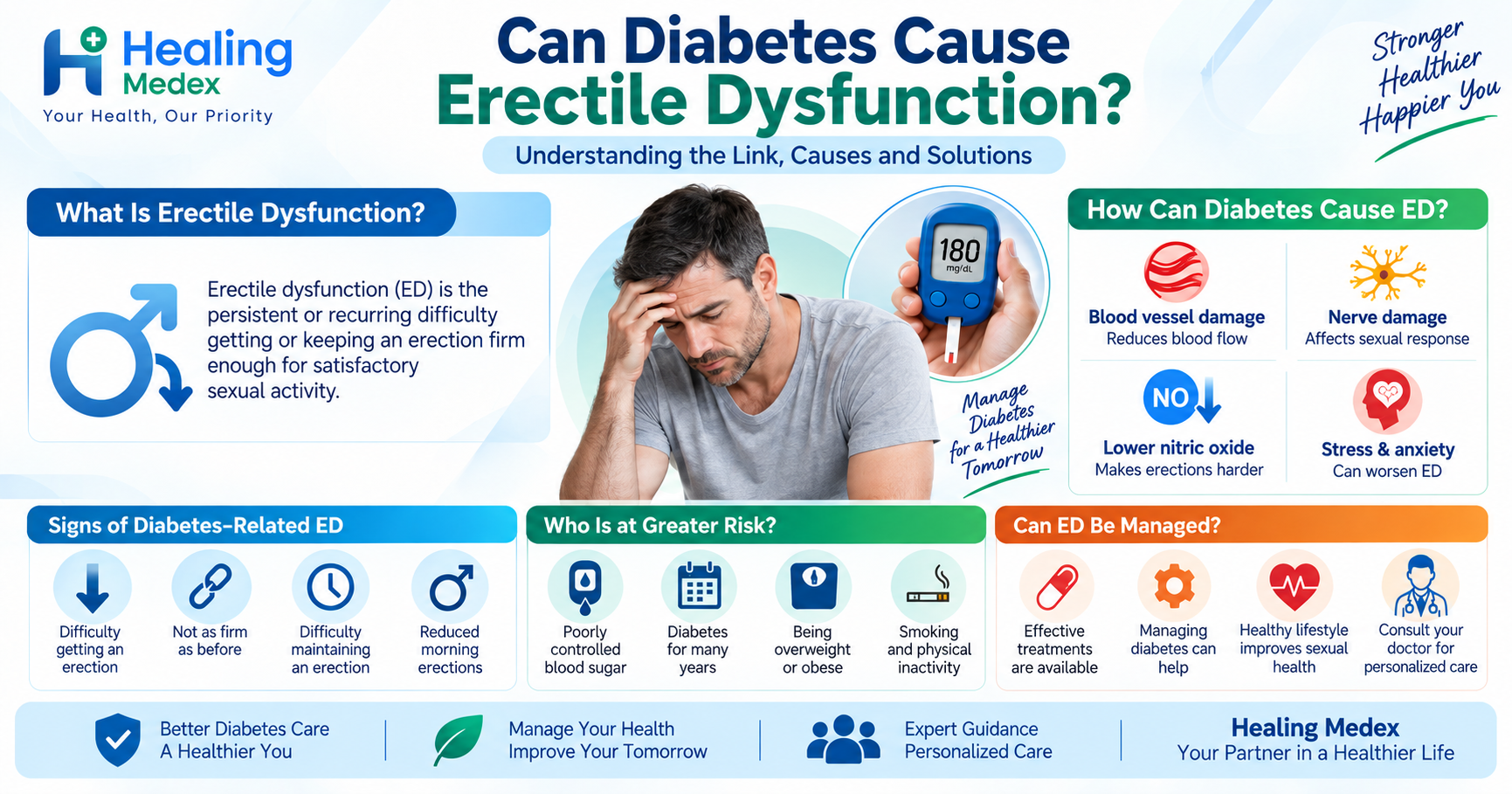
Erectile dysfunction (ED) is the persistent or recurring difficulty getting or keeping an erection firm enough for satisfactory sexual activity.
A man with ED may:
Get an erection sometimes but not consistently
Get an erection that is not firm enough for sex
Lose an erection before sexual activity is completed
Be unable to get an erection
Occasional erection difficulty can happen to many men. Persistent or worsening problems, however, may indicate an underlying medical or psychological condition that should be evaluated.
How Can Diabetes Cause Erectile Dysfunction?
Getting an erection requires several systems to work together, including the brain, nerves, hormones and blood vessels.
Sexual stimulation causes signals from the nervous system that allow blood vessels in the penis to relax. Blood then flows into the erectile tissue, producing an erection.
Diabetes can interfere with this process in several ways.
1. Blood Vessel Damage
Long-term high blood sugar can damage blood vessels throughout the body.
If blood vessels supplying the penis become damaged or narrowed, they may not deliver enough blood for a firm erection.
Because erections depend heavily on healthy circulation, vascular problems are one of the major links between diabetes and ED.
2. Diabetic Nerve Damage
Diabetes can cause diabetic neuropathy, which means damage to nerves caused by prolonged exposure to high blood glucose and other metabolic abnormalities.
Some of these nerves control sexual responses.
When the nerves responsible for sending signals between the brain and penis become damaged, the body may have difficulty producing or maintaining an erection even when sexual desire is present.
3. Reduced Nitric Oxide Activity
Nitric oxide plays an important role in erections because it helps relax the smooth muscles of blood vessels in the penis.
Diabetes-related blood vessel dysfunction can interfere with the normal vascular response needed for sufficient penile blood flow.
This is also why many common oral ED medications work by enhancing the nitric-oxide-related pathway that increases blood flow during sexual stimulation.
4. Heart and Circulation Problems
Men with diabetes are also more likely to experience cardiovascular risk factors such as:
Obesity
Atherosclerosis
Many of these conditions can reduce blood flow to the penis and increase the likelihood of erectile dysfunction.
Mayo Clinic notes that high blood pressure and heart disease may contribute to ED in men with diabetes.
5. Psychological Factors
Diabetes does not only affect physical health.
Living with a chronic condition can contribute to:
Stress
Low confidence
Relationship difficulties
Performance anxiety
These psychological factors can cause or worsen erectile difficulties. NIDDK also identifies anxiety, depression and stress as possible contributors to erectile dysfunction.
What Are the Signs of Diabetes-Related Erectile Dysfunction?
Diabetes-related ED may develop gradually.
Possible symptoms include:
Difficulty becoming fully erect
Erections that feel less firm than before
Difficulty maintaining an erection
Needing more stimulation to achieve an erection
Reduced frequency of spontaneous or morning erections
Difficulty having satisfactory sexual intercourse
Some men with diabetes may also experience changes in sexual desire or ejaculation, although these symptoms can have several possible causes.
Who Is at Greater Risk of ED With Diabetes?
Not every man with diabetes develops erectile dysfunction.
The risk may increase when diabetes occurs alongside factors such as:
Poorly controlled blood sugar
Diabetes for many years
High blood pressure
High cholesterol
Heart or vascular disease
Being overweight or obese
Smoking
Physical inactivity
Excessive alcohol use
Kidney disease
Diabetic neuropathy
Increasing age
Certain medications
The risk of diabetic neuropathy, for example, increases with factors including longer diabetes duration, older age, high blood pressure, high cholesterol, excess weight and smoking.
Can Erectile Dysfunction Be an Early Sign of Diabetes?
Sometimes.
Erectile dysfunction can occasionally appear before a man realizes he has diabetes or another cardiovascular condition.
Because erection quality depends on healthy nerves and blood vessels, ED can sometimes provide an early clue that metabolic or vascular health needs attention. Mayo Clinic notes that some men may notice erection problems before being diagnosed with diabetes or heart disease.
This does not mean that every man with ED has diabetes.
Erectile dysfunction has many possible causes, including:
Obesity
Hormonal disorders
Neurological conditions
Certain medications
Smoking
Alcohol
Stress
Performance anxiety
If ED develops without an obvious explanation, a medical evaluation can help identify its underlying cause.
Can Diabetes-Related Erectile Dysfunction Be Reversed?
It depends on what is causing the erection problem and how much nerve or blood vessel damage has occurred.
Improving diabetes management may help protect the nerves and blood vessels needed for normal sexual function and may improve erections in some men.
However, established nerve or vascular damage may not always be completely reversible.
Treatment therefore usually focuses on two goals:
Managing the underlying health problems
Treating the erectile dysfunction itself
Diabetes-related ED should not simply be accepted as unavoidable. Effective treatments are available.
How Is Erectile Dysfunction Diagnosed in Men With Diabetes?
A healthcare professional will usually begin by asking about your medical and sexual history.
Questions may include:
When did the erection problems begin?
Can you get an erection at all?
Can you maintain erections?
Do you still experience morning erections?
Has your sexual desire changed?
What medications do you take?
Do you smoke or drink alcohol?
Are you experiencing stress, anxiety or depression?
A physical examination may also be performed.
Depending on your situation, additional testing may include blood tests or other investigations to look for hormonal, vascular or neurological causes. NIDDK states that ED evaluation generally involves medical, sexual and mental-health history, physical examination and, where appropriate, laboratory or other tests.
For someone with diabetes, the doctor may also review diabetes control and associated cardiovascular risk factors.
How Is Diabetes-Related Erectile Dysfunction Treated?
Treatment depends on the underlying cause, severity of ED, general health and medications a person is already taking.
1. Improve Diabetes Management
Managing blood sugar is an important part of preventing or limiting diabetes-related complications.
Work with your healthcare professional to manage:
Blood glucose
Blood pressure
Cholesterol
Body weight
Good long-term diabetes management can help protect blood vessels and nerves from further damage.
2. Make Heart-Healthy Lifestyle Changes
Because erectile health and cardiovascular health are closely connected, healthy lifestyle habits may benefit both.
Helpful changes may include:
Exercising regularly
Maintaining a healthy weight
Eating a balanced diet
Stopping smoking
Limiting excessive alcohol consumption
Getting adequate sleep
Managing stress
NIDDK notes that healthy eating may reduce the risk of developing ED or improve ED symptoms while also supporting protection against diabetes, heart disease and obesity.
3. Review Current Medications
Some medicines can contribute to erectile dysfunction, including certain blood-pressure medicines, antidepressants and other drugs.
However, never stop a prescribed medication on your own.
A doctor can review your treatment and determine whether changing the medicine or dose may be appropriate.
4. Oral Erectile Dysfunction Medicines
A doctor may consider oral medicines known as PDE5 inhibitors.
These include:
These medicines help increase blood flow to the penis during sexual stimulation.
They do not automatically produce an erection and sexual stimulation is still required.
Men with diabetes may respond differently to ED medicines, and finding an appropriate medicine and dose should be done with professional medical guidance.
Important Safety Warning
PDE5 inhibitors should not be combined with nitrate medicines used for conditions such as angina because the combination can cause a dangerous fall in blood pressure.
People with serious heart disease, very low blood pressure or other significant medical conditions also require medical assessment before using ED medication.
5. Other ED Treatments
If oral medicines are unsuitable or ineffective, other treatments may be considered.
Depending on the patient, these can include:
Vacuum erection devices
Penile injection therapy
Other locally administered medicines
Penile implants in selected severe cases
A urologist can help determine which treatment is appropriate based on the severity and cause of ED.
6. Psychological Support
When anxiety, stress, depression or relationship difficulties contribute to ED, counseling or psychological therapy may also be helpful.
Some men have both physical and psychological causes.
For example:
Diabetes → occasional erection difficulty → fear of losing the erection → performance anxiety → increased difficulty maintaining an erection
Treating both the physical and psychological components can therefore be important.
Can Better Blood Sugar Control Improve Erections?
Good diabetes management is important for protecting the blood vessels and nerves required for normal erections.
Keeping blood glucose within the targets recommended by your healthcare team may reduce further diabetes-related damage.
However, blood sugar control should not be viewed as an instant ED treatment. If significant nerve or blood vessel damage has already developed, additional ED treatment may still be necessary.
When Should You See a Doctor?
Speak with a healthcare professional if you:
Regularly have difficulty getting an erection
Frequently lose erections during sex
Notice erections becoming progressively weaker
Have diabetes and develop a new sexual problem
Experience reduced sexual desire
Have symptoms of low testosterone
Take medicines that you think may be affecting your erections
Have cardiovascular risk factors such as hypertension or high cholesterol
ED can sometimes be an indicator of another underlying health problem, so persistent symptoms should not simply be ignored.
How Can Men With Diabetes Reduce Their Risk of ED?
There is no guaranteed way to prevent erectile dysfunction, but protecting overall metabolic and cardiovascular health may lower the risk.
Consider focusing on:
Keeping diabetes appropriately controlled
Monitoring blood pressure
Managing cholesterol
Exercising regularly
Maintaining a healthy body weight
Avoiding smoking
Limiting alcohol
Following a heart-healthy eating pattern
Taking prescribed medication correctly
Attending regular diabetes checkups
Discussing sexual-health changes with a healthcare professional
Sexual health is an important part of overall health, and erection problems are a legitimate medical issue to discuss with your doctor.
Frequently Asked Questions
1. Does high blood sugar cause erectile dysfunction?
Persistently high blood sugar can contribute to ED by damaging nerves and blood vessels needed for normal erections. The effect generally develops over time rather than immediately after a single high blood-sugar reading.
2. Is ED common in men with type 2 diabetes?
Erectile problems are more common among men with diabetes, particularly type 2 diabetes. However, ED is not inevitable, and treatment options are available.
3. Can ED be the first sign of diabetes?
It can be in some men. ED may occasionally appear before diabetes or cardiovascular disease is diagnosed. Anyone experiencing persistent unexplained ED should discuss it with a healthcare professional.
4. Can losing weight help diabetes-related ED?
For men who are overweight, achieving a healthier weight can improve several cardiovascular and metabolic risk factors associated with both diabetes and erectile dysfunction. Weight management should be part of an overall health plan rather than considered a guaranteed ED cure.
5. Can a diabetic man take sildenafil or tadalafil?
Some men with diabetes can use PDE5 inhibitors such as sildenafil or tadalafil, but they are not appropriate for everyone.
A healthcare professional should review cardiovascular health, other medical conditions and medications before prescribing ED treatment. These medicines must not be combined with nitrate medicines used for angina.
6. Is diabetes-related ED permanent?
Not necessarily. The outcome depends on the causes and severity of the problem. Improving diabetes and cardiovascular health may help, while medications or other ED treatments can improve erectile function for many men.
Final Thoughts
Diabetes can cause erectile dysfunction, primarily by damaging the nerves and blood vessels involved in normal erections. High blood pressure, high cholesterol, obesity, cardiovascular disease, smoking and psychological stress can further increase the risk.
Erection difficulties should not be considered an unavoidable consequence of having diabetes.
Managing blood sugar and cardiovascular risk factors, following healthy lifestyle habits and discussing persistent erection problems with a healthcare professional can help identify the underlying cause and determine an appropriate treatment.
The earlier diabetes and its complications are properly managed, the better the opportunity to protect long-term vascular, neurological and sexual health.