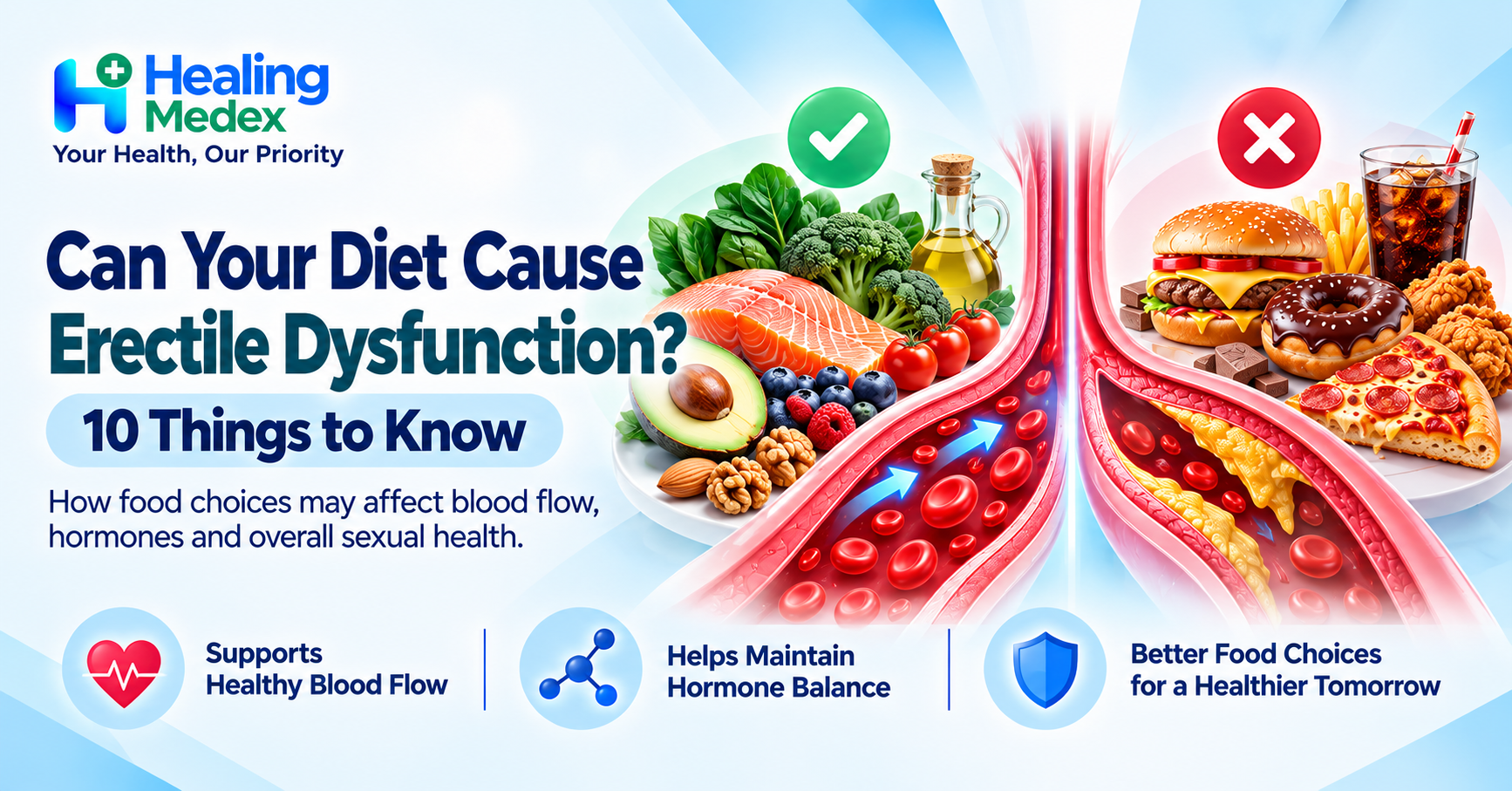
What you eat can influence blood circulation, cholesterol levels, blood pressure, body weight and metabolic health. All these factors can affect your ability to achieve and maintain an erection.
For men in the United Kingdom, diets containing too many highly processed foods, sugary drinks, salty snacks and saturated fats may contribute to health problems associated with erectile dysfunction.
However, no single food automatically causes ED, and no particular diet guarantees a cure. The relationship between nutrition and erectile function is complex.
This Healing Medex UK guide explains 10 important ways dietary habits may influence erectile health, which foods deserve attention and how healthier eating patterns may help.
How Does Your Diet Affect Erectile Function?
An erection depends on several systems working together, including the brain, nerves, hormones and blood vessels.
During sexual arousal, nerve signals encourage the release of nitric oxide, a substance that helps relax smooth muscle in penile blood vessels. This allows more blood to enter the erectile tissue.
Healthy blood vessels and adequate blood circulation are therefore essential for normal erectile function.
Diet can influence this process indirectly by affecting:
Cardiovascular health and blood vessel function
Blood pressure and cholesterol levels
Blood glucose regulation and insulin sensitivity
Body weight and metabolic health
Nutritional status and, in some circumstances, hormone production
Research suggests that healthier dietary patterns are associated with better erectile health, although studies do not prove that changing diet alone will resolve ED in every individual.
10 Things to Know About Diet and Erectile Dysfunction
1. Eating Too Much Saturated Fat May Affect Blood Circulation
A diet consistently high in saturated fat can increase LDL cholesterol, often called bad cholesterol.
Over time, elevated cholesterol can contribute to atherosclerosis, a condition in which fatty deposits accumulate inside artery walls.
Because erections depend on healthy blood flow, vascular disease may make it more difficult to achieve or maintain an erection.
Foods to limit:
Bacon, sausages and fatty cuts of meat
Butter, cream and excessive amounts of full-fat cheese
Pastries, cakes and certain takeaway meals
Foods frequently prepared with large quantities of ghee or butter
Healthier alternatives: Choose fish, beans, lentils, lean meats, unsalted nuts and modest amounts of olive or rapeseed oil.
The NHS recommends that the average adult man consume no more than 30 g of saturated fat per day.
2. Excess Sugar May Increase the Risk of Diabetes-Related ED
Importantly, eating sugar does not directly mean that someone will develop ED. Risk depends on overall dietary habits, genetics, activity levels and metabolic health.
Foods and drinks to reduce:
Sugary fizzy drinks
Energy drinks containing added sugar
Sweets and confectionery
Cakes, biscuits and sweetened cereals
Large portions of sugary desserts
What may help: Replace sugar-sweetened drinks with water or unsweetened alternatives, and choose whole fruits more often than fruit juice.
Men who already have diabetes should follow an individualised nutrition plan to help manage blood glucose.
3. Too Much Salt May Contribute to High Blood Pressure
High blood pressure is a recognised risk factor for erectile dysfunction.
Blood vessels need to relax and widen appropriately for an erection to occur. Long-term hypertension can damage blood vessel function and contribute to cardiovascular problems.
A high-salt diet can increase blood pressure, particularly in people who are sensitive to sodium.
Common sources of excess salt in UK diets include:
Crisps and salted snacks
Processed meats
Ready meals
Takeaway foods
Some sauces, soups and packaged foods
Practical advice: Read nutrition labels, compare products and gradually reduce the amount of salt added during cooking.
UK guidance generally recommends that adults consume no more than 6 g of salt per day.
Reducing excess salt may benefit cardiovascular health, although it is not a direct treatment for every cause of ED.
4. Being Overweight Can Increase Erectile Dysfunction Risk
Dietary habits that regularly provide more calories than the body needs can contribute to excess weight.
Obesity is associated with several health conditions that increase ED risk, including:
Hormonal disturbances
Excess body fat can also affect testosterone regulation in some men, although not everyone with obesity has low testosterone.
Can weight loss improve erections?
For men who are overweight, gradual and sustainable weight loss may improve erectile function, particularly when combined with exercise and management of underlying medical conditions.
A balanced diet with suitable portions, adequate protein, whole grains, vegetables and healthy fats may support this goal.
Extreme calorie restriction or crash dieting is not recommended.
5. Not Eating Enough Fruits and Vegetables May Affect Vascular Health
Fruits and vegetables provide vitamins, minerals, fibre and beneficial plant compounds that support overall cardiovascular health.
Some vegetables, particularly leafy greens and beetroot, contain dietary nitrates that the body can convert into nitric oxide through several biological pathways.
Nitric oxide contributes to normal blood vessel relaxation, which is important for erectile function.
Useful choices include:
Spinach and rocket
Beetroot
Broccoli
Tomatoes
Oranges and other citrus fruits
Berries
Apples and pears
However, eating nitrate-containing foods does not guarantee improved erections, and clinical evidence for specific foods treating ED remains limited.
UK recommendation: Aim for at least five portions of varied fruits and vegetables each day, as advised by the NHS Eatwell Guide.
6. Unhealthy Fat Choices May Affect Heart and Erectile Health
Not all dietary fats have the same effects on cardiovascular health.
Replacing some saturated fats with unsaturated fats can help improve blood cholesterol levels.
This matters because the arteries supplying blood to the penis and heart are both affected by vascular health.
Sources of healthier fats include:
Olive oil
Rapeseed oil
Walnuts and almonds
Avocados
Salmon, sardines and mackerel
Seeds such as flaxseed and chia seeds
Oily fish provides omega-3 fatty acids, which support cardiovascular health.
UK dietary guidance generally recommends at least two portions of fish weekly, including one portion of oily fish.
These foods can be part of an overall heart-healthy diet, but omega-3 supplements and individual foods should not be regarded as proven treatments for ED.
7. Excessive Alcohol Consumption Can Interfere With Erections
Alcohol is another important dietary factor that may influence erectile function.
Drinking large amounts of alcohol can temporarily affect communication between the brain and nervous system, making it more difficult to achieve or maintain an erection.
Long-term heavy alcohol consumption can also contribute to:
Liver disease
High blood pressure
Nerve damage
Hormonal disturbances
Relationship and psychological difficulties
These problems may increase the likelihood of persistent ED.
UK alcohol guidance
The NHS recommends drinking no more than 14 units of alcohol per week on a regular basis, spread over three or more days if drinking that much.
Drinking less, or avoiding alcohol, may be beneficial for men experiencing alcohol-related erection problems.
People who drink heavily every day and may be physically dependent on alcohol should seek medical advice before stopping suddenly, because withdrawal can be dangerous.
8. Nutritional Deficiencies May Affect General and Sexual Health
Adequate intake of essential nutrients supports normal metabolism, nerve function and hormone production.
Nutritional deficiencies may contribute to fatigue, poor general health or hormonal abnormalities, which can sometimes affect sexual function.
Nutrients worth considering include:
Zinc: Involved in normal testosterone production and many metabolic processes. Sources include meat, shellfish, beans, nuts and seeds.
Vitamin D: Important for bone, muscle and overall health. Low vitamin D levels have been associated with ED in some studies, but a direct causal relationship has not been established.
Vitamin B12: Supports normal nerve function and red blood cell production. Sources include fish, meat, eggs, dairy products and fortified foods.
Magnesium: Supports muscle and nerve function. Sources include nuts, whole grains, legumes and leafy greens.
A deficiency should be confirmed and treated appropriately when clinically indicated.
Taking high-dose supplements without medical advice is not a reliable ED treatment and may cause unwanted effects.
9. A Mediterranean-Style Diet May Support Erectile Health
The Mediterranean diet is one of the dietary patterns studied in relation to cardiovascular and erectile health.
It emphasises:
Vegetables and fruits
Whole grains
Beans and lentils
Nuts and seeds
Olive oil
Fish
Smaller amounts of highly processed foods and red or processed meat
This eating pattern may help improve several cardiovascular risk factors associated with erectile dysfunction.
Some studies have linked Mediterranean-style eating with better erectile function, particularly when combined with physical activity and weight management.
However, research findings vary, and the evidence does not establish that a Mediterranean diet alone prevents or cures ED.
A UK-friendly Mediterranean-style meal might include:
Grilled salmon or chickpeas, wholegrain rice, roasted vegetables and a small amount of olive oil, followed by fresh fruit.
This approach can provide a practical foundation for improving overall dietary quality without relying on restrictive eating plans.
10. Long-Term Dietary Habits Matter More Than Individual Foods
Many online articles promote individual foods as natural erectile dysfunction cures.
Examples include watermelon, beetroot, dark chocolate, pomegranate and various nuts.
Although some contain nutrients associated with vascular health, evidence that any single food reliably treats ED is limited.
What matters more is the overall eating pattern maintained over months and years.
A balanced diet can help with:
Managing blood pressure
Maintaining healthier cholesterol levels
Supporting blood glucose control
Achieving a healthy body weight
Reducing cardiovascular risk
Dietary improvements are most useful when combined with regular physical activity, sufficient sleep, smoking cessation and appropriate medical care.
Key takeaway: A consistently healthy eating pattern is more meaningful than searching for one food that promises stronger erections.
What Foods Should Men With Erectile Dysfunction Eat More Often?
The following table summarises practical choices for men in the UK who want to improve their overall diet and support cardiovascular health.
Food group | Examples | Potential benefit |
|---|---|---|
Leafy vegetables | Spinach, kale, rocket | Provide nitrates and micronutrients |
Fruits | Berries, oranges, apples | Supply fibre and beneficial plant compounds |
Whole grains | Oats, wholemeal bread, brown rice | Support fibre intake and metabolic health |
Oily fish | Salmon, sardines, mackerel | Provide omega-3 fatty acids |
Nuts and seeds | Walnuts, almonds, pumpkin seeds | Supply unsaturated fats and minerals |
Pulses | Lentils, chickpeas, beans | Provide fibre and plant protein |
Healthy oils | Olive oil, rapeseed oil | Can replace some saturated fats |
Water | Plain water | Supports normal hydration |
These foods support a healthy diet but should not be presented as guaranteed erectile dysfunction treatments.
Foods and Dietary Habits Worth Limiting
Men concerned about erectile health may benefit from reducing frequent intake of foods that contribute to poor cardiovascular or metabolic health.
Dietary habit | Why it deserves attention |
|---|---|
Frequent processed meats | Can be high in salt and saturated fat |
Sugary drinks | Can contribute to excess calorie intake and metabolic problems |
High-salt ready meals | May make blood pressure management more difficult |
Large portions of fried takeaway food | May increase saturated fat and calorie intake |
Excessive alcohol | Can interfere with erections and harm long-term health |
Regular overeating | Can contribute to excess weight and metabolic disease |
No food needs to be labelled as the sole cause of ED. Frequency, portion size, overall diet and existing health conditions are more important.
Can Changing Your Diet Reverse Erectile Dysfunction?
Dietary improvements may help some men experience better erectile function, especially when ED is associated with obesity, metabolic problems or poor cardiovascular health.
However, improvement is not guaranteed.
Erectile dysfunction may also result from:
Diabetes-related nerve damage
Hormonal disorders
Side effects of prescribed medicines
Anxiety, depression or relationship difficulties
Neurological conditions
Significant vascular disease
In these circumstances, dietary changes alone may not be sufficient.
A GP can help identify underlying causes and recommend suitable treatment.
How Long Does It Take for Dietary Changes to Improve Erections?
There is no established timeline for erectile improvements after changing diet.
Some cardiovascular and metabolic improvements can begin within weeks, while meaningful changes in body weight and long-term risk factors may take months.
Whether erections improve depends on the cause of ED, the severity of any existing health conditions and the individual's response to lifestyle changes.
Men should avoid expecting immediate results from particular foods or supplements.
If erectile difficulties persist, professional assessment is preferable to relying on dietary changes alone.
Can Diet Work Alongside Erectile Dysfunction Medicines?
Yes. A healthy diet can be part of a broader ED treatment plan.
In the UK, commonly used erectile dysfunction medicines include:
Sildenafil: Helps increase blood flow to the penis during sexual stimulation.
Tadalafil: Has a longer duration of action than sildenafil.
Vardenafil: Another PDE5 inhibitor used to treat ED.
Avanafil: A PDE5 inhibitor that may act relatively quickly in some patients.
Some ED medicines may also be affected by food or alcohol. For example, a high-fat meal can delay the onset of sildenafil's effects.
Follow the instructions supplied with the specific medicine and seek advice from a qualified pharmacist or prescriber.
UK patients should use appropriately regulated pharmacies and healthcare services.
When Should You See a GP About Erectile Dysfunction?
Occasional erection difficulties are common and do not necessarily indicate a serious medical problem.
However, repeated or persistent ED deserves medical attention, particularly because it can sometimes be an early sign of cardiovascular disease or diabetes.
Consider booking a GP appointment if:
Erection difficulties happen repeatedly.
You have diabetes, high cholesterol or high blood pressure.
You have noticed reduced libido or other possible hormonal symptoms.
Symptoms began after starting a new medicine.
Erectile problems are affecting your wellbeing or relationship.
Lifestyle changes have not improved persistent symptoms.
A GP may assess blood pressure, cardiovascular risk, blood glucose, cholesterol and, where clinically appropriate, hormone levels.
Treatment may include lifestyle advice, management of underlying conditions, ED medication or psychological support.
Frequently Asked Questions
1. Can eating unhealthy food cause erectile dysfunction?
A consistently unhealthy diet may contribute to conditions such as obesity, diabetes, high blood pressure and cardiovascular disease, all of which are associated with ED. However, an occasional unhealthy meal does not directly cause persistent erectile dysfunction.
2. Can eating too much sugar affect erections?
Excess sugar intake, particularly from sugary drinks and high-calorie foods, can contribute to metabolic problems over time. Poorly controlled diabetes can damage nerves and blood vessels involved in erections.
3. Does eating fatty food cause Ed?
Eating a single fatty meal does not usually cause lasting ED. However, a long-term diet high in saturated fat may increase cholesterol and cardiovascular risk, which can contribute to erectile difficulties.
4. What is the best diet for erectile dysfunction?
There is no single proven ED-curing diet. A balanced, Mediterranean-style eating pattern rich in vegetables, fruits, whole grains, legumes and unsaturated fats is a reasonable choice for supporting overall cardiovascular health.
5. Can losing weight improve erectile function?
Yes, some men who are overweight may experience improvements in erectile function after sustainable weight loss, especially when combined with regular exercise and treatment of underlying medical conditions.
6. Can dehydration cause erectile problems?
Severe dehydration can affect physical wellbeing and circulation. However, evidence that mild everyday dehydration directly causes persistent ED is limited. Maintaining adequate hydration is sensible, but persistent ED should not automatically be attributed to insufficient water intake.
7. Does a vegetarian diet help erectile dysfunction?
A balanced vegetarian diet can support cardiovascular health when it includes sufficient protein, healthy fats and essential nutrients. Some research associates plant-rich diets with better erectile outcomes, but vegetarian eating does not guarantee protection against ED.
Final Thoughts
Yes, your diet can contribute to erectile dysfunction, particularly through its long-term effects on blood vessels, blood pressure, cholesterol, diabetes risk and body weight.
A dietary pattern dominated by sugary drinks, high-salt foods, excessive saturated fat and frequent overeating may increase health risks associated with erection problems.
Conversely, a balanced eating pattern containing fruits, vegetables, whole grains, healthy fats, legumes and fish may help support cardiovascular and metabolic health.
For men in the UK, following the NHS Eatwell Guide is a practical starting point.
Nevertheless, erectile dysfunction has many possible causes, and dietary changes should not replace medical evaluation when symptoms persist.
The most effective approach often combines healthy eating, regular exercise, appropriate management of medical conditions and evidence-based treatment where necessary.
Medical Disclaimer
This article is for general educational purposes only and does not replace advice from a qualified doctor or pharmacist. Medical guidance, approved medicines and prescribing rules differ between countries. Always follow the advice of a healthcare professional licensed in your country of residence.
See another version