Sleep is essential for physical health, mental well-being, hormone regulation, and healthy sexual function. However, millions of American adults struggle with insomnia, difficulty staying asleep, or poor sleep quality. To manage these problems, some people turn to prescription sleeping pills or over-the-counter (OTC) sleep aids.
Although these medicines can help certain individuals sleep, they may also produce unwanted side effects. One concern is whether sleeping pills can contribute to erectile dysfunction (ED).
The short answer is yes. Certain sleeping pills and sedative medications may contribute to erectile dysfunction, but not all sleep medicines carry the same risk. The relationship depends on the type of medication, its sedative effects, the person's underlying health, and other medicines being taken.
Importantly, insomnia itself can also contribute to sexual difficulties, making it challenging to determine whether the medication or the sleep problem is responsible.
This Healing Medex U.S. guide explores how sleeping pills may affect erections, which medications deserve particular attention, possible warning signs, and ways to protect both sleep quality and sexual health.
What Is Erectile Dysfunction?
An erection requires coordination between the brain, nerves, blood vessels, hormones, and psychological responses.
When any part of this process is disrupted, erectile difficulties can occur.
Common symptoms include:
Difficulty achieving an erection.
Trouble maintaining an erection during sexual activity.
Erections that are less firm than usual.
Inconsistent erectile performance.
Reduced sexual desire, which may occur alongside ED but is a separate symptom.
According to the U.S. National Institute of Diabetes and Digestive and Kidney Diseases (NIDDK), certain medicines, including sedatives, may contribute to erectile dysfunction
How Can Sleeping Pills Affect Erectile Function?
Sleeping medications generally work by influencing brain activity, promoting relaxation, or regulating sleep-related pathways.
However, some medicines may also affect alertness, sexual arousal, and other processes involved in erectile function.
1. Reduced Central Nervous System Activity
Many sleeping pills act as central nervous system depressants.
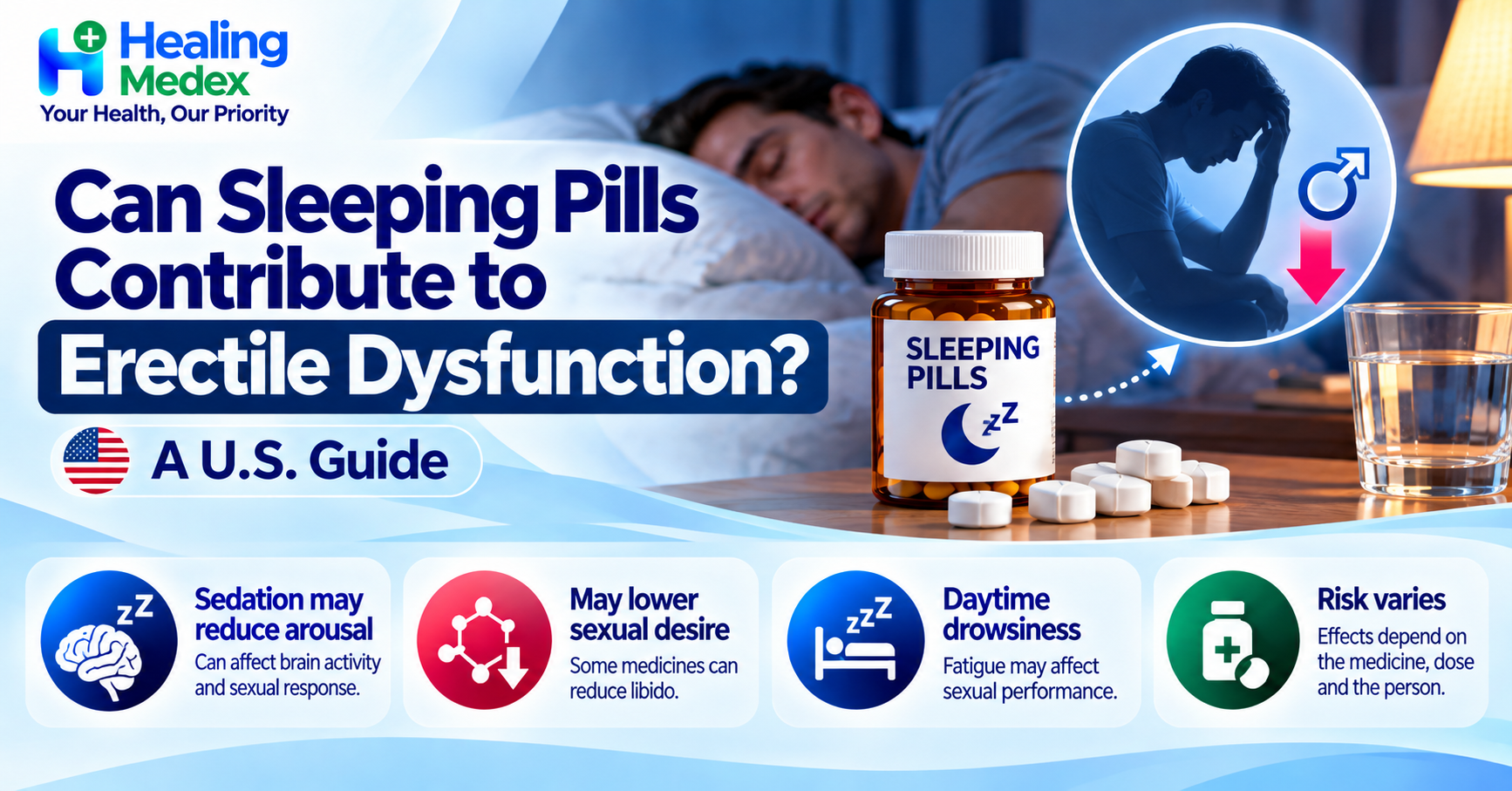
They reduce brain activity to promote sleep and relaxation. In some individuals, these effects may also interfere with sexual responsiveness.
Possible consequences include reduced arousal, delayed sexual responses, and difficulty maintaining an erection.
This effect is especially relevant to certain sedative medications, including benzodiazepines.
2. Reduced Sexual Desire
Some individuals taking sedating medications report a decrease in libido.
Sexual desire and erectile function are not the same, but they are closely related.
When interest in sexual activity decreases, achieving and maintaining an erection may become more difficult.
3. Daytime Drowsiness and Fatigue
Some sleeping pills produce residual sedation after waking.
This may cause:
Daytime sleepiness.
Reduced energy.
Difficulty concentrating.
Lower motivation.
Reduced interest in sexual activity.
These effects can indirectly influence sexual performance, particularly when sedation continues into the following day.
4. Possible Effects on Hormonal Regulation
Healthy sleep plays an important role in normal testosterone regulation.
Persistent sleep disruption may be associated with hormonal changes that affect sexual desire and function.
However, there is insufficient evidence to conclude that all sleeping pills directly lower testosterone levels.
The effects vary between medications, and other health conditions may be involved.
5. Interaction With Other Medications
People using sleeping pills may also take medications for anxiety, depression, chronic pain, or high blood pressure.
Some of these medicines are independently associated with sexual side effects.
When several medications are used together, identifying the cause of erectile dysfunction may become more complicated.
A healthcare professional can review possible interactions and determine whether any medication changes are appropriate.
Which Sleeping Pills May Contribute to Erectile Dysfunction?
Not all sleeping medications affect sexual function in the same way. Some have a more established association with sexual dysfunction, while evidence for others remains limited.
1. Benzodiazepines
Examples include:
Temazepam (Restoril).
Triazolam (Halcion).
Lorazepam (Ativan), sometimes used for anxiety-related sleep problems.
Diazepam (Valium), which may cause sedation but is not generally a preferred insomnia treatment.
Benzodiazepines increase the activity of gamma-aminobutyric acid (GABA), a neurotransmitter that reduces nervous system activity.
Although this promotes relaxation, it may also reduce sexual arousal in some individuals.
A 2025 observational study of adults aged 65 and older found associations between benzodiazepine use, insomnia, and erectile dysfunction. However, because the study was observational, it could not establish that benzodiazepines directly caused ED.
2. Z-Drugs
Common examples include:
Zolpidem (Ambien).
Eszopiclone (Lunesta).
Zaleplon (Sonata).
These medications are commonly prescribed for certain types of insomnia in the United States.
They promote sleep by acting on brain receptors involved in sedation.
Sexual side effects have been reported with some medications in this group, but a direct causal relationship with erectile dysfunction is not consistently established.
Some individuals may experience fatigue, reduced alertness, or other effects that indirectly interfere with sexual activity.
3. Sedating Antidepressants
Examples include:
Trazodone.
Doxepin.
Mirtazapine.
Certain antidepressants are sometimes prescribed to individuals who experience sleep difficulties.
Antidepressants can affect sexual function, although the risk and type of side effects vary considerably between medications.
Possible effects include reduced libido, delayed ejaculation, or erectile difficulties.
Importantly, low-dose doxepin used specifically for insomnia does not necessarily carry the same sexual side-effect profile as higher antidepressant doses.
Trazodone also deserves special attention because it has been associated with rare cases of priapism, a prolonged erection requiring emergency treatment.
4. Over-the-Counter Antihistamine Sleep Aids
Common ingredients include:
Diphenhydramine.
Doxylamine.
These substances are found in some OTC nighttime sleep products sold in the United States.
They produce drowsiness by blocking histamine activity in the brain.
Although some antihistamines are listed among medicines that may contribute to ED, evidence directly linking typical short-term use of OTC antihistamine sleep aids to erectile dysfunction is limited.
These medications can also cause next-day drowsiness, dry mouth, constipation, and urinary difficulties, particularly in older adults.
5. Melatonin and Melatonin Receptor Medicines
Melatonin is a hormone involved in regulating the sleep-wake cycle.
Melatonin supplements and prescription medicines such as ramelteon work through sleep-related hormonal pathways.
Currently, there is no strong clinical evidence that typical melatonin use commonly causes erectile dysfunction.
However, supplement quality, dosage, and individual responses may vary.
Melatonin should not automatically be considered a treatment for ED.
Can Insomnia Itself Cause Erectile Dysfunction?
Yes. Poor sleep may contribute to erectile difficulties even in people who do not take sleeping pills.
Insomnia can affect sexual health through several mechanisms.
Sleep deprivation and hormonal changes: Insufficient or disrupted sleep may affect normal testosterone regulation, which can influence sexual desire.
Stress and anxiety: Difficulty sleeping may increase psychological distress, making sexual arousal and erectile performance more difficult.
Fatigue: Persistent tiredness can reduce interest in sexual activity and interfere with sexual responsiveness.
Associated health conditions: Sleep difficulties may occur alongside obesity, depression, cardiovascular disease, diabetes, or sleep apnea, which may also contribute to ED.
A study published in European Urology Focus in 2024 examined associations between insomnia, insomnia medications, and erectile dysfunction, emphasizing the importance of considering both sleep problems and medication use when evaluating erectile symptoms.
10 Things to Know About Sleeping Pills and Erectile Dysfunction
No. | Important point | What it means |
|---|---|---|
1 | Some sleeping pills may contribute to ED | Sedatives can affect sexual responsiveness. |
2 | Not all sleeping pills carry equal risk | Effects vary by medication. |
3 | Benzodiazepines deserve attention | Some studies link them with sexual dysfunction. |
4 | Daytime sedation may affect sexual activity | Fatigue can reduce arousal and energy. |
5 | Poor sleep itself may contribute to ED | Insomnia can affect physical and mental health. |
6 | Other medicines may be involved | Antidepressants and some blood pressure medicines can contribute. |
7 | Testosterone is not always the cause | ED can occur with normal testosterone levels. |
8 | OTC sleep aids are not risk-free | Antihistamine products can produce unwanted side effects. |
9 | Stopping medication suddenly can be dangerous | Some sedatives require medically supervised tapering. |
10 | ED can often be evaluated and treated | Addressing sleep, medicines, and underlying conditions may help. |
How Do You Know If Sleeping Pills Are Causing ED?
It can be difficult to determine whether erectile dysfunction is related to sleeping pills or another health problem.
However, certain patterns may suggest a possible medication-related effect.
Common Signs to Watch For
Erectile difficulties begin after starting a new sleeping medication.
Sexual desire decreases after a medication change.
Increased daytime drowsiness occurs alongside erectile problems.
Erectile difficulties appear after a prescribed dosage increase.
Sexual function changes despite otherwise stable health and lifestyle habits.
These signs do not prove that sleeping pills are responsible.
A healthcare professional may review the timing of symptoms, medical history, medications, and relevant health conditions before identifying a possible cause.
Can Erectile Dysfunction Improve After Stopping Sleeping Pills?
In some cases, erectile function may improve after a healthcare professional adjusts, changes, or gradually discontinues a medication associated with sexual side effects.
The outcome depends on several factors, including the type of medicine, duration of use, underlying health conditions, and other possible causes of ED.
Some individuals may experience improvement after medication-related sedation decreases. Others may continue experiencing erectile difficulties because of cardiovascular disease, diabetes, hormonal problems, psychological stress, or untreated sleep disorders.
Never stop prescription sleeping pills abruptly without professional guidance.
The U.S. Food and Drug Administration (FDA) warns that suddenly stopping benzodiazepines or reducing their dosage too quickly can cause serious withdrawal reactions, including potentially life-threatening seizures.
How to Manage Sleep Problems Without Worsening Erectile Dysfunction
Improving sleep quality while minimizing medication-related side effects requires an individualized approach.
1. Consider Cognitive Behavioral Therapy for Insomnia
Cognitive behavioral therapy for insomnia (CBT-I) is a structured treatment designed to improve sleep habits and address thoughts and behaviors that contribute to chronic insomnia.
The American College of Physicians recommends CBT-I as the initial treatment for adults with chronic insomnia.
It may help reduce dependence on sleeping medications for some individuals.
2. Maintain a Consistent Sleep Schedule
Try to go to bed and wake up at approximately the same time each day.
Consistent sleep patterns support the body's natural circadian rhythm and may improve overall sleep quality.
3. Reduce Evening Caffeine and Alcohol
Caffeine consumed late in the day may delay sleep onset.
Alcohol can make some people feel sleepy initially but may disrupt sleep later in the night.
Alcohol can also worsen erectile difficulties and increase the sedating effects of certain sleeping pills.
4. Exercise Regularly
Regular physical activity supports cardiovascular health, sleep quality, and overall well-being.
Walking, swimming, cycling, and moderate aerobic exercise may be beneficial.
Improved cardiovascular health can also support erectile function.
5. Review Current Medications
If erectile problems began after starting sleeping pills, discuss the symptoms with your prescribing clinician.
Depending on the circumstances, they may consider adjusting the medication, investigating other causes, or recommending non-medication insomnia treatments.
6. Address Stress and Anxiety
Stress and anxiety may contribute to both insomnia and erectile dysfunction.
Relaxation techniques, counseling, mindfulness, and appropriate psychological treatment may help individuals experiencing these concerns.
7. Get Evaluated for Sleep Apnea
Obstructive sleep apnea can cause repeated interruptions in breathing during sleep.
Symptoms may include loud snoring, witnessed breathing pauses, morning headaches, and excessive daytime sleepiness.
Sleep apnea is also associated with erectile dysfunction.
Individuals experiencing these symptoms should speak with a healthcare professional about sleep-apnea screening.
What Are the Treatment Options for ED Related to Sleeping Pills?
Treatment depends on the suspected cause and the individual's overall health.
Medication Review
A doctor may evaluate whether a sleeping pill or another medicine could be contributing to erectile problems.
Possible approaches include changing medications, adjusting treatment under supervision, or addressing untreated insomnia.
Erectile Dysfunction Medicines
In the United States, healthcare professionals may prescribe PDE5 inhibitors such as:
These medicines improve the body's erectile response by supporting blood flow to the penis during sexual stimulation.
They do not directly treat insomnia or necessarily reverse medication-related changes in sexual desire.
PDE5 inhibitors are not suitable for everyone. They must not be combined with nitrate medications used for conditions such as angina because the combination can cause a dangerous drop in blood pressure.
A doctor or pharmacist should also assess other medications, including sleeping pills, for potential interactions and safety concerns.
Lifestyle and Psychological Support
Managing anxiety, improving sleep habits, reducing excessive alcohol consumption, and increasing physical activity may help improve erectile function.
If ED is related to more than one condition, addressing several contributing factors may provide better results than focusing on sleeping pills alone.
When Should You See a Doctor?
Seek medical advice if:
Erectile difficulties begin after starting a sleeping medication.
ED continues or repeatedly occurs.
Sexual desire decreases significantly.
Sleeping pills cause troublesome daytime sedation.
You experience symptoms suggesting low testosterone or another hormonal problem.
You have diabetes, hypertension, cardiovascular disease, or suspected sleep apnea.
You want to reduce or stop a prescription sleeping medication.
ED can sometimes be an early sign of an underlying cardiovascular or metabolic condition. Therefore, persistent symptoms deserve medical evaluation rather than being automatically attributed to sleeping pills.
In the United States, patients can begin with a primary care physician, sleep medicine specialist, or urologist.
Important safety warning: If you experience sleepwalking, sleep-driving, or other activities while not fully awake after taking zolpidem, eszopiclone, or zaleplon, the FDA advises stopping the medicine and contacting a healthcare professional immediately.
Frequently Asked Questions
1. Can sleeping pills cause erectile dysfunction permanently?
There is no strong evidence that commonly used sleeping pills routinely cause permanent erectile dysfunction. Some medication-related sexual difficulties may improve after supervised treatment changes. Persistent ED should be investigated for other causes.
2. Does Ambien (zolpidem) cause erectile dysfunction?
Zolpidem may cause side effects that indirectly interfere with sexual activity, such as drowsiness or reduced alertness. However, evidence that zolpidem commonly causes ED directly is limited.
3. Can benzodiazepines lower sexual desire?
Yes. Benzodiazepines have been associated with reduced libido and other sexual difficulties in some patients, although effects vary between individuals.
4. Does melatonin cause ED?
Current clinical evidence does not establish melatonin as a common cause of erectile dysfunction. More research is needed to understand its potential effects on male sexual health.
5. Can lack of sleep cause erectile dysfunction without medication?
Yes. Poor sleep may affect hormonal regulation, energy, mood, and sexual responsiveness. It may also coexist with health conditions that increase ED risk.
6. Can taking sleeping pills every night increase ED risk?
The answer depends on the medication, dose, medical history, and duration of use. Some sedative medications may contribute to sexual side effects, but nightly use does not automatically mean ED will occur.
7. Can I take Viagra while using sleeping pills?
Some individuals may be prescribed both an ED medication and a sleeping medicine, but their safety must be assessed individually. Consult a healthcare professional before combining them, especially if you take other medications or have cardiovascular problems.
8. Should I stop sleeping pills if I develop ED?
Do not stop prescription sleeping pills without medical guidance. Your doctor can help determine whether the medication is contributing to symptoms and whether a change is appropriate.
Conclusion
Benzodiazepines have been associated with sexual dysfunction, while the evidence for a direct link between ED and many other sleep medications remains less certain.
Poor sleep itself may also contribute to erectile problems, meaning both insomnia and its treatment should be considered when evaluating sexual health.
For individuals in the United States experiencing erectile difficulties while taking sleeping medication, consulting a qualified healthcare professional is the safest approach.
The key takeaway is that sleeping pills do not automatically cause ED, and erectile difficulties should not be attributed to medication without considering other possible causes. Improving sleep quality, reviewing medications, and addressing underlying health conditions may help protect both sleep and sexual function.
Medical Disclaimer
This article is for general educational purposes only and does not replace advice from a qualified doctor or pharmacist. Medical guidance, approved medicines and prescribing rules differ between countries. Always follow the advice of a healthcare professional licensed in your country of residence.