Erectile dysfunction (ED) can be influenced by many different factors, including cardiovascular health, diabetes, high blood pressure, hormone problems, stress, smoking and certain medicines. Being overweight or living with obesity can also increase the likelihood of erection problems.
For men who are overweight, losing weight may improve erectile function — and in some cases, ED can improve substantially. However, weight loss does not guarantee that erectile dysfunction will completely disappear because ED may have several causes.
Australian health guidance recognises obesity and metabolic syndrome as conditions associated with erectile dysfunction and recommends healthy eating, regular physical activity and weight management as part of reducing ED risk.
How Can Excess Weight Contribute to Erectile Dysfunction?
An erection depends heavily on healthy blood vessels and adequate blood flow to the penis.
Carrying excess body fat can contribute to several health problems that interfere with this process, including:
metabolic syndrome
sleep apnoea
reduced physical fitness
Many of these conditions can damage blood vessels or reduce healthy circulation, making it more difficult to achieve or maintain a firm erection.
Healthdirect Australia lists obesity or metabolic syndrome among the chronic conditions that can contribute to erectile dysfunction.
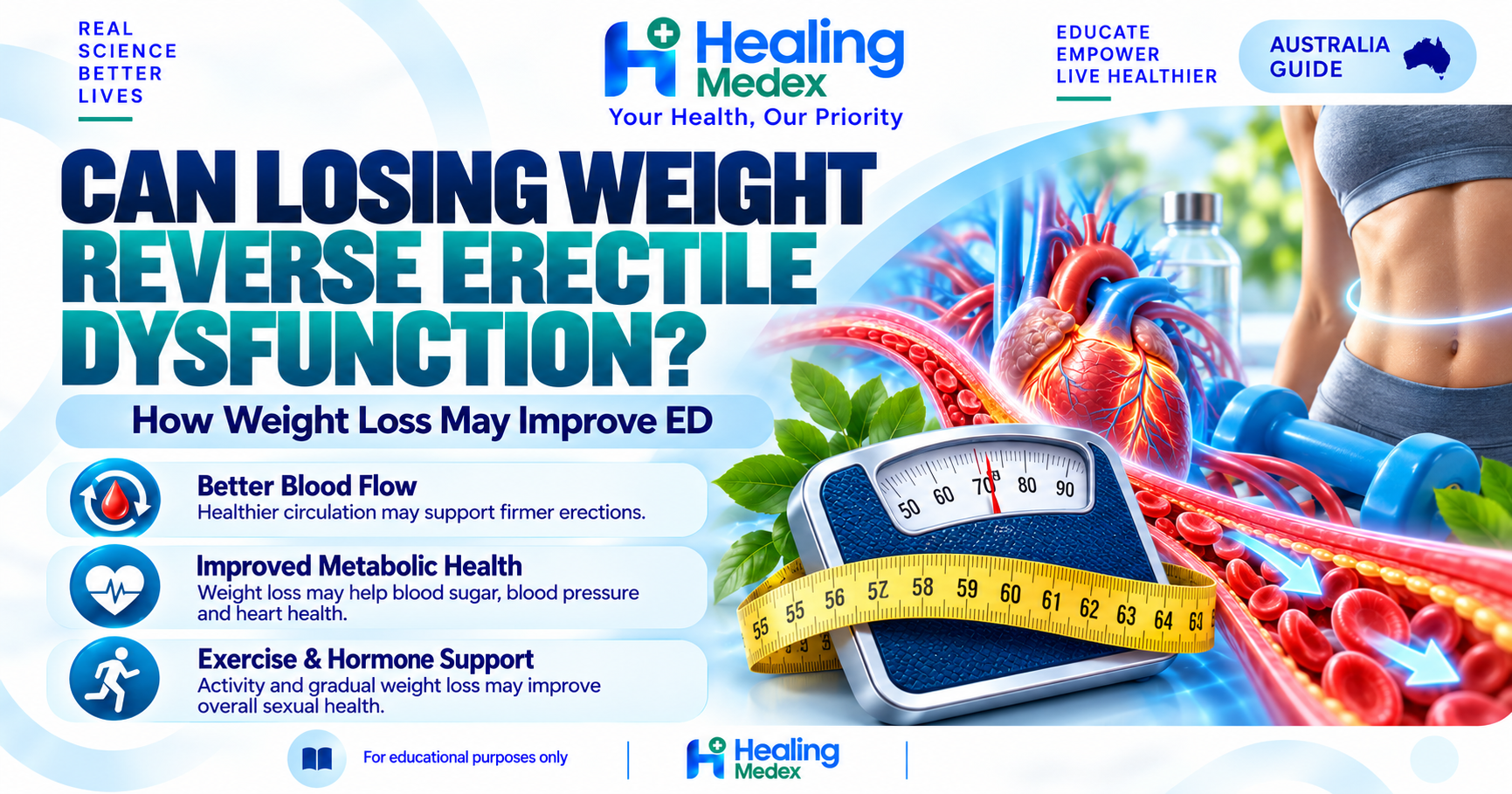
Can Losing Weight Reverse Erectile Dysfunction?
For some men, yes — losing weight can significantly improve erectile function.
The greatest improvement is generally expected when excess weight, poor cardiovascular health, insulin resistance or low physical activity are contributing to the erection problem.
A landmark randomised clinical trial involving 110 men with obesity and erectile dysfunction found that lifestyle changes involving weight loss and increased physical activity improved erectile function. After two years, approximately one-third of men in the lifestyle-intervention group regained erectile function according to the study's criteria.
However, this does not mean that losing weight will reverse every case of ED.
If erectile dysfunction is mainly caused by nerve damage, prostate treatment, certain medicines, severe vascular disease, hormone disorders or psychological factors, additional treatment may still be required.
1. Weight Loss May Improve Blood Flow
Healthy erections require the arteries supplying the penis to widen sufficiently to allow increased blood flow.
Obesity is strongly connected with cardiovascular risk factors such as high cholesterol, hypertension and diabetes, all of which can affect blood vessel health.
Losing excess weight, exercising and improving diet can support cardiovascular health and may therefore improve the circulation needed for erections.
2. Weight Loss Can Improve Metabolic Health
Insulin resistance and type 2 diabetes are important risk factors for ED.
Persistently high blood glucose can damage both blood vessels and nerves involved in erectile function.
Weight reduction can improve metabolic health and decrease the risk of developing type 2 diabetes. Healthdirect notes that even relatively modest weight loss can produce meaningful health benefits.
3. Exercise Helps Beyond Weight Loss
Exercise itself may support erectile health even before a person reaches their target weight.
Regular physical activity can:
support healthy blood pressure
improve insulin sensitivity
help manage body weight
reduce stress
improve mood and energy
support vascular function
Australian guidance recommends regular exercise as one of the lifestyle measures that may help prevent some causes of erectile dysfunction.
Walking, swimming, cycling, resistance training and other forms of regular physical activity can all contribute to better overall cardiovascular health.
4. Losing Weight May Help Testosterone Levels
Obesity can be associated with lower testosterone levels in some men.
Testosterone is important for sexual desire and overall sexual function, although low testosterone is not the cause of every case of ED.
Reducing excess body fat may help improve the body's hormonal environment. However, men who have symptoms of testosterone deficiency should not assume weight is the only explanation.
A GP can arrange appropriate blood tests if low testosterone is suspected.
5. Weight Loss May Reduce Inflammation
Excess body fat — particularly abdominal fat — is associated with increased systemic inflammation.
Chronic inflammation can negatively affect the lining of blood vessels, known as the endothelium. Healthy endothelial function is important for nitric oxide activity and normal blood vessel relaxation during an erection.
In the randomised lifestyle trial mentioned earlier, improvements in erectile function were associated with improvements in body weight, physical activity and inflammatory markers.
6. Losing Weight May Improve Sleep Apnoea
Obesity is a major risk factor for obstructive sleep apnoea.
Poor sleep and sleep apnoea can affect cardiovascular health, energy levels and hormone regulation and are also associated with erectile dysfunction.
Healthdirect identifies both obesity and sleep disorders among conditions that can contribute to ED.
If you snore heavily, regularly wake feeling unrefreshed or experience excessive daytime sleepiness, discuss possible sleep apnoea with your GP.
How Much Weight Do You Need to Lose?
There is no specific amount of weight loss guaranteed to restore erectile function.
You also do not necessarily need to reach an "ideal" body weight before gaining health benefits.
Australian health guidance states that losing around 5% of body weight can already provide health benefits, while losing approximately 5–10% may significantly reduce obesity-related health risks.
For example, for somebody weighing 100 kg, a 5% reduction would be around 5 kg.
The more useful goal is usually sustainable improvement in:
waist circumference
physical activity
blood glucose
diet quality
sleep
smoking status
alcohol intake
rather than concentrating only on the number shown on the scales.
What Is the Best Diet for Weight Loss and Erectile Health?
There is no single diet that cures erectile dysfunction.
A sustainable eating pattern that supports cardiovascular health and gradual weight reduction is generally preferable to extreme dieting.
Consider building meals around:
vegetables
fruit
whole grains
legumes
nuts and seeds
fish
lean sources of protein
healthy unsaturated fats
At the same time, reducing excessive amounts of highly processed foods, sugary drinks, foods high in saturated fat and excessive alcohol can make weight management easier.
Healthdirect advises focusing on nutritious foods from the five main food groups rather than relying on restrictive fad diets promising rapid weight loss.
How Quickly Could Erections Improve After Losing Weight?
There is no fixed timeline.
Some men notice improvements in energy, cardiovascular fitness and sexual function within weeks or months of adopting healthier habits. Significant improvement in established ED may take considerably longer.
The clinical trial demonstrating improved erectile function assessed participants over a two-year lifestyle intervention, illustrating that sustainable improvements may develop gradually rather than immediately.
Your results will depend on factors such as:
your starting weight
severity of ED
medications
hormone levels
psychological factors
age
Will Weight Loss Work Better Than ED Medicines?
They should not necessarily be viewed as competing treatments.
Some men may need both lifestyle changes and medical treatment.
In Australia, ED medicines require appropriate medical assessment and prescribing. Healthdirect advises checking with a GP before using erectile dysfunction medicines because they may interact with other medicines and are unsuitable for some people, particularly people using nitrate medicines for chest pain.
Don't Ignore Persistent Erectile Dysfunction
It can be tempting to assume ED is simply a sexual problem, but persistent erectile dysfunction may sometimes be an early indication of another health condition.
Healthdirect advises that ED may be associated with conditions including:
For that reason, ongoing erectile difficulties should be assessed rather than simply treated without investigating the underlying cause.
When Should You See a GP in Australia?
Occasional difficulty getting an erection can happen due to tiredness, alcohol, stress or anxiety.
Consider speaking with your GP if:
erectile problems happen repeatedly
ED has persisted for several weeks or months
erections are becoming progressively weaker
you have diabetes
you have high blood pressure or high cholesterol
you have symptoms suggesting low testosterone
your sex drive has significantly decreased
you take medicines that may affect sexual function
you experience ED alongside chest discomfort or cardiovascular symptoms
Your GP may check your blood pressure and cardiovascular risk and arrange blood tests where appropriate.
Depending on the suspected cause, treatment may involve lifestyle changes, addressing underlying conditions, counselling, ED medicines or referral to a specialist.
Can Losing Weight Completely Cure ED?
It depends on the cause.
If obesity, physical inactivity and related metabolic problems are major contributors, improving body weight and cardiovascular fitness may substantially improve erectile function and may allow some men to regain satisfactory erections.
But weight loss cannot reverse every cause of ED.
Someone with significant arterial disease, diabetes-related nerve damage, prostate-treatment complications, hormonal disorders or medication-related ED may need additional treatment.
Think of healthy weight management as one part of improving the underlying conditions that affect erections rather than as a guaranteed cure.
Practical Steps for Australian Men
If you are overweight and experiencing erectile dysfunction, a sensible starting plan includes:
Speak with your GP about ongoing ED and cardiovascular risk.
Aim for gradual, sustainable weight loss rather than crash diets.
Increase physical activity according to your fitness and medical circumstances.
Improve diet quality, particularly by increasing minimally processed foods.
Stop smoking if you smoke.
Limit excessive alcohol consumption.
Have blood pressure, cholesterol and blood glucose checked.
Address sleep problems, particularly possible sleep apnoea.
Manage stress and mental health, which can independently affect erections.
Use ED medicines only with appropriate medical advice.
The Bottom Line
Can losing weight reverse erectile dysfunction?
For some men, it can lead to substantial improvement — particularly when excess weight, poor cardiovascular health and metabolic problems are contributing to ED.
Research has shown that sustained lifestyle changes involving weight reduction and increased physical activity can improve erectile function in men with obesity. But results vary, and losing weight should not be considered a guaranteed cure.
A healthier weight can also improve blood pressure, blood glucose, cardiovascular health and overall wellbeing, making weight management worthwhile whether or not ED disappears completely. Australian health authorities recommend healthy eating, exercise, weight management and addressing cardiovascular risk factors as part of maintaining erectile and general health.
Persistent ED deserves proper medical assessment because it can sometimes be an early sign of conditions such as cardiovascular disease, diabetes, high blood pressure or high cholesterol.
Medical Disclaimer
THIS ARTICLE IS FOR GENERAL EDUCATIONAL PURPOSES ONLY AND DOES NOT REPLACE ADVICE FROM A QUALIFIED DOCTOR OR PHARMACIST.MEDICAL GUIDANCE, APPROVED MEDICINES AND PRESCRIBING RULES DIFFER BETWEN COUNTRIES.ALWAYS FOLLOW THE ADVICE OF A HEALTHCARE PROFESSIONAL LICENSED IN YOUR COUNTRY OF RESIDRNCE.