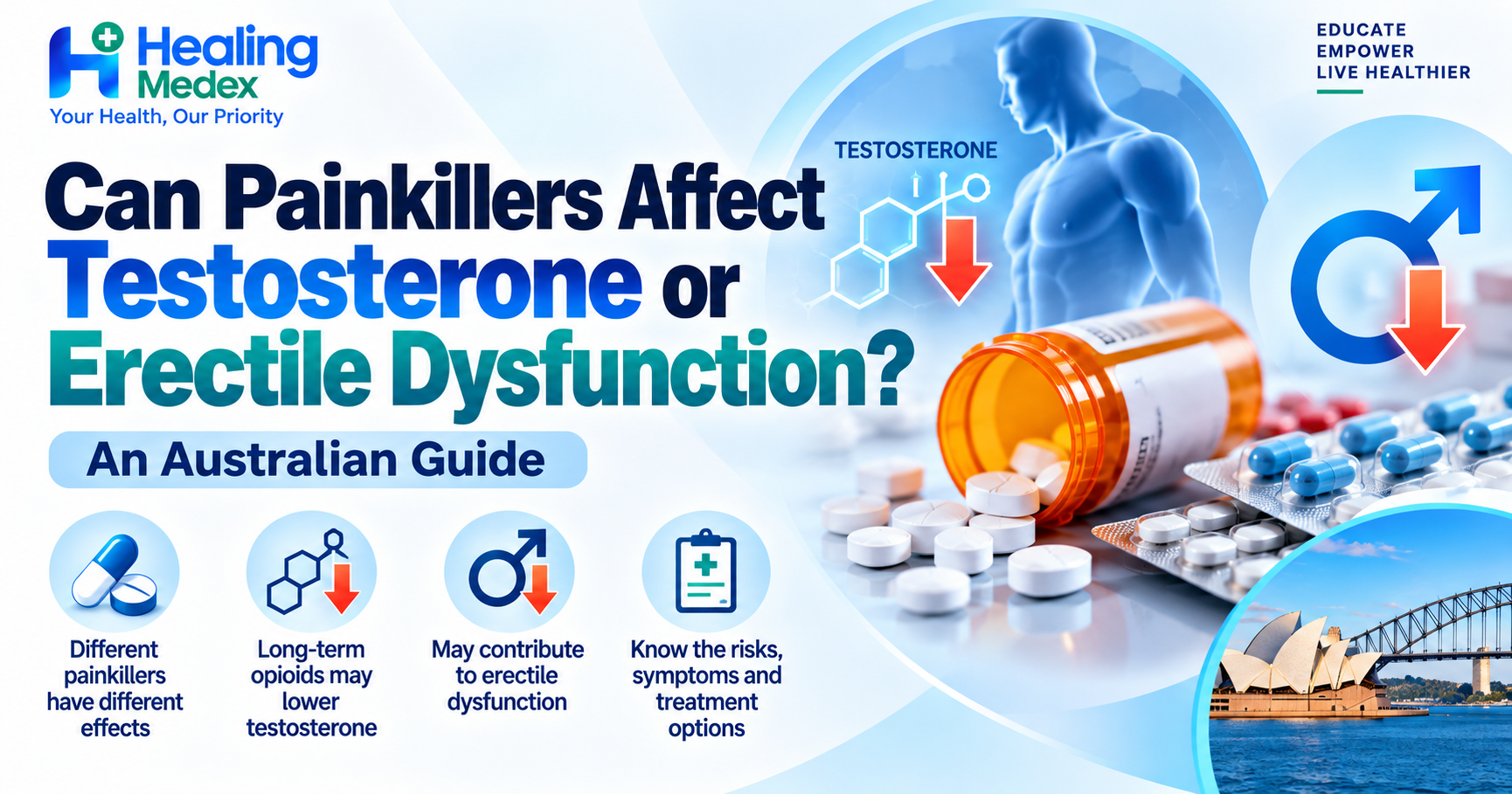
Painkillers are among the most commonly used medicines in Australia. Many people take them to manage headaches, muscle pain, arthritis, injuries or ongoing medical conditions. While these medicines can provide important pain relief, some men wonder whether frequent painkiller use could affect testosterone levels, sexual desire or erectile function.
The answer is yes, certain painkillers may affect testosterone production and contribute to erectile dysfunction (ED), particularly when opioid medicines are used for extended periods. However, not all painkillers have the same effects, and taking an occasional dose of paracetamol or ibuprofen does not automatically cause sexual problems.
Research suggests that long-term opioid use can interfere with the body's hormone-regulating system. Evidence involving common over-the-counter painkillers is less conclusive.
This Australian guide from Healing Medex explains how different pain medicines may influence testosterone, which symptoms to recognise, and when to seek medical advice.
Understanding the Connection Between Painkillers, Testosterone and Erectile Dysfunction
Testosterone is an important male sex hormone involved in several bodily functions, including:
Maintaining sexual desire or libido
Supporting normal sperm production
Maintaining muscle mass and bone strength
Contributing to energy and general wellbeing
Supporting aspects of healthy sexual function
Although low testosterone can contribute to ED, erections also depend on healthy blood vessels, nerve signals, psychological wellbeing and adequate blood flow.
Some medicines may interfere with one or more of these processes.
Painkillers can potentially affect sexual health through hormonal changes, sedation, changes in sexual desire or their effects on the nervous system.
Importantly, chronic pain itself may also contribute to sexual difficulties through stress, poor sleep, reduced mobility and depression.
According to the Endocrine Society, opioid-induced testosterone deficiency is a recognised complication of opioid use, particularly with long-term treatment.
Which Painkillers May Affect Testosterone or Erectile Function?
Different pain medicines work in different ways. Their potential effects on hormones and erectile function also vary.
1. Opioid Painkillers
Opioids are strong pain-relieving medicines commonly prescribed for severe pain following surgery, serious injuries and certain medical conditions.
Examples used in Australia include:
Codeine
Tramadol
Oxycodone
Morphine
Fentanyl
Tapentadol
Methadone
Buprenorphine
Long-term opioid use has the strongest established association with reduced testosterone levels among commonly used pain medicines.
These medicines can interfere with hormonal signals between the brain and the testicles.
Over time, this may contribute to:
Reduced testosterone production
Lower sexual desire
Fatigue and reduced energy
Mood changes
Fertility problems in some men
This condition is commonly called opioid-induced androgen deficiency (OPIAD).
Not everyone taking an opioid will develop low testosterone. The risk varies according to the medicine, dose, duration of treatment and individual health factors.
Australian healthdirect guidance explains that opioids are not generally recommended for long-term use in most people with chronic non-cancer pain because of their potential risks.
2. Ibuprofen and Other Anti-Inflammatory Painkillers
Ibuprofen belongs to a group of medicines called non-steroidal anti-inflammatory drugs (NSAIDs).
Other examples include:
Naproxen
Diclofenac
Celecoxib
Some research has investigated whether regular NSAID use could affect male reproductive hormones.
A small clinical study published in 2018 found that sustained ibuprofen use altered hormonal signalling in healthy young men. Researchers observed increased luteinising hormone (LH) relative to testosterone, a pattern described as compensated hypogonadism.
However, this study did not establish that occasional ibuprofen use causes erectile dysfunction or clinically significant testosterone deficiency.
The long-term implications of these hormonal changes remain uncertain.
Men who require frequent NSAIDs should discuss their treatment with a healthcare professional, particularly because these medicines can also carry gastrointestinal, kidney and cardiovascular risks.
3. Paracetamol
Paracetamol is widely used in Australia to relieve mild to moderate pain and reduce fever.
It is commonly taken for:
Headaches
Toothaches
Muscle pain
Cold and flu symptoms
General aches
Currently, there is insufficient reliable clinical evidence to conclude that occasional paracetamol use lowers testosterone or directly causes erectile dysfunction in adult men.
Researchers have explored possible reproductive effects of analgesics, but laboratory findings and observational associations do not establish that normal therapeutic use causes ED.
Men should nevertheless follow the recommended dose and avoid using paracetamol more frequently than necessary.
Taking excessive amounts can cause serious liver damage, especially when multiple medicines containing paracetamol are used together.
4. Aspirin
Aspirin is another medicine that belongs to the NSAID family.
It may be used for pain relief, while low-dose aspirin is prescribed to certain patients to reduce cardiovascular risks.
There is no strong clinical evidence that appropriately prescribed low-dose aspirin directly causes testosterone deficiency or erectile dysfunction.
Its potential effects should not be confused with those of long-term opioid use.
Men taking aspirin for cardiovascular protection should not stop treatment because of concerns about sexual function without consulting their doctor.
How Do Opioid Painkillers Lower Testosterone?
The body controls testosterone production through a communication system called the hypothalamic-pituitary-gonadal axis.
This system involves the brain, pituitary gland and testicles.
Hypothalamus
Releases GnRH
Pituitary gland
Releases LH and FSH
Testicles
Produce testosterone in response to LH
Long-term opioid exposure can suppress hormonal signalling, resulting in lower testosterone production.
Normally, the hypothalamus releases gonadotropin-releasing hormone (GnRH), which stimulates the pituitary gland.
The pituitary gland then releases hormones that regulate testosterone production.
Opioids can suppress this communication system.
As a result, the testicles may receive weaker hormonal signals and produce less testosterone.
The degree of suppression varies, and it may improve after opioid doses are reduced or treatment is discontinued under medical supervision. Recovery is not guaranteed or immediate.
Can Painkillers Cause Erectile Dysfunction Even When Testosterone Is Normal?
Yes. Sexual difficulties can occur even when testosterone blood tests show levels within the normal range.
Potential contributing factors include:
Sedation and tiredness: Some stronger pain medicines cause drowsiness, which may reduce sexual interest or responsiveness.
Reduced sexual desire: Certain medicines may affect libido without causing measurable testosterone deficiency.
Chronic pain: Persistent pain can make sexual activity uncomfortable and affect sexual confidence.
Depression and anxiety: Psychological conditions frequently associated with chronic pain can interfere with arousal and erections.
Other medical conditions: Diabetes, hypertension, cardiovascular disease and neurological disorders may contribute independently to ED.
This means erectile problems should not automatically be attributed to a particular painkiller.
A full medical assessment can help identify whether medication, underlying illness or a combination of factors is responsible.
Australian healthdirect identifies cardiovascular, hormonal, psychological and medication-related factors among the possible causes of ED.
What Are the Warning Signs of Low Testosterone From Painkiller Use?
Men who have been taking opioid painkillers for an extended period should be aware of potential signs of testosterone deficiency.
Common symptoms may include:
Reduced interest in sexual activity
Difficulty achieving or maintaining erections
Fewer spontaneous or morning erections
Persistent tiredness
Reduced muscle strength
Mood changes or irritability
Difficulty concentrating
Reduced physical stamina
Fertility difficulties
Reduced bone density with prolonged deficiency
These symptoms are not specific to low testosterone.
They may also occur because of poor sleep, depression, chronic illness, medication side effects or other hormonal conditions.
A blood test and medical evaluation are necessary to determine whether testosterone deficiency is present.
Does Taking Painkillers Every Day Increase the Risk of Erectile Dysfunction?
The potential risk depends on the type of painkiller, how much is taken and how long treatment continues.
Pain medicine | What the evidence suggests |
|---|---|
Opioids | Long-term use can suppress testosterone and contribute to sexual dysfunction. |
Ibuprofen and other NSAIDs | Some hormonal effects have been studied, but a causal relationship with ED remains uncertain. |
Paracetamol | Insufficient evidence that normal therapeutic use directly causes ED. |
Aspirin | No convincing evidence that prescribed low-dose use directly causes ED. |
Long-term opioid exposure deserves particular attention.
A 2024 Endocrine Society Scientific Statement highlighted opioid-related hypogonadism as a recognised hormonal complication.
However, researchers also emphasised gaps in the available evidence, including the long-term consequences of certain endocrine effects.
Therefore, it is inaccurate to assume that all daily pain medicines will reduce testosterone or cause erectile dysfunction.
Can Testosterone Levels Return to Normal After Stopping Painkillers?
Testosterone production may improve after opioid treatment is reduced or discontinued.
However, recovery depends on several factors:
Duration of opioid treatment
Dose and type of opioid
Age and underlying hormone health
Other medical conditions
Use of additional medicines
Some men experience hormonal improvement after changing treatment, while others require further investigation.
Men who are physically dependent on prescribed opioids should never stop them suddenly.
Abrupt discontinuation may cause withdrawal symptoms, worsening pain and other complications.
The Therapeutic Goods Administration (TGA) advises that opioid treatment should be reviewed regularly and tapered carefully when discontinuation is appropriate.
How Is Painkiller-Related Testosterone Deficiency Diagnosed in Australia?
If low testosterone is suspected, an Australian general practitioner (GP) may recommend a combination of medical history, physical examination and blood testing.
Step 1: Review Current Medicines
Your GP may ask about the types of painkillers you use, their doses, how frequently you take them and how long you have been receiving treatment.
It is important to mention prescription medicines, over-the-counter products, supplements and other substances.
Step 2: Check Testosterone Levels
A morning blood test may be recommended to measure testosterone.
Because testosterone levels naturally fluctuate, a second morning test is generally needed to confirm an unexpectedly low result.
Step 3: Investigate Other Hormones
Depending on the results, your doctor may request additional tests, including:
Luteinising hormone (LH)
Follicle-stimulating hormone (FSH)
Prolactin
Other tests based on symptoms and medical history
These investigations help determine whether reduced testosterone production may be related to opioid-associated hormonal suppression or another condition.
Step 4: Evaluate Erectile Dysfunction
Your GP may also assess blood pressure, blood glucose, cholesterol and other cardiovascular risk factors.
Healthdirect Australia recommends repeat testing to confirm low testosterone and supports investigating other potential causes of symptoms.
How Can Men Reduce the Risk of Sexual Side Effects While Taking Painkillers?
There are several practical steps men in Australia can take to support their sexual and hormonal health while managing pain.
1. Use Pain Medicines Only as Directed
Follow the prescribed dose and treatment duration.
Do not increase opioid doses or combine different painkillers without professional advice.
2. Discuss Long-Term Pain Management
If you need pain relief for several weeks or months, ask your GP whether other treatment approaches may be appropriate.
Depending on the condition, these may include physiotherapy, graded exercise, psychological pain-management strategies or non-opioid medicines.
3. Maintain Regular Physical Activity
Appropriate exercise may support cardiovascular health, mood, weight management and overall sexual wellbeing.
Activities should be adapted to your pain condition and physical abilities.
4. Prioritise Sleep
Poor sleep can influence testosterone regulation, fatigue, mood and sexual function.
Maintaining a consistent sleep schedule may support general hormonal health.
5. Limit Alcohol and Avoid Smoking
Excessive alcohol consumption and smoking may contribute to erectile difficulties.
Alcohol can also interact dangerously with opioid medicines by increasing sedation and the risk of breathing problems.
6. Maintain a Balanced Diet
A balanced eating pattern containing vegetables, fruits, whole grains, healthy fats and adequate protein can support metabolic and cardiovascular health.
However, no specific food has been proven to reverse opioid-induced testosterone deficiency.
7. Seek Medical Advice About Persistent Symptoms
If reduced libido or erectile difficulties continue, ask your GP whether your treatment or underlying health conditions could be contributing.
Avoid starting testosterone supplements or hormonal medicines without testing and medical supervision.
What Treatments Are Available for Painkiller-Related Erectile Dysfunction in Australia?
Treatment depends on whether sexual difficulties are caused by low testosterone, medication effects, chronic pain, cardiovascular conditions or psychological factors.
Reviewing Pain Medicines
A doctor may consider adjusting the pain treatment plan if opioid-associated sexual side effects are suspected.
Options may include reducing exposure, changing treatment or introducing additional non-medicine pain-management strategies.
Any opioid changes should be supervised.
Erectile Dysfunction Medicines
Doctors in Australia may prescribe phosphodiesterase type 5 (PDE5) inhibitors when appropriate.
These include:
These medicines help increase blood flow to the penis during sexual stimulation.
However, they do not directly correct testosterone deficiency and may not resolve reduced sexual desire.
PDE5 inhibitors must not be used with nitrate medicines prescribed for conditions such as angina because the combination can cause a dangerous fall in blood pressure.
Testosterone Replacement Therapy
Testosterone replacement therapy may be considered in selected men with clinically confirmed testosterone deficiency.
It is not recommended simply because someone is taking opioid painkillers or experiencing occasional erectile problems.
Testosterone treatment requires medical assessment, including consideration of fertility plans and potential adverse effects.
External testosterone can suppress sperm production and may not be appropriate for men trying to conceive.
Psychological Support
Counselling, cognitive behavioural therapy or sex therapy may help when stress, chronic pain, anxiety or relationship concerns contribute to ED.
Treatment may involve a combination of approaches rather than a single medicine.
According to healthdirect, ED medicines in Australia require a prescription, and the most suitable treatment depends on the underlying cause and individual medical history.
When Should You See a Doctor?
Consider booking an appointment with an Australian GP if you experience:
Erectile difficulties that persist or become more frequent
Reduced sexual desire after beginning long-term pain medication
Unexplained fatigue or loss of muscle strength
Fewer morning erections alongside other symptoms
Fertility concerns
Persistent mood changes
Concerns about the effects of long-term opioid use
Seek urgent medical help if someone taking opioids becomes unresponsive, experiences severe breathing difficulties or appears to have overdosed. In Australia, call 000 for an ambulance.
Frequently Asked Questions
1. Can ibuprofen lower testosterone?
A small clinical study found changes in hormonal signalling during sustained ibuprofen use. However, it did not prove that occasional use causes clinically significant testosterone deficiency or ED. More research is needed.
2. Can tramadol cause erectile dysfunction?
Yes. Tramadol is an opioid, and prolonged opioid exposure can contribute to reduced libido, hormone suppression and sexual dysfunction. Individual risk varies.
3. Does paracetamol cause erectile dysfunction?
There is insufficient evidence that paracetamol taken occasionally at recommended doses directly causes erectile dysfunction.
4. Can oxycodone reduce testosterone levels?
Yes. Long-term oxycodone use has been associated with opioid-induced androgen deficiency. Men experiencing symptoms should discuss testing and treatment options with their doctor.
5. Can painkiller-related erectile dysfunction be reversed?
Some men experience improvement after the contributing medicine is reduced, changed or discontinued under medical supervision. However, recovery depends on the underlying cause and is not guaranteed.
6. Can I take sildenafil while using painkillers?
Some combinations may be suitable, but this depends on the exact painkiller, other medicines and medical conditions. A doctor or pharmacist should check for interactions and contraindications before sildenafil is used.
7. Should I stop taking painkillers if I develop ED?
Do not stop prescribed medicines without medical advice, especially opioids taken regularly. A healthcare professional can help determine whether treatment changes are appropriate.
8. How long does it take for testosterone to recover after opioid use?
There is no single recovery timeline. Some men improve after opioid exposure is reduced, while others may need additional testing or specialist care.
Final Thoughts
Painkillers are important medicines for managing acute and chronic pain, but certain types may influence male hormonal and sexual health.
The strongest evidence concerns long-term opioid use, which can suppress testosterone production and contribute to reduced libido, erectile dysfunction and other symptoms of androgen deficiency.
Research involving ibuprofen and other non-opioid painkillers is less conclusive. Occasional use of common over-the-counter pain relief should not automatically be considered a cause of low testosterone or ED.
For men in Australia, the most appropriate approach is to use medicines as directed, review long-term pain treatments regularly and speak with a GP if sexual or hormonal symptoms develop.
Understanding the cause of erectile difficulties is essential, because treatment may require addressing chronic pain, cardiovascular health, psychological wellbeing, medication effects or a confirmed hormonal disorder.
Medical Disclaimer
This article is for general educational purposes only and does not replace advice from a qualified doctor or pharmacist.medical guidance,approved medicines and prescribing rules differ between countries.always follow the advice of a healthcare professional licensed in your country of residence.