Erectile dysfunction (ED) can have many causes, including cardiovascular disease, diabetes, hormonal problems, certain medicines, stress and psychological factors. One possible cause that may be overlooked is thyroid dysfunction.
The thyroid is a small gland in the neck, but the hormones it produces influence metabolism, energy levels, cardiovascular function and other hormone systems throughout the body. When thyroid hormone levels become too low or too high, sexual function may also be affected.
Research suggests that both hypothyroidism (an underactive thyroid) and hyperthyroidism (an overactive thyroid) can be associated with sexual problems in men, including difficulty getting or maintaining an erection.
The encouraging news is that erectile function may improve in some men once the underlying thyroid disorder is appropriately treated.
What Is Erectile Dysfunction?
Erectile dysfunction is the persistent difficulty getting or maintaining an erection firm enough for satisfactory sexual activity.
Occasional difficulty with erections can happen to almost anyone and does not necessarily indicate a medical disorder. However, recurrent or persistent ED deserves medical attention because it can sometimes be associated with an underlying health condition.
Common contributors include:
Obesity
Low testosterone
Hormonal disorders
Certain medications
Smoking
Excessive alcohol use
Depression or anxiety
Sleep disorders
Neurological conditions
Thyroid disease is another potential endocrine contributor that may need to be considered.
What Does the Thyroid Gland Do?
The thyroid is a butterfly-shaped gland located at the front of the neck.
It produces hormones, mainly thyroxine (T4) and triiodothyronine (T3), which help regulate numerous functions throughout the body, including:
Metabolism
Energy production
Heart rate
Body temperature
Muscle function
Mood
Reproductive and sexual function
Thyroid activity is largely controlled by thyroid-stimulating hormone (TSH), which is produced by the pituitary gland.
When thyroid hormone production becomes abnormal, several body systems involved in normal sexual function can be affected.
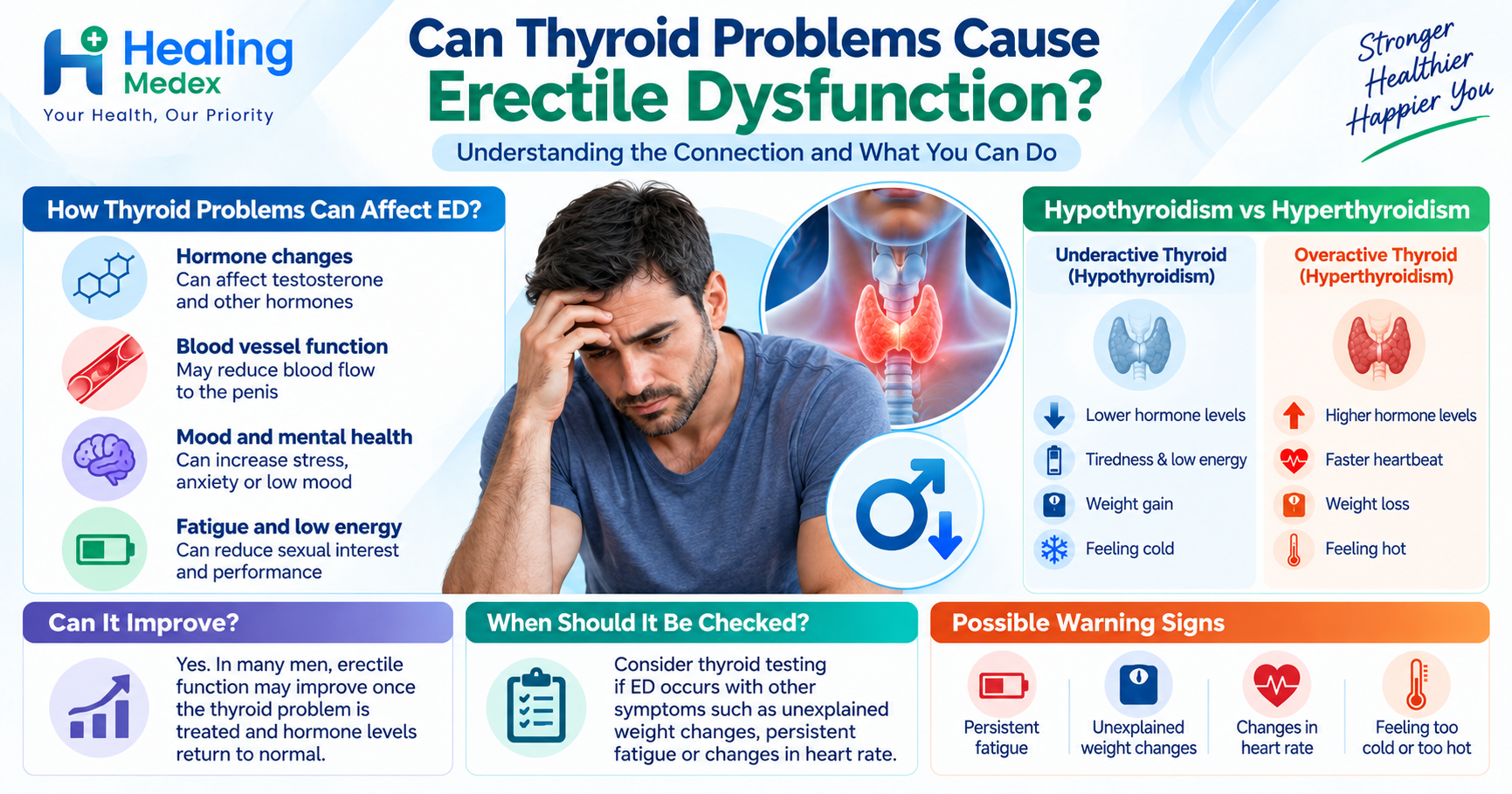
How Can Thyroid Problems Affect Erections?
A normal erection depends on a coordinated interaction between the brain, nerves, hormones and blood vessels.
Thyroid disorders may interfere with this process through several pathways.
1. Changes in Sex Hormones
Abnormal thyroid hormone levels can influence hormones involved in male sexual function.
Thyroid dysfunction may affect:
Testosterone
Sex hormone-binding globulin (SHBG)
Prolactin
Pituitary hormone signalling
Changes in these hormonal systems may affect sexual desire and erectile function.
2. Blood-Vessel Function
Healthy erections require adequate blood flow into the penis.
Thyroid dysfunction can influence cardiovascular and metabolic health, which may indirectly affect the blood vessels involved in erections.
3. Mood and Mental Health
Thyroid disorders may cause symptoms such as:
Depression
Irritability
Difficulty concentrating
Low motivation
Psychological well-being plays an important role in sexual desire and erectile performance.
4. Fatigue and Reduced Energy
Fatigue is particularly common with hypothyroidism.
Persistent tiredness can reduce sexual interest, physical activity and overall sexual performance.
5. Changes in the Nervous System
Thyroid hormones have widespread effects on nervous-system function. Abnormal hormone levels may therefore alter some of the neurological pathways involved in sexual response.
For many patients, several of these mechanisms may occur together rather than ED resulting from one single hormonal change.
Can Hypothyroidism Cause Erectile Dysfunction?
Hypothyroidism occurs when the thyroid gland does not produce enough thyroid hormone.
Research has found an association between hypothyroidism and male sexual dysfunction, including erectile difficulties.
Other possible symptoms of hypothyroidism include:
Persistent tiredness
Feeling unusually cold
Weight gain
Dry skin
Constipation
Difficulty concentrating
Depressed mood
Muscle weakness
Slow heart rate
Reduced sexual desire
Hypothyroidism may also be associated with hormonal changes that can interfere with normal sexual function.
Some studies have reported improvement in erectile and other aspects of sexual function after thyroid hormone levels were brought back toward the normal range with appropriate treatment.
Can Hyperthyroidism Cause Erectile Dysfunction?
Yes. Hyperthyroidism, where the thyroid produces too much thyroid hormone, has also been associated with erectile and other forms of male sexual dysfunction.
Possible symptoms of hyperthyroidism include:
Rapid heartbeat
Increased sweating
Heat intolerance
Unexplained weight loss
Tremor
Nervousness or anxiety
Difficulty sleeping
Muscle weakness
Frequent bowel movements
Reduced exercise tolerance
Men with hyperthyroidism may experience erectile problems as well as changes in ejaculation.
Research has particularly associated hyperthyroidism with an increased likelihood of premature ejaculation, although not every patient develops this problem.
How Common Is Sexual Dysfunction in Men With Thyroid Disease?
The exact rate varies considerably between studies and patient populations.
A 2024 systematic review and meta-analysis examining men with thyroid disorders estimated that sexual dysfunction occurred in approximately half of the participants overall. The analysis also found sexual dysfunction in men with both hypothyroidism and hyperthyroidism.
These numbers should not be interpreted to mean that every man with thyroid disease will develop ED.
Age, cardiovascular health, diabetes, medications, testosterone levels, mental health and other factors may also contribute to sexual difficulties.
Does Treating the Thyroid Improve Erectile Dysfunction?
In some men, yes.
Clinical studies have found that sexual function can improve after abnormal thyroid hormone levels are corrected.
For example, treatment of hypothyroidism with appropriate thyroid hormone replacement has been associated with improvement in erectile function in some affected men.
Similarly, treatment that restores normal thyroid function in people with hyperthyroidism may improve sexual symptoms.
However, correcting thyroid dysfunction does not guarantee that ED will disappear completely.
A man may have more than one contributing factor, such as:
Obesity
Low testosterone
Medication side effects
Smoking
Depression or anxiety
These conditions may need to be addressed separately.
When Should Thyroid Problems Be Suspected in Someone With ED?
Thyroid testing may be particularly worth discussing with a healthcare professional when erectile problems occur alongside symptoms suggesting abnormal thyroid function.
Possible warning signs include:
Signs Suggesting Hypothyroidism
Unexplained weight gain
Persistent fatigue
Feeling cold frequently
Dry skin
Constipation
Slow heartbeat
Depressed mood
Reduced sexual desire
Signs Suggesting Hyperthyroidism
Unexplained weight loss
Fast or irregular heartbeat
Tremor
Excessive sweating
Heat intolerance
Difficulty sleeping
Muscle weakness
A healthcare professional can determine whether thyroid testing is appropriate based on symptoms, medical history and physical examination.
What Tests May Be Needed?
When thyroid dysfunction is suspected, blood testing commonly begins with:
TSH
Thyroid-stimulating hormone (TSH) is commonly used as the initial test for evaluating thyroid function.
Abnormal TSH levels may suggest that the thyroid is underactive or overactive.
Free T4
A free T4 test helps determine how much circulating thyroid hormone is available to the body's tissues.
Additional thyroid tests may sometimes be required depending on the results.
Because erectile dysfunction can have several causes, doctors may also consider tests such as:
Blood glucose or HbA1c
Cholesterol and lipid profile
Blood pressure assessment
Morning testosterone
Other hormonal tests when clinically indicated
The exact evaluation should be individualized.
Is Low Testosterone the Same as Thyroid Disease?
No.
Low testosterone and thyroid dysfunction are different hormonal conditions, although both can contribute to sexual symptoms.
Low testosterone may cause:
Reduced libido
Fewer spontaneous erections
Fatigue
Reduced muscle mass
Mood changes
Fertility problems
Thyroid disease can sometimes influence other hormone systems, so a doctor may decide to evaluate both thyroid function and testosterone when symptoms suggest a hormonal cause.
Self-treating with testosterone without appropriate testing is not recommended.
How Is Thyroid-Related ED Treated?
Treatment depends on whether the thyroid is underactive or overactive.
Treating Hypothyroidism
Hypothyroidism is commonly treated with thyroid hormone replacement such as levothyroxine.
The dose is individualized and usually monitored with blood tests.
As thyroid hormone levels return toward their target range, symptoms such as fatigue, mood changes and sexual dysfunction may improve.
Treating Hyperthyroidism
Treatment options can include:
Radioactive iodine therapy
Surgery in selected cases
Other medicines for symptom control
The best approach depends on the cause and severity of the hyperthyroidism.
Treating Persistent Erectile Dysfunction
If ED remains after thyroid function has been corrected, the patient may need further evaluation.
Depending on individual circumstances, treatment might include:
Lifestyle modifications
Management of diabetes, blood pressure or cholesterol
Weight reduction when appropriate
Smoking cessation
Psychological or relationship support
Review of medications that may contribute to ED
Erectile dysfunction medicines such as PDE5 inhibitors when medically appropriate
PDE5 inhibitors include medicines such as sildenafil and tadalafil. They are not suitable for everyone and can interact dangerously with nitrate medicines used for chest pain, so medical guidance is important.
Lifestyle Measures That May Support Erectile Health
Correcting a thyroid disorder is only one part of maintaining sexual and cardiovascular health.
Helpful lifestyle measures can include:
Exercising regularly
Maintaining a healthy body weight
Eating a balanced diet
Getting adequate sleep
Stopping smoking
Limiting excessive alcohol
Managing diabetes
Controlling blood pressure
Managing cholesterol
Reducing chronic stress
Because erectile dysfunction and cardiovascular health are closely connected, these measures may offer benefits beyond sexual function.
When Should You See a Doctor?
Speak with a healthcare professional if erectile difficulties persist or repeatedly interfere with sexual activity.
Medical evaluation is particularly important if ED occurs together with:
Major weight changes
Severe fatigue
Heart palpitations
Heat or cold intolerance
Reduced sexual desire
Symptoms of low testosterone
Sudden or persistent ED should not simply be assumed to be caused by aging.
Identifying and treating an underlying health problem may improve both sexual and general health.
Frequently Asked Questions
1. Can an underactive thyroid cause erectile dysfunction?
Yes. Hypothyroidism has been associated with erectile dysfunction and other changes in male sexual function. Treating the thyroid disorder may improve symptoms in some men.
2. Can an overactive thyroid cause ED?
Yes. Hyperthyroidism can also be associated with erectile dysfunction and other sexual problems, including premature ejaculation in some men.
3. Can thyroid medicine improve erections?
If abnormal thyroid function is contributing to ED, bringing thyroid hormone levels back toward normal may improve erectile function. However, other causes of ED may still need treatment.
4. Can thyroid problems reduce testosterone?
Thyroid disorders can influence the hormonal systems involved in testosterone regulation and transport. If symptoms suggest testosterone deficiency, a healthcare professional may recommend appropriate hormonal testing.
5. Should every man with ED get a thyroid test?
Not necessarily. The appropriate tests depend on symptoms, medical history, physical examination and other risk factors. Thyroid testing is particularly relevant when there are clinical features suggesting thyroid dysfunction.
6. Can ED be the first sign of a thyroid problem?
It is possible, although ED has many more common causes. Persistent erectile problems accompanied by unexplained fatigue, weight changes, temperature intolerance, palpitations or other thyroid-related symptoms warrant medical evaluation.
The Bottom Line
Yes, thyroid problems can contribute to erectile dysfunction.
Both an underactive thyroid and an overactive thyroid have been associated with male sexual dysfunction. Thyroid hormone abnormalities may affect erections through changes in hormone balance, cardiovascular function, energy levels, mood and other physiological pathways.
Importantly, studies suggest that sexual function can improve in some men after the underlying thyroid disorder is successfully treated.
However, erectile dysfunction is often multifactorial. Diabetes, cardiovascular disease, obesity, low testosterone, medications, smoking and psychological factors may also be involved.
For men experiencing persistent ED—especially alongside symptoms of abnormal thyroid function—a medical assessment can help determine whether thyroid testing or other investigations are appropriate.