Erectile dysfunction (ED) medicines such as Viagra (sildenafil), Cialis (tadalafil), Levitra (vardenafil), and Stendra (avanafil) have helped many men improve their erectile function and sexual confidence. However, one common concern among men using these medications is whether regular use can lead to dependence.
Can you become addicted to erectile dysfunction medicines? Will your body stop producing natural erections if you use Viagra or Cialis too often?
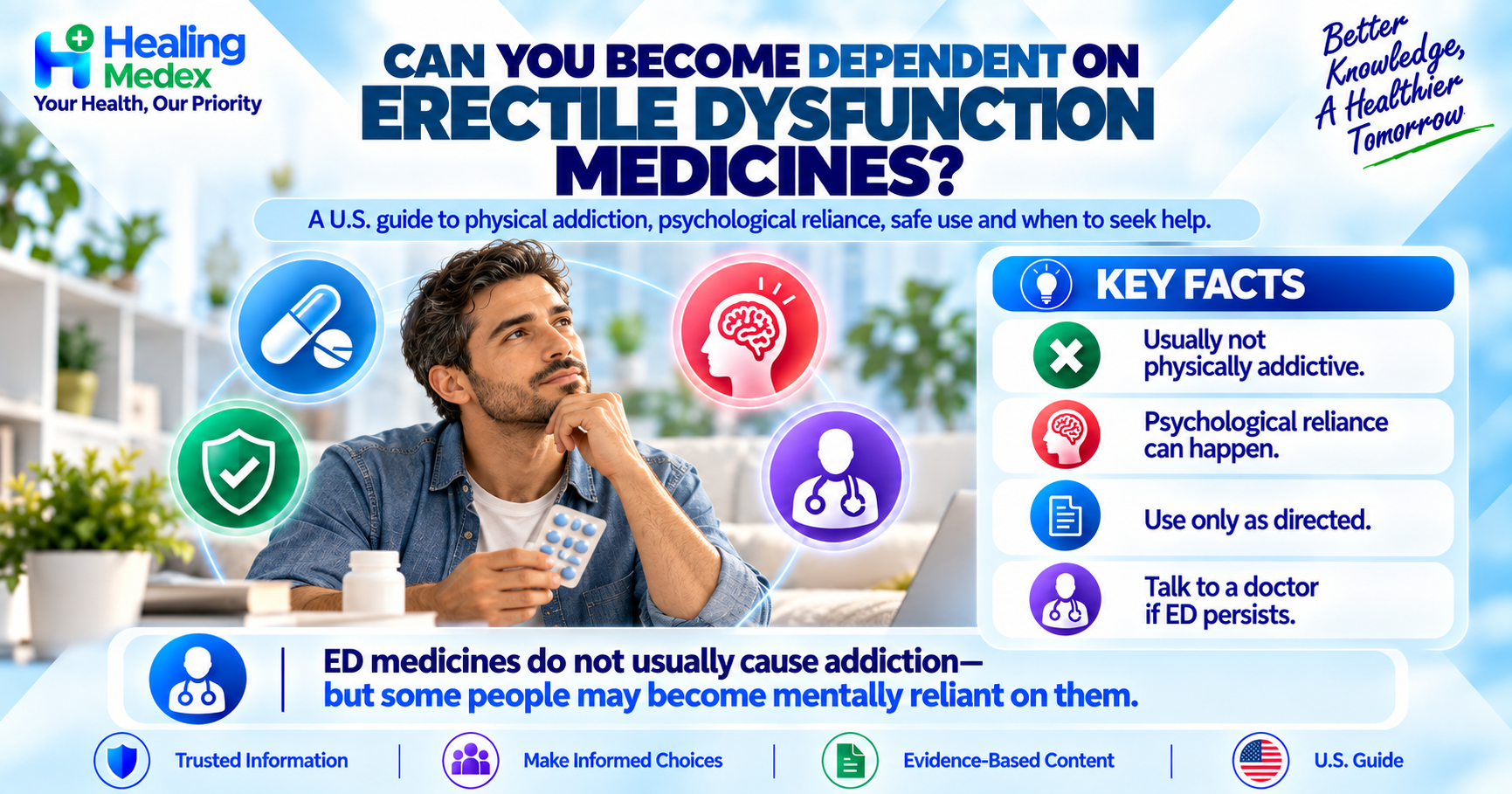
The short answer is that commonly prescribed ED medicines are not generally considered physically addictive. However, some men may develop psychological reliance, meaning they feel unable to perform sexually without taking medication.
Understanding the difference between physical addiction, psychological dependence, and an ongoing medical need for treatment is essential.
This U.S. guide from Healing Medex explains how ED medicines work, whether they cause dependence, what happens when you stop using them, and how to maintain healthy erectile function.
What Are Erectile Dysfunction Medicines?
These medications improve blood flow to the penis by helping blood vessels relax during sexual stimulation.
Common ED medicines available by prescription in the United States include:
Generic medicine | Well-known U.S. brand | Approximate duration of effect |
|---|---|---|
Sildenafil | Viagra | 4–5 hours |
Tadalafil | Cialis | Up to 36 hours |
Vardenafil | Levitra (brand discontinued in the U.S.) | 4–5 hours |
Avanafil | Stendra | Up to 6 hours |
These durations describe potential windows of effectiveness, not the length of an erection. Actual results vary between individuals.
Unlike addictive substances, PDE5 inhibitors do not typically produce euphoria or a drug-induced reward response. They also do not automatically create an erection without sexual stimulation.
Can You Become Physically Addicted to ED Medicines?
Physical addiction involves changes in the body's response to a substance, often including compulsive use and difficulty stopping despite harmful consequences.
Commonly prescribed PDE5 inhibitors are not known to cause the typical physical dependence and withdrawal syndrome associated with substances such as opioids.
For example, taking sildenafil regularly does not normally mean your body will require progressively larger doses to avoid withdrawal symptoms.
However, several important distinctions should be understood:
Regular ED medicine use does not automatically indicate addiction.
A person may continue needing treatment because the underlying ED remains.
Some men may feel psychologically dependent on medication for sexual confidence.
Increasing the dose without medical supervision can increase health risks.
An ongoing need for prescribed medication is different from addiction.
For men with persistent erectile dysfunction caused by diabetes, vascular disease, or other medical conditions, continued medication may be appropriate.
What Is Psychological Dependence on ED Medicines?
Psychological dependence occurs when a person begins to believe they cannot achieve or maintain an erection without medication, even when their natural erectile function may still be adequate.
For example, a man may successfully use sildenafil during several sexual encounters. Over time, he may begin worrying that sex will be unsuccessful unless he takes a tablet.
This worry can increase performance anxiety, making erections more difficult without medication.
A cycle may develop:
Concern about erectile performance
Taking ED medicine for reassurance
Confidence becomes linked to the medicine
Greater anxiety about sex without medication
This does not mean every man using ED medication will develop psychological reliance.
Men with performance anxiety, stress, relationship difficulties, or previous negative sexual experiences may be more vulnerable to this pattern.
Importantly, anxiety itself can contribute to erectile dysfunction, according to the NIDDK.
Does Taking Viagra Regularly Make Natural Erections Weaker?
There is no convincing evidence that properly prescribed sildenafil permanently damages the body's natural ability to achieve erections.
Sildenafil temporarily helps enhance the physiological response to sexual stimulation.
It does not normally switch off natural erection mechanisms or suppress testosterone production.
However, men sometimes report difficulty achieving erections after stopping medication.
Possible explanations include:
The original cause of erectile dysfunction has not improved.
Performance anxiety returns without medication.
Blood circulation problems have progressed.
Diabetes, hypertension, or other health conditions remain uncontrolled.
Age-related changes affect erectile function.
Therefore, experiencing difficulty after discontinuing ED medication does not necessarily mean the medicine caused the problem.
A healthcare professional can help determine whether symptoms reflect persistent ED, psychological factors, or another medical issue.
Can You Develop Tolerance to Sildenafil or Tadalafil?
Tolerance occurs when repeated exposure to a medicine reduces its effects, potentially requiring a higher dose to achieve the same response.
For standard PDE5 inhibitors, clinically significant pharmacological tolerance has not been consistently demonstrated with appropriate use.
However, some men may notice that their usual medication seems less effective over time.
This may happen because of changes in their health rather than because the body has become resistant to the medicine.
Possible contributing factors include:
Progression of diabetes or cardiovascular disease.
Worsening blood vessel function.
Increased stress or anxiety.
Changes in prescription medications.
Incorrect administration or timing.
Alcohol consumption.
Hormonal problems, including testosterone deficiency in some men.
Men should not increase their ED medicine dosage without professional guidance.
A healthcare provider can assess whether the treatment remains appropriate or whether another approach is needed.
What Happens If You Suddenly Stop Taking ED Medicines?
However, the erection-supporting effect of the medication will no longer be present.
What happens next depends largely on the underlying reason for ED.
If ED is mainly related to temporary anxiety: Natural erections may remain satisfactory when anxiety improves.
If ED is associated with diabetes or cardiovascular disease: Erectile difficulties may return because the underlying condition persists.
If medication has become a source of psychological reassurance: A person may feel less confident without it, even if natural erections are possible.
If erectile function has improved through treatment of underlying causes: Medication may become less necessary for some individuals.
Men taking tadalafil for other prescribed indications, such as benign prostatic hyperplasia or pulmonary arterial hypertension, should discuss treatment changes with their prescriber. Different tadalafil products and regimens have different approved uses.
Stopping a medicine may allow symptoms of the condition being treated to return, even though this is not drug withdrawal.
Is It Safe to Take Erectile Dysfunction Medicine Every Day?
However, not all ED medicines are intended to be used in the same way.
Daily Tadalafil
Commonly prescribed daily doses include 2.5 mg and 5 mg.
Daily tadalafil may be considered for men who prefer not to plan medication use around sexual activity.
Taking tadalafil every day under medical supervision does not automatically indicate dependence.
Sildenafil and Other ED Medicines
Patients should follow the prescribed dosing instructions and should not take extra doses to improve their results.
The FDA-approved tadalafil prescribing information specifically distinguishes daily treatment from as-needed treatment.
7 Signs You May Be Psychologically Reliant on ED Medicines
Although ED medicines are not generally physically addictive, certain behaviors may indicate that medication has become an important source of emotional reassurance.
1. Feeling Anxious Without Medication
You experience significant anxiety about sexual activity whenever you do not have an ED tablet available.
2. Believing Natural Erections Are Impossible
You assume that an erection cannot occur without medication, even though you may still experience spontaneous or morning erections.
3. Using ED Medicines Mainly for Confidence
You take medication primarily because you fear disappointing your partner rather than because of a diagnosed erectile problem.
4. Excessive Worry About Sexual Performance
You constantly monitor erection firmness and become distressed by normal fluctuations in sexual response.
5. Taking More Than Prescribed
You increase your dosage or frequency without consulting your healthcare provider because you worry that your current treatment will not work.
This is particularly concerning because inappropriate doses increase the risk of adverse effects.
6. Avoiding Intimacy Without Medication
You refuse or avoid sexual activity when ED medicine is unavailable because you fear erectile difficulties.
7. Feeling Unable to Discuss Medication Use
You feel embarrassed about your reliance on ED medicine and avoid discussing concerns with your partner or healthcare provider.
These signs do not establish a medical diagnosis of addiction. They may reflect performance anxiety, persistent ED, or other psychological factors requiring evaluation.
Can ED Medicines Affect Testosterone or Natural Sexual Desire?
A common misconception is that frequent Viagra or Cialis use reduces testosterone production or weakens natural sexual desire.
PDE5 inhibitors primarily affect blood flow rather than directly controlling testosterone production.
They are not testosterone replacement medicines.
In general, standard use of sildenafil or tadalafil is not known to suppress the body's natural testosterone production.
However, erectile dysfunction and reduced sexual desire are different problems.
A man may experience difficulty achieving an erection while maintaining normal sexual desire. Another individual may have low libido because of hormonal, psychological, or medical factors.
When appropriate, a healthcare provider may investigate testosterone levels and other possible causes.
The American Urological Association recommends evaluating men with ED for underlying medical conditions, including relevant hormonal problems.
How Can You Reduce Psychological Reliance on ED Medicines?
Men concerned about becoming psychologically reliant on ED treatment can consider several strategies.
1. Identify the Original Cause of Erectile Dysfunction
ED may result from physical, psychological, or combined factors.
A healthcare professional may evaluate cardiovascular health, diabetes, hormones, medications, and emotional well-being.
Identifying the cause can help determine whether medication remains necessary.
2. Address Performance Anxiety
Stress and fear of sexual failure can worsen erectile difficulties.
Counseling, cognitive behavioral therapy, or sex therapy may help some men reduce anxiety and build confidence.
3. Exercise Regularly
Regular physical activity supports cardiovascular health, circulation, weight management, and emotional well-being.
These benefits may improve erectile function, particularly when ED is associated with modifiable health factors.
4. Follow a Heart-Healthy Diet
A balanced diet containing vegetables, fruits, whole grains, legumes, nuts, and healthy fats supports cardiovascular health.
Healthy blood vessels are important for normal erectile function.
5. Improve Sleep Quality
Poor sleep can contribute to stress, fatigue, and other health problems that affect sexual function.
Maintaining a consistent sleep routine may support general health and sexual well-being.
6. Limit Alcohol and Avoid Smoking
Excessive alcohol consumption and smoking can contribute to vascular problems and erectile difficulties.
Reducing alcohol intake and quitting smoking may improve overall health and, for some men, erectile function.
7. Discuss Medication Changes With Your Doctor
If you believe you no longer need ED medicine, discuss your symptoms and treatment history with your prescriber.
A clinician may recommend reassessment, treatment adjustments, psychological support, or a supervised trial without medication.
The NIDDK recommends lifestyle changes, counseling when appropriate, and treatment of underlying conditions as part of comprehensive ED management.
What Are the Risks of Taking Too Much ED Medication?
Although PDE5 inhibitors do not commonly cause addiction, inappropriate use can lead to serious health problems.
Potential side effects include:
Headaches
Facial flushing
Nasal congestion
Dizziness
Indigestion
Low blood pressure
Vision disturbances
Back pain or muscle aches, particularly with tadalafil
Rare but serious adverse effects include prolonged erections, sudden vision loss, and sudden hearing loss.
Important safety warning: ED medicines must not be combined with nitrate medications such as nitroglycerin or recreational nitrites known as poppers, because the combination can cause dangerously low blood pressure. PDE5 inhibitors are also contraindicated with guanylate cyclase stimulators such as riociguat.
Patients taking alpha-blockers or certain blood pressure medicines may also require additional precautions.
An erection lasting more than four hours requires immediate emergency medical care. Sudden vision or hearing loss after taking an ED medicine also requires urgent evaluation.
Are Natural ED Supplements Safer Than Prescription Medicines?
Some men use herbal supplements marketed for sexual performance because they believe these products are safer or less likely to cause dependence.
However, natural products are not necessarily safer than prescription medicines.
The U.S. Food and Drug Administration has identified multiple sexual enhancement supplements containing undeclared prescription drug ingredients, including sildenafil.
These hidden ingredients can cause dangerous interactions with other medicines.
Additionally, many supplements promoted for erectile dysfunction lack high-quality evidence demonstrating reliable benefits.
For these reasons, men should consult a qualified healthcare professional before taking sexual enhancement supplements.
When Should You See a Doctor About ED Medicine Dependence?
A medical consultation is recommended if:
Your ED medicine becomes less effective.
You feel significant anxiety about sex without medication.
You take higher doses than prescribed.
You experience troublesome side effects.
You have diabetes, high blood pressure, or cardiovascular disease.
Your erectile difficulties affect relationships or emotional well-being.
Erectile dysfunction can sometimes be an early indicator of cardiovascular disease.
A healthcare professional may recommend blood pressure assessment, blood glucose testing, lipid evaluation, or hormonal testing based on individual symptoms and medical history.
The American Urological Association recognizes ED as a potential marker of underlying cardiovascular health problems.
Frequently Asked Questions
1. Can Viagra become addictive if taken frequently?
2. Does Cialis cause dependence?
3. Can you have normal erections after stopping sildenafil?
Yes. Many men can still experience natural erections after stopping sildenafil, particularly when their underlying erectile function is adequate. However, persistent medical conditions or anxiety may continue to cause difficulties.
4. Can taking ED medicines for years cause permanent ED?
There is no convincing evidence that appropriately prescribed PDE5 inhibitors directly cause permanent erectile dysfunction. However, underlying health conditions may progress over time.
5. Do ED medicines stop working after long-term use?
Not necessarily. Some patients experience changes in effectiveness, but this may be related to medical conditions, medication interactions, incorrect use, or psychological factors rather than true drug tolerance.
6. Is psychological dependence on Viagra common?
Some men report feeling dependent on ED medicine for confidence, but the exact prevalence of clinically significant psychological reliance is not well established.
7. Is it possible to stop using ED medicine naturally?
Some men can reduce their need for ED medication after improving cardiovascular health, managing stress, addressing underlying medical conditions, or receiving psychological treatment. Others may continue to need medication.
8. Can younger men become dependent on ED medicines?
Younger men may also develop psychological reliance, particularly when medication is used primarily for reassurance or performance anxiety. This does not mean that all younger users experience dependence.
9. Should I use sildenafil even if I do not have erectile dysfunction?
Sildenafil should not be used recreationally or without appropriate medical evaluation. Unnecessary use exposes individuals to potential adverse effects and drug interactions without an established medical benefit.
10. Can you use erectile dysfunction medicines for the rest of your life?
Some men use prescribed ED medicines for many years. Long-term treatment may be appropriate when it remains effective, well tolerated, and medically suitable. Periodic reassessment is important.
Final Thoughts: Can ED Medicines Cause Dependence?
These medicines do not normally cause the withdrawal symptoms seen with addictive drugs, nor do they inherently eliminate the body's ability to produce natural erections.
However, psychological reliance can develop in some individuals, particularly when medication becomes closely connected with sexual confidence and performance anxiety.
The most important distinction is between needing medication to treat an ongoing medical condition and believing that sexual performance is impossible without it.
For men experiencing persistent erectile dysfunction, a complete medical assessment is essential. Improving cardiovascular health, managing psychological stress, addressing underlying conditions, and following an appropriate treatment plan can all support long-term sexual health.
At Healing Medex, we encourage informed decisions about erectile dysfunction treatment, responsible medicine use, and professional medical guidance.
Medical Disclaimer
This article is for general educational purposes only and does not replace advice from a qualified doctor or pharmacist.medical guidance,approved medicines and prescribing rules differ between countries.always follow the advice of a healthcare professional licensed in your country of residence.