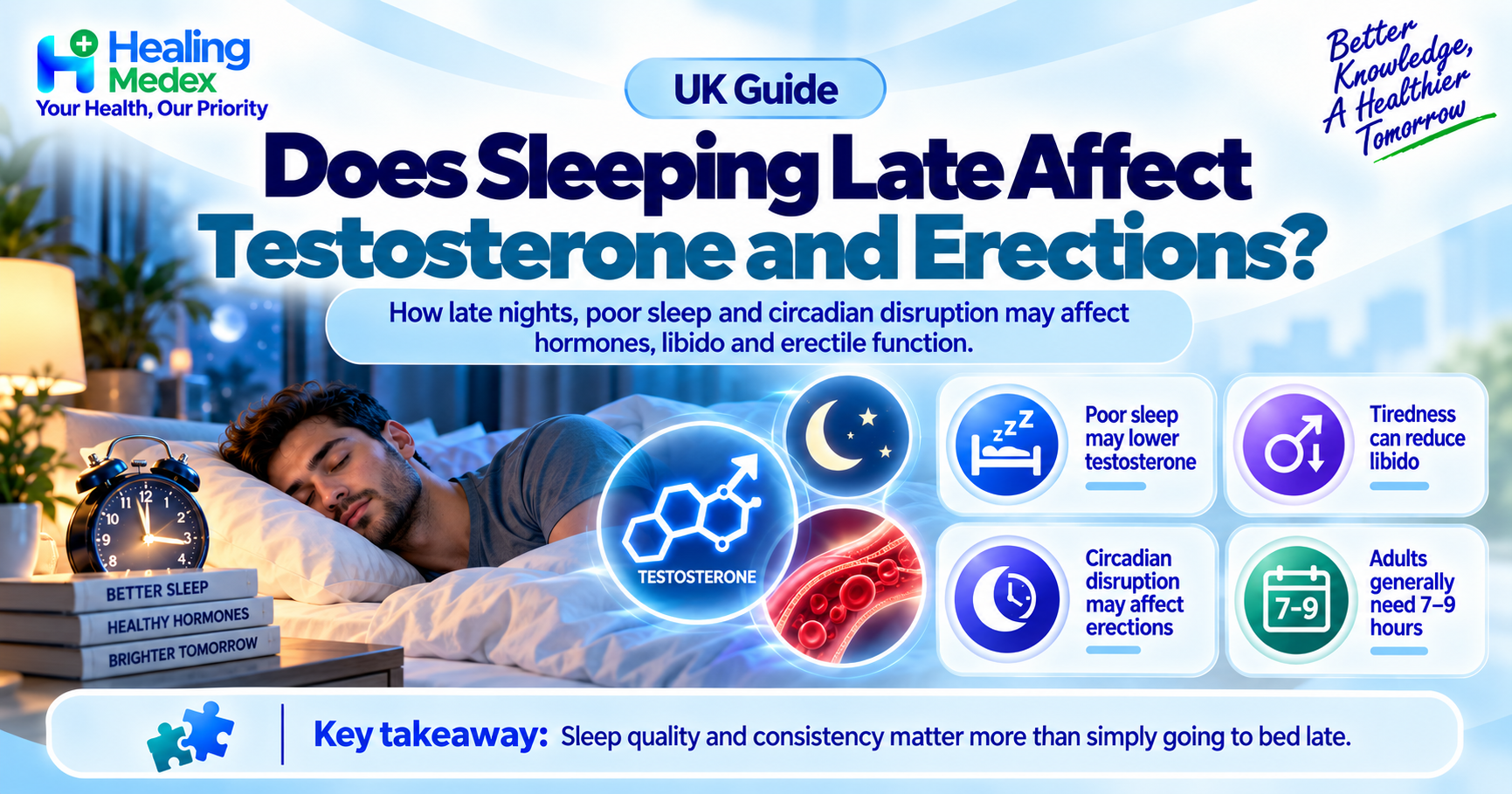
Sleep is essential for maintaining hormonal balance, physical health and sexual well-being. However, many men in the UK regularly stay awake until late at night because of work commitments, stress, screen time or irregular daily routines.
The answer is that poor sleep, particularly when it reduces total sleeping hours or disrupts normal sleep patterns, may affect testosterone production, sexual desire and erectile function.
However, going to bed late does not automatically cause low testosterone or erectile dysfunction. The amount, quality and consistency of sleep are important factors.
This guide from Healing Medex explains how sleeping late may influence testosterone and erections, what scientific research suggests and how men in the UK can improve their sleep habits to support sexual health.
What Happens to Your Body When You Sleep Late?
Sleep helps regulate several important biological processes, including hormone production, metabolism, nervous system activity and cardiovascular function.
Your body follows an internal biological clock known as the circadian rhythm, which helps control when you feel awake or sleepy.
When you regularly stay awake late into the night, particularly while waking early for work, you may experience:
Reduced total sleep duration
Increased daytime tiredness
Difficulty concentrating
Changes in mood and stress responses
Disruption of normal hormone patterns
Reduced sexual interest
These effects may become more noticeable when insufficient sleep continues for several days or weeks.
According to the NHS, most healthy adults need approximately 7–9 hours of sleep each night, although individual requirements vary.
Can Sleeping Late Lower Testosterone Levels?
Testosterone is an important male sex hormone involved in sexual desire, sperm production, muscle development, bone health and overall well-being.
Testosterone levels naturally fluctuate throughout the day and are influenced by sleep.
How sleep affects testosterone production
A substantial proportion of daily testosterone release occurs during sleep. In men with a typical day–night routine, testosterone levels tend to rise during sleep and are generally higher in the morning.
Regular sleep deprivation may interfere with these normal hormonal patterns.
For example, a small study published in JAMA in 2011 investigated testosterone levels in 10 healthy young men.
After approximately one week of restricted sleep, with only five hours allocated for sleeping each night, daytime testosterone levels decreased compared with the rested condition.
The study provides evidence that insufficient sleep can affect testosterone, although its small sample size means the findings should not be applied to every man.
Does sleeping after midnight reduce testosterone?
Not necessarily.
A man who sleeps from 1 am to 9 am may receive enough sleep, while someone sleeping from 11 pm to 5 am receives only six hours.
The second person may be more sleep-deprived despite going to bed earlier.
There is no established universal bedtime after which testosterone suddenly decreases.
The main concerns are chronic sleep restriction, disrupted sleep quality and inconsistent sleeping patterns.
Research examining sleep timing has also shown that testosterone responses can vary depending on when sleep is lost.
Does Sleeping Late Cause Erectile Dysfunction?
Sleeping late does not directly cause erectile dysfunction in every man.
However, consistently poor sleep may contribute to erection difficulties through several pathways.
An erection depends on healthy blood circulation, functioning nerves, psychological well-being and appropriate hormonal activity.
If insufficient sleep affects these systems, erectile function may also be affected.
1. Reduced sexual desire
Poor sleep can leave men feeling physically exhausted and less interested in sexual activity.
Although low testosterone may contribute to reduced libido, tiredness alone can also decrease sexual interest.
2. Increased stress and anxiety
Insufficient sleep can make stress harder to manage.
Stress and anxiety can interfere with the psychological and nervous-system processes involved in achieving an erection.
The NHS identifies stress and tiredness as common reasons why men occasionally experience difficulty getting or maintaining erections.
3. Hormonal disruption
When inadequate sleep affects testosterone levels, some men may notice reduced libido or changes in sexual function.
However, testosterone is only one factor involved in erections. Many men with erectile dysfunction have testosterone levels within the normal range.
4. Cardiovascular and metabolic health
Healthy erections depend on adequate blood flow.
Long-term poor sleep is associated with health problems that may also affect erectile function, including obesity, hypertension and metabolic disorders.
These connections are important because erectile dysfunction can sometimes indicate an underlying cardiovascular or metabolic condition.
5. Reduced energy and mood changes
Sleeping poorly can contribute to irritability, low motivation and reduced emotional well-being.
These changes may affect confidence, intimacy and sexual performance.
Can Lack of Sleep Affect Morning Erections?
Morning erections are a normal physiological occurrence in many men.
They are associated with spontaneous erections during sleep, particularly during rapid eye movement (REM) sleep.
When sleep becomes shorter or more fragmented, the timing and frequency of sleep-related erections may change.
A man may also notice fewer morning erections simply because he wakes at a different stage of his sleep cycle.
However, consistently reduced morning erections can sometimes be associated with hormonal, vascular or other health conditions.
The British Society for Sexual Medicine identifies reduced morning erections, low sexual desire and erectile dysfunction among symptoms that may warrant assessment for testosterone deficiency.
Important: Occasionally waking without an erection does not necessarily mean testosterone levels are low or that erectile dysfunction is present.
How Many Hours Should Men Sleep for Healthy Testosterone?
For most adults in the UK, the NHS recommends approximately 7–9 hours of sleep per night.
The following table illustrates how sleep duration may relate to overall health.
Sleep duration | General considerations |
|---|---|
Less than 5 hours | Significant sleep restriction; may affect energy, hormonal regulation and general health |
5–6 hours | May be insufficient for many adults, especially when habitual |
7–9 hours | Recommended range for most healthy adults |
More than 9 hours | May be appropriate for some people; persistent excessive sleepiness deserves assessment |
These ranges are general guidance rather than individual testosterone targets.
Sleeping eight hours does not guarantee optimal testosterone levels, and sleeping six hours does not automatically result in erectile dysfunction.
Sleep quality, medical conditions and individual needs also matter.
Does Sleeping Late Every Night Increase the Risk of ED?
A single late night is unlikely to cause persistent erectile dysfunction.
However, repeatedly staying awake late while receiving inadequate or poor-quality sleep may contribute to several health problems.
Possible effects include:
Persistent fatigue
Difficulty managing stress
Reduced sexual interest
Changes in normal hormone patterns
Reduced concentration and motivation
Worsening of existing sleep disorders
Over time, these problems may affect sexual well-being.
The relationship is not always straightforward, because poor sleep and erectile dysfunction can share underlying causes, such as anxiety, depression, obesity or chronic illness.
Can Shift Work Affect Testosterone and Sexual Health?
Many people in the UK work night shifts or rotating schedules in healthcare, transportation, manufacturing and other industries.
These working patterns can make it difficult to maintain consistent sleeping hours.
Shift workers may experience:
Irregular sleep timing
Reduced sleep duration
Difficulty sleeping during daylight hours
Daytime fatigue
Disruption of circadian rhythms
These problems may influence overall well-being and potentially sexual health.
However, evidence does not establish that every man working night shifts will develop low testosterone or erectile dysfunction.
For shift workers, obtaining sufficient, uninterrupted sleep and maintaining a routine whenever possible are particularly important.
Can Improving Sleep Increase Testosterone Naturally?
Improving sleep may help support normal testosterone regulation, especially in men who regularly experience sleep deprivation.
However, the benefits depend on the underlying cause of hormonal changes.
For example, someone whose testosterone levels are affected by inadequate sleep may benefit from improving their sleeping habits.
In contrast, a man with testosterone deficiency caused by a testicular or pituitary disorder may require specific medical treatment.
There is also limited evidence that simply sleeping longer will produce a large or predictable testosterone increase in otherwise healthy men.
Good sleep should therefore be considered part of a healthy lifestyle rather than a guaranteed treatment for low testosterone.
10 Ways to Improve Sleep and Support Sexual Health Naturally
1. Maintain a consistent sleep schedule
Try to sleep and wake at approximately the same time every day, including weekends. A regular routine supports your body’s natural sleep–wake cycle.
2. Create a relaxing sleeping environment
Keep your bedroom quiet, dark and comfortably cool. Minimise unnecessary disturbances during the night.
3. Reduce screen use before bedtime
Avoid prolonged phone use, gaming or television immediately before sleeping. Bright light and stimulating activities can make it harder to fall asleep.
4. Limit caffeine later in the day
Coffee, energy drinks and other caffeinated beverages may disrupt sleep, particularly when consumed during the evening.
5. Exercise regularly
Walking, cycling, swimming and other physical activities may support sleep quality, cardiovascular health and general well-being.
6. Maintain a balanced diet
Include vegetables, fruits, whole grains, adequate protein and healthy fats. Avoid regularly eating large meals immediately before bedtime.
7. Manage stress
Relaxation exercises, meditation and breathing techniques may help reduce stress and support better sleep.
8. Limit alcohol consumption
Alcohol may initially make you feel sleepy but can disturb sleep later in the night. Excessive alcohol intake may also contribute to erection difficulties.
9. Get natural daylight
Spending time outdoors during the day can help reinforce your natural circadian rhythm, particularly when combined with consistent sleep times.
10. Seek help for persistent sleep problems
Consult a GP if insomnia, excessive daytime sleepiness or disrupted sleep continues despite lifestyle changes. Treating an underlying sleep disorder may improve overall health.
These suggestions are consistent with general NHS recommendations for better sleep.
Can Sleep Apnoea Contribute to Low Testosterone and ED?
Obstructive sleep apnoea is a sleep-related breathing disorder that causes repeated interruptions to breathing during sleep.
Common symptoms include loud snoring, gasping or choking while asleep, frequent awakening and excessive daytime tiredness.
Sleep apnoea is associated with erectile dysfunction and can coexist with low testosterone, although factors such as obesity and other health conditions may contribute to these associations.
Men who experience both poor sleep and erection problems should not assume that bedtime habits are the only explanation.
According to the NHS, people experiencing symptoms of sleep apnoea should speak to a GP, as assessment and treatment may be necessary.
When Should You Check Your Testosterone Levels?
A testosterone blood test may be appropriate when symptoms suggest possible testosterone deficiency.
These may include:
Persistently reduced sexual desire
Fewer spontaneous morning erections
Unexplained fatigue alongside sexual symptoms
Reduced muscle strength or other signs of hormonal deficiency
These symptoms are not specific to low testosterone and may have other causes.
UK clinical guidance recommends measuring testosterone during the morning, generally between 7 am and 11 am, with repeat testing when needed to confirm a low result.
For men who work night shifts or have unusual sleep patterns, testing times should be discussed with their healthcare professional.
A diagnosis of testosterone deficiency requires compatible symptoms and appropriately confirmed low testosterone levels, rather than a single isolated result.
What Treatments Are Available in the UK for Erectile Dysfunction?
If erectile dysfunction persists despite improved sleep, a healthcare professional may recommend further assessment and treatment.
The most suitable approach depends on the underlying cause.
1. Lifestyle changes
Lifestyle improvements may include regular exercise, better sleep, weight management where appropriate, stopping smoking and reducing excessive alcohol intake.
These measures support cardiovascular health and may improve sexual function.
2. Counselling or psychological support
3. Erectile dysfunction medicines
They improve the blood-flow response involved in achieving an erection when sexual stimulation occurs.
These medicines do not directly correct sleep deprivation or automatically increase testosterone.
They may not be suitable for everyone, particularly people taking nitrates for chest pain. Combining PDE5 inhibitors with nitrate medicines can cause a dangerous fall in blood pressure.
In the UK, suitability should be assessed by an appropriately qualified prescriber or pharmacist, and medicines should be obtained through legitimate, regulated sources.
4. Testosterone replacement therapy
Testosterone replacement therapy (TRT) may be considered for men with confirmed testosterone deficiency when clinically appropriate.
However, it is not recommended simply because someone sleeps late or experiences occasional erectile difficulties.
Testosterone treatment requires medical supervision and may affect fertility, so a proper diagnosis and discussion of potential risks are essential.
When Should You See a GP in the UK?
Occasional erection problems after a poor night's sleep are common and do not always indicate a serious medical condition.
However, you should arrange a GP appointment if:
Erection difficulties happen repeatedly.
Sexual desire remains unusually low.
Persistent tiredness affects daily activities.
You experience loud snoring, gasping or interrupted breathing during sleep.
You suspect a hormonal problem.
Sleep difficulties continue despite improving your routine.
Your GP may assess medical history, medicines, blood pressure, cardiovascular risk factors and potential hormonal or metabolic causes.
Persistent erectile dysfunction should not be attributed to poor sleep alone, because it can sometimes be an early sign of another treatable medical condition.
Frequently Asked Questions
1. Does sleeping at 2 am lower testosterone?
Sleeping at 2 am does not automatically lower testosterone. The effect depends on factors such as total sleeping hours, sleep quality and the consistency of your schedule. Regularly getting insufficient sleep may interfere with normal hormonal regulation.
2. Can sleeping only five hours cause erectile dysfunction?
Habitually sleeping five hours may contribute to tiredness, stress and hormonal changes that can affect sexual function. However, it does not mean that every man sleeping five hours will develop erectile dysfunction.
3. Can getting eight hours of sleep improve erections?
Adequate sleep may improve energy, mood and overall well-being, which can support sexual function. However, it may not resolve erectile dysfunction caused by diabetes, vascular disease, medication effects or other medical conditions.
4. Does lack of sleep reduce morning erections?
Poor or disrupted sleep may affect the timing and occurrence of sleep-related erections. However, occasionally waking without an erection is normal and does not necessarily indicate a medical problem.
5. Can sleeping late reduce sperm count?
Sleep disturbances and short sleep duration have been associated with changes in some measures of semen quality. However, the evidence is mixed, and sleeping late alone has not been established as a direct cause of reduced sperm count.
6. Is sleeping before midnight necessary for healthy testosterone?
There is no established medical rule that every man must fall asleep before midnight to maintain healthy testosterone. Sufficient, good-quality and consistent sleep is more important than following one universal bedtime.
7. How long does it take testosterone to improve after better sleep?
There is no guaranteed timeframe. Hormonal responses depend on the severity of sleep deprivation, general health and the underlying cause of any low testosterone levels. Improving sleep may help support normal regulation, but it does not guarantee a measurable increase.
8. Can sleeping pills affect erections?
Some sleep medicines can cause sedation or other side effects that may affect sexual well-being. The effects depend on the specific medicine. Do not stop prescribed sleeping medication without consulting your healthcare professional.
9. Can young men experience ED because of poor sleep?
Yes. Young men may experience temporary erection difficulties associated with tiredness, stress or inadequate sleep. Persistent symptoms still deserve medical assessment, regardless of age.
10. Should I take testosterone supplements if I sleep late?
No. Sleeping late is not, by itself, a reason to take testosterone supplements or begin testosterone treatment. If you have symptoms suggesting testosterone deficiency, consult a GP for appropriate assessment.
Final Thoughts
Sleeping late may affect testosterone regulation and erectile function, particularly when it results in chronic sleep deprivation, poor sleep quality or irregular sleeping patterns.
Research suggests that insufficient sleep can influence testosterone levels, while tiredness, stress and underlying health conditions may also contribute to erection difficulties.
However, going to bed late does not automatically cause low testosterone or erectile dysfunction.
For men in the UK, maintaining a consistent sleep routine, aiming for around 7–9 hours of quality sleep, staying physically active and managing stress can help support overall sexual well-being.
If erectile problems, low libido or persistent tiredness continue, consulting a GP is important to identify possible underlying causes.
At Healing Medex, we encourage informed, evidence-based decisions about men's sexual health, sleep and hormonal well-being.
Medical Disclaimer
This article is for general educational purposes only and does not replace advice from a qualified doctor or pharmacist. Medical guidance, approved medicines and prescribing rules differ between countries. Always follow the advice of a healthcare professional licensed in your country of residence.