What Is a Parasitic Infection?
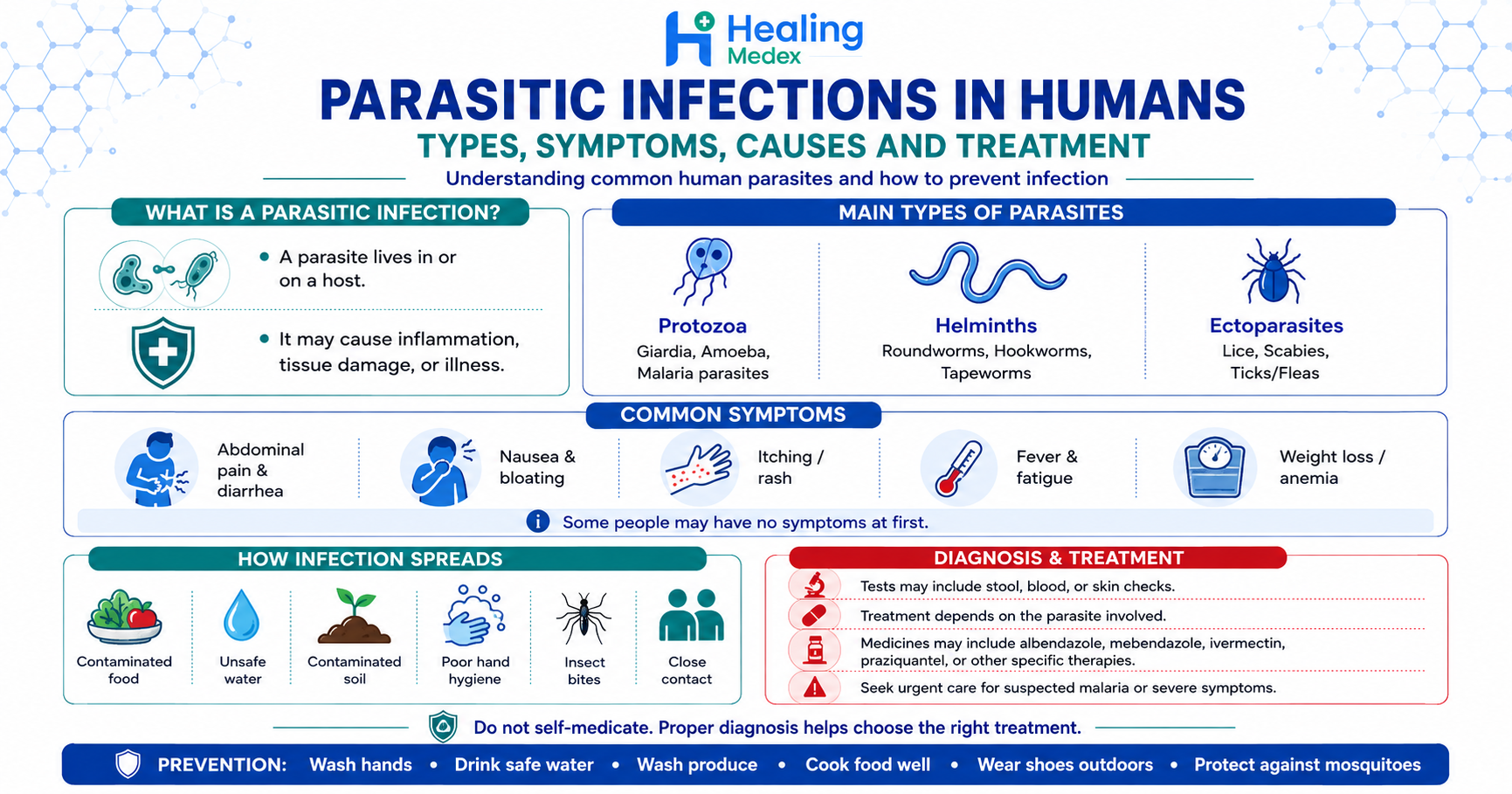
A parasite is an organism that survives by living in or on another organism, known as the host.
When a disease-causing parasite enters the human body, it may reproduce, consume nutrients, damage tissues, trigger inflammation, or interfere with normal organ function.
Some parasitic infections cause noticeable symptoms soon after infection. Others can remain mild or even produce no symptoms for a considerable period.
What Are the Main Types of Parasites in Humans?
Human parasites are generally divided into three major categories.
1. Protozoa
Protozoa are microscopic, single-celled organisms. Certain protozoa can multiply inside the human body.
Common protozoan infections include:
Giardiasis caused by Giardia
Amoebiasis caused by Entamoeba histolytica
Toxoplasmosis caused by Toxoplasma gondii
Cryptosporidiosis caused by Cryptosporidium
Intestinal protozoa frequently spread through contaminated food or water, while some blood parasites are transmitted by insects such as mosquitoes.
2. Helminths or Parasitic Worms
Helminths are multicellular worms that can live inside the human body.
Common types include:
Roundworms
Examples include:
Ascaris
Pinworms
Strongyloides
Hookworms
Hookworm larvae can enter the body through the skin, particularly when someone walks barefoot on contaminated soil.
Whipworms
Whipworm infection generally occurs after swallowing parasite eggs from contaminated soil, food, or hands.
Tapeworms
Certain tapeworm infections may develop after eating contaminated or inadequately cooked meat or through other parasite-specific transmission routes.
WHO identifies roundworm, whipworm, and hookworms among the major soil-transmitted helminths affecting humans.
3. Ectoparasites
Ectoparasites live mainly on the outside of the body.
Examples include:
Head lice
Body lice
Pubic lice
Scabies mites
Certain ticks and fleas
These parasites frequently cause itching and skin irritation and may spread through close personal contact, contaminated clothing or bedding, or environmental exposure.
What Are the Symptoms of a Parasitic Infection?
Symptoms vary according to:
The parasite involved
The part of the body affected
The number of parasites
How long the infection has been present
The person’s age
Nutritional status
Immune system function
Some infected people may initially have no symptoms at all.
Common Symptoms of Intestinal Parasites
Possible signs include:
Abdominal pain or cramping
Diarrhea
Nausea
Vomiting
Excessive gas
Bloating
Loss of appetite
Unexplained weight loss
Fatigue or weakness
Changes in bowel movements
Mucus in stools
Nutritional deficiencies
For example, Giardia commonly causes diarrhea and may also produce gas, stomach cramps, nausea, dehydration, and greasy or foul-smelling stools.
Symptoms of Intestinal Worms
Worm infections may cause:
Abdominal discomfort
Diarrhea
Nausea
Poor appetite
Weakness
Weight loss
Malnutrition
Anemia
Visible worms or worm segments in stool in certain infections
WHO reports that heavier soil-transmitted worm infections may cause diarrhea, abdominal pain, malnutrition, weakness, and impaired growth. Hookworm infections can also cause chronic intestinal blood loss leading to anemia.
Skin-Related Symptoms
Parasites affecting the skin may cause:
Severe itching
Redness
Rash
Small bumps
Scratching marks
Sores caused by repeated scratching
Crawling sensations in specific conditions
Severe nighttime itching, particularly around the fingers, wrists, waist, or genital area, can occur with scabies.
Symptoms of Blood or Tissue Parasites
Some parasites infect the bloodstream or internal organs.
Symptoms may include:
Fever
Chills
Sweating
Headache
Muscle aches
Extreme tiredness
Enlarged lymph nodes
Anemia
Malaria is an important example of a parasitic infection transmitted through infected mosquitoes. It can become life-threatening without prompt diagnosis and appropriate treatment.
What Causes Parasitic Infections?
Parasites can enter the body through several routes.
1. Contaminated Food
Eating contaminated food is an important route of transmission for several parasites.
Risk may increase with:
Poorly washed fruits and vegetables
Food contaminated during preparation
Undercooked meat associated with particular parasites
Poor kitchen hygiene
2. Contaminated Water
Drinking untreated or contaminated water may expose people to parasites such as Giardia and other intestinal organisms.
Giardia can spread through contaminated water, food, surfaces, objects, or person-to-person contact.
3. Contaminated Soil
Soil contaminated with human feces can contain parasite eggs or larvae.
According to WHO, soil-transmitted helminths can spread when parasite eggs contaminate soil in places where sanitation is inadequate. People may ingest the eggs through contaminated vegetables, water, or unwashed hands. Hookworm larvae can also penetrate human skin.
4. Poor Hand Hygiene
Not washing hands properly after:
Using the toilet
Changing diapers
Working with soil
Handling contaminated materials
Before preparing or eating food
can increase the risk of certain parasitic infections.
5. Insect Bites
Some parasites require insects to spread between humans.
For example, malaria is transmitted through the bite of an infected Anopheles mosquito.
6. Walking Barefoot on Contaminated Soil
Certain hookworm larvae can penetrate exposed skin.
Wearing footwear in areas where soil contamination is possible can therefore help reduce infection risk.
7. Close Person-to-Person Contact
Certain infections, particularly some intestinal protozoa, lice, and scabies, may spread between people through close contact or contaminated belongings.
Who Is at Greater Risk of Parasitic Infections?
Anyone can develop a parasitic infection, but the risk may be higher among:
People living in areas with inadequate sanitation
Travelers to areas where particular parasites are common
People who drink untreated water
People who frequently walk barefoot outdoors
Young children
People with weakened immune systems
People exposed to contaminated soil
Individuals with limited access to clean water
People eating improperly prepared food
Household contacts of individuals with certain contagious parasites
People with weakened immune systems may also experience more persistent or severe infections with some parasites.
How Are Parasitic Infections Diagnosed?
Because symptoms such as diarrhea, stomach pain, fatigue, and weight loss can have many causes, a parasitic infection should not be diagnosed from symptoms alone.
A healthcare professional may consider your symptoms along with:
Recent travel
Food and drinking-water exposure
Contact with infected people
Animal exposure
Living conditions
Duration of symptoms
Current medicines and medical conditions
Depending on the suspected parasite, testing may include:
Stool Tests
Stool samples can be examined for:
Parasite eggs
Larvae
Cysts
Parasite antigens
Genetic material from certain parasites
Sometimes more than one sample may be required.
Blood Tests
Blood tests may help identify some parasites or detect complications such as anemia.
Skin Examination
Scabies, lice, and certain other ectoparasitic infections may be diagnosed by examining the affected skin or hair.
Imaging or Other Tests
Ultrasound, CT scans, MRI, endoscopy, biopsies, or other specialized investigations may occasionally be required when parasites are suspected in internal organs or tissues.
How Are Parasitic Infections Treated?
There is no single medicine that treats every parasite.
Treatment depends on:
The specific parasite
Location of the infection
Severity of disease
Patient’s age and weight
Pregnancy or breastfeeding
Other medical conditions
Other medicines being taken
Local patterns of drug resistance
Anthelmintic Medicines
Anthelmintics are medicines used against parasitic worms.
Depending on the infection, healthcare professionals may use medicines such as:
However, these medicines are not interchangeable, and the correct medicine, dose, and treatment duration depend on the particular parasite.
WHO identifies albendazole and mebendazole as widely used medicines in programmes addressing soil-transmitted helminth infections.
Medicines for Protozoal Infections
Different antiprotozoal medicines may be used for conditions such as:
Giardiasis
Amoebiasis
Toxoplasmosis
Other protozoal infections
Treatment should be chosen according to the confirmed or strongly suspected organism.
For Giardia, the CDC advises discussing treatment with a healthcare provider because factors such as medical history, nutritional status, and immune function can influence management. Maintaining adequate fluid intake is also important when diarrhea is present.
Treatment for Malaria
Malaria requires prompt medical assessment.
The medicine used depends on several factors, including:
Type of malaria parasite
Where the infection was acquired
Possible drug resistance
Severity
Age
Pregnancy or breastfeeding status
Malaria can progress rapidly and should be treated as a potentially serious medical condition.
Treatment for Lice and Scabies
Treatment may involve appropriate topical or oral medicines depending on the parasite and patient’s circumstances.
Household members or close contacts may also require evaluation in certain situations, and clothing, bedding, and other potentially contaminated belongings may need appropriate cleaning.
Can You Treat Parasites Without Knowing Which Parasite You Have?
Self-treating an unexplained illness with an antiparasitic medicine is generally not recommended.
Different parasites respond to different medications, and symptoms that appear to be caused by parasites may actually result from bacterial infections, viral infections, inflammatory bowel conditions, food intolerance, medication effects, or other medical problems.
Taking the wrong medicine may:
Delay the correct diagnosis
Cause unnecessary side effects
Interact with other medicines
Be unsafe during pregnancy or with certain medical conditions
Fail to eliminate the actual infection
A healthcare professional can determine whether testing is required and select appropriate treatment.
How Can Parasitic Infections Be Prevented?
Many parasitic infections can be prevented through hygiene, sanitation, food safety, and protection against insects.
Wash Your Hands
Wash hands thoroughly with soap and clean water:
Before preparing food
Before eating
After using the toilet
After changing diapers
After working with soil
Drink Safe Water
Use properly treated drinking water.
Travelers should be particularly cautious where water sanitation is uncertain.
Wash Fruits and Vegetables
Clean produce carefully before eating. Depending on local conditions, cooking or peeling food may provide additional protection.
Cook Food Thoroughly
Adequately cooking meat and other foods can reduce the risk of certain foodborne parasitic infections.
Wear Shoes Outdoors
Avoid walking barefoot where soil could be contaminated with human waste, particularly in areas where hookworm is common.
WHO specifically recommends clean water, careful food washing or preparation, handwashing, and footwear as measures for reducing soil-transmitted helminth infections.
Protect Yourself From Mosquitoes
In areas where malaria or other mosquito-borne parasitic diseases occur:
Use appropriate insect repellent
Sleep under suitable mosquito nets where recommended
Wear protective clothing
Follow destination-specific travel health recommendations
Maintain Good Household Hygiene
Appropriate washing of bedding, clothes, towels, and personal items may help prevent the spread or recurrence of certain parasites such as lice and scabies.
When Should You See a Doctor?
Seek medical advice if you develop persistent or unexplained:
Diarrhea
Abdominal pain
Vomiting
Weight loss
Severe itching
Unexplained anemia
Weakness or fatigue
Worms or unusual material in stool
Symptoms following international travel
Medical evaluation is particularly important for:
Infants and young children
Pregnant women
Older adults
People with weakened immune systems
People experiencing significant dehydration
Fever or illness after traveling to or living in a malaria-risk area requires prompt medical attention. Malaria can become life-threatening if diagnosis and treatment are delayed.
Frequently Asked Questions About Parasitic Infections
1. What is the most common symptom of parasites in humans?
There is no single symptom that confirms a parasitic infection. Depending on the parasite, symptoms can include diarrhea, abdominal pain, itching, fatigue, anemia, fever, weight loss, or no symptoms at all.
2. Can intestinal parasites cause weight loss?
Yes. Some intestinal parasites may interfere with digestion or nutrient absorption, reduce appetite, or cause persistent diarrhea, potentially contributing to weight loss.
3. Can parasites cause anemia?
Yes. Hookworm infections can cause chronic intestinal blood loss and contribute to iron-deficiency anemia.
4. Can a person have parasites without symptoms?
Yes. Some parasitic infections can remain asymptomatic, particularly when the parasite burden is relatively low.
5. Are all intestinal worms treated with the same medicine?
No. Different worm species require different medicines, doses, and treatment schedules. Proper diagnosis or professional medical assessment is important before treatment.
6. How long does it take to recover from a parasitic infection?
Recovery varies widely depending on the parasite, severity of infection, treatment used, and overall health of the patient. Some infections resolve quickly after appropriate treatment, while others require longer or repeated treatment.
7. Can parasitic infections come back after treatment?
Yes. Reinfection may occur if a person continues to be exposed to contaminated food, water, soil, insects, infected contacts, or other sources.
Final Thoughts
Parasitic infections in humans range from relatively mild intestinal illnesses to potentially serious diseases involving the blood, skin, or internal organs.
The major groups include protozoa, parasitic worms, and ectoparasites, and each group contains many different organisms requiring different approaches to diagnosis and treatment.
Good hand hygiene, safe food and drinking water, proper sanitation, protective footwear, and prevention of insect bites can substantially reduce exposure to many parasites.
Most importantly, persistent symptoms should be properly evaluated rather than treated solely on assumption. The correct antiparasitic treatment depends on identifying or strongly suspecting the parasite involved and considering the patient’s overall health.