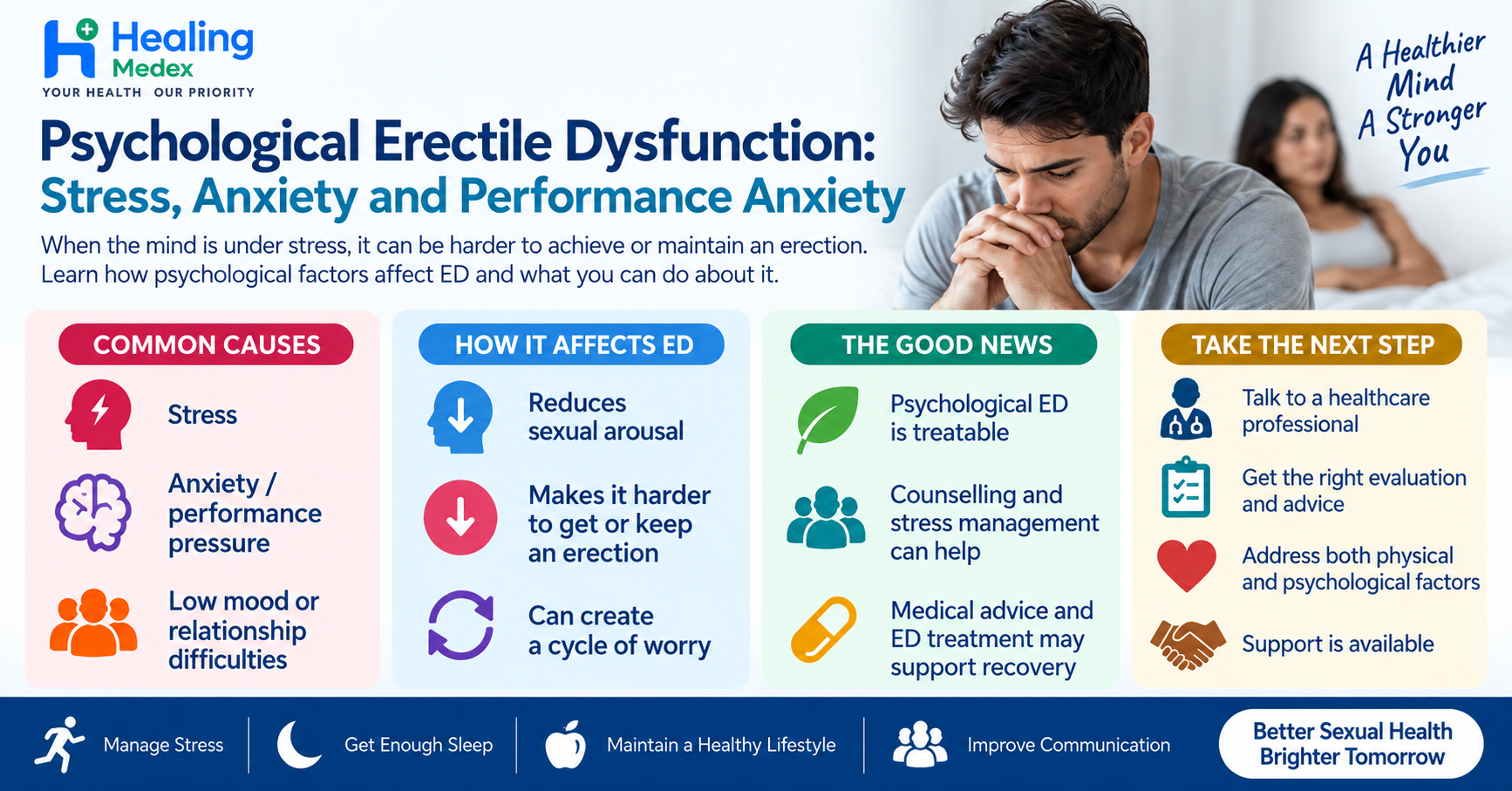
Psychological Erectile Dysfunction: Stress, Anxiety and Performance Anxiety
Erectile dysfunction (ED) is often associated with physical conditions such as diabetes, cardiovascular disease, hormonal problems or reduced blood flow. However, erections also depend heavily on the brain, emotions and nervous system. Stress, anxiety, depression, relationship difficulties and performance anxiety can cause or worsen erectile dysfunction.
When emotional or psychological factors play a major role, the condition is sometimes referred to as psychological or psychogenic erectile dysfunction.
Psychological ED can affect men of different ages. It may happen occasionally during stressful periods or become a recurring problem when fear of erection difficulties creates additional anxiety.
The good news is that psychological factors contributing to ED can often be addressed through appropriate medical evaluation, counselling, stress management and, when suitable, ED treatment.
What Is Psychological Erectile Dysfunction?
Erectile dysfunction means having persistent difficulty getting or maintaining an erection firm enough for sexual activity. Some men can achieve an erection but lose it before or during sex, while others may have difficulty becoming fully erect.
Sexual arousal is complex. The brain, emotions, nerves, hormones, muscles and blood vessels all participate in producing an erection. Psychological distress can interfere with this process even when the penile blood vessels and nerves are functioning normally.
Psychological ED may therefore occur when thoughts or emotions interfere with sexual arousal.
However, ED is not always entirely psychological or entirely physical. Both factors can occur together. For example, a minor physical erection problem can make a man worried about whether he will maintain an erection the next time he has sex. That anxiety can then make the original erection problem worse.
How Can Stress Cause Erectile Dysfunction?
Stress activates the body's response to perceived pressure or danger. While temporary stress is normal, ongoing psychological stress can make relaxation and sexual arousal more difficult.
Stress may come from many areas of life, including work pressure, financial concerns, lack of sleep, family responsibilities, relationship difficulties or major life changes.
A man who is mentally preoccupied with these concerns may find it harder to focus on sexual stimulation.
Stress can also contribute indirectly to ED. For example, prolonged stress may affect sleep, mood, alcohol consumption, exercise habits and relationships — all of which can influence sexual health.
The National Institute of Diabetes and Digestive and Kidney Diseases (NIDDK) identifies stress and anxiety among the emotional or mental-health factors that can cause or worsen erectile dysfunction.
How Does Anxiety Affect Erections?
An erection normally develops when sexual stimulation causes signals from the brain and nerves to increase blood flow into the penis.
Anxiety can interfere with this process because attention shifts away from sexual stimulation and toward worrying thoughts.
A man may start thinking:
“Will I get an erection?”
“Will I stay hard?”
“What will my partner think?”
“What if it happens again?”
Instead of remaining focused on pleasurable sensations and intimacy, the brain becomes focused on evaluating sexual performance.
This can make sexual arousal more difficult and may contribute to losing an erection.
What Is Sexual Performance Anxiety?
Performance anxiety occurs when someone becomes excessively worried about their ability to perform sexually.
A previous erection difficulty can sometimes trigger this problem.
For example, a man may experience ED once because he is tired, stressed or has consumed too much alcohol. During his next sexual encounter, he may remember what happened and worry that it will happen again.
That fear creates additional anxiety.
The anxiety then makes achieving or maintaining an erection more difficult, reinforcing the belief that another erection problem is likely.
This can create a repeating cycle:
Erection difficulty → worry about sexual performance → increased anxiety → reduced arousal → another erection difficulty.
Breaking this cycle is often an important part of managing psychological ED.
Common Psychological Causes of Erectile Dysfunction
Psychological and emotional factors associated with erectile difficulties can include:
stress and excessive worry
sexual performance anxiety
generalized anxiety
depression or low mood
relationship conflict or communication problems
low self-confidence or self-esteem
negative body image
fear associated with previous sexual difficulties
loneliness or emotional disconnection
NIDDK specifically recognizes anxiety, depression, stress, low self-esteem, lack of confidence and negative body image among psychological or emotional factors that may contribute to ED.
Signs That Psychological Factors May Be Involved
The pattern of erection problems can sometimes give a healthcare professional useful information.
For example, psychological factors may be considered when erection problems appear suddenly during a period of significant stress or when difficulties are strongly connected with particular sexual situations.
Some men may still experience erections at other times, such as during sleep or on waking. The NHS notes that, depending on the cause of ED, a man may still be able to get erections at other times.
However, these patterns cannot confirm psychological ED on their own.
Physical and psychological causes frequently overlap, so persistent erectile difficulties should still be medically evaluated.
Can Relationship Problems Cause ED?
Yes. Relationship tension can contribute to erectile difficulties in some men.
Poor communication, unresolved conflict, reduced emotional intimacy, concerns about sexual satisfaction or fear of disappointing a partner can increase anxiety around sex.
ED itself can then create further relationship tension.
For example, a partner may incorrectly interpret erection difficulties as a lack of sexual attraction. The man experiencing ED may become embarrassed or avoid sexual activity because he is worried about another unsuccessful experience.
Open communication can help reduce these misunderstandings.
When relationship difficulties are contributing to ED, couples counselling or psychosexual therapy may sometimes be useful. Mayo Clinic notes that a healthcare professional may suggest counselling for an individual or couple when anxiety, stress, depression or relationship issues are affecting ED.
How Is Psychological Erectile Dysfunction Diagnosed?
There is no single test that proves ED is psychological.
Instead, a healthcare professional normally considers the person's overall medical and sexual history.
According to NIDDK, evaluation of erectile dysfunction can involve a medical, sexual and mental-health history, physical examination and laboratory or other tests when appropriate.
A doctor may ask about when the erection difficulties began, whether erections occur during masturbation or sleep, whether sexual desire has changed, current stress or relationship problems, medications being taken and existing medical conditions.
Physical causes must also be considered.
Conditions associated with ED include diabetes, high blood pressure, cardiovascular disease, obesity, hormonal problems and certain neurological conditions. Some medications and lifestyle factors can also contribute.
Because ED may occasionally indicate an underlying medical condition, persistent symptoms should not automatically be assumed to result from anxiety.
How Is Psychological Erectile Dysfunction Treated?
Treatment depends on what is contributing to the erection problem.
Psychological Therapy
Counselling can be particularly helpful when anxiety, stress, depression or relationship difficulties are contributing to ED.
NIDDK states that counselling may help people reduce anxiety and stress related to sex, and a partner may sometimes participate in counselling sessions.
Psychological approaches may include cognitive behavioural therapy (CBT), psychosexual therapy, sexual-skills education and couples therapy.
European Association of Urology guidance also recommends psychosocial interventions, including psychosexual education, sexual-skills approaches and cognitive behavioural therapy for appropriate patients with ED.
Managing Stress and Anxiety
Reducing overall stress can also support sexual health.
Regular exercise, adequate sleep, relaxation techniques, reducing excessive alcohol consumption and discussing persistent anxiety with a mental-health professional may all be useful components of treatment.
Rather than concentrating exclusively on whether an erection is occurring, some therapy approaches help individuals focus more on physical sensations, intimacy and communication with their partner.
Communication With Your Partner
Trying to hide erection difficulties can sometimes increase pressure.
Openly discussing the problem may reduce misunderstanding and help remove some of the expectation surrounding sexual performance.
For couples affected by persistent performance anxiety, professional sex or relationship therapy may provide structured techniques for rebuilding confidence and intimacy.
Erectile Dysfunction Medicines
Some men with psychological ED may also be prescribed PDE5 inhibitors, such as sildenafil or tadalafil, when a healthcare professional determines they are medically appropriate.
These medicines improve the blood-flow response involved in erections; sexual stimulation is still required.
Medication does not necessarily resolve the anxiety, relationship difficulties or emotional factors responsible for psychological ED, so combining appropriate medical treatment with psychological support can sometimes be beneficial.
ED medicines are not appropriate for everyone and can interact dangerously with certain medications, particularly nitrate medicines used for chest pain. Men should therefore obtain appropriate medical advice rather than self-treating persistent ED.
Can Psychological ED Go Away?
Psychological erectile dysfunction can improve, particularly when the underlying source of stress or anxiety is identified and treated.
For some men, improvement begins after understanding how performance anxiety affects sexual arousal. Others may benefit from counselling, therapy, lifestyle changes or medical treatment.
Recovery does not always occur immediately. Worrying about whether every sexual experience will be successful can itself maintain performance anxiety.
The aim is generally to address the underlying causes while gradually restoring sexual confidence.
How Can You Break the Performance-Anxiety Cycle?
One important change is to stop treating every sexual encounter as a test of whether an erection will occur.
Communication with a partner can reduce pressure and create a more relaxed environment. Focusing on intimacy and pleasurable sensations instead of monitoring erection firmness may also help.
If intrusive worries repeatedly appear during sexual activity, CBT or psychosexual therapy can teach strategies for recognizing and changing these thought patterns.
Professional support is particularly useful when anxiety has resulted in avoidance of sexual activity, significant relationship problems or persistent distress.
When Should You See a Doctor?
An occasional difficulty achieving an erection can happen because of stress, tiredness or excessive alcohol consumption and does not necessarily indicate chronic ED.
However, repeated or persistent erection difficulties should be discussed with a healthcare professional. The NHS recommends seeking medical advice when erection problems keep happening because ED can sometimes be associated with a treatable health condition.
Medical evaluation is particularly important when erection problems occur alongside reduced sexual desire, penile pain or curvature, cardiovascular symptoms, diabetes or other significant health conditions.
Frequently Asked Questions
1. Can anxiety alone cause erectile dysfunction?
Yes. Anxiety can contribute to or worsen erectile dysfunction because sexual arousal depends partly on psychological and emotional processes. However, persistent ED should still be medically evaluated because physical and psychological factors can occur together.
2. Can overthinking cause ED?
Persistent worrying during sexual activity can interfere with arousal. Men who continually monitor whether their erection is firm enough may become increasingly anxious, potentially creating a cycle of performance anxiety and erection difficulty.
3. Why can I get an erection alone but not with a partner?
Several explanations are possible. In some cases, performance anxiety, relationship concerns or feeling pressured during partnered sex may contribute. This pattern does not prove that the problem is psychological, so recurrent symptoms should still be discussed with a healthcare professional.
4. Does performance anxiety affect young men?
It can. Psychological factors such as anxiety and stress can affect sexual function regardless of age. Physical causes should still be considered when erection difficulties persist.
5. Can counselling help psychological ED?
Yes. Counselling may help reduce anxiety and stress surrounding sex, while CBT, psychosexual therapy and couples-based interventions may address thoughts, behaviours and relationship factors contributing to erectile difficulties.
6. Can sildenafil or tadalafil help performance-anxiety ED?
PDE5 inhibitors may help some men achieve or maintain erections when prescribed appropriately. However, medication does not directly resolve the psychological cause of performance anxiety. Depending on the individual, a healthcare professional may recommend medical treatment alongside counselling or psychological therapy.
Final Thoughts
Psychological erectile dysfunction is a genuine sexual-health problem that can develop when stress, anxiety, depression, relationship difficulties or fear of sexual failure interfere with normal arousal.
Performance anxiety can be particularly frustrating because one temporary erection problem may create fear of another, forming a self-reinforcing cycle.
Fortunately, psychological factors contributing to ED are often manageable. Identifying underlying stress, communicating with a partner, receiving counselling or psychosexual therapy and addressing any accompanying physical conditions can all form part of treatment.
Most importantly, persistent erectile dysfunction should not automatically be labelled as psychological. A healthcare professional can help determine whether emotional, physical or combined factors are involved and recommend an appropriate treatment plan.